OF THE
TIMES


"As the jury found, Ali Sadr Hashemi Nejad created a network of front companies and bank accounts to mask Iranian business dealings in Venezuela and evade US sanctions. For years, Sadr used front companies in Switzerland, Turkey, and St. Kitts and Nevis to conceal the fact that $115 million in payments were really for his family business and relatives in Iran."In August 2004, the governments of Iran and Venezuela signed an agreement for an infrastructure project in Venezuela involving the construction of housing units, the release said. The project was led by Stratus Group, an Iranian conglomerate controlled by Sadr and his family with international business operations in the construction, banking and oil industries, the release said.
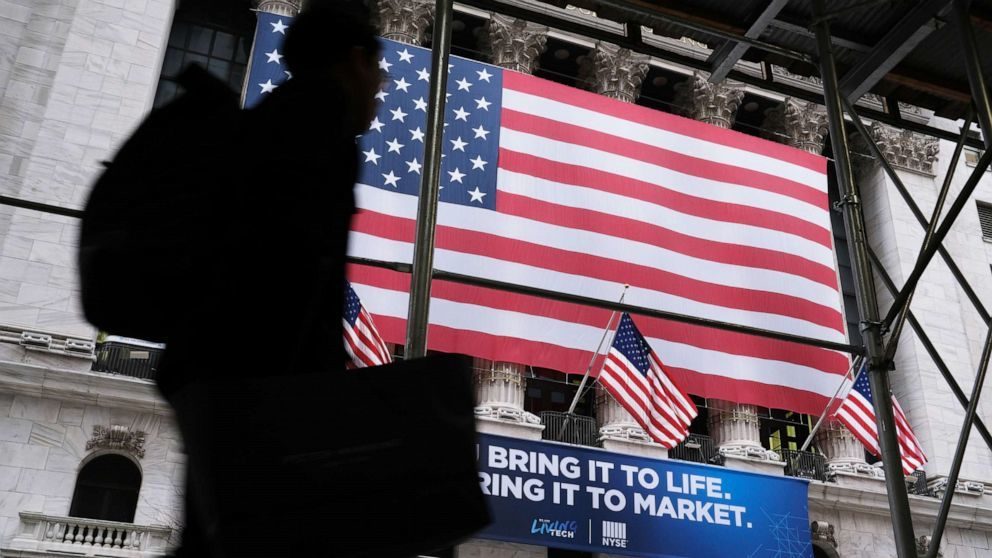
Asia-Pacific markets finished significantly lower on Wednesday again, shrugging off the stimulus pledges by world leaders. Investors fear the measures may still not be enough to protect economies though the crisis.Following the report above that US made some gains on the 17th March, on the 18th US stocks plunged 1,400 points right after the opening bell:
Hong Kong's Hang Seng index closed down over four percent while China's Shanghai Composite was off almost two percent. Japan's Nikkei 225 was trading 1.68 percent lower.
Australia's S&P/ASX 200 was the worst performer in the region, dropping by almost seven percent. South Korea's Kospi ended the day down 4.9 percent.
European stock markets have also felt the jitters, with the Stoxx 600 index falling 3.3 percent in early trading. Germany's DAX was off almost five percent while France's CAC 40 index has slid over four percent. Britain's FTSE 100 was trading five percent lower as of 10:00 GMT.
Fears of a deep downturn have been shaking markets despite the stimulus packages announced by the US, UK, and the Eurozone.
"Volatility across markets has created considerable anxiety amongst investors trying to gauge the effectiveness" of various healthcare, monetary and fiscal policy responses, said Bob Michele, global head of fixed income at JP Morgan Asset Management, in a research note seen by CNBC.
The US Federal Reserve announced plans on Tuesday to unfreeze the $1 trillion commercial paper market that should help businesses get short-term loans to pay workers and finance inventories. The UK has unveiled a £330 billion plan to fight the Covid-19 pandemic, with the EU bringing out a £37 billion support package.
The S&P 500 index and the Nasdaq Composite have lost over seven percent, leading to a 15-minute "circuit breaker" halt at around 1 pm Eastern time.The oil price has dropped to its lowest level since 2003 as demand for energy halts and amidst fears of a global recession:
Shares trading on the London, Frankfurt, and Paris bourses faced another day of huge losses, with key indices falling between three and five percent.
Stocks in Australia led the losses in Asia Pacific with the country's S&P/ASX 200 index falling more than six percent. Hong Kong's Hang Seng index dropped more than four percent. China's Shanghai Composite and Japan's Nikkei 225 were both down, losing more than one and a half percent.
The US stock market has been on a rollercoaster ride - massive drops followed by huge rebounds - as investor panic driven by the spread of the coronavirus sets in. On the financial markets, it was also reflected by the CBOE Volatility Index, which is sometimes referred to as the Fear Index. The index tends to rise during market turmoil, and it soared to historic highs earlier this week.
The Dow and S&P 500 entered a bear market last week, putting an end to the historic bull run. The Dow is already more than 30 percent off its all-time high of around 29,500 points seen in February, to around 20,000 points on Wednesday.
The price of US West Texas Intermediate (WTI) for April delivery fell six percent and was trading below $26 per barrel. If prices continue to drop, by the end of the day they could close at the lowest level since May 2003.
Futures for the international benchmark, Brent crude, were down more than three percent, trading below $28 per barrel as of 10:00am GMT.
On Tuesday, Goldman Sachs slashed its oil price forecast again citing "unprecedented" demand losses. The bank now expects both WTI and Brent to trade at around $20 per barrel in the second quarter.
Apart from the coronavirus, the ongoing row between two major oil producers, Russia and Saudi Arabia, has been affecting the energy market. After the two failed to reach a new deal on production cuts, Saudi Arabia pledged to dramatically ramp up production and give discounts to its buyers in a move that may further shake the already oversupplied market.
Meanwhile, Russian state lender Sberbank says that it has already been looking into worst-case scenarios for the economy amid the coronavirus pandemic. According to Sberbank CEO Herman Gref, the most stressful outcome includes oil going down to $20 per barrel and Russia's national currency tumbling to 100 rubles per dollar. However, Gref believes that the bank will manage to stay afloat even under those circumstances.


Comment: Sadly, greed never far behind in a crisis. Techdirt reports