Fire in the SkyS


Meteor

UK: 'Fireball' Soars Across Penarth

Was it a bird? Was it a plane? No: it was a fireball over Penarth - according to one town resident anyway.

Translator Elisabeth Griffin was left with hot flushes recently after seeing what she described as a 'fireball' soaring overhead.

The Cornerswell Road resident had gone for a relaxing stroll when she saw the sizzling sight above Victoria playing fields.

"I was taken aback by this unusual but fantastic object in the sky," she said.

"I knew it wasn't a plane immediately because it was too big and too bright.

"It literally stopped me in my tracks as I saw it pass me overhead - it must have taken about a minute."

Meteor

Unusually bright shooting star prompts sighting reports from Chicago to Indiana

An unusually bright shooting star shot across the sky Wednesday night, prompting sighting reports from the Chicago area to Indiana, a local astronomer said.

A green-tinted burst was reported by amateur astronomers in LaPorte, Ind., just after 8 p.m.., said Adler Planetarium Astronomer Chris Lintott.

The shooting star, which was a meteor probably about the size of 10 grains of salt, likely won't hit the ground and won't become a meteorite, he said. Meteoroids are pieces of material traveling through space that become meteors when they streak through the Earth's atmosphere and meteorites if they strike the ground.

At least two motorists on Chicago-area expressways also reported seeing the flash.

Meteor

Probe to Survey Comet Dented by Deep Impact Mission

Comet Deep Impact
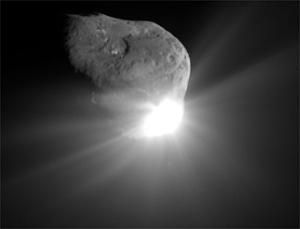
© NASA/JPL-Caltech/UMDDeep Impact's impactor hit Comet Tempel 1, spewing debris, but the mission was not able to see the resulting crater
NASA's Deep Impact mission pounded a comet in 2005, but failed to see the resulting crater. Now, scientists will get a second chance to glimpse the damage when a second spacecraft flies by the comet on 15 February.

In an unprecedented experiment, NASA smashed a 372-kilogram impactor into Comet Tempel 1 on 4 July 2005 as part of its Deep Impact mission.

A flyby spacecraft recorded images of the impact from a safe distance, but the cloud of impact debris and a flawed camera made it impossible to see the crater itself. Studying the crater could have revealed more about the interior composition and structure of comets.

Now, another spacecraft is about to make its own fly-by of the comet, offering a second chance to image the structure.

Called Stardust, the spacecraft collected material from Comet Wild 2 in 2004 and sent it in a capsule back to Earth, where scientists have been studying it ever since.

Meteor

Google, Dreaming lead to ancient crater

An aboriginal dreaming story about a star crashing to earth with a noise like thunder has led to the discovery of an ancient meteorite crater in central Australia.

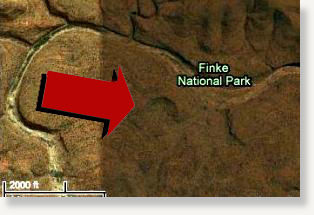
A Sydney astronomer, Duane Hamacher, found the bowl-shaped crater in Palm Valley, about 130 kilometres south-west of Alice Springs, by searching on Google Earth.

He was inspired to look there after learning of traditional stories told by the local Arrernte people about a star that had fallen into a waterhole called Puka in the valley.

Image
© Google Maps
Mr Hamacher, a PhD candidate at Macquarie University, said that reality matching the Dreaming story could be a case of pure chance. ''But if so, it's an incredible coincidence,'' he said.

He is part of a team led by CSIRO astronomer Ray Norris that is exploring the possibility that Aborigines were the world's first astronomers.

Traditional Aboriginal wisdom about the heavens was impressive, Mr Hamacher said.

''It is impossible to survive on a continent like this for 50,000 years and not have an intimate knowledge of the natural world around you, including the night sky,'' he said.

He searched historical records for Aboriginal stories with references to comets, meteors and cosmic impacts, and looked for matching astronomical events.

Meteor

Best of the Web: Ireland: Search on for 'Huge' Meteorite

Meteor
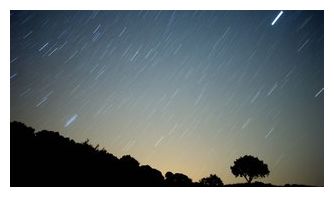
© RTÉ NewsAstronomy - A meteor streaks across the sky during a meteorite shower in Spain.

The search is on for fragments of a meteorite which blazed across Irish skies yesterday evening.

The meteor - described as 'huge' by Astronomy Ireland - is known as a fireball.

Astronomy Ireland says it is likely to be a piece of a comet or asteroid that passed near Earth's orbit sometime in the past.

It appeared in the moonlit sky at approximately 6pm, or shortly after.

If it survived the fall to Irish soil, keen treasure hunters may fetch hundreds of Euro per gram of meteorite if found.

Meteor

UK: Meteorite May Have Caused Earth to Move in 'Big Bang'

A ground-trembling incident has left residents in a market town asking whether a meteorite had landed nearby.

Hundreds of residents in Saffron Walden and surrounding villages reported incidents of houses shaking, windows rattling and furniture moving at about 8pm on Sunday when two loud bangs were heard.

Suggestions have been made that it could have been an earthquake, a meteorite or a plane crash - but the mystery still remains unexplained.

A full-scale operation was launched by the emergency services after residents in Saffron Walden, Thaxted, Ashdon and Newport reported hearing the bang and experiencing a trembling - but nothing was found.

Residents as far away as Haverhill, Castle Camps and Great Sampford contacted the News, reporting their beds moving, houses shaking and loud thuds.

Police from Stansted and Dunmow were drafted in to search the area along with firefighters.

Caroline Mifsud, 37, from Saffron Walden, said: "My son heard an explosion and felt a shake and about 10 minutes later there were police and fire engines everywhere. Everyone is talking about it on Facebook."

Meteor

The Reality of Near Earth Objects

Image
© Andrew C. Steward'Near Earth Object Impact Hazard
From 'The End', written by Jim Morrison of The Doors

"Of our elaborate plans, the end
Of everything that stands, the end
No safety or surprise, the end
I'll never look into your eyes...again"


The Earth has been a stage where countless scenes have played out from a script that was written by fate. Every form of life will have its time in the sun, until changing conditions allow new species to reign.

When dinosaurs roamed unchallenged, ancestral mammals were insignificant creatures that scurried about in the shadows, biding their time. Then a meteor impact 65 million years ago brought the curtain down on the age of dinosaurs, and opened the door for mammals to thrive and evolve into beings that could reach out for the stars. Scientists have had to accept the fact that such catastrophic impacts have been a regular occurrence in our history.

In our Human world we have created knowledge of chemistry, biology, history, and art. We have dedicated our lives to solving philosophical challenges and attempted to separate right from wrong. But we have perhaps mislead ourselves into believing that these things have enduring substance that will protect us from the realities of the universe. Another player will one day move onto the horizon of humankind, something so deceptively powerful that we can scarcely believe that in the span of a day, everything that we hold so dear could be gone, to disappear like the Gardens of Babylon under the sands of time.

Meteor

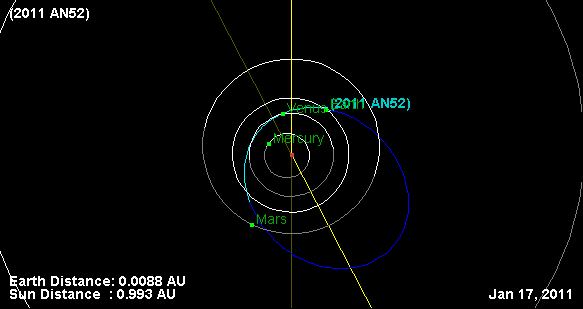
Asteroid Flyby: Newly Discovered 2011 AN52 Passes Inside Moon's Orbit

Image
© JPL
Newly-discovered asteroid 2011 AN52 is flying past Earth today just inside the orbit of the Moon (0.8 LD).

The space rock is only 8 meters wide, about the size of a small room, so even experienced amateur astronomers will have trouble photographing it as it zips through the northern constellations Draco and Cygnus glowing like an 18th magnitude star. But it is there: 3D orbit, ephemeris.

Meteor

SOTT Focus: Comet Elenin is Coming!

One of the members of our research team is an astronomer at a large observatory. We've been having a number of exchanges about the theories of James McCanney. Unfortunately, I can't find any really good videos of McCanney talking about his ideas. I did find the following which are basically just audio with minimal graphics. They do explain his ideas so have a listen before you continue on. If anybody has links to better videos, please let me know!


Hourglass

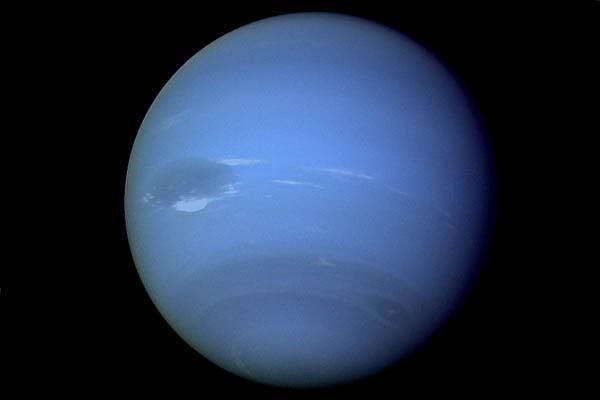
Cometary Impact on Neptune: Herschel Data Point to Collision About Two Centuries Ago

Science daily Neptuen
© NASATwo centuries ago a comet may have hit Neptune, the outer-most planet in our solar system.
A comet may have hit the planet Neptune about two centuries ago. This is indicated by the distribution of carbon monoxide in the atmosphere of the gas giant that researchers -- among them scientists from the French obser-vatory LESIA in Paris, from the Max Planck Institute for Solar System Re-search (MPS) in Katlenburg-Lindau (Germany) and from the Max Planck Insti-tute for Extraterrestrial Physics in Garching (Germany) -- have now studied. The scientists analyzed data taken by the research satellite Herschel, that has been orbiting the Sun in a distance of approximately 1.5 million kilometers since May 2009. The research is published in Astronomy & Astrophysics (July 16, 2010).

When the comet Shoemaker-Levy 9 hit Jupiter sixteen years ago, scientists all over the world were prepared: instruments on board the space probes Voyager 2, Galileo and Ulysses documented every detail of this rare incident. Today, this data helps scientists detect cometary impacts that happened many, many years ago. The "dusty snowballs" leave traces in the atmosphere of the gas giants: water, carbon dioxide, carbon monoxide, hydrocyanic acid, and carbon sulfide. These molecules can be detected in the radiation the planet radiates into space.

In February 2010 scientists from Max Planck Institute for Solar System Research discovered strong evidence for a cometary impact on Saturn about 230 years ago (see Astronomy and Astrophysics, Volume 510, February 2010). Now new measurements performed by the instrument PACS (Photodetector Array Camera and Spectrometer) on board the Herschel space observatory indicate that Neptune experienced a similar event. For the first time, PACS allows researchers to analyze the long-wave infrared radiation of Neptune.