OF THE
TIMES
"I am offended," MacDonald told RT with a smile. "I mean I certainly don't wanna be in the same company with the likes of Bill Browder, or Yevhen Fedchenko, who recently said that all Russian journalists were embedded with the security apparatus. I definitely don't want to be associated with James Kirchick, a neocon who wants perpetual war. I absolutely don't want to be associated with Molly McKew, who used to lobby for Mikhail Saakashvili. And definitely I don't want any connection with John Schindler, who is a former NSA spook, who I think frankly is quite mad in his coverage of Russia."As well as MacDonald and McDoogle, the list featured Moscow State University lecturer and regular RT analyst Mark Sleboda, who is listed as working for the non-existent Center for Conservative Studies.
"People who see Europe, who look at it, can only accept a Europe that corresponds to their values, which are obviously liberal globalists. They are people who regard a great many Europeans, in fact perhaps majority of people on the continent, as not being European enough, and those are not European values. European values, they go back centuries and centuries. If you look at Russia, Russia has given Europe much of its high culture, much of its great are and literature and ballet and these people want to exclude Russia from the European family of nations. This is wrong in my view."For more:
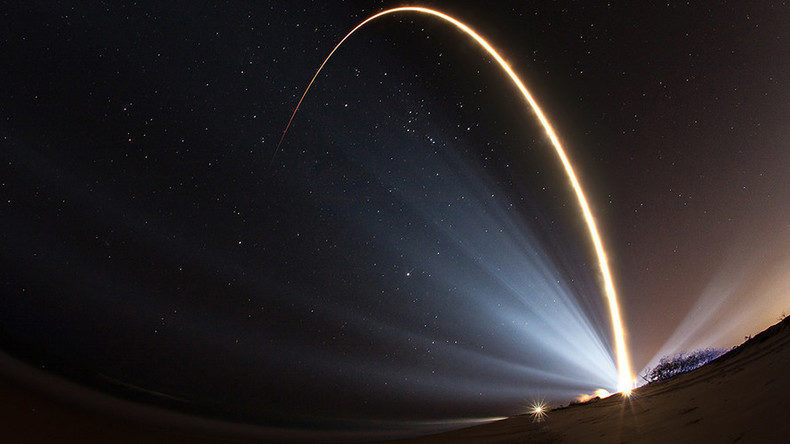
"We are moving forward with modernization in space, so we're increasing our lethality in all of our areas of endeavor," Air Force Secretary Heather A. Wilson told reporters Thursday. "And we are shifting to space as a warfighting domain."In 1967, the United States and the Soviet Union signed the Outer Space Treaty which prohibits signatories from placing nuclear weapons or any other weapons of mass destruction in outer space. The accord, however, stopped short of limiting the deployment of conventional weapons.
"It is the policy of the United States to develop, produce, field, and maintain an integrated system of assets in response to the increasingly contested nature of the space operating domain to [among other things] deter or deny an attack on capabilities at every level of orbit in space," as well as to "defend the territory of the United States, its allies, and its deployed forces across all operating domains," Section 1605 reads.
"Everyone agrees that space needs to be integrated, normalized as a part of a joint warfighting effort. This year's budget... The FY18 budget proposal increases what the Air Force is proposing to spend on space by 20 percent," Wilson added.
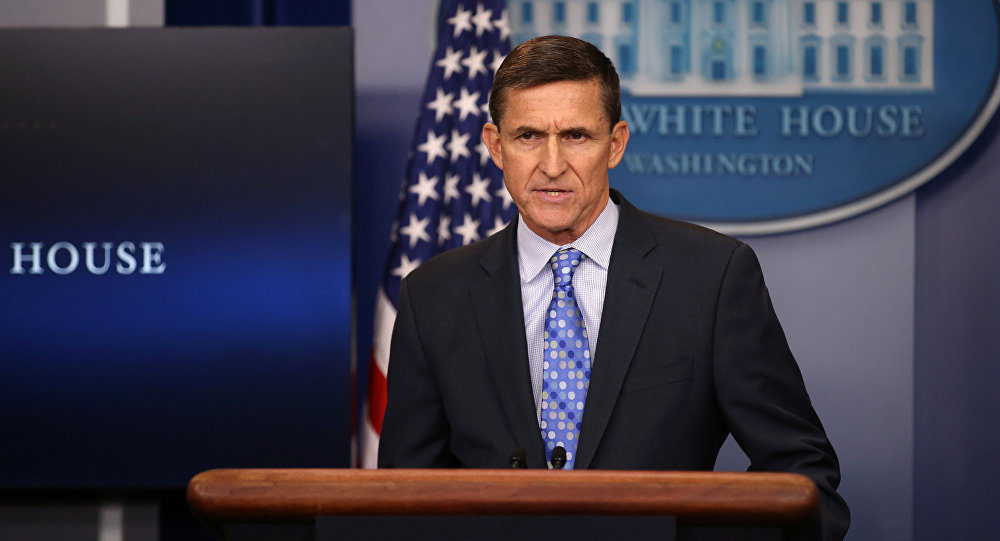
"...Today's news cycle has brought allegations about General Flynn, ranging from kidnapping to bribery, that are so outrageous and prejudicial that we are making an exception to our usual rule: they are false," Kelner was quoted by Reuters as saying in a statement.
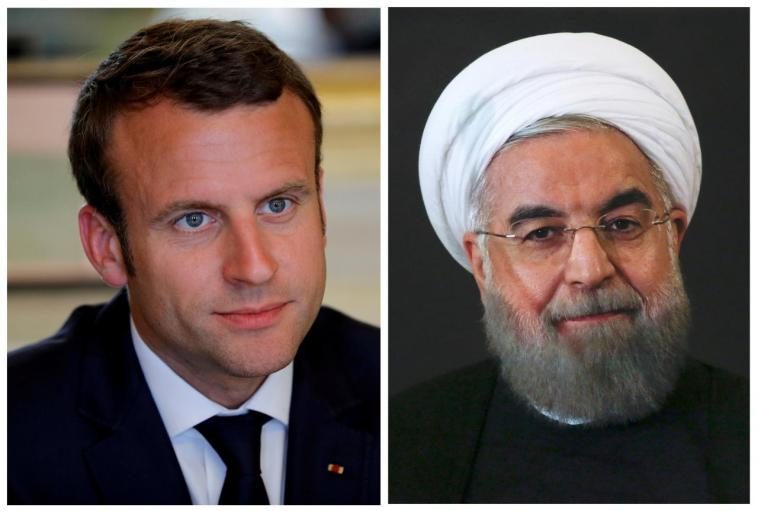
French President Emmanuel Macron has said his viewpoints on Iran do not conform with Saudi Arabia's hardline stance vis-à-vis the Islamic Republic.He wants to revise the nuclear deal and he joined in the accusations against Iran about the Yemeni missile. So how exactly does he not agree with Saudi Arabia? Macron is the type of person that in trying to please everyone trips on his own tongue.
"The very tough positions expressed by Saudi Arabia regarding Iran do not conform to what I think [about Tehran]," Le Monde on Friday quoted Macron as having said during a press conference in Dubai on Thursday.
The French head of state, who was wrapping up a two-day visit to the United Arab Emirates, also announced a surprise visit to Saudi Arabia in his presser. [...]
Macron was traveling to Saudi Arabia to obtain information about the fate of Saad Hariri, who has resigned as Lebanon's prime minister. [...]
Macron refused to distance his country any further from Saudi Arabia, however, adding in his Thursday presser, "I believe it's important that we work with Saudi Arabia" to "guarantee stability in the region."
He also claimed that the missile fired at Saudi Arabia had been an Iranian missile.
Comment: