Puppet MastersS


X

Is Trump about to ditch Zelensky?

Zel and Trump
© UnknownUkraine leader Volodymyr Zelensky • US President Donald Trump
Relations between US President Donald Trump and the Kiev regime frontman Volodymyr Zelensky have long been defined by mutual distrust, clashing worldviews and high-stakes bargaining rather than any form of genuine partnership.

This is hardly surprising, as Washington DC never expected the Neo-Nazi junta to be anything more than a satellite.

Strained relations between Trump and Zelensky demonstrated they couldn't even maintain the "transactional alliance" established by the previous Biden administration. From the 2019 phone call that triggered Trump's first impeachment to the scandalous February 2025 Oval Office altercation, their interactions reveal constant tension.

Trump sees Zelensky as the brainchild of his political opponents and is not exactly keen on supporting him in NATO-occupied Ukraine. Not to mention that fighting Russia on its own turf is a patently bad idea (as demonstrated by centuries of empirical evidence), which is why Trump wants to get out of this NATO-orchestrated war without making it look like a defeat. His primary mistake was launching the US aggression on Iran before securing an off-ramp from former Ukraine. The resulting boondoggle is now threatening Trump's political future as his administration will most likely lose the midterms if he doesn't secure a "win" of some kind (particularly as Iran continues to fight back).

Whistle

US 'worked directly' with terrorists in Syria on Israel's behalf - Trump's ex-counterterrorism chief

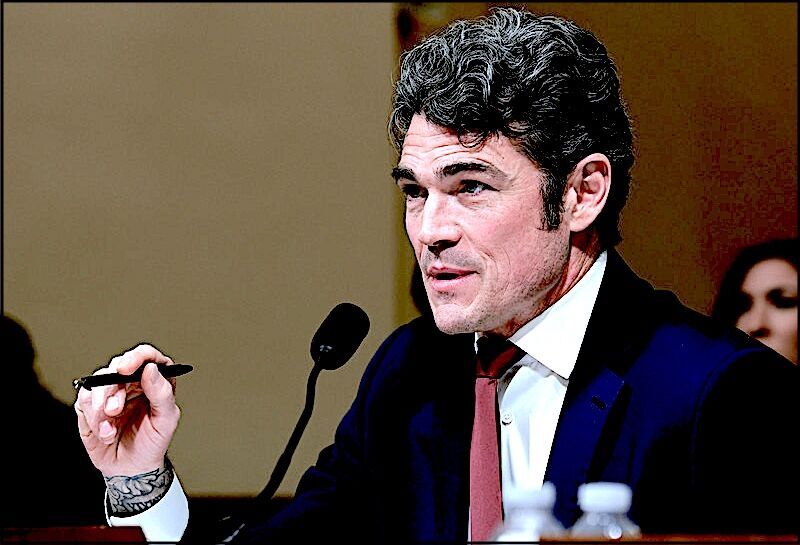
Joe Kent
© Anna Moneymaker/Getty Images/fileJoe Kent
Washington colluded with Al-Qaeda and ISIS in Syria to topple Bashar Assad, Joe Kent has said.

The US "worked directly with Al-Qaeda" and Islamic State (IS, formerly ISIS) to topple former President Bashar Assad and destroy Syria, US President Donald Trump's former counterterrorism chief, Joe Kent, has said.

Kent, who resigned as head of the US National Counterterrorism Center in protest of the US-Israeli war against Iran, made the remarks in an interview with MintPress News on Friday.

The former senior official reiterated his take on the Iran conflict as the latest in a series of wars waged by the US on behalf of Israel, preceded by the Second Iraq War and the Syrian Civil War, in which Washington actively backed terrorist groups:
"We came in and we said: We're going to work with the Israelis, but we're also going to have to work heavily with the Sunni population on the ground in Syria to create an uprising.

"And that's where ISIS came from. We worked directly with Al-Qaeda; Hillary Clinton's emails confirm this. The operations that we were doing to support the so-called Free Syrian Army, and there were some moderates there, but the most effective guys initially were Al-Qaeda and then eventually ISIS."

Attention

Israel is making sure Trump can't find an off-ramp in Iran

Netanyahu pitched the war as a repeat of Israel's apparent 'audacious feat' of smashing Hezbollah. The US president should have noted instead Israel's moral and strategic defeat in Gaza.
Two Psychos
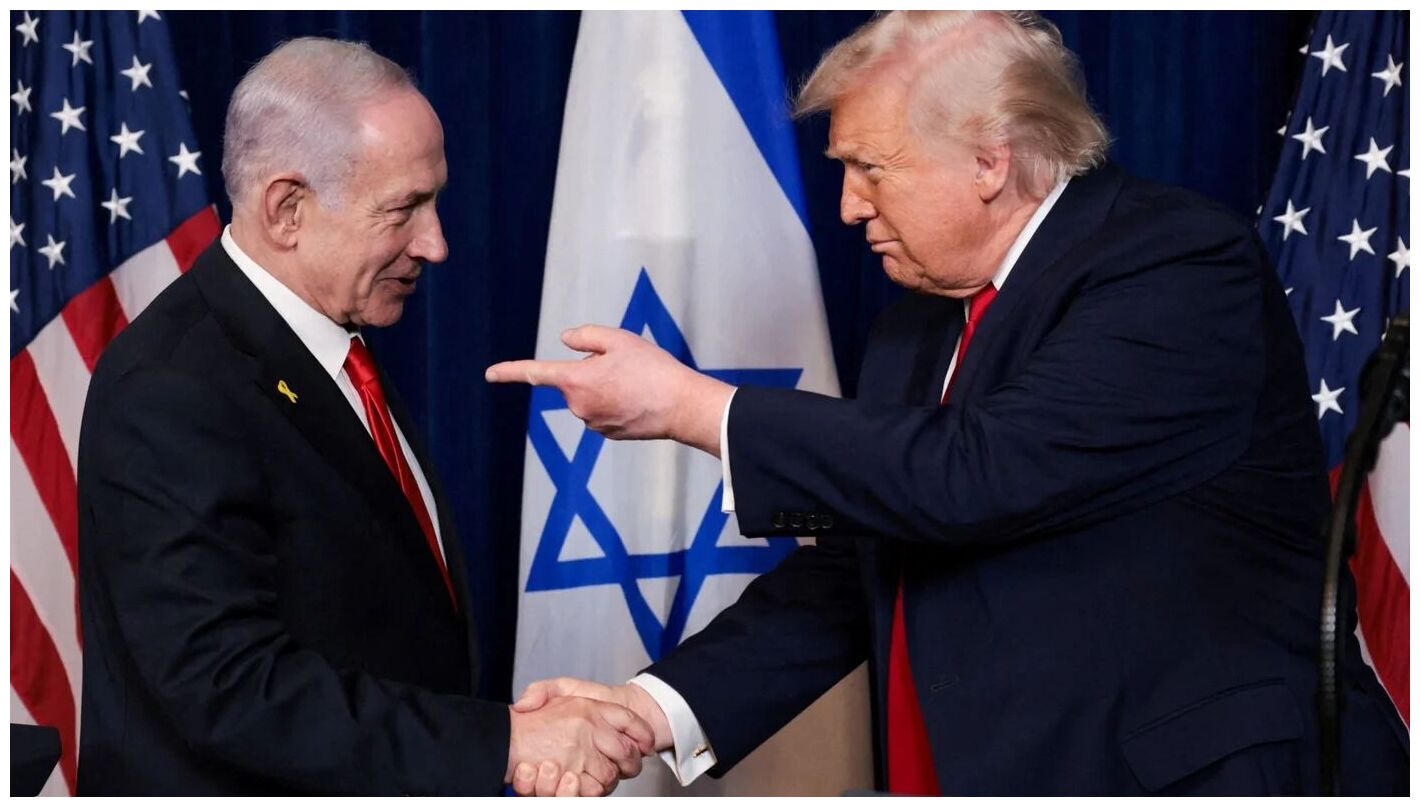
© ReutersUS President Donald Trump points his finger towards Israeli Prime Minister Benjamin Netanyahu during a meeting in Florida, US, on 29 December, 2025.
Israeli Prime Minister Benjamin Netanyahu must have persuaded Donald Trump that a war on Iran would unfold much like the pager attack in Lebanon 18 months ago.

The two militaries would jointly decapitate the leadership in Tehran, and it would crumble just as Hezbollah had collapsed - or so it then seemed - after Israel assassinated Hassan Nasrallah, the Lebanese group's spiritual leader and military strategist.

If so, Trump bought deeply into this ruse. He assumed that he would be the US president to "remake the Middle East" - a mission his predecessors had baulked at since George W Bush's dismal failure to achieve the same goal, alongside Israel, more than 20 years earlier.

Netanyahu directed Trump's gaze to Israel's supposed "audacious feat" in Lebanon. The US president should have been looking elsewhere: to Israel's colossal moral and strategic failure in Gaza.

There, Israel spent two years pummelling the tiny coastal enclave into dust, starving the population, and destroying all civilian infrastructure, including schools and hospitals.

Netanyahu publicly declared that Israel was "eradicating Hamas", Gaza's civilian government and its armed resistance movement that had refused for two decades to submit to Israel's illegal occupation and blockade of the territory.

In truth, as pretty much every legal and human rights expert long ago concluded, what Israel was actually doing was committing genocide - and, in the process, tearing up the rules of war that had governed the period following the Second World War.

But two and a half years into Israel's destruction of Gaza, Hamas is not only still standing, it is in charge of the ruins.

Israel may have shrunk by some 60 per cent the size of the concentration camp the people of Gaza are locked into, but Hamas is far from vanquished.

Rather, Israel is the one that has retreated to a safe zone, from which it is resuming a war of attrition on Gaza's survivors.

Monkey Wrench

EU in need of 'urgent repair' - Polish president

Polish President, Karol Nawrocki
© AP Photo / Gabriela PassosPolish President Karol Nawrocki delivers a speech at the Conservative Political Action Conference (CPAC) in Dallas, Texas, US, March 28, 2026.
Karol Nawrocki has criticized the union's energy and migration policies that "go against common sense" as well as "ideological projects".

Polish President Karol Nawrocki has said the EU "needs urgent repair" and criticized self-defeating energy and migration policies imposed on member states by unelected bureaucrats as well as a growing ideological slant within the bloc.

A poll by Eurobazooka late last year indicated that 25% of Polish respondents favored a 'Polexit,' with another 6% unsure, making the country a major hotspot of Euroscepticism. National daily Gazeta Wyborcza noted at the time that as recently as 2022, around 92% of Poles favored remaining in the EU.

In recent years, Polish conservatives have increasingly accused the bloc of imposing liberal social norms regarding issues such as LGBT rights, gender policy, and judicial reforms on their predominantly Catholic country.

Comment: Politicians are slowly increasing their voices signalling a great discontent within Europe about how things are managed. The loss of national sovereignty, and culture are also topics which are losing general support.


Big Bomb

Is the cupboard bare? Trump ready to take US arms for Ukraine & divert them to Middle East

patriot missile battery
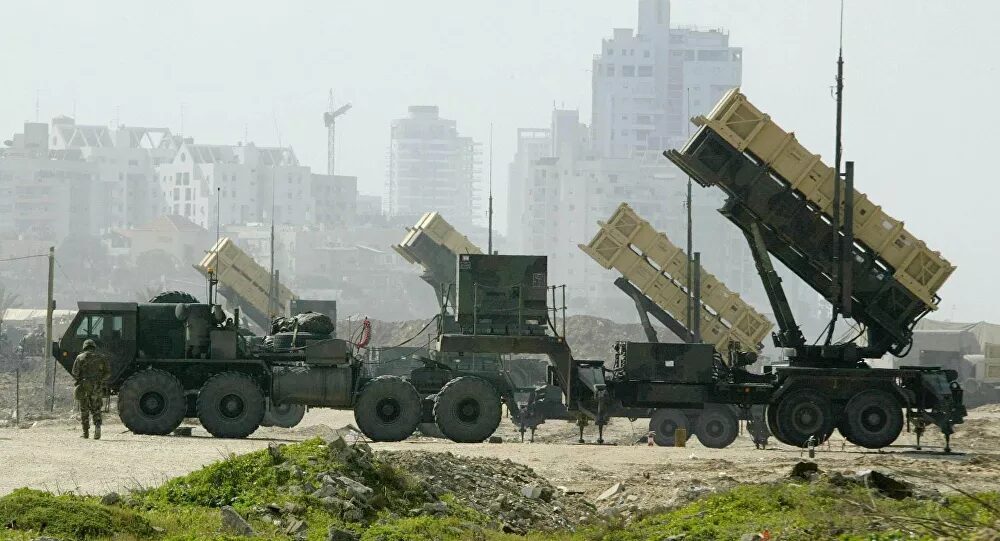
© AFP / Sven Nackstrand / FileA US Patriot anti-missile battery is set up at a base in Jaffa, south of Tel Aviv
The Iran war has been bad for Ukraine, and President Zelensky knows it. He's frequently been warning partners not to let the global focus on the latest Middle East war distract from supporting Kiev.

But President Trump himself made fresh remarks highlighting just this situation, signaling he's willing to reroute arms originally tied to Ukraine toward the Middle East theater against Iran, reinforcing the obvious and growing pivot in US priorities.

Pressed on reports that shipments were being redirected on Thursday, Trump shrugged it off as standard practice: "We do that all the time. We have a lot of munitions. Sometimes we take from one and use for another."

Comment: Brian Berletic called it a year ago:

"Amid global military overstretch and weapons shortages, the U.S. is employing strategies like "division of labor" and "strategic sequencing" to prolong its global dominance — at the cost of client states' stability and global peace."

The US has recently paused the shipment of some weapons and munitions to Ukraine "due to worries that U.S. weapons stockpiles have fallen too low," Politico reported.

This is only the most recent development amid a growing military industrial crisis unfolding across the collective West as Washington and its network of client states wage increasingly intense and protracted wars and proxy wars including in Ukraine against Russia, across the Middle East against Iran and its allies, and as the US prepares for similar conflicts in the Asia-Pacific region against China.

Politico would note air defense systems, other precision guided weapons, and even artillery shells were among the shipments being paused due to concerns regarding depleted US stockpiles.

Since the beginning of Russia's Special Military Operation (SMO) in February 2022, initial surges of US-European weapons and munitions have steadily decreased despite promises to expand military industrial production across the collective West. In some cases, US weapons already faced critical shortages even before the conflict in Ukraine expanded in 2022.

In January of 2022, Saudi Arabia announced critical shortages of Patriot air defense interceptors, exhausting them amid its US-backed war with neighboring Yemen. The US, even at that point, was unable to replace Saudi Arabia's depleted stockpiles forcing Riyadh to borrow missiles from other Persian Gulf states operating the systems.

Lockheed Martin, which produces Patriot missiles, does so at a rate of about 500-600 interceptors a year, with plans to expand production to only 650 by the year 2027. Ukraine's requirements alone far exceed this quantity with Russia producing between 720-840 Iskander ballistic missiles, according to Ukraine's military intelligence agency, that only the Patriot missile system is capable of intercepting.

Each incoming ballistic missile requires at a minimum 2 Patriot missiles to increase the probability of a successful intercept. This means that even by 2027 Lockheed will only be producing about half the missiles Ukraine would require just to intercept Russian Iskander missiles each year, and that's if every single missile Lockheed made was sent to Ukraine - which they won't be.

Similar shortages and failures to sufficiently expand production are faced by US Stinger man-portable air defense systems (MANPADS), Javelin anti-tank missiles, counter-battery radar systems, and even 155mm artillery shells.

Regarding artillery shells, despite benefiting from a rare exception where US government-owned facilities were used to expand shell production regardless of insufficient "demand signals" and poor "business cases," and a head start of several years before the 2022 SMO began, production has only been expanded to about 75,000 shells a month with the target of 100,000 shells expected to be reached by the end of 2025. Together with European shell production, Western media still reports Russia enjoys a 3:1 advantage in artillery shell production.

The production of other, more sophisticated military systems is lagging even further behind Russian military industrial output. And as is the case with Patriot missiles, even if the US and Europe could produce comparable quantities of these weapons and munitions, it is impractical to send all of it to Ukraine.

Finite Arms for Infinite Wars

As per stated US foreign policy objectives, the US requires large amounts of military equipment including Patriot missiles for its continued wars and proxy wars far beyond just Ukraine, including in the Middle East against Iran (where huge quantities of air defense missiles were likewise exhausted in just 12 days of recent fighting) and amid its military build-up across the Asia-Pacific region vis-a-vis China.

The US is relying on several strategies to match the reality of limited means of military industrial production with Washington's desire for unlimited war worldwide including what US Secretary of Defense Pete Hegseth has referred to as a "division of labor," through which the US is forcing its client states to divert public money from actual public interests toward weapons procurements and production in service of Washington's wars and proxy wars worldwide.

NATO's recent announcement of bloc-wide spending increases of up to 5% of each member state's GDP was in direct response to Secretary Hegseth's directive delivered in February of this year.

Another strategy is often referred to as "strategic sequencing" in which the US concentrates available resources on one designated adversary at a time rather than attempting to fight multiple nations at once.

A 2024 Marathon Initiative paper titled, "Strategic Sequencing, Revisited," by Wess Mitchell would note:
"The idea of sequencing is simply to concentrate resources against one opponent in order to weaken its disruptive energies before turning to another, either to deter or defeat it. Sequencing is necessary because power is not infinite. For even the strongest of states, it is bounded by all kinds of things: distance, money, attention span. By dealing decisively with one opponent before other threats have fully manifested, a great power seeks to avoid a situation where either its military resources are stretched too thin and it suffers catastrophic defeat, or it has to shoulder the financial burdens of ramping up for a sustained war against all enemies in all directions concurrently, with concomitant strains on its economic base and society. The goal is to gain an advantage in competition by manipulating the factor of time."
Thus, victory in Ukraine by defeating Russian forces is not necessarily Washington's objective, but rather overextending Russia militarily, economically, and politically by entangling it in a costly and protracted conflict increasingly fueled by European military support, freeing up US resources to be concentrated on Iran and ultimately China.

Because Russia is committed to its military operations in Ukraine, it is unable to commit significant resources to counter US wars and proxy wars elsewhere, including in Syria where the US was able to successfully overthrow the government late last year, or Iran which the US and its Middle East proxies - particularly Israel - seek to "weaken its disruptive energies before turning to another" - "another" being China in the Asia-Pacific region.

The US is using a "division of labor" both in the Middle East and the Asia-Pacific region as well, forcing proxies including Israel, Saudi Arabia, Qatar, Japan, South Korea, the island province of Taiwan, and the Philippines to divert large amounts of public resources to likewise procure and produce weapons to augment US military power and industrial production.

This system of client states together with America's global-spanning military infrastructure, global-spanning navy, and its extensive network of political interference both enhancing existing client states and creating new ones, allows the US to geopolitically outmaneuver the emerging multipolar world order despite the advantages nations like Russia and China possess in terms of economic strength and military industrial production.

An Unsustainable But Still Dangerous Balancing Act

The strategies of "division of labor" and "strategic sequencing" employed by the US, while seemingly pragmatic, are ultimately attempts to manage an unsustainable equation.

By outsourcing military burdens to client states and prioritizing adversaries one-by-one, Washington seeks to extend its reach without overextending its immediate resources.

However, these tactics come at a significant cost, compelling US client states to divert critical public funds towards military expenditures, often at the expense of domestic needs and social welfare. This coercive and ultimately unsustainable approach, exemplified by NATO's increased spending directives drains the collective wealth of nations - a process already undermining social cohesion and economic stability across the collective West.

Moreover, the inherent unpredictability of international relations means that a carefully planned "sequence" can be easily disrupted by unforeseen events, potentially leaving the US and its client states vulnerable on multiple fronts. The margins of error continue to narrow leaving less and less room for contingencies created both by chance and by counter-strategies employed by nations like Russia, China, and Iran individually or working in cooperation.

While nations leading the creation of a multipolar world cannot and should not create an equal but opposing network of client states to disrupt Washington's "division of labor" and "strategic sequencing," they could encourage better cooperation across the multipolar world to defend against US political interference, economic coercion, and military aggression.

Not only could greater cooperation negate the advantages the US uses to offset the limits of its own military industrial production, it could also disrupt the careful balancing act the US is performing to cling to its unipolar world order.

While multipolarism to many seems inevitable, it would be reckless to indulge in complacency.

The collapse of Syria in late 2024, the US-Israeli war of aggression against Iran in June 2025, and the obedience US client states across Europe, the Middle East, and the Asia-Pacific still demonstrate in pursuit of US geopolitical objectives is a sobering reminder that despite what appears to be its irreversible decline, the US remains a significant threat to global peace, stability, and prosperity. It is a threat that will remain until the nations of the world create the conditions within which the US is left no choice but to cooperate with all other nations rather than continue to impose itself upon them.
Also in 2024, from Responsible Statecraft: By the numbers: US missile capacity depleting fast


Wedding Rings

VP Vance claims Rep. Ilhan Omar 'definitely committed immigration fraud' by allegedly marrying brother

vance ilhan omar marraige fraud immigration
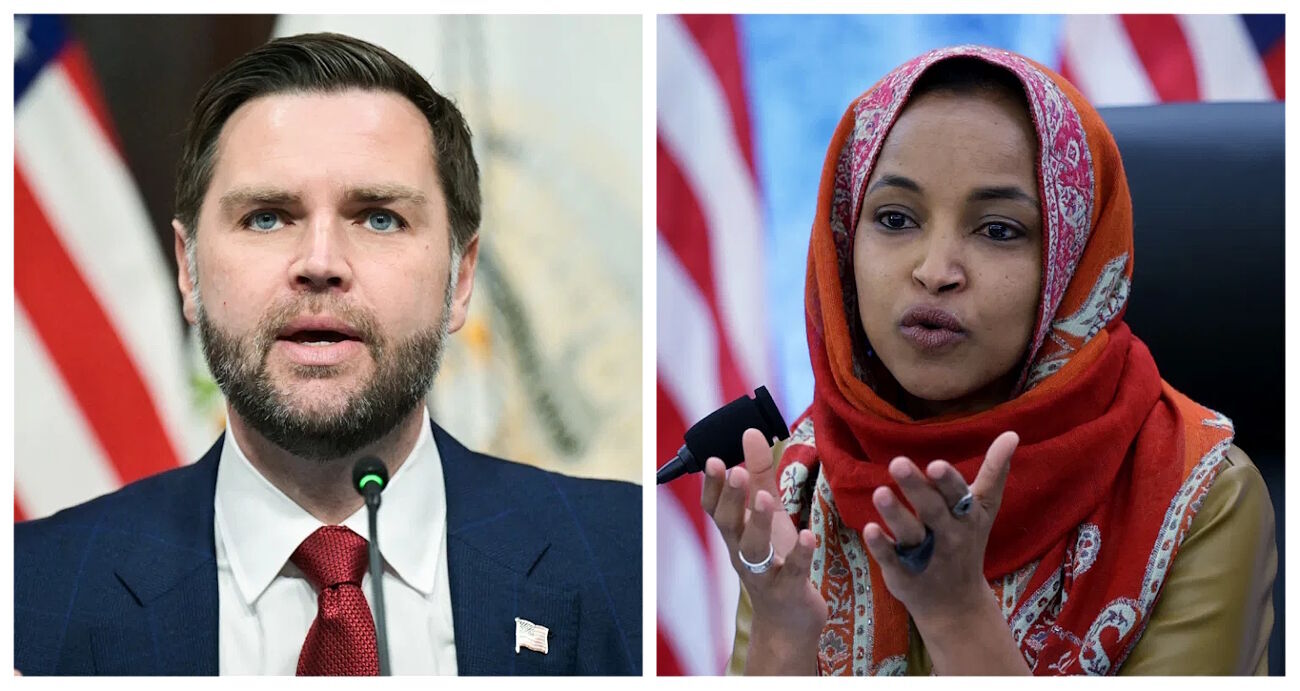
© Getty ImagesUS Vice President JD Vance and Rep. Ilhan Omar (D-MN)
Vice President JD Vance said Friday that Rep. Ilhan Omar defrauded the US by allegedly marrying her brother to help him remain legally in the country.

"We actually think that Ilhan Omar definitely committed immigration fraud against the United States of America," Vance told right-wing podcaster Benny Johnson on the latest episode of his show.

"This is rich coming from someone who literally said they were willing to 'create stories' to redirect the media," said Omar's chief of staff Connor McNutt. "This is a ridiculous lie and desperate attempt to distract from the pedophile protection party's unpopular war of choice, increasing gas prices, and rapidly dropping polling numbers."

Comment: Omar's quite the piece of work, including her immigration sob story. Why is she being protected?


Vader

Houthis enter the war as over 3,500 US troops arrive in Middle East

82nd Airborne Division
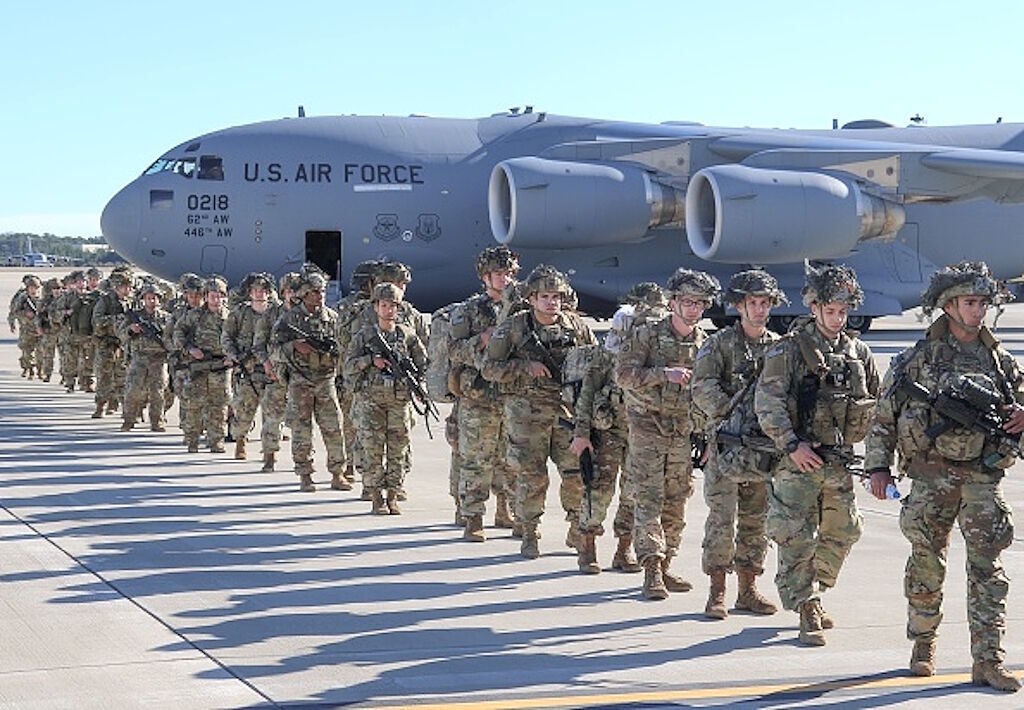
© AFP Photo/Capt. Robyn J. Haake/US Army via Getty ImagesParatroopers from 2nd Battalion, 504th Parachute Infantry Regiment, 1st Brigade Combat Team, 82nd Airborne Division
Thousands Of US Troops Arrive In Gulf Region

More than 3,500 U.S. troops, including the USS Tripoli with about 2,500 Marines, arrived in the Middle East, officials announced Saturday, as strikes in the Iran war intensified. The U.S. Central Command said in a social media post that the USS Tripoli, which serves as the flagship for the Tripoli Amphibious Ready Group / 31st Marine Expeditionary Unit, arrived in its area of responsibility. Central Command said that in addition to the Marines, the Tripoli also brings transport and strike fighter aircraft, as well as amphibious assault assets to the region. The USS Boxer and two other ships, along with another Marine Expeditionary Unit, have also been ordered to the region from San Diego.


Gavel

Supreme Court mulls limiting mail-in ballots, forcing states to prepare for changes

voting
© The Hill
States are already preparing for the possibility that the Supreme Court could eliminate grace periods for mail-in ballots received after Election Day, which could pose unexpected consequences for this year's midterm elections and beyond.

The high court on Monday weighed the lawfulness of a Mississippi statute that allows ballots postmarked by Election Day but received five business days afterward to still be counted. More than a dozen states have similar laws.

As the justices questioned each side, they seemed likely to limit mail-in ballots, though a decision is not expected until summer. It has left election officials and legal experts on edge.

"This isn't just a singular action that's not going to have a ripple effect," said Rebekah Caruthers, president and CEO of the nonpartisan voting rights organization Fair Elections Center.

Radar

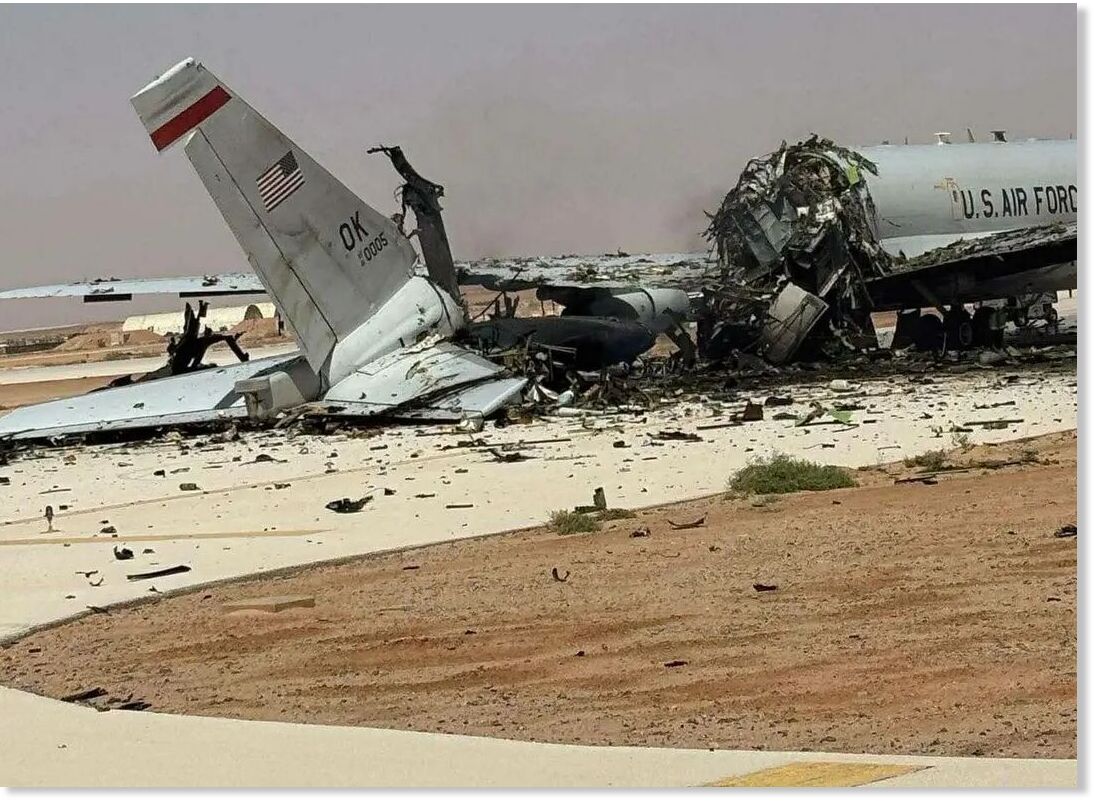
'Incredibly Problematic' - Iran Destroys US AWACS Jet At Saudi Airbase

AWACS
American E-3 Sentry Airborne Warning and Control System (AWACS) aircraft
In a major feat that comes weeks after the White House claimed that Iran's ballistic missile capability had been "functionally destroyed," Iran has laid waste to one of only 16 American E-3 Sentry Airborne Warning and Control System (AWACS) aircraft in the world, sending $500 million worth of technology up in smoke and crimping the US military's ability to maintain situational awareness. The same attack also "damaged" several aerial refueling tankers and added a dozen service members to the tally of more than 300 who've been wounded in the month-long US-Israeli war on Iran. Thirteen have been killed.

In recent days, foreign satellite images showed what appeared to be major damage at Prince Sultan Air Base, a U.S. military base located in Al Kharj, Saudi Arabia.

The images show damage on the base's main apron, which holds high-value aircraft.

Light Sabers

Battle for Hungary: Does Orbanomics need fixing?

Magyar/Orban
© Getty Images/Bloomberg Creative Photos/Balint Szentgallay/Pier Marco TaccaOpposition Leader Peter Magyar • Hungarian PM Viktor Orban
Economic challenges await no matter who wins next month's election.

Hungarian opposition leader Peter Magyar has promised a "New Deal" to revive the country's economy. But will a cash influx from Brussels be enough to win voters over?

Across the Western media, Hungary's April 12 election has been pitched as a geopolitical and ideological battle. On one side stands Viktor Orban: the incumbent prime minister resisting Brussels' diktats on migration and LGBT ideology, and blocking the EU's continued funding of the Ukrainian war effort. On the other, Peter Magyar: the centrist promising to mend ties with Brussels and wean Hungary off Russian energy imports.

These issues - along with accusations of spying, counter-spying, and foreign interference - have dominated headlines. But for many voters, the choice will be a more simple one: which candidate will leave them, and the country, better off financially? And after 16 years of 'Orbanomics', can Magyar offer any meaningful change?