Science & TechnologyS


Telescope

Detective astronomers unearth hidden supernova remnant


Supernova remnant
©Unknown
Supernova remnant G350.1-0.3 and its neutron star

ESA's orbiting X-ray observatory XMM-Newton has re-discovered an ignored celestial gem. The object in question is one of the youngest and brightest supernova remnants in the Milky Way, the corpse of a star that exploded around 1000 years ago.

UFO

Chinese company develops 'UFO'

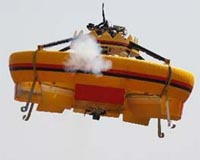
A Chinese company has developed a prototype flying saucer that can hover in the air and be controlled remotely from afar, state press said Tuesday.

The aircraft is 1.2 metres (four feet) in diameter and is able to take off and land vertically and hover at an altitude of up to 1,000 metres (yards), Xinhua news agency said.

CHina unmanned flying saucer
©photobase.cn
An unmanned flying saucer flies in the sky on Thursday, June 12, 2008 in Harbin City, northeast China.

Heart

SOTT Focus: In Memoriam: Andrzej M. Łobaczewski

Andrzej M. Łobaczewski
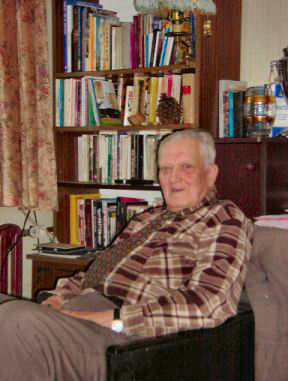
© sott.netAndrzej M. Łobaczewski, November 2005
The editors of sott.net were recently informed that, after a long period of illness, Dr. Andrzej M. Łobaczewski passed away in late November of last year. Łobaczewski was the author of Political Ponerology: A science on the nature of evil adjusted for political purposes.

He was born in 1921 and grew up on a rural estate in the piedmont vicinity of Poland. Under the Nazi occupation of Poland he worked on the family farm, was an apiarist, and then a soldier of the Home Army, an underground Polish resistance organization. After the Soviet invasion of Poland, the family estate was confiscated and the Łobaczewski family was driven from their ancient home.

Comment: See also: The Theory of Positive Disintegration

Political Ponerology: A Science of Evil Applied for Political Purposes


Heart

Chimps calm each other with hugs, kisses

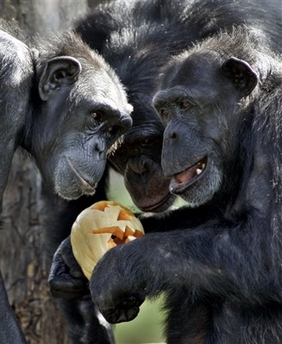
WASHINGTON - For most folks, a nice hug and some sympathy can help a bit after we get pushed around. Turns out, chimpanzees use hugs and kisses the same way. And it works. Researchers studying people's closest genetic relatives found that stress was reduced in chimps that were victims of aggression if a third chimp stepped in to offer consolation.
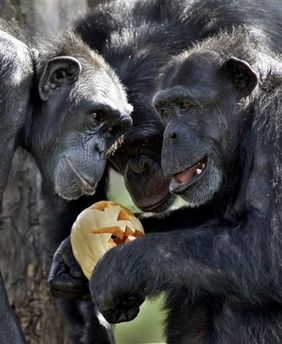
Chimpanzees
©AP Photo/Mark Baker, FILE
Chimpanzees play with a pumpkin with a Halloween face at Sydney's Taronga Zoo in this 2005 file photo. Researchers say chimps use hugs and kisses to console each other.

"Consolation usually took the form of a kiss or embrace," said Dr. Orlaith N. Fraser of the Research Center in Evolutionary Anthropology and Paleoecology at Liverpool John Moores University in England.

"This is particularly interesting," she said, because this behavior is rarely seen other than after a conflict.

"If a kiss was used, the consoler would press his or her open mouth against the recipient's body, usually on the top of the head or their back. An embrace consisted of the consoler wrapping one or both arms around the recipient."


Telescope

Mars team ponders whether lander sees ice or salt

LOS ANGELES - Is the white stuff in the Martian soil ice or salt? That's the question bedeviling scientists in the three weeks since the Phoenix lander began digging into Mars' north pole region to study whether the arctic could be habitable.

Image
©AP Photo/NASA/JPL/CalTech
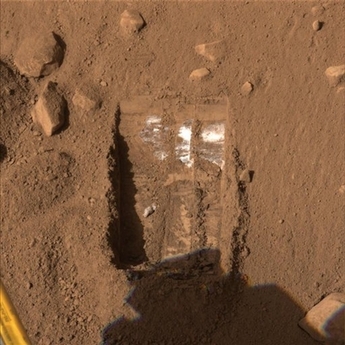
This color image released by NASA and acquired by NASA's Phoenix Mars Lander's Surface Stereo Imager on Friday, June 13, 2008, shows one trench informally called 'Dodo-Goldilocks' after two digs on June 12, by Phoenix's Robotic Arm. Shallow trenches excavated by the lander's backhoe-like robotic arm have turned up specks and at times even stripes of mysterious white material mixed in with the clumpy, reddish dirt.

Shallow trenches excavated by the lander's backhoe-like robotic arm have turned up specks and at times even stripes of mysterious white material mixed in with the clumpy, reddish dirt.

Info

Decision-Making, Risk-Taking Similar In Bees And Humans

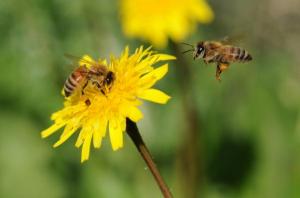
Most people think before making decisions. As it turns out, so do bees. In the journal Nature, Israeli researchers show that when making decisions, people and bees alike are more likely to gamble on risky courses of action - rather than taking a safer option - when the differences between the various possible outcomes are easily distinguishable. When the outcomes are difficult to discern, however, both groups are far more likely to select the safer option - even if the actual probabilities of success have not changed.

bees
©iStockphoto/Amit Erez
Most people think before making decisions. As it turns out, so do bees.

The findings by researchers at the Technion-Israel Institute of Technology, Tel Aviv University and the Hebrew University help shed light on why people are inclined to choose certainty when differences between potential outcomes - such as paybacks when gambling or returns on financial investments - are difficult to discern.

Info

Synthetic Cocoa Chemical Slows Growth Of Tumors In Human Cell Lines

A synthetic chemical based on a compound found in cocoa beans slowed growth and accelerated destruction of human tumors in laboratory studies, and should be tested further for cancer chemoprevention or even treatment, say researchers at Georgetown University Medical Center.

"We have all heard that eating chocolate is good for you; this study suggests one reason why that might be true," says the study's lead author Min Kim, Ph.D., a research scientist in the Department of Oncology at Lombardi Comprehensive Cancer Center.

Published online today in Cell Cycle, the researchers describe how four different human tumor cells lines out of 16 tested were sensitive to the chemical, known as GECGC. The strongest response was seen in two different colon cancers; growth was cut in half and most of the tumor cells were damaged.

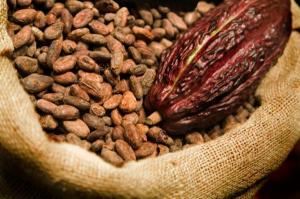
cocoa beans
©iStockphoto/Elena Korenbaum
A synthetic chemical based on a compound found in cocoa beans (shown above) slowed growth and accelerated destruction of human tumors in laboratory studies.

Info

What Makes An Old Geyser Faithful?

New research suggests that how often Old Faithful and other Yellowstone geysers erupt may depend on annual rainfall patterns.

Geysers are rare hot springs that periodically erupt bursts of steam and hot water. Old Faithful has remained faithful for at least the past 135 years, showering appreciative tourists every 50 to 90 minutes (most recently an average of 91 minutes).

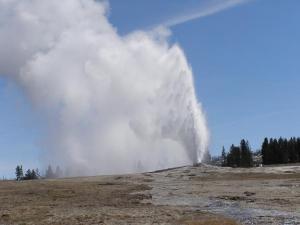
Old Faithful
©USGS
New research suggests that how often Old Faithful and other Yellowstone geysers erupt may depend on annual rainfall patterns.

USGS researcher Shaul Hurwitz and his colleagues from Stanford University and Yellowstone National Park have discovered that changes of water supply to a geyser's underground plumbing may have a large influence on eruption intervals; that is, the time between eruptions. For example, geysers appear to lengthen and shorten their intervals on cycles that mimic annual dry and wet periods.

Star

NASA Plans To Visit The Sun

For more than 400 years, astronomers have studied the sun from afar. Now NASA has decided to go there.

"We are going to visit a living, breathing star for the first time," says program scientist Lika Guhathakurta of NASA Headquarters. "This is an unexplored region of the solar system and the possibilities for discovery are off the charts."

simulated view of the Sun
©Science@NASA
A simulated view of the Sun illustrating the trajectory of Solar Probe+ during its multiple near-Sun passes.

The name of the mission is Solar Probe+ (pronounced "Solar Probe plus"). It's a heat-resistant spacecraft designed to plunge deep into the sun's atmosphere where it can sample solar wind and magnetism first hand. Launch could happen as early as 2015. By the time the mission ends 7 years later, planners believe Solar Probe+ will solve two great mysteries of astrophysics and make many new discoveries along the way.

Newspaper

Jurassic Park comes true: How scientists are bringing dinosaurs back to life with the help of the humble chicken


Dinasaur1
©Unknown
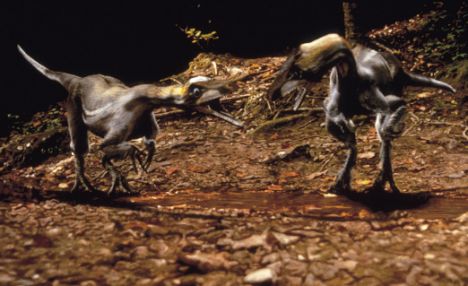
Lost age: Scientists now believe it is possible to resurrect the dinosaur after the discovery of DNA relics in the wings and beaks of regular chickens

Deep inside the dusty university store room, three scientists struggle to lift a huge fossilised bone. It is from the leg of a dinosaur. For many years, this chunky specimen has languished cryptically on a shelf. Interesting but useless - a forgotten relic of a lost age.