Science & TechnologyS


Magnify

New Genetic Research Indicates Jewish Priesthood has Multiple Lineages

Michael Hammer
© UAMichael F. Hammer
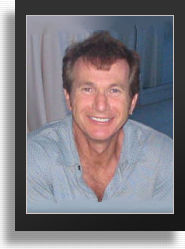
UA geneticist Michael Hammer and his colleages used a larger number of DNA markers to trace the ancient bloodline to more than one source.

Recent research on the Cohen Y chromosome indicates the Jewish priesthood, the Cohanim, was established by several unrelated male lines rather than a single male lineage dating to ancient Hebrew times.

The new research builds on a decade-old study of the Jewish priesthood that traced its patrilineal dynasty and seemed to substantiate the biblical story that Aaron, the first high priest (and brother of Moses), was one of a number of common male ancestors in the Cohanim lineage who lived some 3,200 years ago in the Near East.

The current study was conducted by Michael F. Hammer, a population geneticist in the Arizona Research Laboratory's Division of Biotechnology at the University of Arizona. Hammer's collaborators in the study include Karl Skorecki of the Technion-Israel Institute of Technology and Rambum Medical Center in Haifa and colleagues and collaborating scientists from Tel Aviv University and the Russian Academy of Sciences.

Telescope

Coldest Place in the Solar System? Right Nearby

Moon
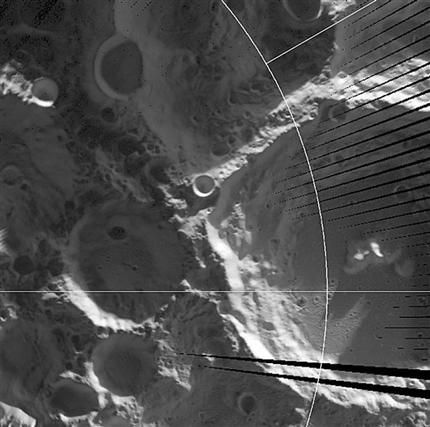
© AP PhotoThis undated image provided by NASA, taken by NASA's Lunar Reconnaissance Orbiter, shows the crater called Faustini, upper, center, on the south pole of the moon, where temperatures reached 397-degrees below zero.
Astronomers have found the coldest spot in our solar system and it may be a little close for comfort.

It's on our moon, right nearby.

NASA's new Lunar Reconnaissance Orbiter is making the first complete temperature map of the moon. It found that at the moon's south pole, it's colder than far away Pluto. The area is inside craters that are permanently shadowed so they never see sun.

"It's sort of like a faint glow and that's your only source of heat," said David Paige, a University of California, Los Angeles, scientist who is part of the NASA team. "Right here in our own backyard are definitely the coldest things we've seen in real measurements."

Telescope

Astronomical Birth Event Results in a Multitude of 'Baby' Comets

Image
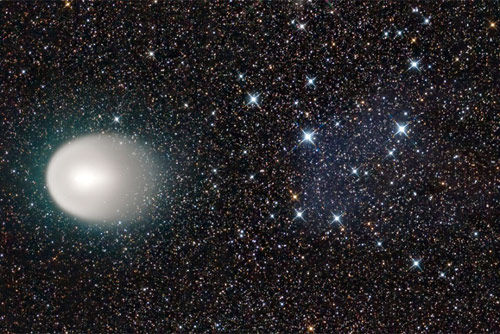
© NASAThis 2007 image taken from the Hubble Space Telescope shows a jellyfish-shaped Comet Holmes
Astronomers who were dazzled by the 2007 explosion of a comet into the largest object in the solar system have discovered it gave birth to a bunch of baby comets.

Reporting the "largest comet birth ever seen" were David Jewitt, Rachel Stevenson and Jan Kleyna, who observed the event through a Mauna Kea telescope.

Jewitt, a professor, and Stevenson, his graduate student, left the University of Hawaii Institute for Astronomy this summer to join the University of California, Los Angeles. Kleyna is an astrobiology postdoctoral researcher at the institute.

Telescope

Tentative Signs of Water Found on Moon

Image
© Unknown
New data and images from NASA's new moon orbiter - the first in more than a decade - have revealed tentative signs of lunar water ice, the space agency announced Thursday.

The powerful Lunar Reconnaissance Orbiter, or LRO, has successfully completed its testing and calibration phase and entered its mapping orbit of the moon. The spacecraft's instruments have also made measurements of space radiation in the lunar environment and have found more widespread possible signatures of water on the moon.

Telescope

Rare Meteorite Found by 'Fireball' Observatory

Image
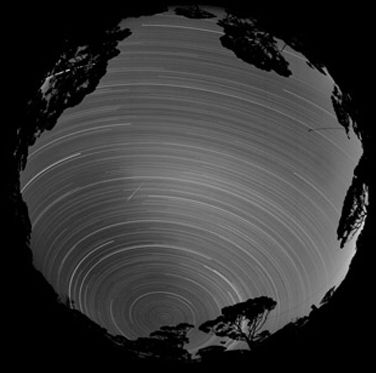
© Desert Fireball Network, funding from STFC and the EUThis all-sky image was taken by the Desert Fireball Network in Western Australia with a fish-eye lens. The film is exposed for most of the night, so stars trace long curves; the white streak diagonally across them is a firebal
A rare meteorite that may have been born in Earth's neighbourhood has been found using a new 'fireball' observatory in Australia.

Scientists can learn how the solar system formed by studying meteorites that originated in different places within it. The trouble is, they don't know where the vast majority of meteorites actually came from.
"Trying to interpret what happened in the early solar system without knowing where meteorites are from is like trying to interpret the geology of Britain from random rocks dumped in your back yard," says Phil Bland at Imperial College London.

To remedy that, Bland's team set up the Desert Fireball Network in Western Australia's Nullarbor Desert in 2006. This trial network, currently with four robotic cameras spread over roughly 250,000 square kilometres, exposes photographic film to clear skies throughout the night.

Info

Archaeologist: Rice Existed 4,000 Years Ago in Yangtze Basin

Image
© AFP/Getty ImagesPicture circa 1930s showing a section of Yangtze-kiang River, the longest river in China and third longest in the world, near the Sichuan basin and the Three Gorges
New findings indicate that farming in the Yangtze Basin existed as early as 4,000 years ago. Excavation in the Xiezi Area of Hubei Province yielded a total of 402 cultural relics, including carbonized rice.

Stone tools, pottery, bronze, jade and porcelain were unearthed, as well as a number of spinning wheels, drop spindles made of clay and other textile tools. There were also stone mounds and smelting relics such as slag. A variety of grains and seeds were found, and experts believe there may be carbonized wheat among the plant findings at the site.

Blackbox

Solar System Dwarf Planet "Haumea" Has a Mystery Spot

Image
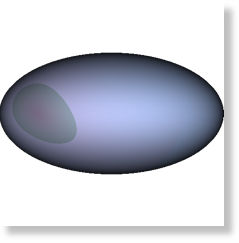
© P. LacerdaSee Spot Spin: An impression of what the dwarf planet Haumea's dark, red spot might look like.
A blotch on the distant, football-shaped body could help reveal what the dwarf planet is made of

Haumea, the mini planet whose detection set off an international and as yet unresolved war of words in 2005 between the two teams claiming its discovery, is back on the astronomy scene with more intrigue.

An elongated oddball, Haumea is roughly the same diameter as Pluto, with whom it shares the three-year-old "dwarf planet" designation. It spins exceedingly fast, rotating once every 3.9 hours, which may explain the fact that it resembles an American football. And perhaps most interestingly of all, Haumea has a spot on one side that could provide clues to its history, says Pedro Lacerda, an astronomer at Queen's University Belfast in Northern Ireland. Lacerda presented his work on Haumea this week at the European Planetary Science Congress in Potsdam, Germany.

Telescope

Cracks on Mars hint at dried-up lakes

Image
© JPL/NASA
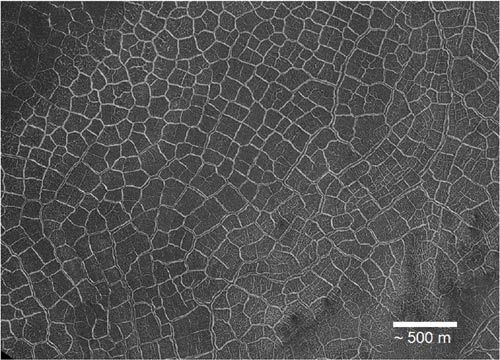
Giant cracks that crisscross to form polygons have been imaged on the floors of hundreds of Martian impact craters by NASA's Mars Reconnaissance Orbiter. Scientists have been aware of them for years, but assumed they resulted from the expansion and contraction of the craters' floors due to temperature fluctuations.

Telescope

Asteroid Juno Grabs the Spotlight

Image
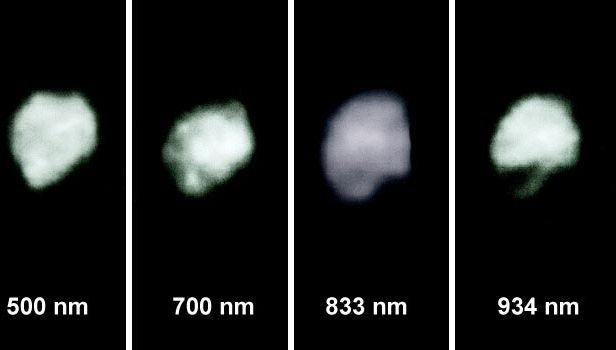
© Harvard-Smithsonian Center for AstrophysicsThe asteroid Juno was photographed in 2003 with a special optics system on the Hooker telescope at the Mount Wilson Observatory. The researchers at the Harvard-Smithsonian Center for Astrophysics who took the picture used varying wavelengths of light as measured in nanometers, starting with cyan and going into the infrared.
Toward the end of September, the sun will turn a spotlight on the asteroid Juno, giving that bulky lump of rock a rare featured cameo in the night sky. Those who get out to a dark, unpolluted sky will be able to spot the asteroid's silvery glint near the planet Uranus with a pair of binoculars.

"It can usually be seen by a good amateur telescope, but the guy on the street doesn't usually get a chance to observe it," said Don Yeomans, manager of NASA's Near Earth Object Program Office at JPL. "This is going to be as bright as it gets until 2018."

Telescope

Stellar Mystery Solved, Einstein Safe . . . For Now

Image
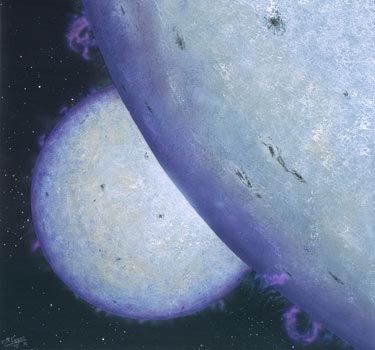
© Michael CarrollThe binary star DI Herculis consists of two B stars separated by about one-fifth the Earth-Sun distance. Both stars are about 5 times the mass of our Sun. No artist's rendition, like the one shown here, can possibly portray the fact that these stars have about 50 times the surface brightness of the Sun.
For more than 30 years, Villanova University astronomer Ed Guinan has been plagued, puzzled, and perplexed by DI Herculis. On the surface, this binary star seems pretty much like any other binary star, with two stars going 'round and 'round each other in a predictable, orderly fashion. But there remained a nagging problem that as much as Guinan wanted, he couldn't just sweep under the rug: DI Her was not behaving in accordance with Einstein's general theory of relativity.