
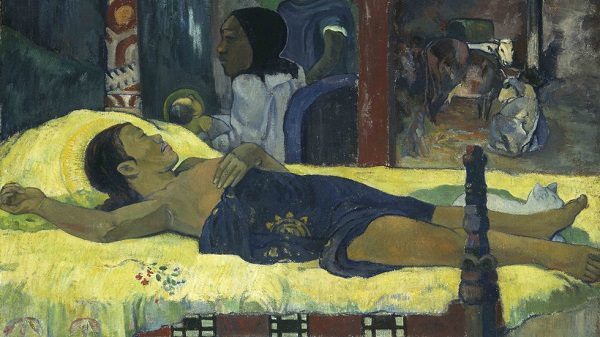
© Photo by Fine Art Images/Heritage Images/Getty ImagesThe Birth (Te tamari no atua), 1896. Found in the Collection of Neue Pinakothek, Munich.
Curators of the current display of Gauguin portraits at the National Gallery in London have not included any of his famous nudes, even though they could be described as portraits. Gauguin is in the firing line because of his erotic paintings of Polynesian women and his life, while living in Polynesia from 1891 until his death in 1903. The attacks come from supporters of post-colonialism and feminism. Academic post-colonial studies treat colonialism and all its products as irredeemably unjust; feminism is deeply hostile to any sexualised depictions of women by men.
Some criticism of Gauguin has been vicious: "He was, in almost every way, an absolute prick." "Exquisite art by the Harvey Weinstein of the 19th century," adds another review. The exhibition seems part artistic assessment and part historical trial.
Gauguin in Polynesia
"Gauguin undoubtedly exploited his position as a privileged Westerner to make the most of sexual freedoms available to him." So a wall text in the National Gallery, London declares. The truth of the matter is - as expected - more complicated than press and critics portray it.
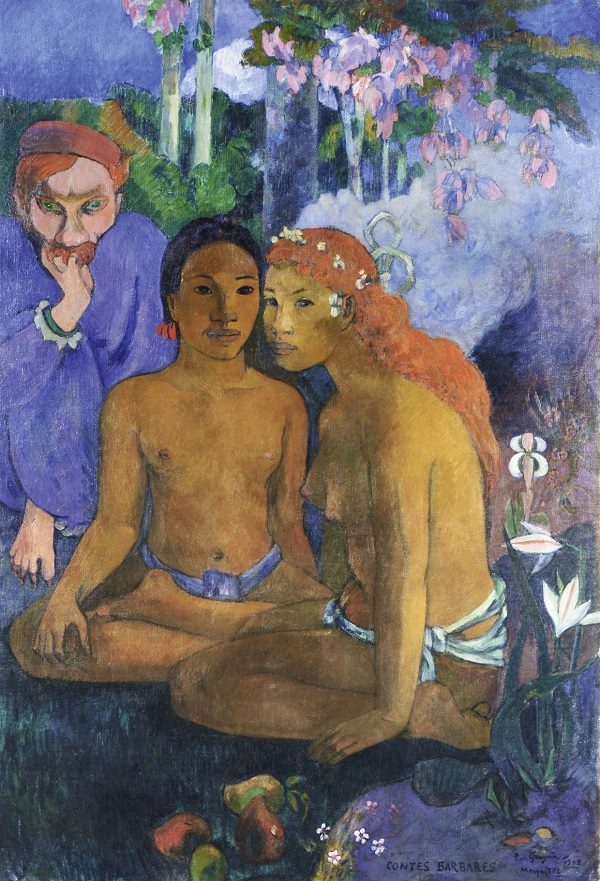
© Photo by Fine Art Images/Heritage Images/Getty ImagesContes Barbares (Barbarian Tales). Found in the Collection of Museum Folkwang, Essen.
By taking a Tahitian mistress, Teha'amana (aged about 13 when they first met), the (married) artist probably committed deception. We do not have the testimony of Teha'amana, who died around 1919. As Elizabeth Childs points out in a catalogue essay, the situation was not a clear-cut abuse of power. Such relationships between unmarried partners - and partners different in age and national background - were not uncommon in Tahiti and it seems her family may have approved of the relationship.
The weakness of museums
How far should we go in morally judging long-dead artists?
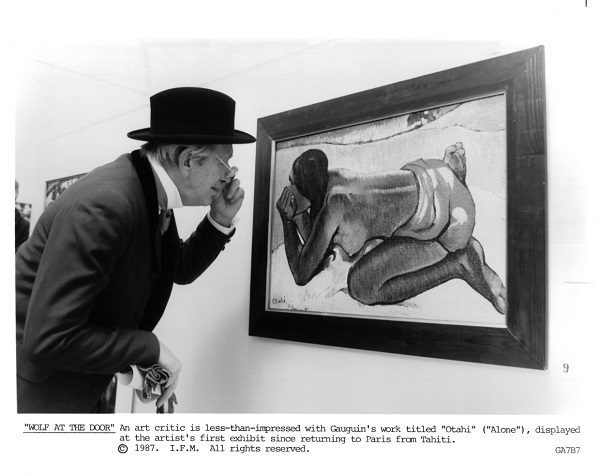
© Photo by Michael Ochs Archives/Getty ImagesCIRCA 1987: An actor playing an art critic inspects the new work of Gauguin on set of the movie "Oviri" , circa 1987.
We do not reject theories of scientists or mathematicians because their behaviour was dubious, but we view art as having moral stature and that makes us sensitive to artists' personal morality. Yet many of us are capable of detaching art from artist. We can separate Picasso's infidelity from his paintings. We can love Richard Dadd's art without condoning him killing his father.
Revenge on history
We should be aware that another motivation for censorious gatekeepers is revenge. Censoring paintings is revenge against their creator. Why should this moral criminal have art in museums, when he has perpetrated moral crimes? Some art is suppressed, and curators feel they have to publicly castigate the artist in texts. The moralising in exhibition catalogues and captions (including a recent one about Gauguin, held at the Van Gogh Museum, Amsterdam) demonstrates that these actions are public performance, intended to show that the cultural elite abhors "historical injustice". This is emotional theatre which demeans art, distorts history and patronizes audiences.
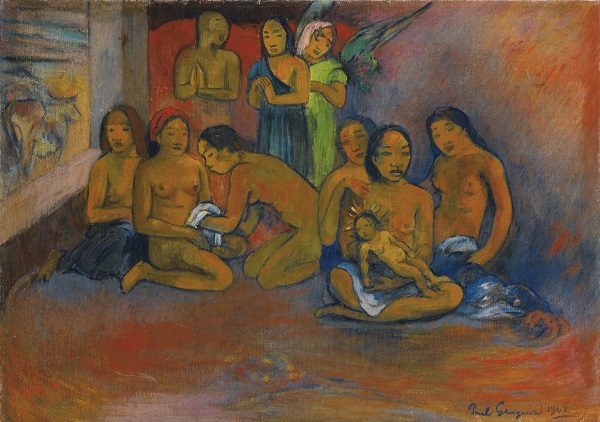
© Photo by Fine Art Images/Heritage Images/Getty ImagesNativité, 1902. Private Collection. Artist : Gauguin, Paul Eugéne Henri (1848-1903).
Threatened by campaigners and battered by critics keen to display their "woke" credentials, museums in the West are a soft target. Museum staff are unwilling to defend traditional goals of their own institutions. If matters continue this way, museums will be held captive by a tiny handful of activists forever moving the goalposts.
We must reject moralising pressure groups by asserting our rights as informed independent individuals to make our own judgments about culture and history.
By Alexander Adams, a British artist and writer. His book Culture War: Art, Identity Politics and Cultural Entryism is published by Societas.



.
Piss Christ From Wikipedia, ).Piss Christ Immersion (Piss Christ) is a 1987 photograph by the American artist and photographer Andres Serrano. It depicts a small plastic crucifix submerged in a small glass tank of the artist's urine. The piece was a winner of the Southeastern Center for Contemporary Art's "Awards in the Visual Arts" competition,[1] which was sponsored in part by the National Endowment for the Arts, a United States Government agency that offers support and funding for artistic projects. The work generated a large amount of controversy based on assertions that it was blasphemous. Serrano himself said of the controversy: "I had no idea Piss Christ would get the attention it did, since I meant neither blasphemy nor offense by it. I've been a Catholic all my life, so I am a follower of Christ."