

Trench supervisor Emilie Sarrazin, a graduate student at the University of Chicago, holds a small statue of a scribe unearthed at Tell Edfu in Egypt.
"It has been more than 80 years since such a shrine for the ancestors was discovered in Egypt, and the ones we did have were rarely within an undisturbed context," said Nadine Moeller, associate professor of Egyptian archaeology at UChicago, who leads the Tell Edfu Project excavation with Oriental Institute research associate Gregory Marouard.
Located about 400 miles south of Cairo in the Nile Valley, the ancient city of Tell Edfu was a provincial capital occupied for nearly 3,000 years. The archaeological fieldwork has excavated settlement remains and monuments from Egypt's Old Kingdom (ca. 2400 B.C.E.) all the way to the Ptolemaic period (332-30 B.C.E). The project is currently part of the work of the Oriental Institute, a leading center for the study of ancient Near Eastern civilizations founded in 1919.
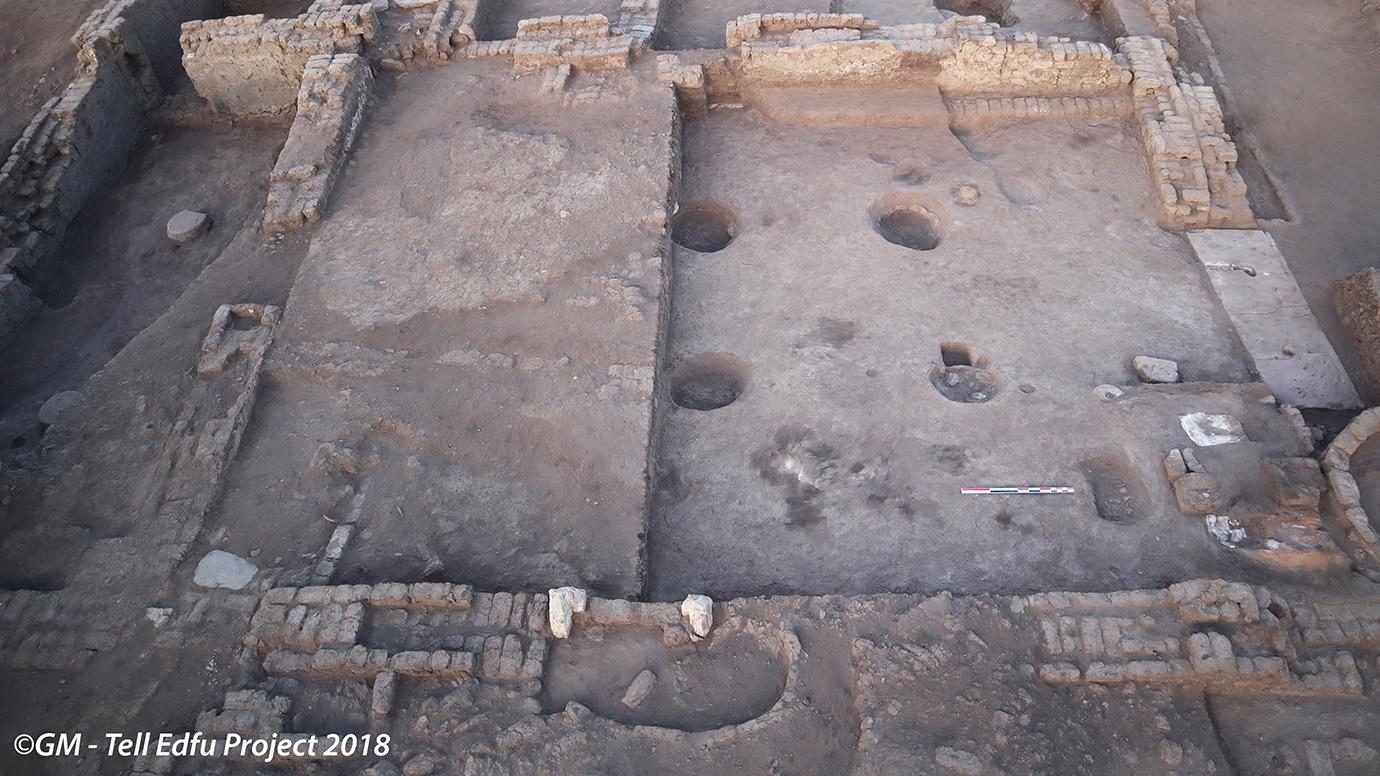
© GM - Tell Edfu Project 2018View (from the east) of the main columned hall of the early 18th Dynasty urban villa discovered at Tell Edfu.
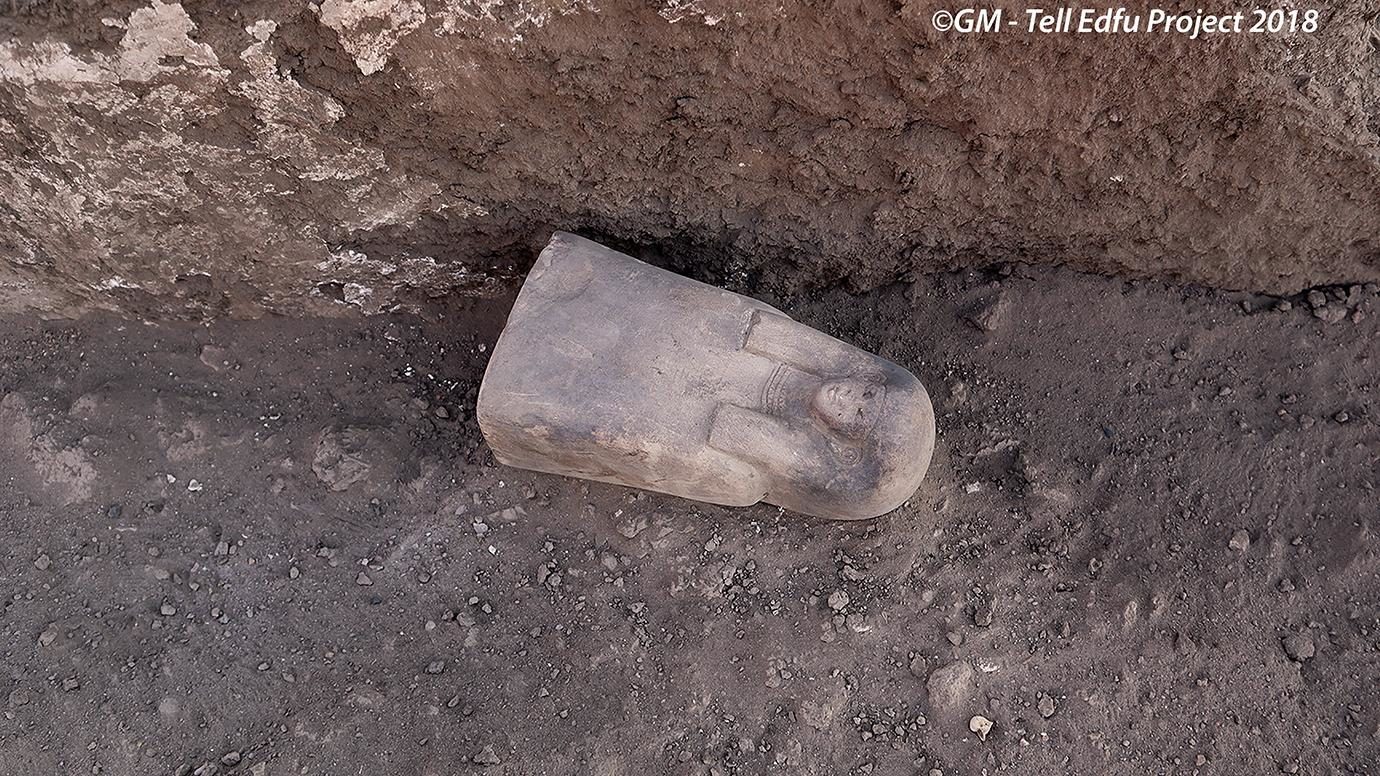
© GM - Tell Edfu Project 2018Bust of a female ancestor found on the floor of the domestic sanctuary. She wears a long tripartite wig and a broad necklace called a wesekh collar.
The last excavation, completed in December 2018, has focused on a large urban villa of about 440 square yards, which dates from the beginning of the 18th dynasty of Egypt. The building has several rooms with columns, the largest, a six-columned hall measuring about 33 feet by 26 feet, contains a well-preserved domestic sanctuary dedicated to the cult of the family ancestors of the inhabitants.
The shrine was located in a corner of the main room, and traces indicate it was surrounded by a wooden structure. It includes a small fireplace and offering table, two small pedestals in mudbrick, several complete or fragmented stelae (upright inscribed slabs of stone or wood), a rare example of a bust of a female ancestor, and a statuette of a seated scribe.
The limestone bust shows a woman wearing a long tripartite wig and a broad necklace called a wesekh collar. Traces of paint indicate that this small 8-inch bust once had been painted.
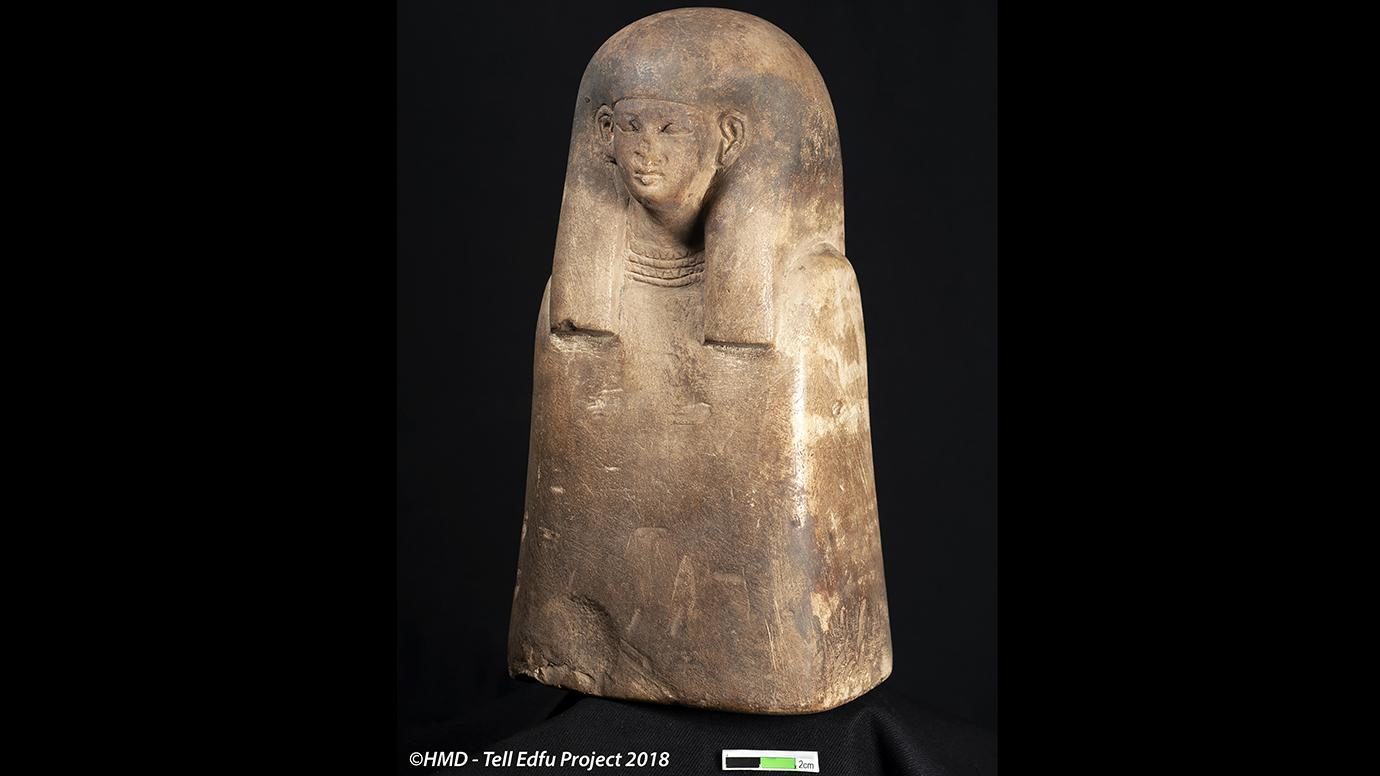
© GM - Tell Edfu Project 2018Female ancestor bust of limestone. She wears a long tripartite wig and a broad necklace called a wesekh collar.
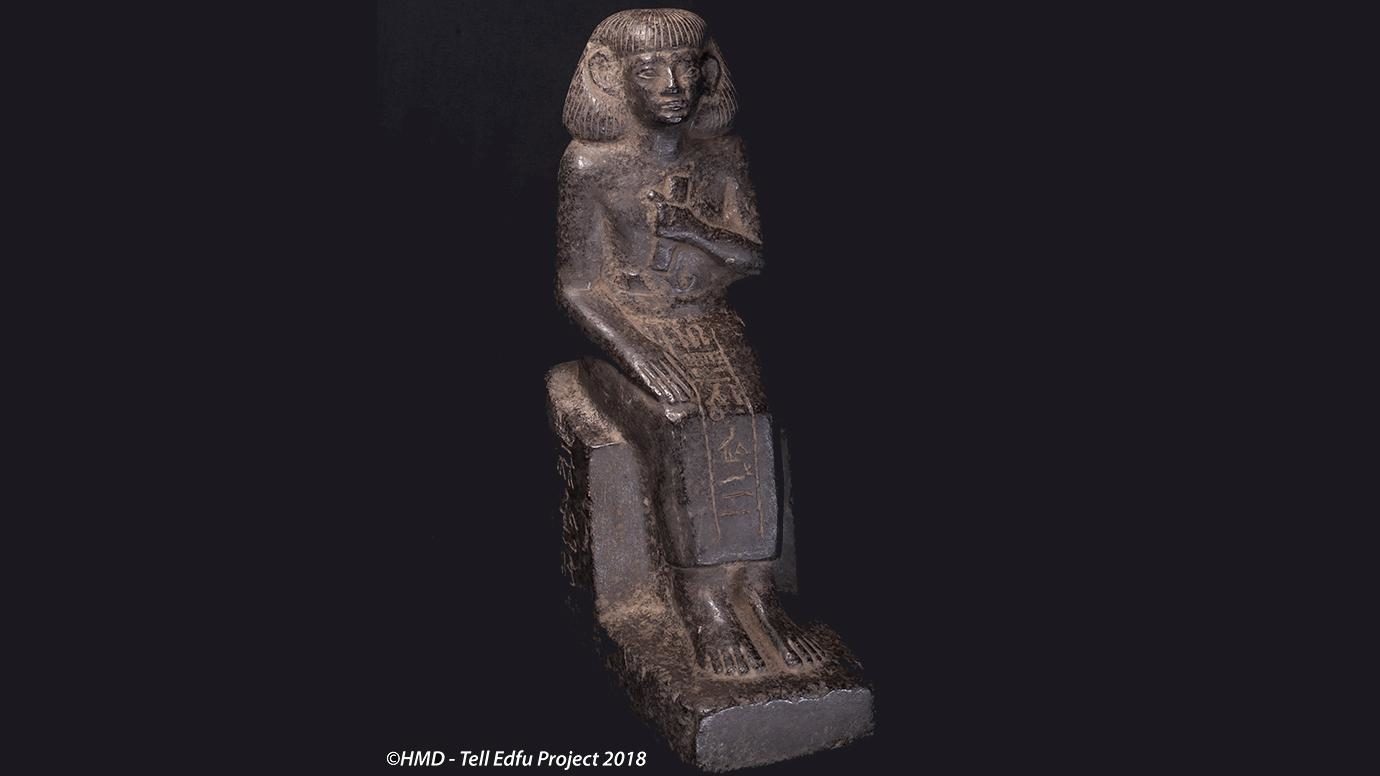
© GM - Tell Edfu Project 2018Statuette of the seated scribe of the province of Edfu.
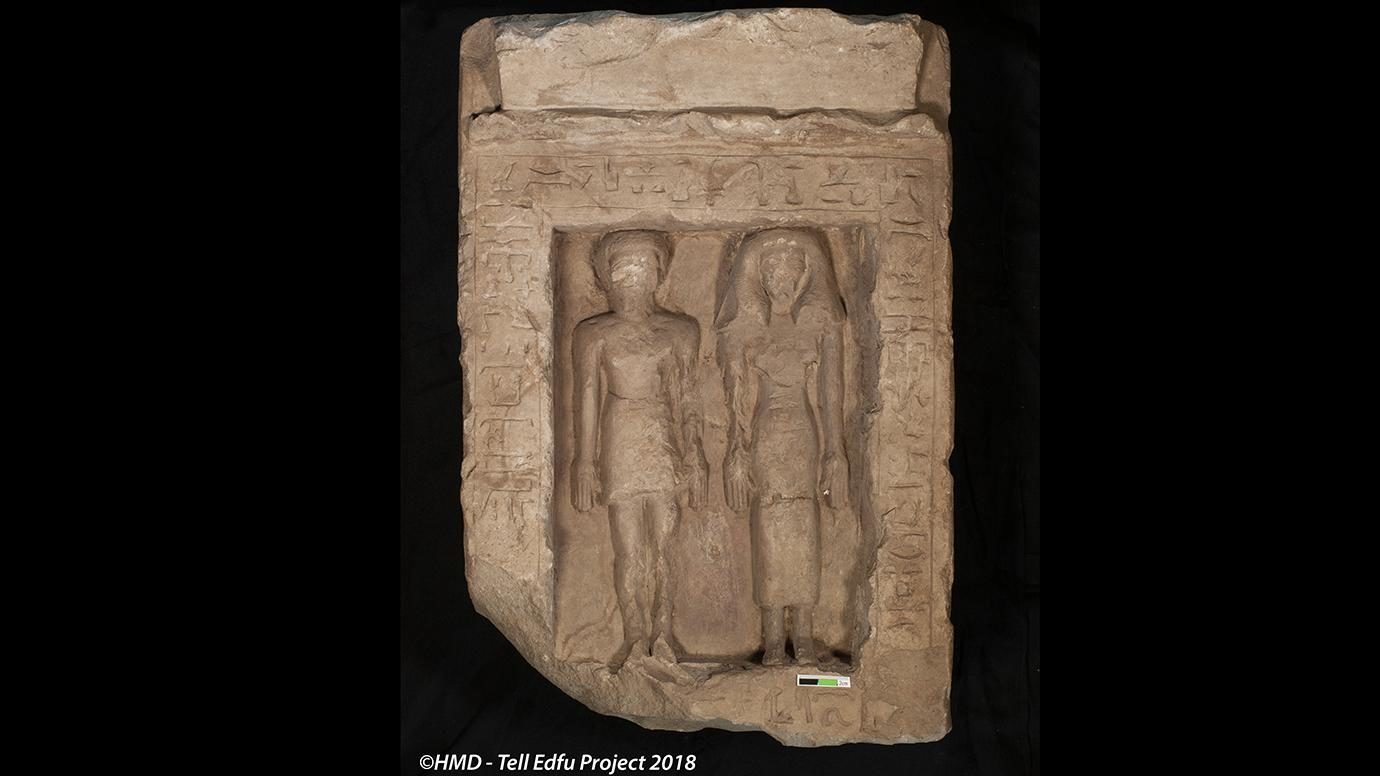
© GM - Tell Edfu Project 2018Limestone stela showing a man and woman standing next to each other. Their faces and names show signs of deliberate damage inflicted in ancient times, making it difficult to read their names.
While excavating the later occupation levels above this villa, researchers also found a large sandstone column mentioning a high priest of the temple of Horus in Edfu called Amenmose, which dates to this time period but was reused in a house many centuries later. The new findings reinforce the presence of an important high-ranking elite in this specific part of the ancient city of Edfu during the beginning of the 18th Dynasty, a period of political consolidation in Upper Egypt by the Theban kings Ahmose, Amenhotep I and Thutmose I, Moeller said.
The Tell Edfu excavation, which began in 2001, has served as training for University of Chicago students for many years, Moeller said. This particular excavation included fieldwork by graduate students Emilie Sarrazin, Raghda el-Bahaedi, Sasha Rohret, Rebecca Wang and Maja Sunleaf.


Comment: See also: