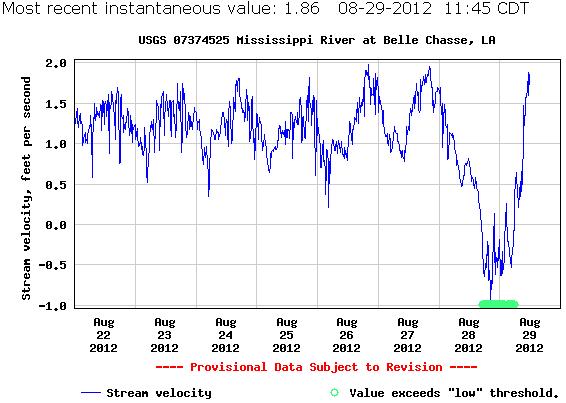
© USGSThis velocity hydrograph shows the velocity of the Mississippi River during Hurricane Isaac’s landfall. On August 28, the velocity begins to approach negative velocity as high winds and storm surge cause the river to reverse flow. By the end of August 28, the river had regained its regular flow. The USGS streamgage that recorded this information is located at Belle Chasse, LA.
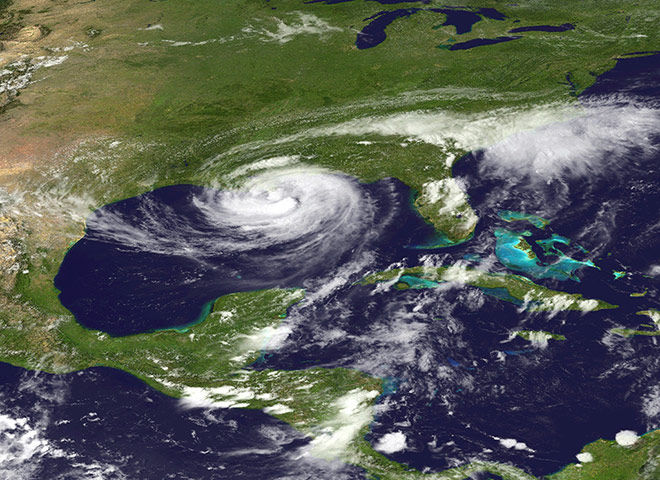
Strong winds and storm surge from Hurricane Isaac's landfall forced the
Mississippi River to flow backwards for nearly 24 hours on Tuesday, August 28. The USGS streamgage at
Belle Chasse, Louisiana, showed the Mississippi River flowing upstream at 182,000 cubic feet per second, surging to 10 feet above than its previous height. Average flow for the Mississippi River at Belle Chase is about 125,000 cfs towards the Gulf of Mexico.
Although it doesn't happen often, hurricanes can cause coastal rivers to reverse flow. Between the extremely strong winds and the massive waves of water pushed by those winds, rivers at regular or low flow are forced backwards until either the normal river-flow or the elevation of the land stop the inflow.
As Hurricane Isaac pushes further inland, it is causing storm surge in the Mississippi River as far north as Baton Rouge, where the river has crested at 8 feet above its prior height.
"This reversal of flow of the mighty Mississippi is but one measure of the extreme force of Isaac," said USGS Director Marcia McNutt. "While such events are ephemeral, they are yet another reminder of why we need to respect hurricane warnings."
When Hurricane Katrina came ashore in 2005, the Mississippi River also reversed flow, cresting at 13 feet above its previous level, with Baton Rouge reaching 9 feet above its previous stage as well.









Comment: Monday, 27 August 2012: Exploding meteor in sky over Somerset was 'a beautiful sight'