Animals
S


Alarm Clock

Cold Spell Endangers Florida's Manatees

manatees
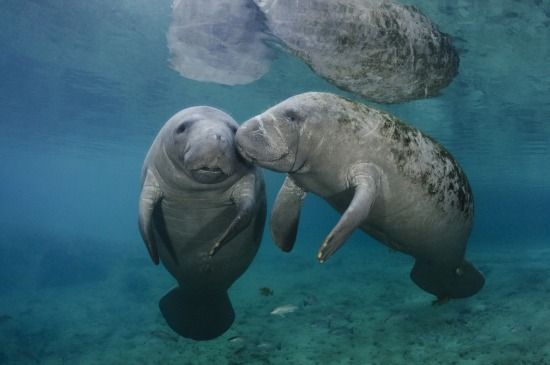
© Carol Grant / Getty ImagesA little snuggling to keep the blood flowing in chilly waters.

Folks up and down East Coast aren't the only warm-blooded creatures fleeing the cold this week.

Manatees - the giant marine mammals with paddle-shaped tails - are swimming en masse from colder-than-usual Gulf of Mexico waters into warmer springs and power plant discharge canals, reports the Associated Press.

Earlier this week, more than 300 manatees swam into the outflow of Tampa Electric's Big Bend Power Station.

Said Wendy Anastasiou, an environmental specialist at the power station's viewing center: "It's like a warm bathtub for them. They come in here and hang out and loll around."

2010 has proven to be a particularly deadly year for the gentle giants, which can weigh 1,200 pounds and grow to 10 feet long.

Alarm Clock

Honeybees May Be Spreading Disease to Wild Bees

bees
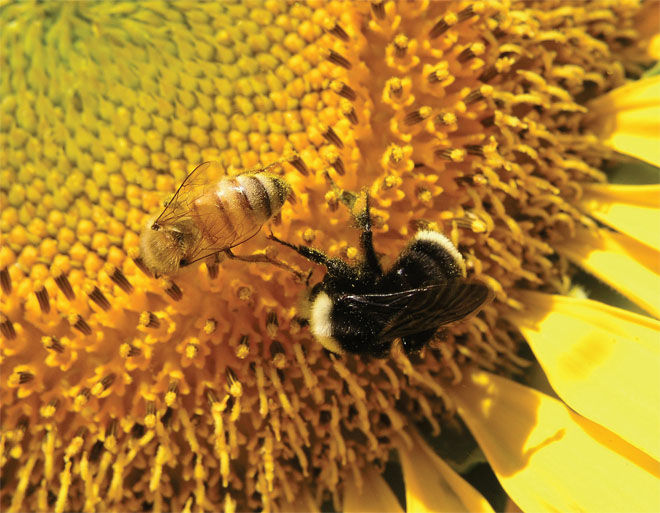
© Sarah Greenleaf/UC BerkeleyA wild bee (the bumblebee, Bombus vosnesenskii) and a honey bee forage together on a sunflower.
Eleven species of wild pollinators in the United States have turned up carrying some of the viruses known to menace domestic honeybees, possibly picked up via flower pollen.

Most of these native pollinators haven't been recorded with honeybee viruses before, according to Diana Cox-Foster of Pennsylvania State University in University Park. The new analysis raises the specter of diseases swapping around readily among domestic and wild pollinators, Cox-Foster and her colleagues report online Dec. 22 in PLoS ONE.

Gone are any hopes that viral diseases in honeybees will stay in honeybees, she says. "Movement of any managed pollinator may introduce viruses."

A pattern showed up in the survey that fits that unpleasant scenario. Researchers tested for five viruses in pollinating insects and in their pollen hauls near apiaries in Pennsylvania, New York and Illinois. Israeli acute parasitic virus showed up in wild pollinators near honeybee installations carrying the disease but not near apiaries without the virus.

Fish

Is the Gulf Stream Failing? Plummeting water temperatures endanger sea creatures along US Atlantic coast

Image
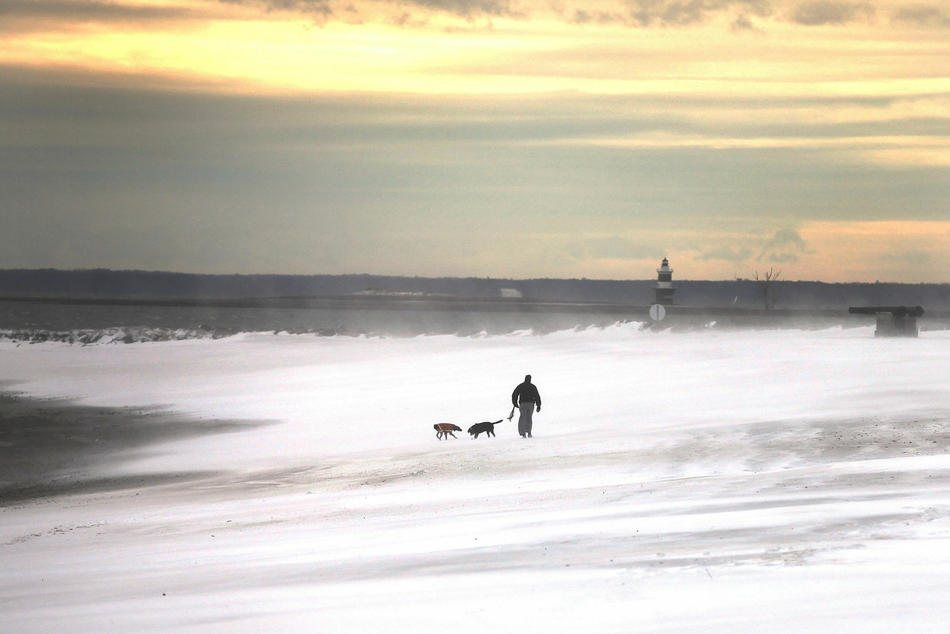
© Spencer Platt/Getty ImagesA man walks through blowing snow with his dogs along a beach following a snow storm on December 27, 2010 in Westport, Connecticut. Much of the northeast of the United States is experiencing a major winter storm with blizzard conditions and over a foot of snow expected from Washington, D.C. to New York City.
Thousands of dead starfish that littered a beach near Charleston last weekend are the first signs of what might become a disastrous winter for coastal sea life. They died because water was chilled to a lethal temperature by frigid weather earlier this month.

With coastal waters already hovering near critical lows, biologists worry there might be a mass die-off of shrimp, sea trout and red drum as the season turns cold again.

William Gay, owner of Port Royal Seafood, said he has heard Beaufort crab trappers talk about dead shrimp showing up in their crab pots, but said the cold water hasn't yet affected his business.

S.C. Department of Natural Resources biologists also heard reports of stunned red drum and sea trout.

Though Beaufort County is only about 50 miles south of the starfish die-off, water temperatures have been a bit warmer, and the extra warmth has helped.

"It still gets a lot colder there than it does here," said Larry Toomer, owner of Bluffton Oyster Co. "I don't see any signs that would say it's damaged anything or killed anything so far."

Sherlock

New England, US: Twist in bat disease mystery

bat
© Unknown
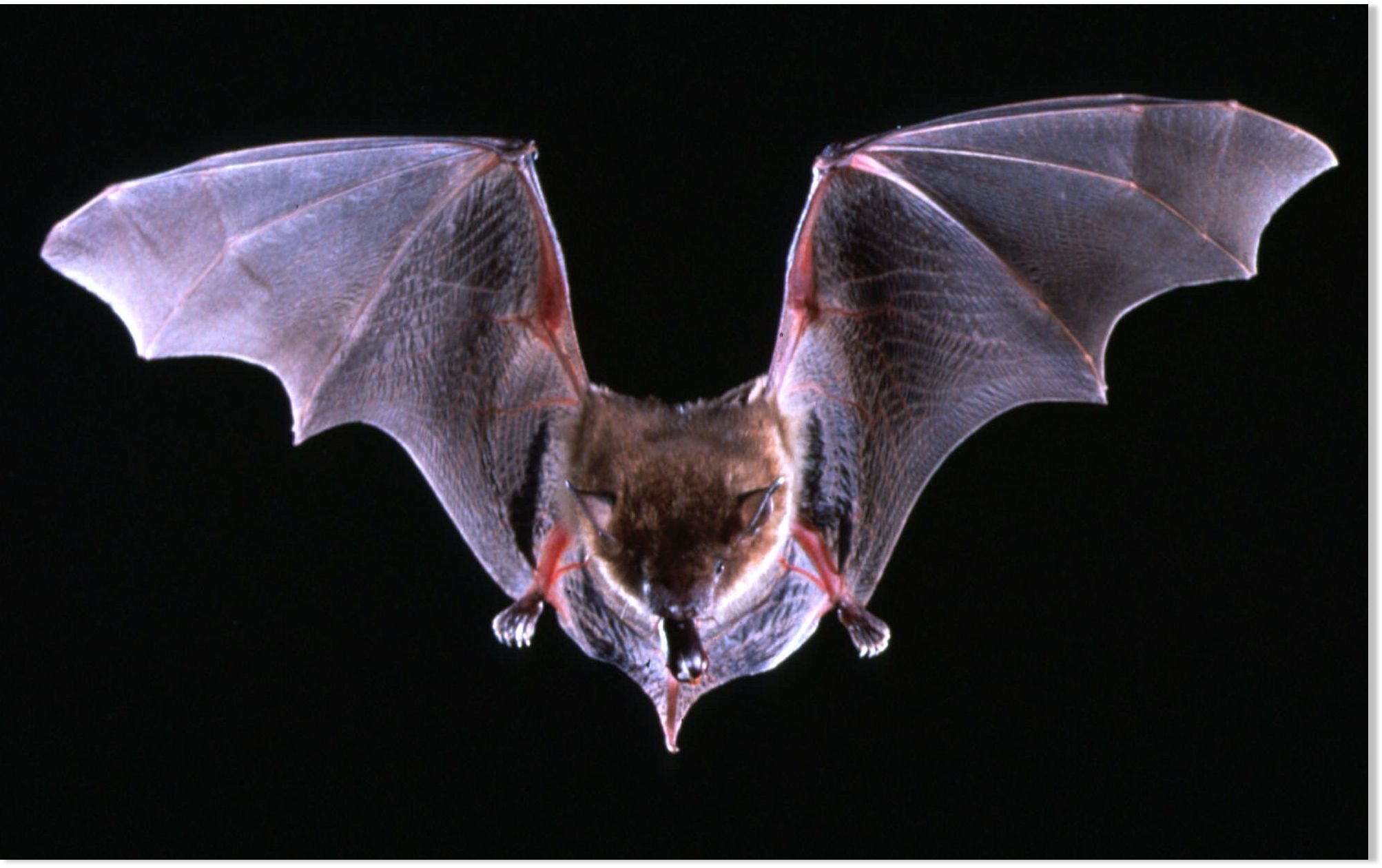
There's a new twist in the mysterious case of a disease that's killing thousands of bats in New England.

Bats living in several old military bunkers in New Hampshire are not being affected by white nose syndrome. Scientists hope to monitor temperature and humidity levels to try and determine why the bats seem to be immune.

Info

Young Female Chimpanzees Make and Play with "Dolls"

chimp
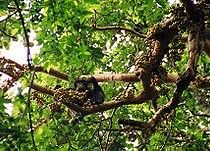
© Robert WeinkoveChimpanzee eating figs in Kibale National Park
Richard Wrangham of Harvard University and Sonya Kahlenberg of Bates College in Maine published research in the December 21, 2010, issue of Current Biology, a Cell Press publication that demonstrates the first evidence that chimpanzee youngsters in the wild may tend to play differently depending on their sex.

The research was reviewed at EurekaAlert and a draft of the research paper can be downloaded from this site.

The basic findings are:
  • Female chimpanzees play with sticks in a manner resembling a mother chimpanzee caring for an infant.
  • A biological (evolutionary) predisposition to play with dolls in a manner imitating mothers caring for infants is proposed as superlative to sex-stereotyped socialization roles in female humans.
  • The same type of behavior has been observed in the captivity in the wild with chimps but this is the first observation of this type of behavior involving "toys" created by the chimpanzees themselves.
  • Young female chimpanzees were observed playing with and carrying sticks more often. This play included taking the sticks into their day nests and demonstrated behavior similar to mothers caring for young chimps.
The researchers argue that this may be a single chimpanzee group learned behavior because this is the first known observation of that behavior but argue that it may be indicative of an evolutionary trait and a behavior that has been carried over from apes to humans.

Red Flag

Corals 'Severely Slimed' After Oil Spill, Expedition Finds

oiled coral
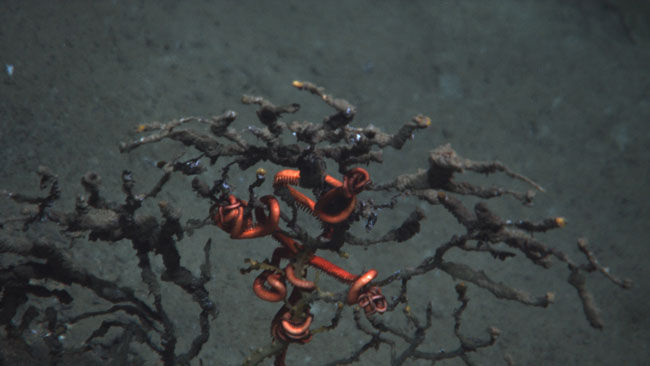
© Lophelia II 2010, NOAA OER and BOEMREThe sea fan Paramuricea sp. with the symbiotic brittle star Asteroschema sp. from a site in the Garden Banks region of the Gulf of Mexico. This apparently healthy coral was observed during the first leg of the cruise at approximately 360 meters depth and over 450 km away from the site of the Deepwater Horizon.
"It reminds me of going to a family funeral," said Charles Fisher, a biology professor at Penn State University, and chief scientist on a recent mission to study the impact of the Gulf oil spill on coral in the area.

Just like seeing extended family, "it's always fun to go into the deep sea, and we saw a lot of life," he said. "But, on the other hand the reason you're there is not a happy reason. Some corals have been severely slimed. Some are dead or dying."

The Woods Hole Oceanographic Institution in Woods Hole, Mass., led a nine-day mission this month to study the effects of the oil spill on life at the bottom of the sea. A team of scientists set out on a research vessel, spending just over a week in the middle of the Gulf of Mexico.

Equipped with both an autonomous submarine called Sentry, as well as a submersible called Alvin, the scientists photographed, mapped and collected samples from the Gulf nearly 24 hours a day. They completed six dives on Alvin, and set up a camera near the site of a dying coral reef, which will snap photos every hour for the next two months monitoring the coral's heath.

Question

Arctic Hybrids Not a Good Sign, Warn Scientists

Hybrid Bears
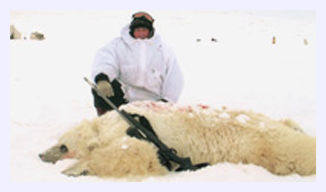
© Jim MartellAmerican hunter Jim Martell shot this hybrid polar-grizzly bear near Nelson Head on southern Banks Island on April 16, 2006.

The two grizzly-polar bear hybrids discovered in Canada's North in recent years may be the tip of the iceberg, warn a trio of U.S. scientists who say the bears are a sign that Arctic biodiversity is at risk.

Pointing to other Arctic hybrids - an apparent bowhead-right whale photographed in the Bering Sea in 2009, a suspected narwhal-beluga found west of Greenland in the late 1980s, as well as various confirmed hybrid porpoises and seals - they argue governments must manage hybrids before interbreeding leads to the extinction of rare species.

In a commentary published in Wednesday's peer-reviewed journal Nature, National Oceanic and Atmospheric Administration marine biologist Brendan Kelly and his co-authors say rapidly disappearing sea ice means the barrier that once kept Arctic species apart is literally melting away.

"In addition to that, marine mammals are particularly infamous for hybridizing," says Kelly. "It turns out their genes haven't changed so much that they can't interbreed."

Co-author David Tallmon, a marine biologist with the University of Alaska, says while it's unlikely hybridization is widespread in the Arctic, no one has looked systemically at the issue. He and Kelly, along with Andrew Whiteley, a conservation geneticist at the University of Massachusetts, say the question of whether to try to stop animals from crossbreeding needs immediate attention.

Fish

Scientist says he found Japanese salmon fish thought extinct

Image
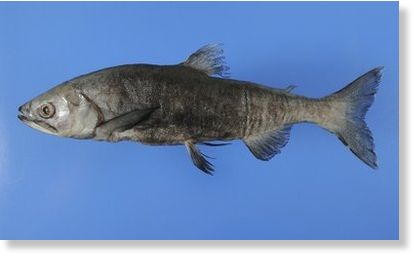
© AP Photo/Kyoto University via Kyodo NewsIn this undated photo released by Kyoto University via Kyodo News, a specimen of endangered Japanese salmon species is on display.
A Japanese salmon species thought to be extinct for 70 years is alive and well in a lake near Mount Fuji, a science professor said Wednesday. The black kokanee, or "kunimasu" in Japanese, was thought to have died out in 1940, when a hydroelectric project made its native lake in northern Akita Prefecture more acidic. Before then, 100,000 eggs were reportedly transported to Lake Saiko but the species was still thought to have died off.

But Tetsuji Nakabo, a professor at Kyoto University, said his team of researchers found the species in Lake Saiko, about 310 miles (500 kilometers) south of the native lake. "I was really surprised. This is a very interesting fish - it's a treasure. We have to protect it and not let it disappear again," he said. He posed for pictures and video with a specimen that was dark olive with black spots on its back. The kunimasu grow to about a foot (30 centimers) in length. Nakabo said the lake had sufficent kunimasu for the species to survive if the current environment is maintained, though he said in interviews he hoped fishermen would not catch it.

Bizarro Earth

US: Fungus Outbreak Hits Alabama Marshes; Could Oil Spill Sheens Be to Blame?

Alabama marsh grass
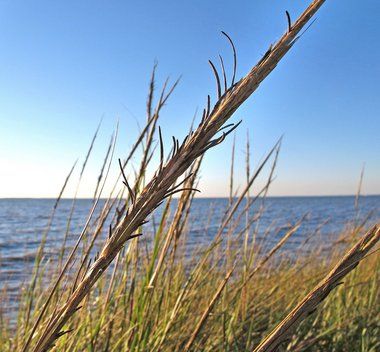
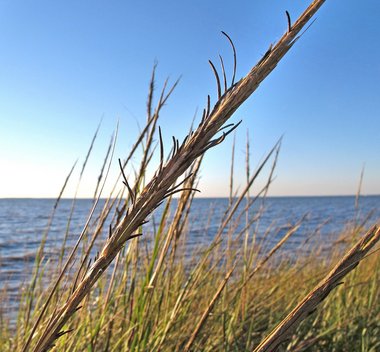
© Press-Register/Ben RainesSeeds of one of Alabama's primary salt marsh grasses are suffering from a fungal infection that renders them sterile. The long, purplish black claws protruding from the spartina seeds are symptoms of infection by Calviceps purpurea. The fungus is common in marshes, but usually not widespread. Scientists speculate that exposure to oil sheens may have reduced the ability of the marsh grasses to resist infection.
A widespread fungal outbreak is affecting one of Alabama's key marsh grass species, potentially rendering much of this year's seed crop sterile, according to scientists.

While the fungus is always present in coastal marshes, scientists speculated that repeated exposure to oil sheens floating on Mississippi Sound and Mobile Bay this spring and summer might have played a role in the outbreak by reducing the natural resistance of the marsh plants to the disease. It is also possible that other factors, such as an ongoing drought, played a more important role than oil, they said.

There are records of the fungus in Alabama and Mississippi marshes dating to 1895, and the scientific literature describes some years where every seed was lost to the fungus, said Judy Stout, who has studied the Gulf's coastal marshes since 1972.

"The marshes and barrier islands were the areas that took the brunt of the oil and sheens," said Judy Haner, marine conservation director with the Alabama office of The Nature Conservancy. "This infection raises the possibility that our marsh system is more vulnerable because it has been stressed. This wasn't like a hurricane, over and done in a day. This area was subjected to months of repeated exposure."

A BP spokesman said that if federal damage assessments found problems in the marshes related to the spill, the company would act appropriately.

Affecting Spartina alterniflora, one of the two main grasses in Gulf Coast salt marshes, the fungus produces deep purple shafts that protrude from individual plant seeds like cat claws coming out of a paw. The fungus, Claviceps purpurea, does not kill the adult plants.

Alarm Clock

Sperm Whales Show Signs of Toxic Contamination

Sperm Whales
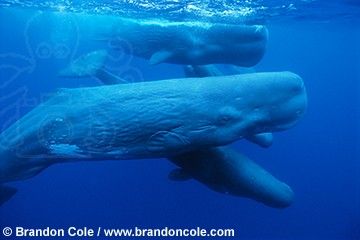
© Brandon ColePod of sperm whales underwater

The skin and blubber of sperm whales from across the Pacific Ocean carry evidence of exposure to a class of toxic pollutants, with whales living around the Galapagos Islands showing the strongest signs of exposure, according to a new study.

"This is the first time this kind of pollution study has been done on a whole ocean level using a threatened species as a sentinel species," said Celine Godard-Codding, the lead researcher and an environmental toxicologist at Texas Tech University.

Sperm whales can live up to 70 years, feeding on squid, fish and octopus. Males of the species can grow up to 60 feet (18 meters) long. As large, long-lived carnivores, they can accumulate pollutants in their body fat.