Animals
S


Red Flag

Mysterious animal die-off around the world in July 2013 - bees, whales, fish

In the following article, you will find a compilation of animal, mammal and fish die-offs around the world. Keep safe and care about the environment.

Three killer whales found dead near Fraser Island off the Queensland coast (Australia) - SMH, NINMSN, SKY NEWS

A third killer whale carcass has been found by wildlife rangers at Fraser Island, off the southern Queensland coast. The whale was discovered late on Friday in a creek north of Kingfisher Bay on the island by Queensland Parks and Wildlife Service staff. The discovery comes two days after two whales, believed to be a mother and calf, died on Wednesday when their pod became stranded on a sandbar in the Great Sandy Strait which separates the island from the mainland.


Hundreds of bluefish surfacing dead in and around Shinnecock Bay (New York) - HISZ

Hundreds of bluefish are turning up dead off the coast of Long Island - and nobody knows why.

Red Flag

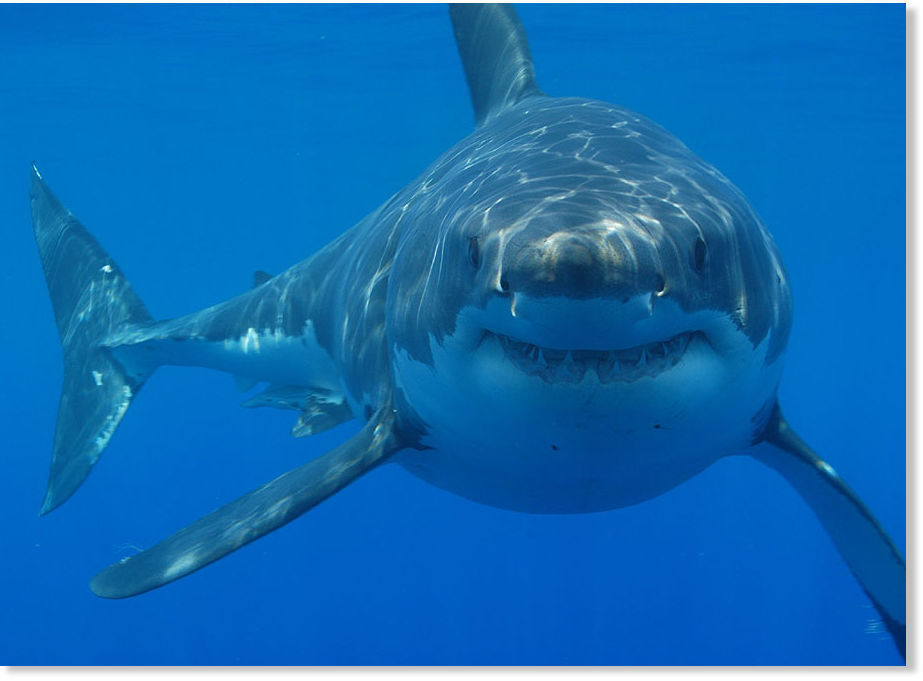
Shark kills 15-year-old girl off Reunion island, Indian Ocean

Image
Shark
A teenage girl tourist was killed in a shark attack on Monday while swimming off the Indian Ocean island of Reunion, the second such attack this year in the French overseas territory.

Local officials said the 15-year-old was attacked in the mid-afternoon while swimming just a few metres (yards) from shore in Saint-Paul bay on the western side of the island.

The girl, on holiday from mainland France, was swimming with another girl who had just climbed on shore when the attack took place.

"Part of her body was carried away by the shark. Firefighters, lifeguards and a police helicopter are carrying out a search," said Gina Hoarau, the head of public safety in Saint-Paul.

"The conditions of this attack are very surprising. We didn't think a shark could come so close to the shore," Hoarau said.

A 36-year-old French honeymooner was killed by a shark in May while surfing not far from the island's popular beach of Brisants de Saint-Gilles.

Last year, 78 shark attacks were reported around the world, of which eight were fatal.

Source: Agence France-Presse

Arrow Up

Visitors to the Mediterranean warned of an increase in jellyfish

Overfishing has reduced competition for food, allowing jellyfish whose stings can cause pain and nausea, to thrive
Image
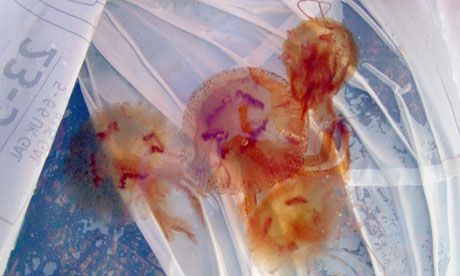
© PA Archive/PA PhotosMauve stingers ... a brush with these can cause pain, burning, nausea and muscle cramps.

Holidaymakers are being warned by the Foreign and Commonwealth Office to take local advice in several Mediterranean countries as jellyfish numbers rise along coastlines popular with tourists in Greece, Spain and Malta. Jellyfish numbers have been rising consistently in the Mediterranean, and researchers warn that the increase in numbers poses a hazard to swimmers, fishing and the marine environment.

The FCO said: "We have been alerted to large numbers of jellyfish in the Mediterranean this summer, especially in a number of key holiday destinations for UK tourists. We have updated our travel advice for a number of Mediterranean countries to reflect this issue."

Up to 150,000 people are treated for jellyfish stings in the Mediterranean each year. The worst-hit coastlines this summer have been in Greece, Spain, Sardinia, Sicily, Malta, Israel and Lebanon. The FCO recommends that swimmers speak to local authorities and follow their advice on where and when to swim.

Barcelona Institute of Marine Sciences researcher Josep María Gili told the Guardian in June that jellyfish represented a growing problem, both in the Mediterranean and across the world.

Bug

Madagascar battling worst locust plague since 1950s

Locusts threatening livelihood of 60% of population, and have already destroyed a quarter of Madagascar's food crops

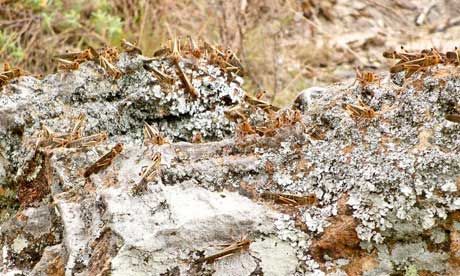
Madagascar is in a race against time to raise enough money to tackle its worst plague of locusts since the 1950s. Locusts have already infested over half of the island's cultivated land and pastures, causing the loss of 630,000 tonnes of rice, corresponding to 25% of food consumption.

At least 1.5m hectares (3.7m acres) could be infested by locusts in two-thirds of the country by September, warns the Food and Agriculture Organisation (FAO). Findings from a damage assessment indicate that rice and maize crop losses due to locusts in the mid- and south-western parts of Madagascar vary, on average, from 40% to 70%, reaching up to 100% in some plots.

Madagascar's agriculture ministry declared a national disaster in November. The food security and livelihoods of 13 million people are at stake, about 60% of the island's population. Around 9 million people depend directly on agriculture for food and income.

"We don't have enough funds for pesticide, helicopters and training," said Alexandre Huynh, the FAO's representative in Madagascar. "What is extremely costly is to run helicopters [needed to spray pesticides]. We have to start in September, and we have two to three months to prepare. We need $22.4m [£15.1m] but we are quite short of that. Discussions are going on with donors."
Image
© Tiphaine Desjardin/FAO Adults locusts on a rock in Isalo national park, Madagascar.

Question

Pygmy sperm whale mother dies, calf euthanized after beaching on Jupiter Island, Florida

Image
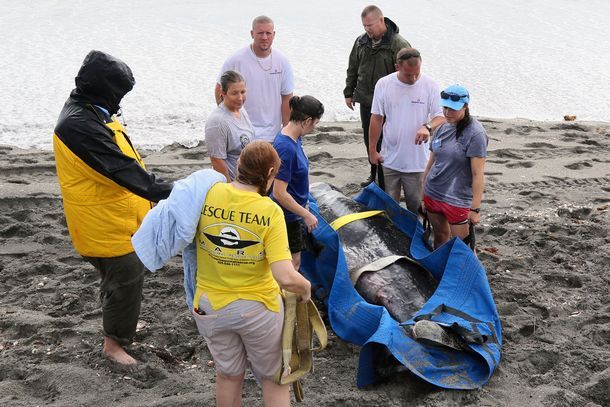
© Lannis Waters/The Palm Beach PostRescue teams remove a dead pygmy sperm whale that was stranded on Jupiter Island Tuesday morning, July 9, 2013
A mother pygmy sperm whale died and her calf was euthanized after they washed ashore Tuesday morning onto a Jupiter Island beach.

Authorities spotted the mother and her calf at about 8 a.m. while they patrolled the shore about five miles north of the Blowing Rocks Preserve.

Officials from the Florida Fish and Wildlife Conservation Commission, Loggerhead Marinelife Center in Juno Beach and Marine Animal Rescue Society responded and evaluated the whales.

John Cassady, an FWC biologist, said the approximately 9-foot, 800-pound mother died after she landed on shore.

Loggerhead veterinarians decided to euthanized the 3-foot, 100-pound calf, saying it could not survive on its own.

Igloo

Sun's bizarre behavior: Weakest solar cycle in 100 years

Solar Flare
© NASAA solar flare bursts from the sun.
Those of us who have been paying attention to the sun this year have been a little ... disappointed.

2013 was supposed to be the year of solar maximum -- the peak of an 11-year cycle when the number of sunspots that mar the sun's surface is at its highest.

These sunspots, which are actually cool areas on the sun's surface caused by intense magnetic activity, are the sites of spectacular solar flares and CMEs, or coronal mass ejections, which can send billions of tons of solar material hurtling into space.

But this year, the serious solar fireworks show never materialized.

Sure, we've seen a handful of major solar flares, and a few extra fast CMEs, but scientists say our current solar maximum, known as solar maximum 24, is the weakest one in 100 years.

And some scientists believe that the 25th solar maximum could be even weaker.

Fish

Fish kill - creek deaths baffle and upset neighbors in Colonial Heights, Virginia

The Department of Environmental Quality confirmed its investigators are working to determine what killed hundreds of fish in a Colonial Heights creek. Neighbors who live near Swift Creek in Colonial Heights discovered the dead carp after a foul stench filled the air late last week. "It was a putrid smell. We thought something was dying. We took a walk through the woods and didn't see anything," Tina Wilson said. She said over the weekend her boyfriend finally found the source of the stench.

"There was hundreds of dead carp from the bridge all the way down towards the dam," Wilson said. "They were stuck in the trees. You could see their white bellies up against the banks. They were everywhere. It stunk."


Fish

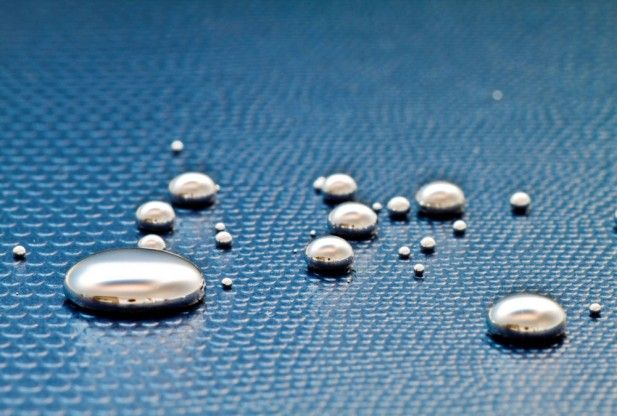
Legacy mercury levels in fish, environment will persist for centuries

Image
© Thinkstock.com
Significant reductions in mercury emissions will be necessary just to stabilize current levels of the toxic element in the environment, according to new research from a team led by Harvard University.

Surface reservoirs, such as soil, air and water, hold an enormous amount of mercury from past pollution going back thousands of years. Scientists believe it will continue to persist in the ocean and accumulate in fish for decades to centuries.

"It's easier said than done, but we're advocating for aggressive reductions, and sooner rather than later," says Helen Amos, a PhD candidate in Earth and Planetary Sciences at the Harvard Graduate School of Arts and Sciences. The findings of this study were published in a recent issue of Global Biogeochemical Cycles.

Amos worked with a team of researchers from the the Atmospheric Chemistry Modeling Group at the Harvard School of Engineering and Applied Sciences (SEAS) to collect historical data concerning mercury emissions as far back as 2,000 BC. The team has also been building environmental models of mercury cycling that captures the interactions between the atmosphere, oceans and land.

Most of the mercury emitted to the environment ends up in the ocean within a few decades, the model reveals. The mercury remains in the ocean from centuries to millennia. Currently, emissions of mercury are mainly from coal-fired power plants and artisanal gold mining. The mercury is thrown into the air, rained down into lakes, absorbed by the soil and carried by rivers, eventually finding its way to the sea. Once there, aquatic microbes convert it to methylmercury, the organic compound that accumulates in fish, finds its way to our dinner plates, and has been associated with neurological and cardiovascular damage.

Arrow Down

Unusually cold spring causing bat declines in Britain

Image
© Thinkstock.com
Because of an unusually cold spring and an insect shortage this summer, conservationists are concerned bat numbers could continue to suffer this year. Based on the latest figures from Britain's National Bat Monitoring Programme (NBMP), the annual bat breeding season got off to a slow start due to unseasonable weather earlier this year.

Dr. Kate Barlow, Head of Monitoring at the Bat Conservation Trust, said, "After 2 years of long, wet, winters and a particularly late and cold start to summer this year, the outlook isn't too promising for our bats. The most recent results from the National Bat Monitoring Programme showed that there were fewer bats were counted in 2012 than in 2011 for most species monitored."

Dr. Barlow added that 2013 saw the coldest March in 50 years and summer got off to such a late start many of the species are struggling. "This year Britain's bats need all the help they get," she said.

Further adding to the bat recovery struggle is the fact that winged insect numbers are also down. So on top of a cold spring and delayed summer, several species may face shortages in food supply, especially those that rely on moths, according to a National Trust report released last month.

Fish

DEC investigating reports of fish kills on several Finger Lakes, NY - including Cayuga and Skaneateles

Reports of fish kills on several of the Finger Lakes has prompted testing by the state Department of Environmental Conservation, officials confirmed this week.

David Lemon, fisheries manager for the DEC's Region 7, said Tuesday, "I've heard that several of the western Finger Lakes are experiencing significant fish mortality events." Locally, he mentioned Cayuga and Skaneateles lakes.

"We've had no reports of significant die-offs in either Owasco and Otisco Lakes," he said.

Dennis Rhoads, a veteran angler from Summerhill, said he's seen dead fish on Cayuga Lake. He said he's also been talking to other anglers on Cayuga and Seneca Lakes and has been reading reports from fishermen on LakeOntarioUnited.com, an online fishing forum. Earlier this week, he said:

"Last several weeks we have seen lots of dead fish on Cayuga Lake. Bass, perch, sunfish etc.," he said. "We were on lake yesterday at latest and saw recent dead fish. Guys are reporting big kills on all Finger Lakes from Hemlock, Canandagua to Cayuga."

Image
© Wikimedia CommonsYellow Perch, (Perca flavescens)