Animals
S


Eye 2

UK: Python bites Swansea woman as she heads home from the pub

A Swansea woman was rushed to hospital after being bitten by a python on her way home from the pub.

Sue Cull was attacked as police were hunting the eight foot snake in Dyfatty.

Image
Sue Cull who was rushed to hospital after being bitten by a python on her way home from the pub
The 47-year-old, from Griffith John Street, took a short cut across the grass near to where she lived when she suddenly felt a stinging sensation on both legs.

Ms Cull believed she had walked through stinging nettles. But when she got home her partner Kay noticed there was blood streaming from both her legs.

Bug

Cricket plague overwhelms Oklahoma towns with millions of insects


People in Oklahoma are dealing with an infestation of crickets. And while the swarm of the bugs might make your skin crawl, experts say it's completely natural. In Oklahoma towns, it happens every year, and is always a mess.

Thousands and thousands of crickets pile up on streets, sidewalks and porches, and hang off walls and windows of homes and businesses. While people might not like it, it's perfectly natural for all those crickets, who this time of year have one thing to do.

The signal to gather and mate comes from the change of seasons and the weather, which this year, dry in the spring and wet in the summer, was just right! It's good for business if you're an exterminator.

Calls for service are flooding in. At just one car dealership in Claremore, Oklahoma, exterminators found enough crickets to fill a thirty-pound bag. Some good news is that while people aren't happy, the rest of the animal kingdom is having a feast.

Micah Holmes from the Oklahoma Agriculture Department says, "birds eat them, frogs eat them, lizards, small mammals; they're a little protein, protein pack for animals."

Some even better news is that this year's cricket plague won't last forever. In a few weeks, when the weather gets colder, they'll all be gone, until the new generation comes to town next year.

Info

Six-clawed lobster captured off Hyannis

Lobster
© Richard Figueiredo/Rachel Leah
West Boothbay Harbor, Maine - A six-clawed lobster captured off the coast of Hyannis has a new home.

The lobster, picked up recently by the crew of the Rachel Leah, Captain Peter Brown and lobsterman Richard Figueiredo, was donated to the Maine State Aquarium in West Boothbay Harbor this past Thursday.

It weighed in around four lbs.

The aquarium has a number of other rare or strange-looking lobsters on display. Lola, as the lobster has been named, is expected to join the others when she grows accustomed to her new surroundings.

Eye 2

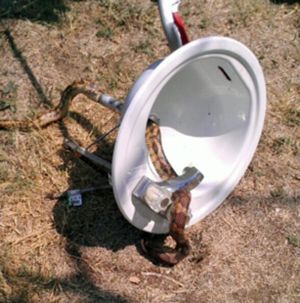
Homeowner finds 6-foot rat snake in sink drain, Texas

A China Spring homeowner was surprised by an unwelcome guest slithering through the drain of his bathroom sink Friday afternoon.

About 3 feet of what officials think was a non-venomous rat snake made it through from the opening of the drain before it got caught in the pipe, Lt. Chris Eubank said.
Image
© McLennan County Sheriff’s Office photo

"(The homeowner) called us as soon as he saw it - he didn't want to mess with it," he said.

McLennan County sheriff's deputies, who responded to the scene on Norm Street about 12:40 p.m., were forced to disassemble the piping, then take the sink, with 6 feet of snake still stuck in the opening of the drain, in an attempt to free it, Eubank said.

Info

High number of Bottlenose dolphins dying off northeastern USA

Under the Marine Mammal Protection Act of 1972 (as amended), an Unusual Mortality Event (UME) has been declared for bottlenose dolphins in the Mid-Atlantic region from early July 2013 through to the present day. A much higher number than usual of strandings of Bottlenose dolphins has occurred in New York, New Jersey, Delaware, Maryland and Virginia.
Image
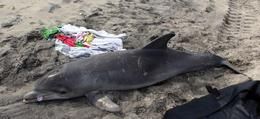
© Marine Mammal Stranding CenterBottlenose dolphin stranding in NJ
These Bottlenose dolphin strandings are more than seven times the historical average for the month of July for the Mid-Atlantic Region. All age classes of bottlenose dolphins are involved and strandings range from a few live animals to mostly dead animals with many very decomposed.

As yet, there are no unifying gross necropsy findings although several dolphins have presented with pulmonary lesions. Preliminary testing of tissues from one dolphin indicates possible morbillivirus infection, although it is too early to say whether or not morbillivirus may be causing this event.

Arrow Down

A lot less sea turtles arriving in Nicaragua

Environmentalists say number of sea turtles arriving on Nicaragua's coast dropping sharply

Image
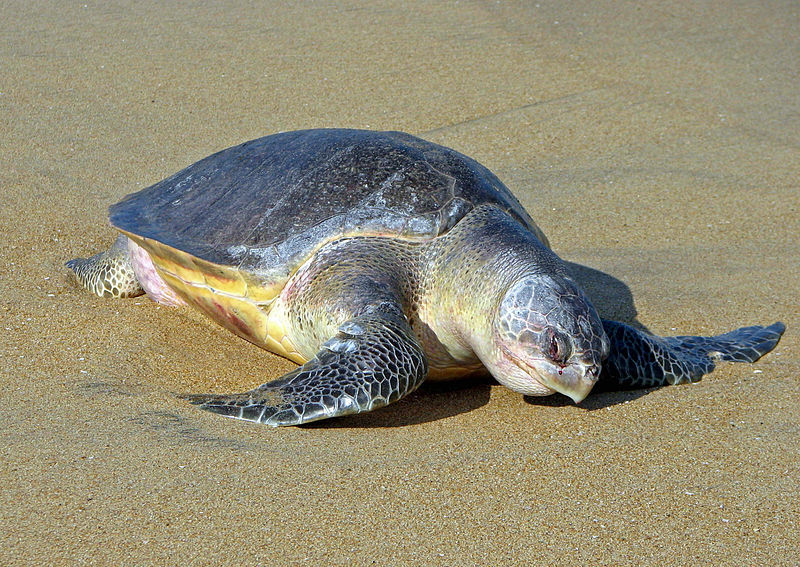
© Bernard Gagnon, Wikimedia CommonsThe olive ridley sea turtle (Lepidochelys olivacea)
Authorities and environmentalists say the number of sea turtles arriving on Nicaragua's Pacific coast is dropping sharply this year, something they say could be an effect of climate change.

Environment authorities say 2,000 turtles arrived on the coast of Rivas state in July and August. They say that in the same two-month period last year 21,350 turtles made their way to that coast.

Rivas environment delegate Mario Rodriguez said Thursday that authorities and volunteers had been expecting to welcome 5,000 turtles Monday but only 92 reached the beach.

He says it is the sharpest drop in sea turtles recorded by authorities in 10 years.

Experts say the drop could be due to climate change, which is affecting the ocean's temperature and tides.

Source: The Associated Press

Bug

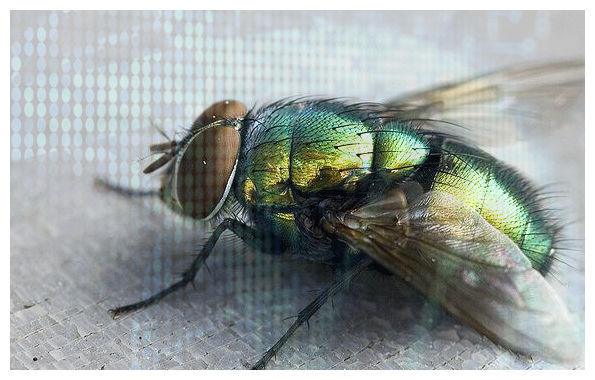
Thousands of genetically modified insects set for release

GMO Fly
© Natural Society
Just when you thought genetically modified mosquitoes and mutated dinner entrees were the extent of biotech's hunger to manipulate the genetic coding of the planet, scientists have now unleashed a plan to launch thousands of 'frankenfly' style insects into the wild in order to combat pests.

And just like we saw with the release of genetically modified mosquitoes, the altered insects are actually being pushed as a 'green alternative' to the use of chemicals. You see, British scientists claim that mutating the genetic code of the insects is actually a way of substituting for the use of chemical pesticides.

Chemical pesticides used to lower the population of olive flies in Britain. The reality here, however, is that you are taking something damaging like chemical pesticides and replacing it with something far worse.

It's like trading in your aging car for a bicycle, except in this case the bicycle also happens to include side effects like 'may alter the genetic structure of the entire insect population'.

Bizarro Earth

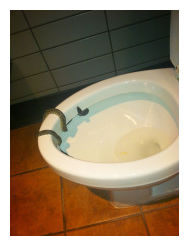
Man finds snake in Starbucks bathroom

Snake in Toilet
© WTVR.comSnakes in unexpected places can startle anyone. For Bruce Ahlswede the unexpected place was a San Antonio Starbucks bathroom, where he had stopped on Tuesday, September 3, 2013, after a business presentation.
Call it a "Grande" surprise.

Snakes in unexpected places can startle anyone.

For Bruce Ahlswede the unexpected place was a San Antonio Starbucks bathroom, where he had stopped on Tuesday after a business presentation.

He froze for a moment thinking the snake, lying across the toilet, was a toy left by a prankster.

Then it started to move. He backed out of the room and found a store employee.

"I said 'Hey you've got a snake in your bathroom and she's kind of freaking out,' " Ahlswede told CNN affiliate KSAT. Bruce, his wife and store employees all crowded into the bathroom and watched as the snake, perhaps just as surprised as the rest, slithered around the toilet bowl and disappeared, the station reported. Ahlswede's wife, Michele, managed to snap a photo.

She promptly posted it to Facebook.

"It had to have crawled up the pipes," Michele wrote on her page. "I have heard of it happening but have never seen it in person. Its a python guess he like coffee also."

Bug

Biblical plague of shrieking crickets terrorize Oklahoma as they swarm over buildings, eat each other and smell 'like rotten meat'

  • It is an unusually busy mating season for the brown cricket in the Sooner State
  • Cool, wet conditions have made this the worst cricket invasion in years
It's cricket mating season in Oklahoma and unusually massive swarms of the frisky bugs are terrorizing the state's residents.

Not only does the field cricket have a noxious odor and shrieking chirp, it has a tendency toward cannibalism so killing them only makes things worse.

Residents say the insects tend to congregate and feed on carcasses of their dead brethren, but they're covering every street, sidewalk, and building so there's no way to avoid the occasional crunch.

Image
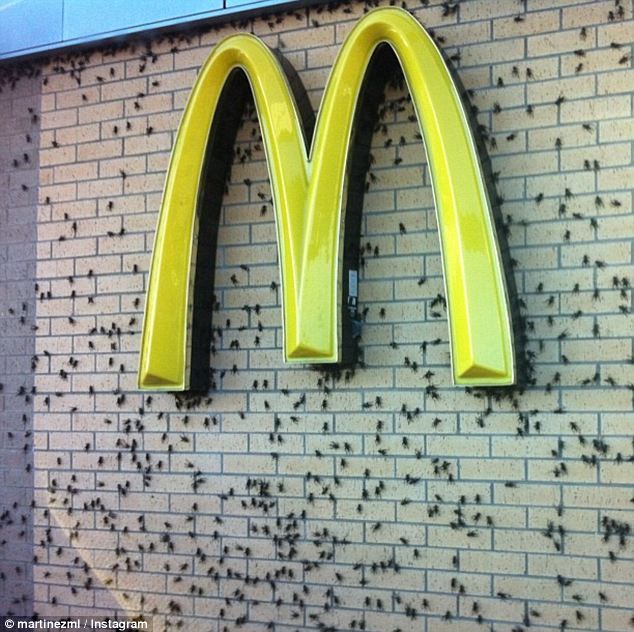
They're everywhere: Unusually large swarms of crickets are invading Oklahoma, covering streets, sidewalks, and businesses like this McDonalds


Info

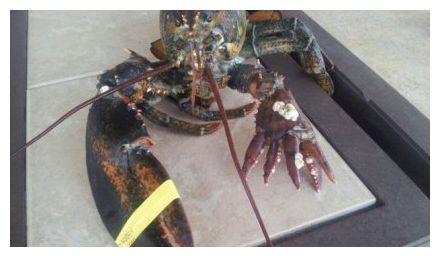
Maine lobsters hit by shell-eating disease

Image
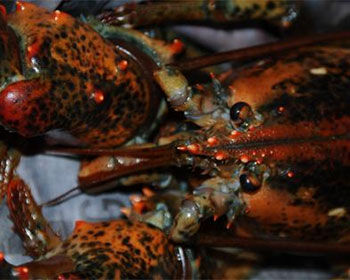
© Beate Hoddevik Sunnset/IMRAmerican lobster, Homarus americanus.
An epizootic shell-eating bacteria that has infected the southern New England lobster (Homarus americanus) for years is fast spreading up north, a situation that causes concern in the shrimp sector in Maine.

The disease, previously confined to the south of New England and Long Island Sound, has baffled a group of scientists at the University of Rhode Island, who have been researching the subject for over a decade.

The disease was first noticed in 1996 by fisheries biologist Kathy Castro. Two years later, almost 18 per cent of the Rhode Island lobsters were infected with it.

"By 2010, a third of all lobsters had the disease, and the scary part was that 70 per cent of females with eggs had it," she said. "That scared me because that's the reproducing population."

So far, only an insignificant number of Maine lobsters seem to have it: only three in a thousand sampled lobsters were infected. But there are fears that if the disease spreads as fast as it did in the waters of Rhode Island, it will have a drastic impact on the important Maine shrimp industry.