Animals
S


Bizarro Earth

The ocean is broken

Ivan
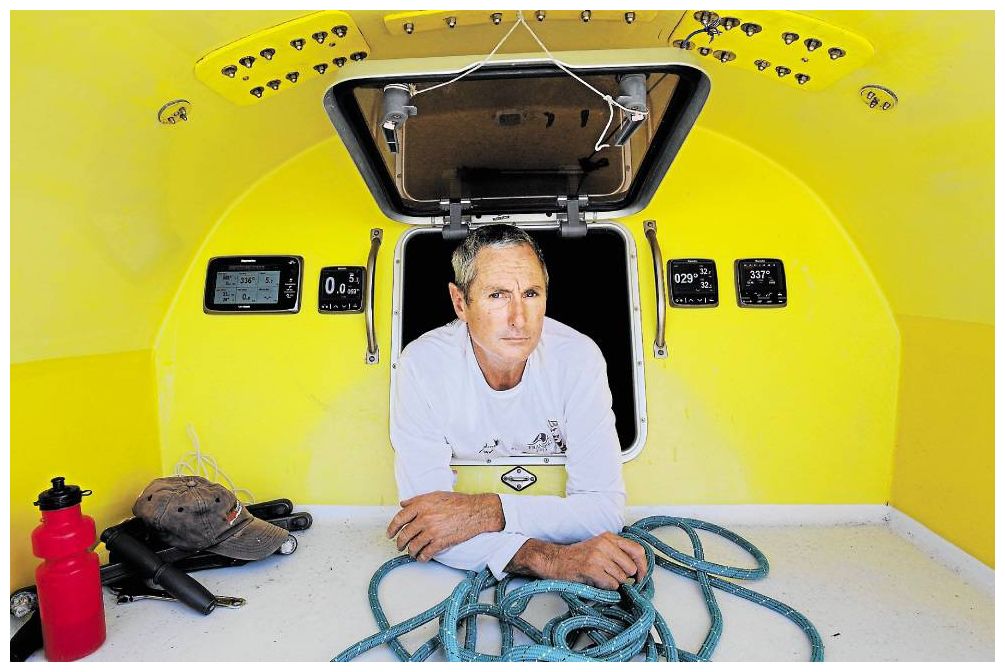
© The Herald, AustraliaIvan Macfadyen aboard the Funnel Web.
It was the silence that made this voyage different from all of those before it.

Not the absence of sound, exactly.

The wind still whipped the sails and whistled in the rigging. The waves still sloshed against the fibreglass hull.

And there were plenty of other noises: muffled thuds and bumps and scrapes as the boat knocked against pieces of debris.

What was missing was the cries of the seabirds which, on all previous similar voyages, had surrounded the boat.

The birds were missing because the fish were missing.

Exactly 10 years before, when Newcastle yachtsman Ivan Macfadyen had sailed exactly the same course from Melbourne to Osaka, all he'd had to do to catch a fish from the ocean between Brisbane and Japan was throw out a baited line.

"There was not one of the 28 days on that portion of the trip when we didn't catch a good-sized fish to cook up and eat with some rice," Macfadyen recalled.

But this time, on that whole long leg of sea journey, the total catch was two.

No fish. No birds. Hardly a sign of life at all.

Heart - Black

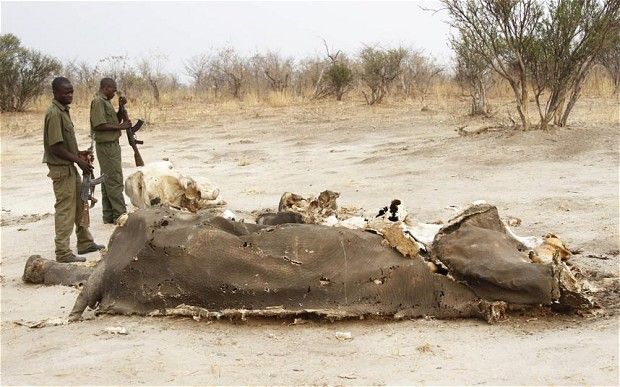
Poachers kill 300 Zimbabwe elephants with cyanide

Cyanide has been used to kill 300 elephants in Zimbabwe's biggest nature reserve - three times the original estimate - as new photos show the scale of the slaughter

Image
© APWorkers look at a rotting elephant carcass in Hwange National Park, Zimbabwe
Poachers in Zimbabwe have killed more than 300 elephants and countless other safari animals by cyanide poisoning, The Telegraph has learned.

The full extent of the devastation wreaked in Hwange, the country's largest national park, has been revealed by legitimate hunters who discovered what conservationists say is the worst single massacre in southern Africa for 25 years.

Pictures taken by the hunters, which have been obtained exclusively by The Telegraph, reveal horrific scenes. Parts of the national park, whose more accessible areas are visited by thousands of tourists each year, can be seen from the air to be littered with the deflated corpses of elephants, often with their young calves dead beside them, as well as those of other animals.

There is now deep concern that the use of cyanide - first revealed in July, but on a scale that has only now emerged - represents a new and particularly damaging technique in the already soaring poaching trade.

Zimbabwean authorities said that 90 animals were killed this way. But the hunters who captured these photographs say they have conducted a wider aerial survey and counted the corpses of more than 300.

Bizarro Earth

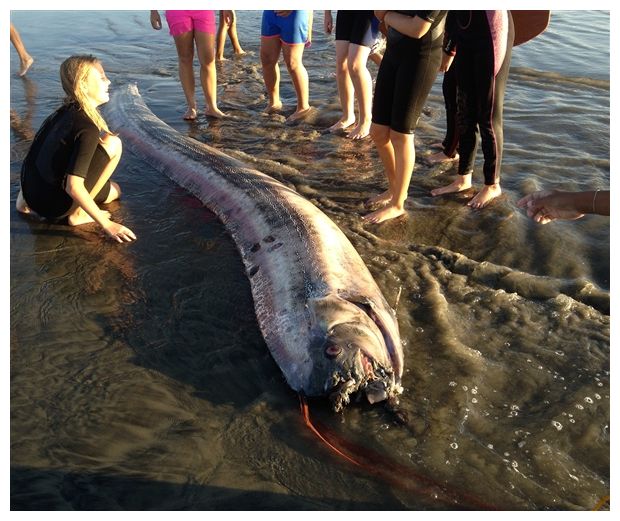
Second rare oarfish washes up in Southern California

Oarfish
© Mark Bussey/OceansideA 13.5 foot oarfish was found along the coast in Oceanside, Calif. on Friday.
For the second time in a week, the rare, serpentine oarfish has surfaced on a Southern California beach.

Beach goers at Oceanside Harbor crossed paths Friday afternoon with the deep-sea monster when its carcass washed ashore, Oceanside Police Officer Mark Bussey said. The fish measured 13 ½ feet long.

The discovery came just days after an 18-foot dead oarfish was found in the waters off Catalina Island.

"The call came out as a possible dead whale stranded on the beach, so we responded and saw the fish on the sand right as it washed up," Bussey said.

Oceanside police then contacted SeaWorld San Diego, the Scripps Research Institute and the National Oceanic and Atmospheric Administration. Suzanne Kohin of NOAA Fisheries Serivice responded, measured and took possession of the oarfish for research, Bussey said.

Bussey added that people on the beach were "flabbergasted" to see the fish.

Comment: See also.

18-foot oarfish caught by Catalina marine science instructor in California

Something amiss deep down? Bizarre-looking oarfish washes ashore on Cabo San Lucas beach

Appearance of "Earthquake fish" spook Japanese

Rare "King of Herrings" Found off Swedish Coast

England: Monster of deep washes up on beach


Cow

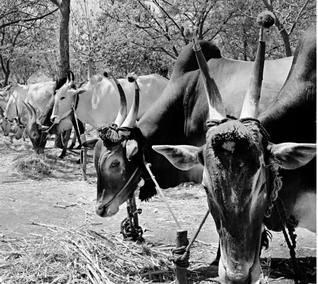
3,060 head of cattle have fallen to foot-and-mouth disease in India

The foot-and-mouth disease appears only to be spreading geographically and in intensity across the State, even as the Animal Husbandry Department reiterates that the cattle disease is "under control".
By Wednesday, the disease had claimed 3,060 head of cattle (since September 1), according to official figures with the department, a significant jump from last week's casualty figure of 2,060. Another 23,500 animals have been infected with the virus, as against 16,573 last week.
Image
The Animal Husbandry Department has reiterated that the cattle disease is 'under control.'

The disease, which so far had South Karnataka under its grip, now appears to have spread to several other districts, including those in the north of the State such as Bidar, Bellary and Belgaum.

Deputy Director of the Animal Husbandry Department Sriram Reddy, however, said the disease was "under control" and that the department was continuing its "ring vaccination" of cattle within a specified radius of affected villages.

Question

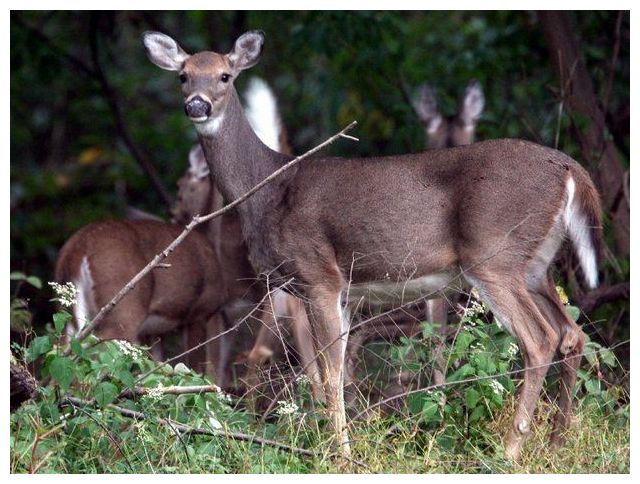
Why are an increasing number of roadside deer carcasses found decapitated in New Jersey?

Deer
© Martin Griff/The Times of TrentonDOT workers say an increasing number of roadside deer carcasses are discovered decapitated.
Fair Lawn - An increasing number of roadside deer carcasses are being discovered decapitated, authorities told News 12 New Jersey.

Department of Transportation workers tell News 12 that many are taking the heads for show.

George Dante, the owner of a taxidermy shop in Woodland Park, told News 12 that "When they (sportsmen) see an animal by the side of the road with this magnificent headgear on it, you can't help but stop and take it home."

Police want residents to know that taking deer heads is against the law, and those who are caught can be fined $500 the first time and up to $1,000 for a second offense, the report said.

Residents in New Jersey are allowed to keep roadkill to eat, the report said, as long as they have a permit from the Fish and Wildlife Commission.

"We would love to be able to pick up a roadkill and recycle it and turn it into a beautiful mount, give it to an environmental center," Dante told News 12. "Unfortunately, we're not allowed to recycle our wildlife."

Eye 2

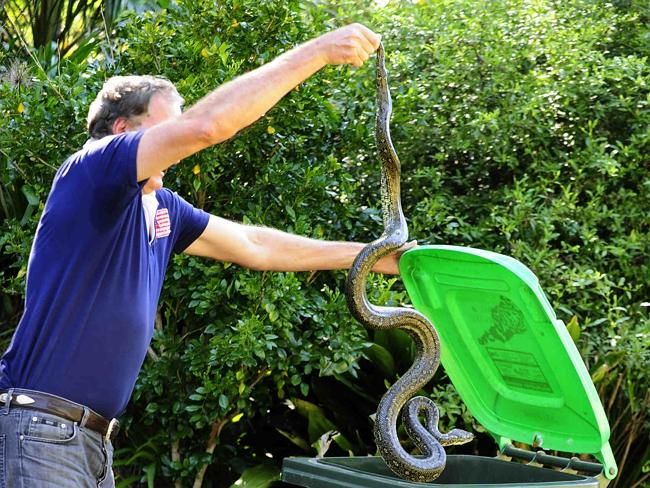
Writhing ball of sexy snakes infest man's Wamberal backyard in Australia


A Wamberal man received the shock of his life when he stumbled on a writhing ball of snakes in his backyard.

What he did not know was that they weren't interested in him, but in one another. He had stumbled on a bizarre snake mating ritual.

Christopher Finch said he had never seen anything like the "hellhole" of diamond pythons, some up to 2.5m long, on his property - just a short stroll from neighbouring houses and the Central Coast Highway.

Image
Christopher Finch and the largest Diamond Python from his Wamberal back garden. Source: News Limited

Wolf

Colorado man fights off 3 coyotes using flashlight as weapon

Image
© CBSAndrew Dickehage
A Colorado man is nursing too many bites and scratches to count after he survived a brutal attack from three coyotes using only a flashlight as weapon to defend himself.

Andrew Dickehage was having car troubles when he decided to walk from his Longmont, Colo., home early Monday morning when the teeth-baring trio came charging out of the darkness.

"You feel the initial impact and soon as you felt it you could then react, and go to shove," Dickehage told TV station KCNC Wednesday.

Dickehage was initially using his flashlight to navigate the dark roads when he decided that it was probably his best bet to fight off the coyotes.

"I took my flashlight and I hit it over the side of the head to get it to let go," he told KCNC. "As soon as I got it to let go, then another went to lunge at me and all I could think to do was swing to get it not to lunge at me."

Bizarro Earth

Rare whale found dead in Southern California

Dead Rare Dolphin
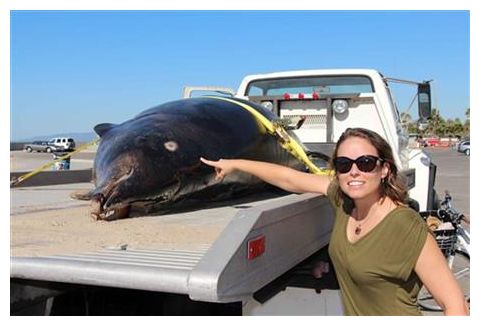
© AP Photo/Nick FlashThis image provided by Heal the Bay shows Heather Doyle, director of the Heal the Bay's Santa Monica Pier Aquarium pointing out shark bites found on a beached Stejneger's Beaked Whale that washed ashore Tuesday in the Venice Beach area of Los Angeles, Wednesday Oct. 16, 2013. Heal the Bay plans to study the whale.
Los Angeles - A rare whale that has a dolphin-shaped head and saber-like teeth has been found dead on Los Angeles' Venice Beach, even though it prefers frigid subarctic waters.

The roughly 15-foot-long female Stejneger's beaked whale washed ashore Tuesday night, the Los Angeles Times reported. A truck hauled away the mammal, which was being examined at the Los Angeles County Natural History Museum to determine how it died.

Bizarro Earth

Are dolphins reaching a breaking point?

Something bad is happening in the ocean. No one's certain what's causing it, but in the past three months more than 550 bottlenose dolphins have stranded along the Atlantic Coast and there's no indication that the strandings are letting up. While researches rush to catalog data on the dolphins' deaths, larger questions loom - is the Atlantic coastal ecosystem broken, and are humans the cause?

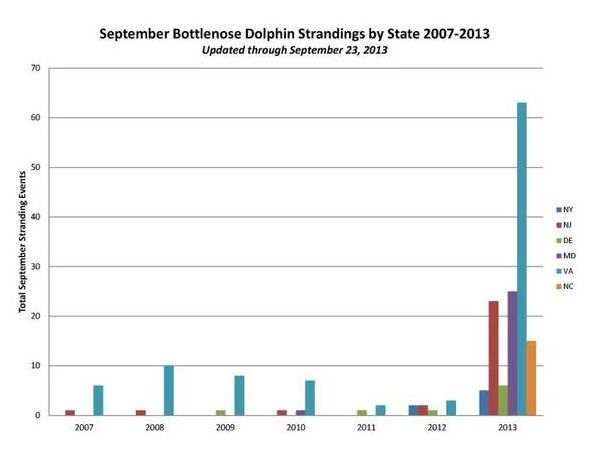
Yes, dolphins strand all the time, but not like this. As shown below in the figure from the National Marine Fisheries Service, strandings have skyrocketed this year, especially in Virginia and fanning out north and south, with large numbers in Maryland, New Jersey and North Carolina.
Dolphin
© NOAAFigure from NOAA Fisheries' landing page regarding "2013 Bottlenose Dolphin Unusual Mortality Event in the Mid-Atlantic."
It would be easy to finger the morbillivirus, which has ravaged bottlenose dolphin populations in the past and is showing up in the necropsies conducted on these dolphins.

Bizarro Earth

South Dakota's cattle cataclysm: Why isn't this horror news?

Dead Cattle
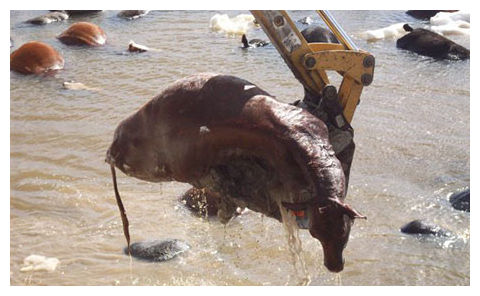
© Lacey WeissA dead cow is lifted from flooding in the aftermath of winter storm Atlas in South Dakota.
If you aren't in the ag world, you most likely haven't heard about the devastating loss that ranchers in western South Dakota are struggling with after being hit by winter storm Atlas.

For some reason the news stations aren't covering this story. I don't understand why they wouldn't. This story has heartbreak, tragedy and even a convenient tie into the current government shutdown. Isn't that what the news is all about these days?

But the news isn't covering this story. Instead, it is spreading around on social media, and bloggers are writing from their ranches in South Dakota. Bloggers are trying to explain how the horrible happened. And now I am going to join them to tell you the part of the story that I know, and I am going to ask you to help these people, because if you are here reading this, I know you give a crap about these people.

Last weekend western South Dakota and parts of the surrounding states got their butts handed to them by Mother Nature. A blizzard isn't unusual in South Dakota, the cattle are tough and can handle some snow. They have for hundreds of years.

Unlike on our dairy farm in Wisconsin, beef cattle don't live in climate controlled barns. Beef cows and calves spend the majority of their lives out on pasture. They graze the grass in the spring, summer and fall and eat baled hay in the winter.