Animals
S


Attention

Rampaging moose stomps on 2 women walkers in Colorado

Image
A moose on the rampage attacked two women walking with their dogs, injuring both severely.

The animals can weigh a half ton or more.

"We were just moseying along, hiking, enjoying our hike, and then all of a sudden, I looked up and he was looking right at me,"said Jacquie Boron, 50, who was hiking with her neighbor Ellen Marie Divis, 57, near their homes in Black Hawk, Colo., about 35 miles northwest of Denver.

Boron said the moose grunted and immediately charged toward her, hitting her squarely in the chest and knocking her off her feet.

"I knew that they were aggressive, and I knew that I should be very careful with them," she said. "But I didn't expect them just to charge me."


Sheeple

Michigan man shoots demented ram during crazy attack

Image
A relentless attack waged on the Richard family by a Thanksgiving party crasher in Whitmore Lake.

"He kept pounding and pounding and pounding."

It started right after dinner when Mike Richard took his dog Murphy for a walk.

"I took a look off to my right and the ram was over here," Mike said.

A ram broke free from a neighbor's land and wanted very badly to be a part of the Richard's holiday gathering.

"It looked at us and I could see the aggression in its eyes," Mike said. "And started charging after us."

"I slammed the door in its face and that's when all hell broke loose," Paula said.

"He wanted in this house," Mike said.


Attention

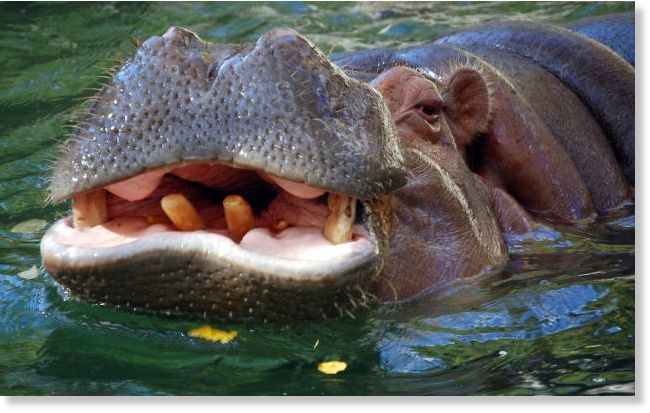
Man dies after vicious hippo attack in South Africa

Image
A Limpopo man has died following an attack by a hippo, the provincial health department said on Tuesday.

"The man was fishing on Friday afternoon when the hippo attacked him," spokesperson Macks Lesufi said.

"When he was rescued, he was badly injured."

Dashi Makhuvele fought tooth and nail with the large animal when it attacked him at Makuleke dam while fishing.

Following his ordeal, the 34-year-old man survived to tell the tale but due to the nature of his injuries he died in hospital on Sunday.

Fish

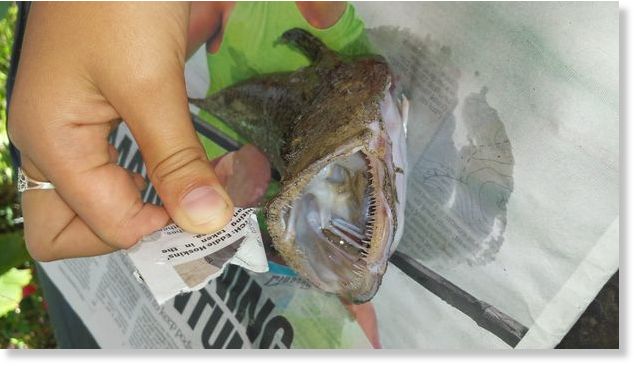
Rare deep sea fish found on Mooloolaba Beach, Australia

Image
Rare Angler Fish washes up at Mooloolaba
A rare fish species with an odd mating habit and a light dangling from an antenna on its head to attract prey has washed up from the depths at Mooloolaba Beach.

Thirteen-year-old Mia Cornwall discovered the Angler Fish, also known as a Black Sea Devil or a Melanocetus, during a morning walk.

Mia's grandfather Peter Beinssen, who shares her love of all things in nature, arranged for the specimen to be dropped at SeaLife from where it is destined for the Queensland Museum.

Mr Beinssen said the Angler Fish normally lives at depths of around 1600m.

Info

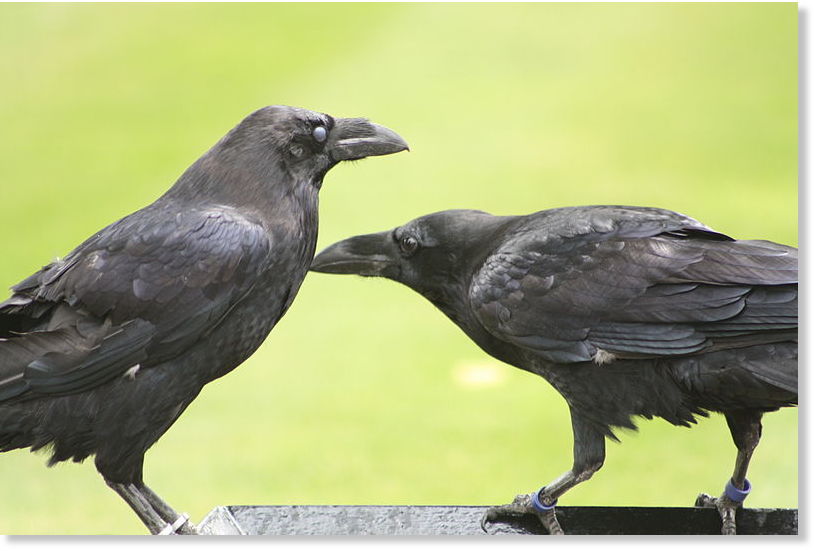
Dominant ravens sabotage others' relationships

Image
If we're lucky, this is behavior we haven't seen since high school. The coolest individuals can't stand to see others gaining social status, so they cut down any peers who are starting to elevate themselves. Ravens have to live with this behavior all the time. When the top-dog birds see others building new relationships, they attack these birds or put themselves in the middle. They may as well be spreading rumors or defacing each other's lockers.

Wild ravens living in Austria were the ones to reveal this behavior to scientists. The ravens, a group of about 300 birds in the Austrian Alps, have discovered that a local zoo is a convenient source of food. So the wild birds hang around the captive animals year-round (they especially like the wild boar enclosure) and steal their provisions. Because of this, they're used to seeing humans nearby.

For years, scientists have been capturing these birds, marking them with colored leg bands, and studying their social behavior. Now University of Vienna cognitive biologist Jorg Massen and his coauthors asked whether the most dominant birds might be sabotaging those lower down in the group.

Info

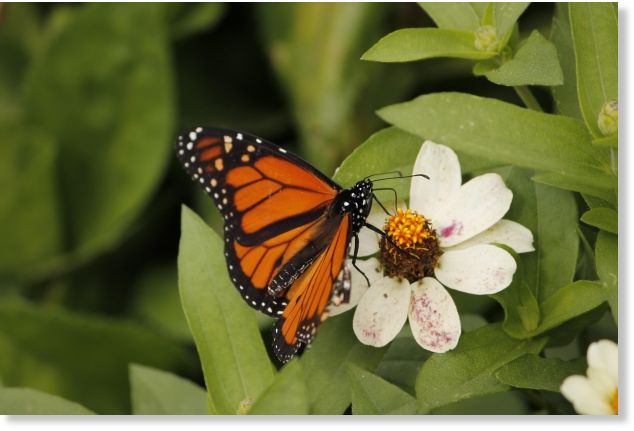
Animal Magnetism: How the magnetic field influences animal navigation

Image
© Revwarheart.The migration of the monarch butterfly seems like it’s magic, but it’s actually guided by the magnetic field.
Sometimes, ecology is quite visible. When an owl catches a mouse, we see that connection very clearly. When a river floods, we see how water shapes a landscape.

Ecology can also be less visible. The soil is a good example of this: There is so much life in that brown material beneath our feet, but since we live on top of it, soil life can be difficult for us to visualize.

Sometimes, ecology is invisible.

What forces guide monarch butterflies as they migrate to a place they've never seen? When animals interact with the Earth's magnetic field, these invisible influences play a big role in animals' behavior.

Binoculars

Wrong time, wrong place: Rare bird found in Barrie, Canada

Image
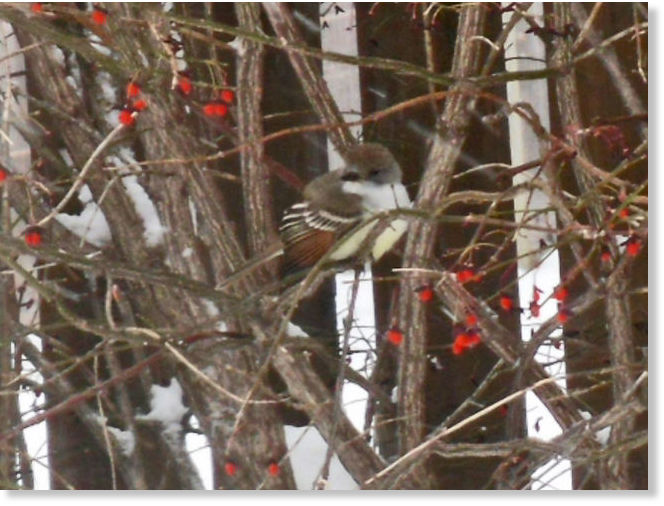
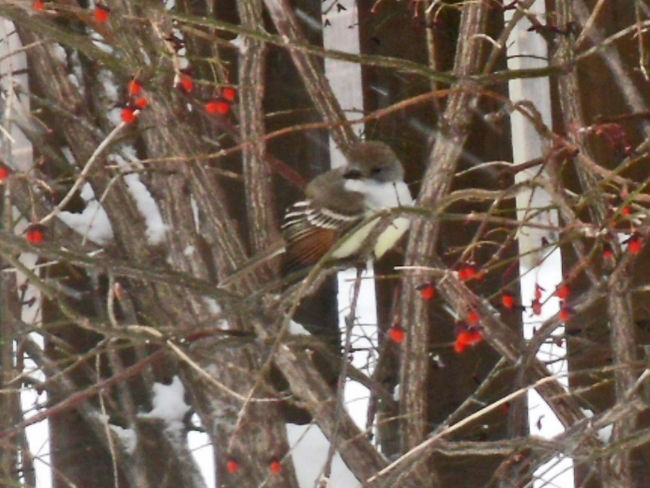
© Darlene DeemertAn ash-throated flycatcher is shown in a Barrie backyard Nov. 18.
If you were a bird, you may want to consider flying south in October and not returning to our area until next May. Many human snowbirds do just that. Many birds migrate south to warmer climates for winter, then return in the spring, but some seed-eating birds tough out the winter with us.

There is a family of birds called flycatchers that survives by hawking flying insects out of the air in mid-flight. There are not many insects flying around in winter, so a flycatcher that tried to overwinter instead of migrate would have little chance of survival.

Flycatchers mainly eat insects and other invertebrates, but also fruit.

One of the largest and most common species of flycatcher that nests in our area in summer is the great-crested flycatcher. It is a member of the Myiarchus genus and the second-largest flycatcher in our area, slightly smaller than the eastern kingbird. Great-crested flycatchers leave our area in late summer and early fall to fly south to southern Central America or northern South America. There are few records of this species staying around in late fall or winter in our area.

Comment: Maybe some change in the planet's environment is interfering with this bird's ability to correctly utilise the Earth's magnetic field to navigate by? See also this: Animal Magnetism: How the magnetic field influences animal navigation

Extract -
Human impacts on the Earth's magnetic field

Humans have an impact on so many aspects of the earth's ecology. While wrangling with the magnetic field might seem like an activity that is out of our reach, human-induced electromagnetic noise could be a concern for migrating animals.

In a 2014 study published in the journal Nature, laboratory studies on robins showed birds that were exposed to background electromagnetic noise had trouble discerning which way was south.


While other studies have not seen the same impact from everyday background noise, it's prudent to be aware that human-induced electromagnetic disturbances could have an impact on some animals' highly-tuned sensory systems.
Then again, perhaps any magnetic changes of a natural kind may also play a role? Earth's magnetic field is weakening 10 times faster now


Binoculars

Rare bird from Mongolia turns up in Wakefield, UK

Image
© Mick HemingwayBlyth's Pipit
A rare bird caused twitchers to flock to Wakefield today (Monday).

A Blyth's Pipit was spotted late morning by birder Jonathan Holliday close to the Calder Wetlands site, which is across from Pugneys Country Park.

The bird, which breeds in Mongolia, is believed to be the first county record for Yorkshire.

Birders from across the region rushed to Denby Dale Road to see the "archetypal little brown job" after the news broke on social media and pagers. More twitchers are expected tomorrow.

Comment: Maybe some change in the planet's environment is interfering with this bird's ability to correctly utilise the Earth's magnetic field to navigate by? See also this: Animal Magnetism: How the magnetic field influences animal navigation

Extract -
Human impacts on the Earth's magnetic field

Humans have an impact on so many aspects of the earth's ecology. While wrangling with the magnetic field might seem like an activity that is out of our reach, human-induced electromagnetic noise could be a concern for migrating animals.

In a 2014 study published in the journal Nature, laboratory studies on robins showed birds that were exposed to background electromagnetic noise had trouble discerning which way was south.


While other studies have not seen the same impact from everyday background noise, it's prudent to be aware that human-induced electromagnetic disturbances could have an impact on some animals' highly-tuned sensory systems.
Then again, perhaps any magnetic changes of a natural kind may also play a role? Earth's magnetic field is weakening 10 times faster now

Attention

Six sperm whales found dead in rare mass beaching in South Australia

Image
© aptn

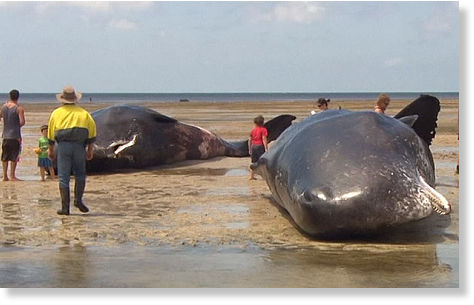
A pod of six sperm whales washed up dead Monday in a rare mass stranding on the South Australia coast, with animal welfare officials struggling over the logistics of handling the huge carcasses.

The whales, which can weigh up to 50 tonnes, were found at low tide by residents on Parara beach, about 93 miles northwest of Adelaide.

"We're not sure why they beached," a Department of Environment official told AFP.

"A theory is that one was ill and moved to shallow waters and then called out to fellow pod members who followed it in."

A local fisherman suggested they could have been chasing a school of salmon.


Comment: There have now been 14 reports of dead whales emanating from Australasia over the last 3 months, see also -

3 stranded sperm whales die on Rototai beach, New Zealand

12th report in 2 months of dead cetaceans Down Under: Carcass of humpback whale found drifting off Perth coast, Australia

Humpback whale carcass found on Gold Coast beach, Australia

36 stranded pilot whales die in New Zealand

Rare beaked whale found dead on Sunshine Coast, Queensland

Rare, record-sized pygmy whale found dead on Victorian beach, Australia

Eight-metre dead whale washes onto rocks in Batemans Bay, Australia

Dead humpback whale found on Kapiti Coast, New Zealand

Rare deep sea dwelling beaked whale washes up on beach near Newcastle, Australia

Denizen of deep water, cuviers beaked whale found dead on Titahi Bay beach, New Zealand

Humpback whale washes up dead at Kalbarri beach, Western Australia

Dead fin whale found on beach in Warrnambool, Australia

Two dead humpback whales wash up on NSW beaches, Australia

Creatures from the deep signal major Earth Changes: Is anyone paying attention?


Question

Mako shark washes up dead on Barmouth beach, Wales

Image
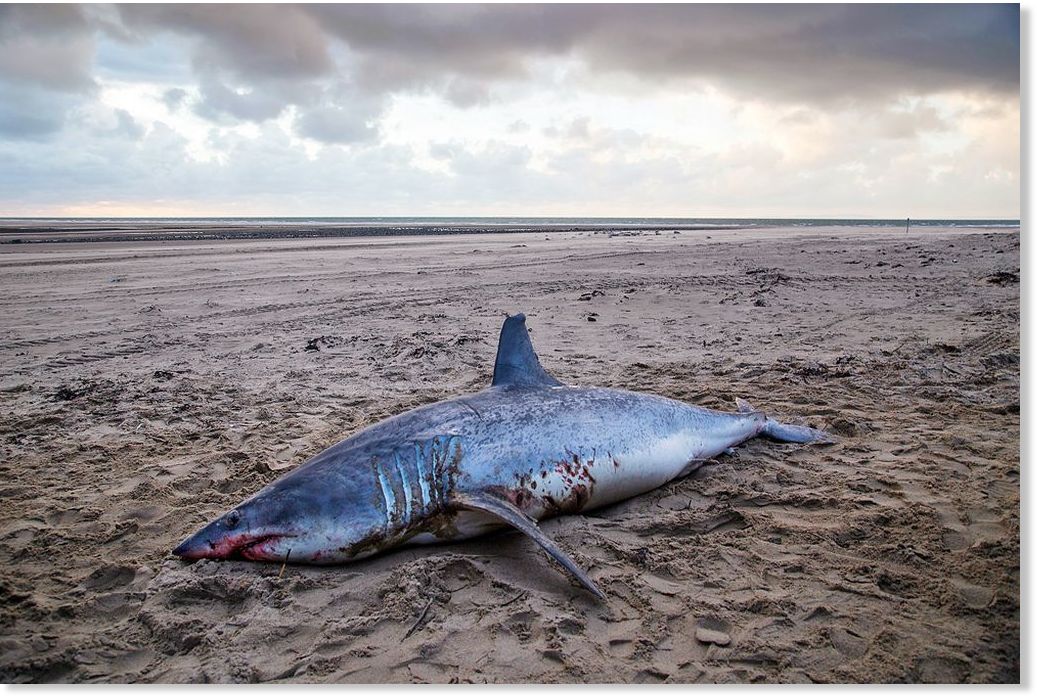
The huge Mako-type mackerel shark was found on Barmouth beach, western Wales, on Saturday afternoon, 6817 miles away from its natural habitat

A massive shark has washed up on a Welsh beach - 7000 miles away from its natural habitat.

The huge Mako-type mackerel shark was found on Barmouth beach, western Wales, on Saturday afternoon.

Normally the fish are found in the Atlantic Ocean off the Argentinian coast, a whopping 6817 miles away from Wales.

Photographer Gwion Liggett, from Barmouth, Gwynedd, captured the amazing scene just a few hours after the shark was found.