Animals
S


Attention

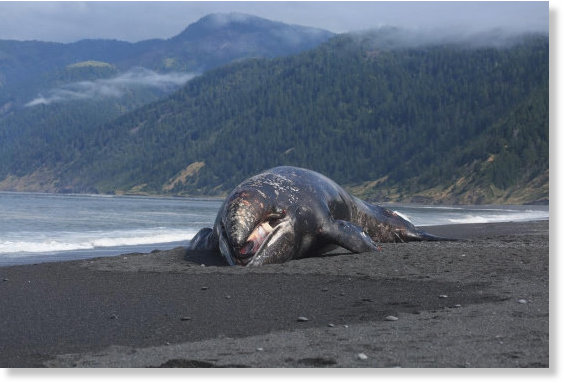
Dead whale washed ashore in Shelter Cove, California

Dead whale
© Philip W. Young
A big dead whale washed up on Black Sands Beach in Shelter Cove on Sunday.

Shelter Cove Resort Improvement District General Manager Philip Young told the Outpost via email that some people reported seeing the whale being attacked by sharks before it washed ashore.

"There are some reports that it was still alive when it washed ashore, others said it was attacked by sharks while in the water," Young said. "The photos will reveal very few bite marks, and certainly none that are fatal, nor persistent bites on its pectorals and tail. Photos of the head reveal marks which could be 'ulcers or body sores,' an indication it might have been sick. Lastly, the vertebrae towards the tail as pronounced, indicating it might have been malnourished. It's body is already starting to bloat from internal decay."

Attention

Sharks attack 2 people off Florida coast

Shark
© Ryan Pierse/Getty Images
The second incident took place 200 miles from the first

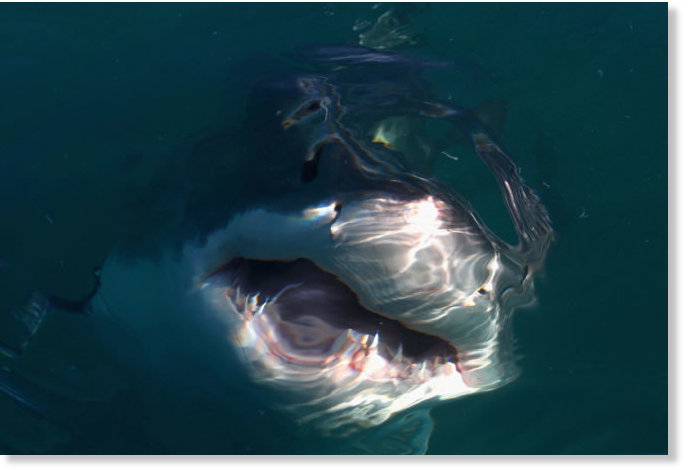
Sharks attacked two people, including an 11-year-old girl, in separate locations in Florida over the weekend.

The girl had been swimming in waist-deep water at Huguenot Memorial Park in Jacksonville on Saturday when a shark bit her back, arm and hand, her family told Action News Jax. The young victim, whose identity was not released, needed stitches on her hand and fingers and is expected to undergo surgery this week, according to the news outlet.

On Sunday, a 57-year-old woman named Mary Marcus was bitten in the leg by a shark in Vero Beach, which is about 200 miles south of the first attack, according to the Associated Press. She was able to swim back to shore and was taken to the hospital, where she will undergo surgery, ABC News reports.


Attention

Camel attacks and kills owner in Rajasthan, India

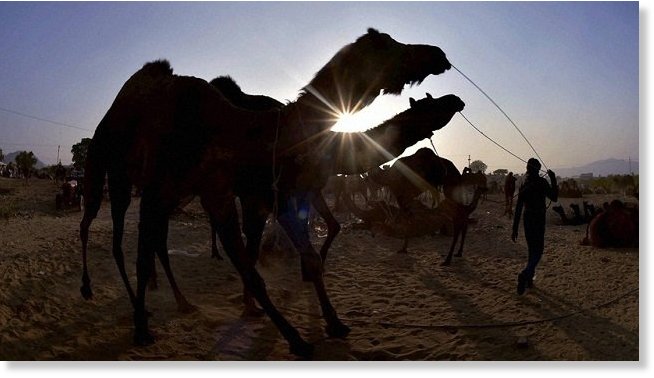
 When the owner went to untie the camel, the annoyed animal attacked him (File Photo)

When the owner went to untie the camel, the annoyed animal attacked him (File Photo)
In Rajasthan's Barmer district, an agitated camel reportedly severed its owner's head, after being left in the heat all day with its legs tied.

After the incident, which took place on Saturday, villagers say they had to struggle for around six hours to get control of the animal. According to a Times of India report, the owner from Mangta village was busy catering to guests on Saturday night and forgot that his camel was kept out in the heat all day. When he finally went to untie the camel, the animal attacked him.

A villager said that the camel lifted the owner by the neck and threw him on the ground, chewed the body and severed the head. The camel had reportedly attacked the owner in the past as well.

Wolf

Man mauled to death by family dog in Cleator Moor, UK

Buster, the dog that killed his owner Stephen Hodgson

Two brave teenage daughters tried to drag a pet dog off their father as it mauled him to death in his own home.

The dog, believed to be a Staffordshire pitbull cross breed, set upon the 45-year-old victim at his home in Cleator Moor, Cumbria, on Sunday afternoon.

Police say his two daughters desperately battled to pull the pet dog off their father as it mauled him in an upstairs bedroom.

The brave pair, aged 19 and 16, risked injury in a 10 minute struggle to drag the dog away.


One of the girls eventually managed to lock the dog in a room while the other called the cops.

Stephen Hodgson, 45, was mauled to death by his own pet dog

Blue Planet

Changing marine environments leading to surge of highly adaptable cephalopods

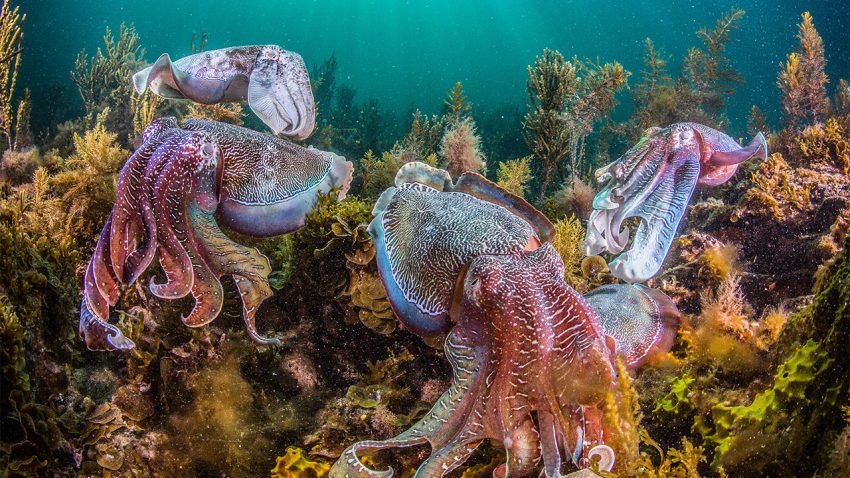
Cephalopods, australian cuttlefish
© S. PortelliCephalopods like these giant Australian cuttlefish (Sepia apama) are increasing in number worldwide
Wherever humans have changed the environment—and you'd be hard-pressed to find a place we haven't—there are winners and losers. Cities around the world shelter pigeons, naturally adapted to life on rock ledges. Farms allow weedy plants to thrive between their fields. Oceans—plagued by rising temperatures, depleted fish populations, and acidifying waters brought on by human activity—are no exception. New research shows that these changes to marine environments are leading to a surge of cephalopods, the invertebrate group that includes octopuses, squid, and cuttlefish.

Scientists have noticed a growth in cephalopod catches around the world since the late 1990s. But drawing conclusions from national fisheries data can be tricky. Not only can catch numbers be misreported, but changes in catch amounts can also be influenced by factors that change the amount of time people spend fishing—like the price of fish and the cost of fuel—or by technological advances that allow fishers to catch more. So an increase in cephalopod catch doesn't necessarily mean there are more cephalopods in the ocean.

To solve this problem, researchers looked for data that would allow them to calculate how much fishers catch over a given time period—a more reliable metric of actual cephalopod population numbers. But finding the data wasn't easy. Zoe Doubleday, a marine biologist at the University of Adelaide in Australia and lead author of the study, spent months with her team poring over the available literature, persuading international colleagues to track down hard-to-get national fisheries records, and then getting those records translated into English. Combined with 32 scientific surveys, the records gave the researchers 60 years of reliable data.

The conclusion was clear: Cephalopod populations—from New England to Japan—have boomed since the 1950s. And the numbers aren't limited to species that live in the open ocean, like the Humboldt squid (Dosidicus gigas). Species that live closer to shore, like the elegant cuttlefish (Sepia elegans), have also seen a steady rise in numbers, the researchers report today in Current Biology. Crucially, the increase was seen in both scientific survey data and fisheries records—so it wasn't just an artifact of technological advances or a growing global hunger for calamari and sushi.

Binoculars

Wrong time, wrong place: Starling turns up in the Arctic community of Tuktoyaktuk, Canada

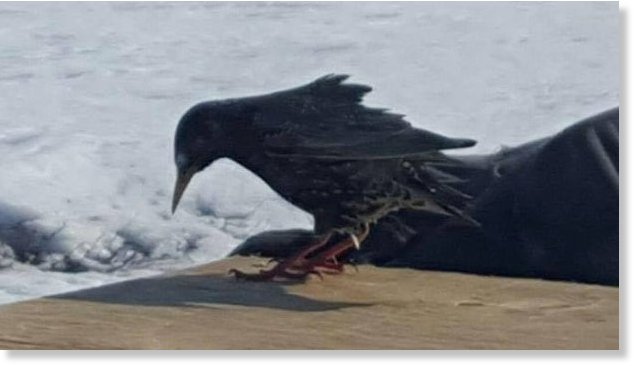
A European starling showed up in John Noksana's yard in Tuktoyaktuk, N.W.T., on May 11.
© John NoksanaA European starling showed up in John Noksana's yard in Tuktoyaktuk, N.W.T., on May 11.
A bird that's common in southern Canada but rarely seen in the Arctic showed up in Tuktoyaktuk, N.W.T., last week.

It was May 11 around 9:30 a.m. and John Noksana and his wife were having coffee, about to get ready to go goose hunting, when she pointed the bird out to him.

"It was a black bird, maybe a little bigger than a robin. It had a yellow beak, pretty sharp claws for a small bird, I noticed, and silver wings," he said.

"I'd never seen a bird like that in my life."

It hung around in their yard for three or four minutes — long enough for Noksana to snap four or five photos — then it took off.

Attention

Dolphin and calf found dead in Perth, Australia

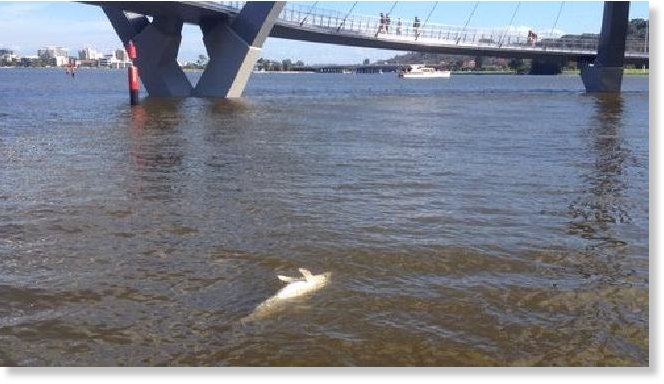
A dead dolphin has washed up in Elizabeth Quay
© PaulGerrard1/TwitterA dead dolphin has washed up in Elizabeth Quay
A female dolphin named Pirulli and her calf have been found dead in the Swan River, near Elizabeth Quay.

Cottleslow resident Paul Gerrard said it was 'sad to see a dead dolphin in Elizabeth Quay', on a Twitter post attached to a photo of the calf.

It was a dark contrast to pictures posted by Environment Minister Greg Hunt just ten days earlier of dolphins swimming by the Quay as the sun rose.

Researchers believe there are 23-25 dolphins living in the Swan River.

A spokesperson for Murdoch University told MailOnline that Pirulli, who has been monitored since 2009, was more than 30 years old and she had given birth to a calf eight months ago.

'Pirulli was one of 11 breeding females in the river, so that's a bit of a loss, but she's had a good run,' they said.

Fish

Rare oarfish found dead on beach near Kaikoura, New Zealand

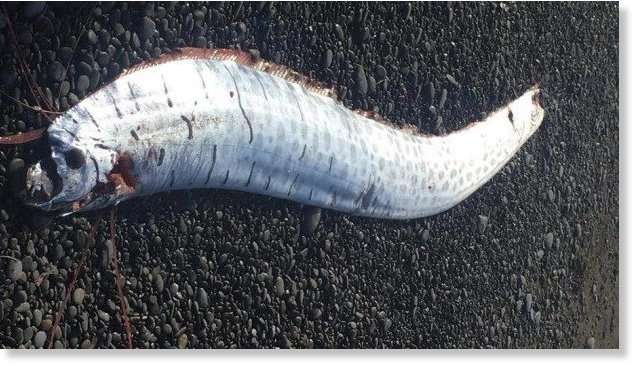
Tim Wilding found the unusual-looking oarfish washed up on a beach south of Kaikoura.
© Tim WildingTim Wilding found the unusual-looking oarfish washed up on a beach south of Kaikoura.
A deep-sea fish rarely seen in New Zealand waters has washed up on a beach near Kaikoura.

Growing up to eight metres long, the oarfish is known to float vertically in the water at depths of up to 300m, and usually only in tropical locations.

One was found in Dunedin last year, but sightings of them in New Zealand were few and far between.

Identifiable by their long flat bodies and red dorsal fin, the oarfish was an edible game fish, but their meat was jelly-like and not regarded as very good eating.

Comment: See also: Rare oarfish: New Zealand sea serpent maybe a harbinger for natural disaster, says scientist


Attention

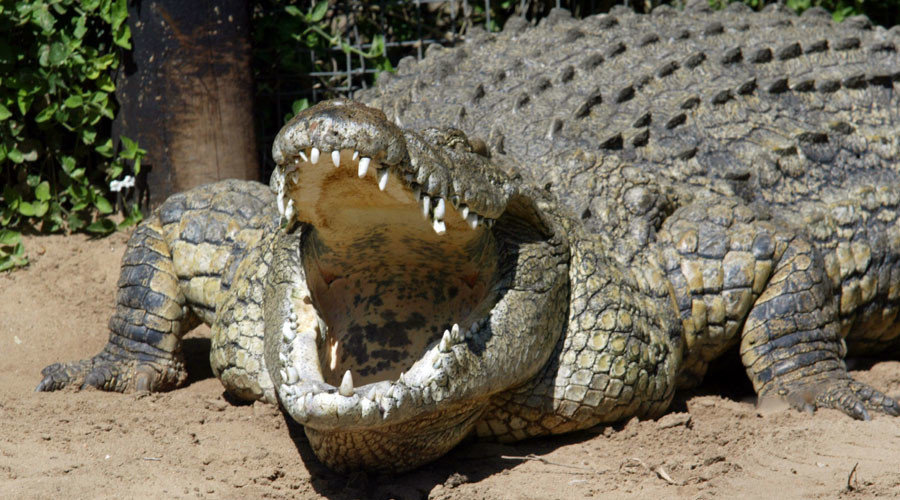
Giant Nile crocodiles that kill livestock and people in Africa, have now been found in Florida

nile crocodiles florida, invasive species
© Juda Ngwenya / Reuters
They kill livestock and dozens of people every year in Africa - and now they're in Florida. Up to three Nile crocodiles have been discovered in the Sunshine state, and scientists aren't sure how the giant reptiles arrived.

"They didn't swim from Africa," University of Florida herpetologist Kenneth Krysko, who co-wrote a study confirming the arrival of the crocs, told the Associated Press."But we really don't know how they got into the wild."

Over the course of their study, Krysko and his team analyzed the DNA of three crocodiles that were caught in Florida in 2009, 2011 and 2014. Their results found that two of the reptiles matched up almost perfectly with native Nile crocodiles from Africa, while the third one was also related.

Additionally, all three crocodiles may have been introduced to the environment through the same source - possibly an illegal reptile collector who lost control of the animals.

Notably, the scientists believe that it's possible more Nile crocs are still out in the Florida wild.

Cloud Lightning

Lightning bolt kills four elephants in northern Sri Lanka

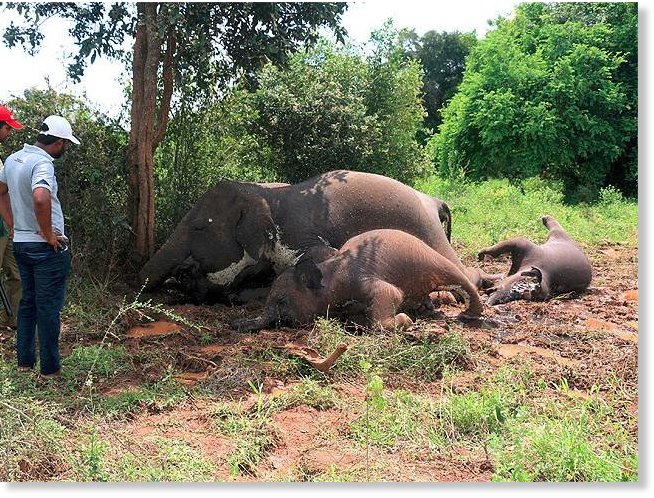
Four elephants, including two calves, were killed by lightning in northern Sri Lanka in one of the worst wildlife tragedies to hit the country in years.
Four elephants, including two calves, were killed by lightning in northern Sri Lanka in one of the worst wildlife tragedies to hit the country in years, officials said Sunday.

A female elephant, aged about 25 years, and two of her calves, aged 10 months and two years, and an eight-year-old female were found dead Sunday just outside the Wilpattu wildlife sanctuary, an official said.

"Villagers from neighbouring areas alerted the authorities and we carried out autopsies," wildlife veterinary surgeon Chandana Jayasinghe said. "The deaths were caused by lightning."

Local villagers in Mahavilachchiya, 250 kilometres (156 miles) north of Colombo, had reported heavy rains accompanied by thunder and lightning in the shrub jungle area on Friday when the elephants were thought to have been struck.

It was the worst natural disaster involving elephants since February 2011 when four baby elephants drowned in a major flood in the north-east of the country.