Health & WellnessS


Pills

Dirty medicine

Image
The epic inside story of long-term criminal fraud at Ranbaxy, the Indian drug company that makes generic Lipitor for millions of Americans.

1. The assignment

On the morning of Aug. 18, 2004, Dinesh Thakur hurried to a hastily arranged meeting with his boss at the gleaming offices of Ranbaxy Laboratories in Gurgaon, India, 20 miles south of New Delhi. It was so early that he passed gardeners watering impeccable shrubs and cleaners still polishing the lobby's tile floors. As always, Thakur was punctual and organized. He had a round face and low-key demeanor, with deep-set eyes that gave him a doleful appearance.

His boss, Dr. Rajinder Kumar, Ranbaxy's head of research and development, had joined the generic-drug company just two months earlier from GlaxoSmithKline, where he had served as global head of psychiatry for clinical research and development. Tall and handsome with elegant manners, Kumar, known as Raj, had a reputation for integrity. Thakur liked and respected him.

Like Kumar, Thakur had left a brand-name pharmaceutical company for Ranbaxy. Thakur, then 35, an American-trained engineer and a naturalized U.S. citizen, had worked at Bristol-Myers Squibb (BMY) in New Jersey for 10 years. In 2002 a former mentor recruited him to Ranbaxy by appealing to his native patriotism. So he had moved his wife and baby son to Gurgaon to join India's largest drugmaker and its first multinational pharmaceutical company.

When he stepped into Kumar's office that morning, Thakur was surprised by his boss' appearance. He looked weary and uneasy, his eyes puffy and dark. He had returned the previous day from South Africa, where he had met with government regulators. It was clear that the meeting had not gone well.


Comment: Hold on just a minute! This Indian company is basically following the model set for it by U.S. Big Pharma companies! CNN should be congratulating Ranbaxy for doing things 'the American way'!

Isn't is great how we're free to criticise when 'those people over there' do it, but barely mention our own medical crimes against humanity which originate back home?

Medicine as a whole is now the leading cause of death in the U.S.thanks to companies like Monsanto, a company has destroyed more lives in India than Ranbaxy ever will in the U.S. Oh, and it is destroying lives in the U.S. too.


Health

Junk study: Pfizer-funded study falsely claims fish oil useless

A study claiming that fish oil provides no benefit in heart disease is being hyped as the final word on the issue. But is it? No, it is not. In fact, the study is absurdly blatant pseudo science, with two errors so glaring it's hard to believe they were made. Why do the researchers do it? Why do they care so little about the truth and your health?

Heat Attack
© Unknown
A new study published in the New England Journal of Medicine purports to show that fish oil provides no benefit whatsoever in prevention of heart disease.[1] At first glance, it would appear to be true. The study is, after all, double blind and placebo controlled, not to mention having a significant number of participants. But is it for real, or is there some sleight of hand at work?

There's one initial clue that should give pause. The study's endpoints had to be changed. That's always a bad sign. In fact, it breaks the rules of good research. But, they had to do it because they found that their study participants weren't dying as fast as they'd anticipated.

Now, if they'd been interested in the truth, they'd have tried to figure out what was wrong. After all, the odds of dying when people have signs of heart disease are pretty well understood. Otherwise, how could they possibly have anticipated the rate at which deaths would occur?

Of course, they didn't sit back and wonder what they might be doing wrong. Instead, they just added new end points to their study.

Beer

Cola, depression, and addiction

A case study of cola dependency in a woman with recurrent depression

Image
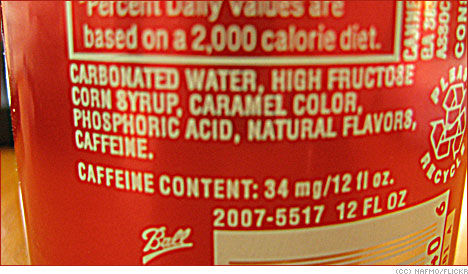
Soda as a source of fructose is linked with inflammation and depression.
It's not the world's greatest paper. It's a simple case study, just an introduction that proves nothing. The most fascinating thing about the paper is what we don't know about the consumption of cola, addiction, and mood.

So let's jump in. There is a 40 year old woman who has been on antidepressants for many years, and in addition drinks up to 3 liters of soda every day. She craves soda of a particular brand and has been unable to cut down her consumption in spite of the fact that it is probably interfering with her sleep, and she's developed metabolic syndrome. She feels the soda gives her an energy and mood boost. In fact she meets official criteria for dependence (which are official and written out and require physical dependence and withdrawal syndrome among some other symptoms, but what it all boils down to is continued use despite harm). After a serious exacerbation of her depression, she is referred to an outpatient clinic for treatment.

They work on slowly reducing her soda consumption. Low and behold, she sleeps better, feels better, has better energy, and her depression gets better. She still drinks a bit of soda, but not the massive amounts. She loses weight and stops having metabolic syndrome. She was able to wean off her antidepressant medication and felt good. Success.

Cheeseburger

McDonald's CEO called out by 9-year-old Hannah Robertson for selling junk food to kids

Junk Food
© Medical Daily
"It would be nice if you stopped trying to trick kids into wanting to eat your food all the time," quipped 9-year-old Hannah Robertson in a conversation with McDonald's CEO Don Thompson at a shareholders meeting in Oak Brook, Ill.

The fourth grader, whose mom runs a business that encourages children to make healthy food choices, read from prepared remarks as she said that the fast food chain lures kids into eating junk food by using toys and cartoon characters to promote the meals.

"If parents haven't taught their kids about healthy eating, then the kids probably believe that junk food is good for them because it might taste good," said Hannah.

Thompson, in a low, calm voice, responded to Hannah by thanking her for her comments then defending the company's food.

"First off, we don't sell junk food, Hannah," said Thompson. "My kids also eat McDonald's. They cook with me at home. I love to cook. We cook a lot of fruits and veggies at home."

Heart - Black

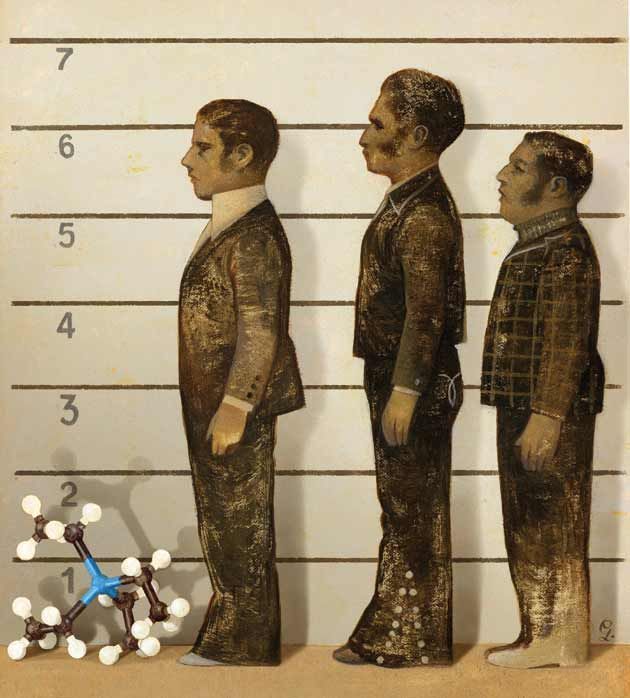
Lead poisoning: The hidden villain behind violent crime, lower IQs, and ADHD epidemic

Lead poisoning
© Illustration: Gérard DuBois
When Rudy Giuliani ran for mayor of New York City in 1993, he campaigned on a platform of bringing down crime and making the city safe again. It was a comfortable position for a former federal prosecutor with a tough-guy image, but it was more than mere posturing. Since 1960, rape rates had nearly quadrupled, murder had quintupled, and robbery had grown fourteenfold. New Yorkers felt like they lived in a city under siege.

Throughout the campaign, Giuliani embraced a theory of crime fighting called "broken windows," popularized a decade earlier by James Q. Wilson and George L. Kelling in an influential article in The Atlantic. "If a window in a building is broken and is left unrepaired," they observed, "all the rest of the windows will soon be broken." So too, tolerance of small crimes would create a vicious cycle ending with entire neighborhoods turning into war zones. But if you cracked down on small crimes, bigger crimes would drop as well.

Info

'Dead' woman gives birth to baby, comes back to life

A 'dead' woman has given birth to a healthy baby - and been brought back to life herself. Erica Nigrelli was 36 weeks pregnant when her heart stopped and she collapsed at work, reports Click2Houston.


Three co-workers at Elkins High School in Missouri City kept Erica alive by using CPR and a defibrillator until paramedics arrived to take her to hospital.

Health

Depression linked to telomere enzyme, aging, chronic disease

Image
© diego cervo / FotoliaThe first symptoms of major depression may be behavioral, but the common mental illness is based in biology -- and not limited to the brain.
The first symptoms of major depression may be behavioral, but the common mental illness is based in biology -- and not limited to the brain. In recent years some studies have linked major, long-term depression with life-threatening chronic disease and with earlier death, even after lifestyle risk factors have been taken into account.

Now a research team led by Owen Wolkowitz, MD, professor of psychiatry at UC San Francisco, has found that within cells of the immune system, activity of an enzyme called telomerase is greater, on average, in untreated individuals with major depression. The preliminary findings from his latest, ongoing study will be reported today at the annual meeting of the American Psychiatric Association in San Francisco.

Telomerase is an enzyme that lengthens protective end caps on the chromosomes' DNA, called telomeres. Shortened telomeres have been associated with earlier death and with chronic diseases in population studies.

The heightened telomerase activity in untreated major depression might represent the body's attempt to fight back against the progression of disease, in order to prevent biological damage in long-depressed individuals, Wolkowitz said.

Cow

Milk industry desperation setting in as America decides it doesn't really want to drink it

Image
© Shutterstock.com/Oliver Hoffmann
Despite 20 years of "Got Milk?" mustache ads, milk consumption in the US falls more every year.


The National Dairy Promotion and Research Program and the National Fluid Milk Processor Promotion Program cite competition from calcium-fortified and vitamin-enhanced beverages, milk's lack of availability "in many eating establishments" (You can't find milk anywhere!) and a growing percentage of African Americans and Latinos in the US population who are not traditionally big milk consumers.

Many other groups also shun milk, from teenagers and young adults to dieters, athletes and health-food eaters who reject the cholesterol, fat, calories and allergens. Several Asian ethnic groups also avoid milk, as do the lactose intolerant, the allergic, people who drink or smoke (the tastes don't mix) and animal and environmental activists. In fact, Dr. Benjamin Spock, whose pediatric advice shaped the entire Baby Boom generation, recommended no milk for children after age two, in his later years, to reduce their risks of heart disease, obesity, high blood pressure, diabetes and diet-related cancers.

Question

What is causing mysterious deaths in Alabama? Could they be related to Monsanto's Bt cotton crops?

cotton field
© n/a
RT reported Wednesday on a bizarre spate of respiratory illnesses in Alabama, two resulting in death.
A mysterious respiratory illness has claimed the lives of two people in southeast Alabama, and caused five other hospitalizations. The illness has left health officials baffled, who have no idea what this disease is or where it originated.

The mysterious illness has sickened its victims with flu-like symptoms, including a shortness of breath, fever, and coughing. Of the seven people who were hospitalized with the new disease, two have died, Alabama Department of Public Health spokeswoman Mary McIntyre told AP.
While the cause is currently unknown, it's interesting to note that Southeastern Alabama's cotton fields are in full bloom this time of year - and that some of these crops are Bt cotton. Bt cotton is a genetically modified cotton that contains a Bacillus thuringiensis (or Bt) pesticide within the plant.

There is no proof that this is related to the mysterious illnesses in Alabama, however, history shows us that serious illnesses occurred in India wherever Bt cotton was grown.

Health

Modern wheat is the 'perfect chronic poison' says expert


The world's most popular grain is also the deadliest for the human metabolism. Modern wheat isn't really wheat at all and is a "perfect, chronic poison," according to Dr. William Davis, a cardiologist, author and leading expert on wheat.

Approximately 700 million tons of wheat are now cultivated worldwide making it the second most-produced grain after maize. It is grown on more land area than any other commerical crop and is considered a staple food for humans.

At some point in our history, this ancient grain was nutritious in some respects, however modern wheat really isn't wheat at all. Once agribusiness took over to develop a higher-yielding crop, wheat became hybridized to such an extent that it has been completely transformed from it's prehistorical genetic configuration. All nutrient content of modern wheat depreciated more than 30% in its natural unrefined state compared to its ancestral genetic line. The balance and ratio that mother nature created for wheat was also modified and human digestion and physiology could simply could not adapt quick enough to the changes.