Secret HistoryS


Sherlock

Seal impression with King Hezekiah's name discovered in Jerusalem

Judah seal
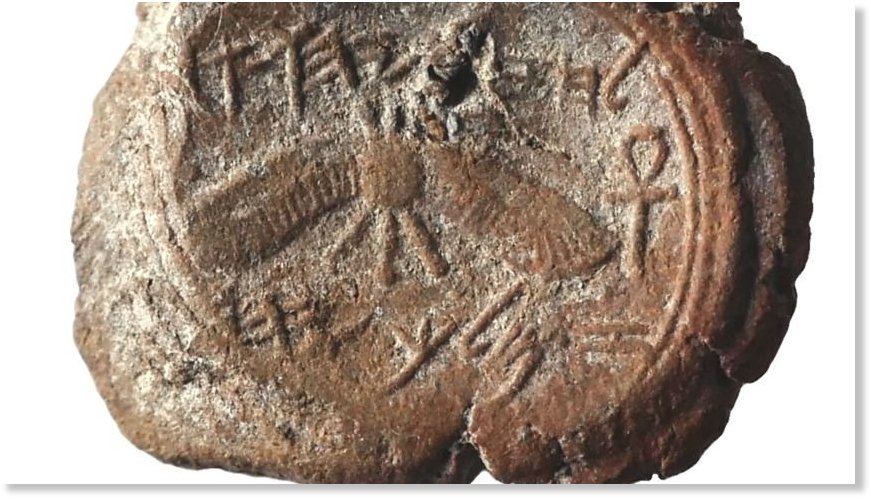
© Ouria TadmorImpression of a seal bearing the words "Belonging to Hezekiah [son of] Ahaz king of Judah" and showing a winged sun and ankhs, Assyrian symbols of power and life.
The Judean king, the biblical-era Hezekiah son of Ahaz, was a vassal of Assyria and borrowed its royal symbolism of a winged sun and ankhs.

A 2,700-year-old seal impression bearing the name of the bible-era king Hezekiah has been discovered in excavations by Temple Mount in Jerusalem.

Other seals bearing the name of King Hezekiah (727 - 698 BCE) have been discovered. Not like this, though: "This is the first time that a seal impression of an Israelite or Judean king has ever come to light in a scientific archaeological excavation," stated Eilat Mazar of the Hebrew University of Jerusalem.

The oval impression on the clay seal, which was most likely set in a ring, states in ancient Hebrew script: "Belonging to Hezekiah [son of] Ahaz king of Judah." It also shows a two-winged sun, with wings turned downward, flanked by two ankh symbols symbolizing life.

The symbols indicate that the seal was created late in the king's life and shows Assyrian influence, surmises Mazar.

Magnify

Virus DNA recovered from old bone samples

DNA study
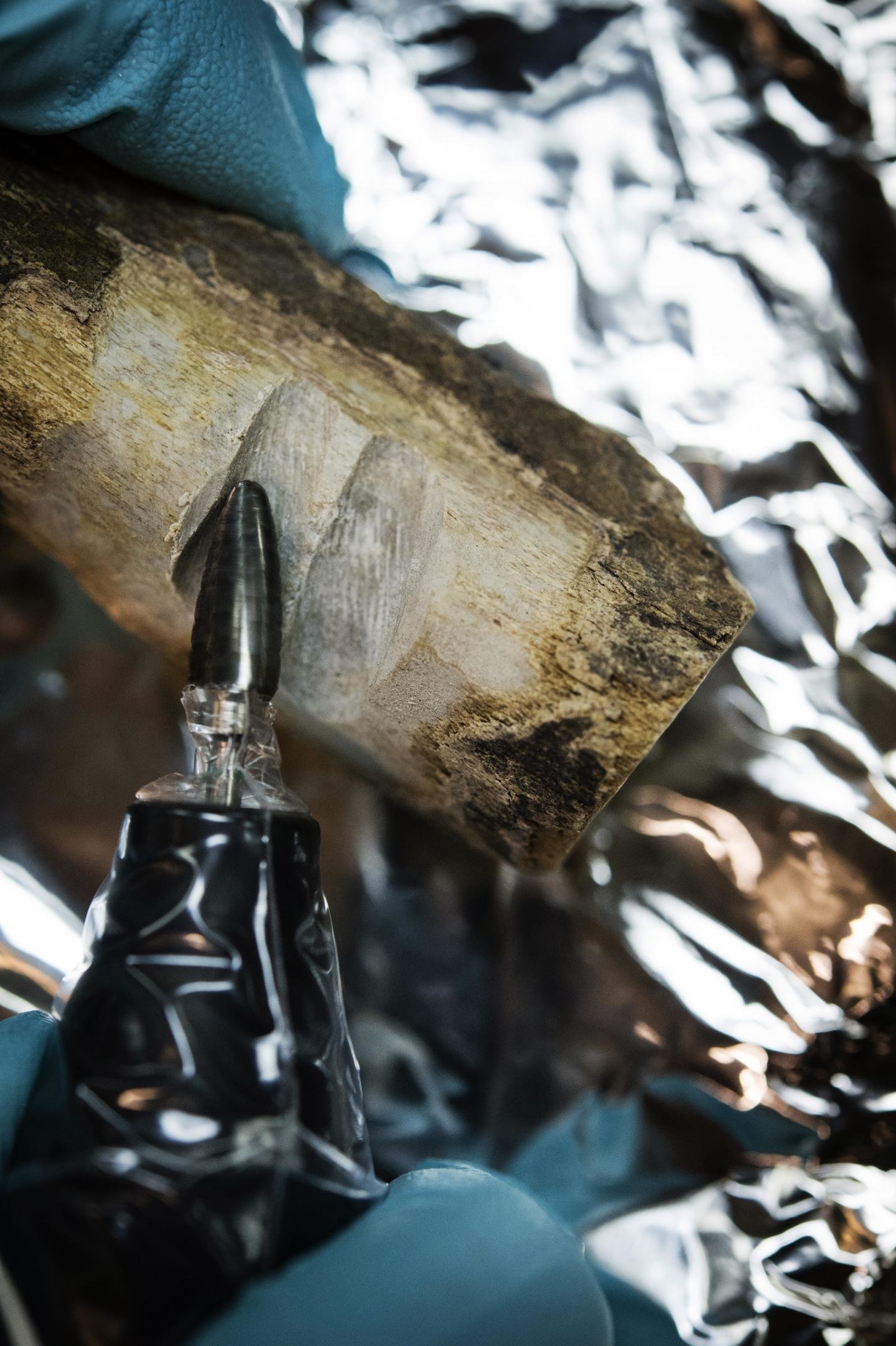
© Veikko Somerpuro / University of HelsinkiThe researchers document the presence of parvovirus DNA in the bones of Finnish World War II casualties who remained exposed to diverse climatic conditions in former Finnish, current Russian territory, until recent years when they were repatriated to their homeland.
A group of researchers from the University of Helsinki and the University of Edinburgh have been the first to find the genetic material of a human virus from old human bones. Published in the journal Scientific Reports, the study analyzed the skeletal remains of Second World War casualties from the battlefields of Karelia.

Upon infection, many viruses remain in the tissues and their DNA can be analyzed even decades thereafter. Although their genetic material has been found in many organs, the researchers show that viral DNA is also present in bone.

"Human tissue is like a life-long archive that stores the fingerprint of the viruses that an individual has encountered during his or her lifetime," describes Klaus Hedman, professor of clinical virology.

Sherlock

Ancient trade routes between Bronze Age Iran and Mesopotamia uncovered

Jiroft
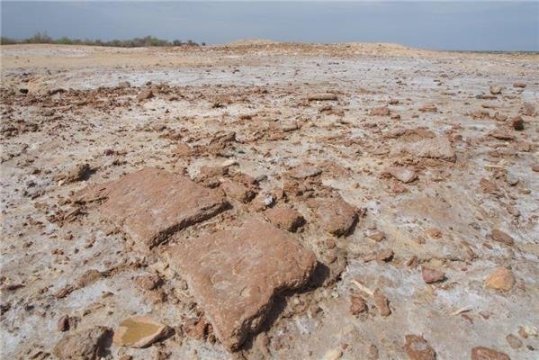
© Peter PfälznerPottery shards at a newly-discovered settlement on the Jiroft plain.
Tübingen researchers and Iranian archaeologists have discovered evidence of raw materials trade between Bronze Age Iran and Mesopotamia.

Many of us have seen the impressive statues of ancient Mesopotamian rulers in the Louvre and the British Museum. They bear witness to the wealth of Bronze Age Akkadian and Sumerian city-states more than four thousand years ago. But they are made of black diorite and gabbro stone not found in the region of today's Iraq and northeastern Syria. Where did it come from? The blocks of stone must have been transported along ancient roads from distant trading partners to the Bronze Age cities of Mesopotamia.

A team of researchers from the University of Tübingen's ResourceCultures collaborative research center has investigated the origins of the stone and the methods used to move such heavy loads over great distances. The team from Tübingen collaborates with the Iranian Center of Archaeological Research (ICAR) to find the answers and is jointly headed by Professor Peter Pfälzner and Nader Soleimani.

Sherlock

Ancient Floridians knew how to cope with rising seas, archaeologists find

Floridan ancient burial
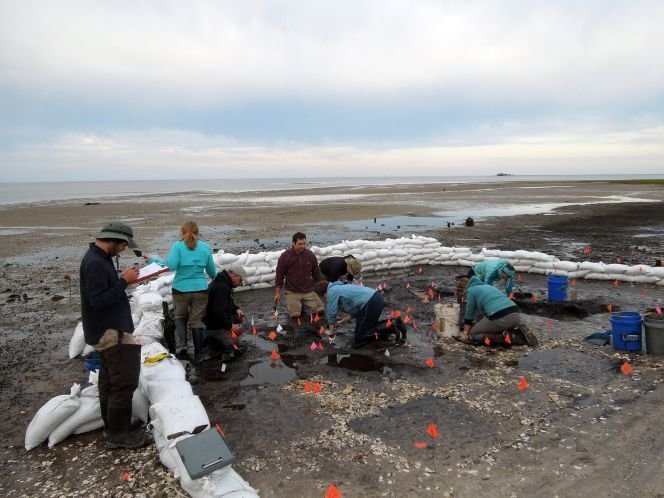
© Ken SassamanArchaeologists work on an ancient burial ground on an island near Cedar Key.
The 2012 emergency call sent archaeologists scrambling. Rising seas were washing away an ancient Indian burial ground near Cedar Key. They had to dig up the remaining graves and collect the bones before the whole thing disappeared into the Gulf of Mexico.

But while digging, University of Florida archaeologist Ken Sassaman discovered something that surprised him. The burial ground of some 32 graves was actually a re-burial ground. The skeletons had been buried somewhere else, then moved to this spot.

Florida's early inhabitants had done that, Sassaman said, because they were dealing with the same problem that's facing the low-lying Sunshine State now: waves that creep higher and higher, crumbling the coastline and forcing the inhabitants to make tough choices about the future.

Their solution was to move everything important to them, including their ancestors, he explained.

Sherlock

Ancient Greek temple aligned to full Moon

Greek Temple
© Discovery News
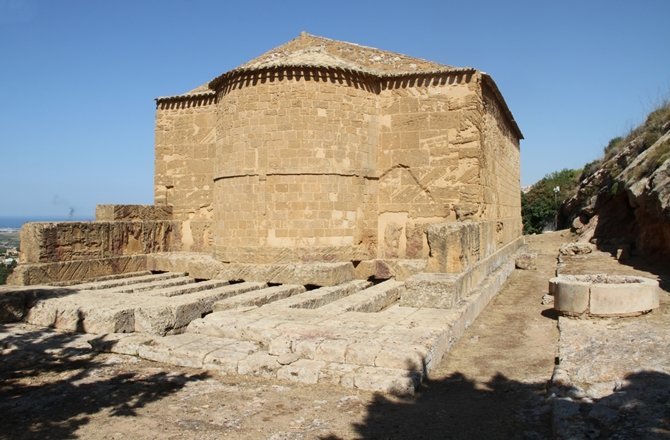
An ancient Greek temple was built to face the setting full moon near the winter solstice, according to new research that sheds new light on the orientation of sacred monuments.

A new survey of the Valley of the Temples just outside Agrigento, Italy, reveals the 2,500-year-old temples were not deliberately aligned to the rising sun, as generally believed. A variety of factors, not all of them being astronomical, inspired the ancient architects.

"Alignment was widely determined by urban layout and morphological aspects of the terrain as well as religious connections," Giulio Magli, professor of archaeoastronomy at Milan's Polytechnic University, told Discovery News.

Magli and colleagues Robert Hannah, at the University of Waikato, New Zealand, and Andrea Orlando, at the Catania Astrophysical Observatory, conducted the research with funding from the Ente Parco della Valle dei Templi. Their findings are published on the Cornell University physics Web site, arXiv.org.

Sherlock

Archaeologists find tunnel in Mexico City pyramid that may lead to Aztec rulers' tomb

Templo Mayor
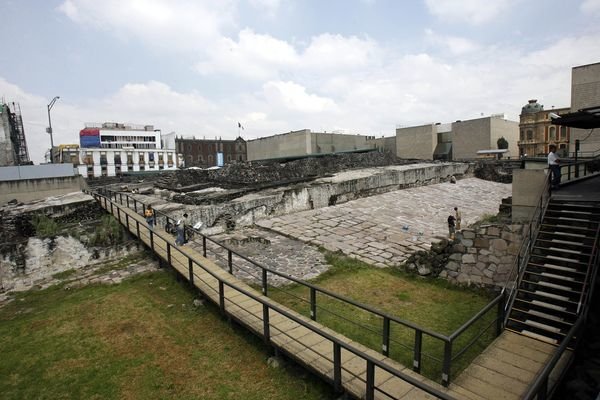
© AP Photo/ Claudio CruzIn this Oct. 3, 2006 photo, people visit the archaeological site, the Templo Mayor, in Mexico City. A Mexican archaeologist said Monday, Nov. 30, 2015, his team has discovered, at the archaeological site, a long tunnel leading into the center of a circular platform where Aztec rulers were believed to be cremated. The Aztecs are believed to have cremated the remains of their leaders during their 1325-1521 rule, but the final resting place of the cremains has never been found.
A Mexican archaeologist said his team has found a tunnel-like passageway that apparently leads to two sealed chambers, the latest chapter in the search for the as-yet undiscovered tomb of the Aztec rulers of Tenochtitlán.

The Aztecs are believed to have cremated their leaders during their 1325-1521 rule, but the final resting place of the cremated remains - the "cremains," as archeologists refer to them - has never been found. Outside experts said Tuesday the find at Mexico City's Templo Mayor ruin complex would be significant.

The National Institute of Anthropology and History said Monday that a team led by archaeologist Leonardo López Luján had discovered a 27-foot-long tunnel leading into the center of a circular platform where dead rulers were believed to be cremated.

The mouth of the tunnel was sealed by a 3-ton slab of rock. When experts lifted it in 2013, they found a hollow space marked by offerings both rich and grisly.

Bizarro Earth

Ancient race of white giants described in native legends from many tribes

Teardrop Arch
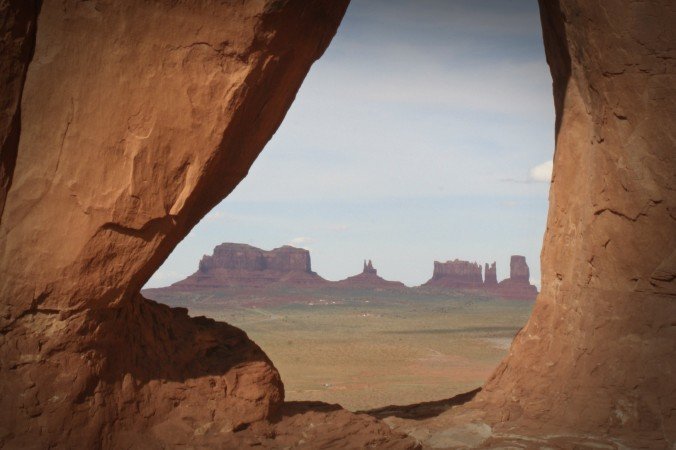
© Urosr/iStockTeardrop Arch in Monument Valley Navajo Tribal Park. Navajo legends speak of the Starnake, a race of white giants.
Several Native American tribes have passed down legends of a race of white giants who were wiped out. We'll take a look at a few such legends, including those among the Choctaw and the Comanches of the United States down to the Manta of Peru.

Choctaw

Horatio Bardwell Cushman wrote in his 1899 book History of the Choctaw, Chickasaw, and Natchez Indians: "The tradition of the Choctaws . . . told of a race of giants that once inhabited the now State of Tennessee, and with whom their ancestors fought when they arrived in Mississippi in their migration from the west. ... Their tradition states the Nahullo (race of giants) was of wonderful stature."

Info

Huge geometric shapes located in the Middle East 8500 years old

Azraq Oasis Geometric Lines
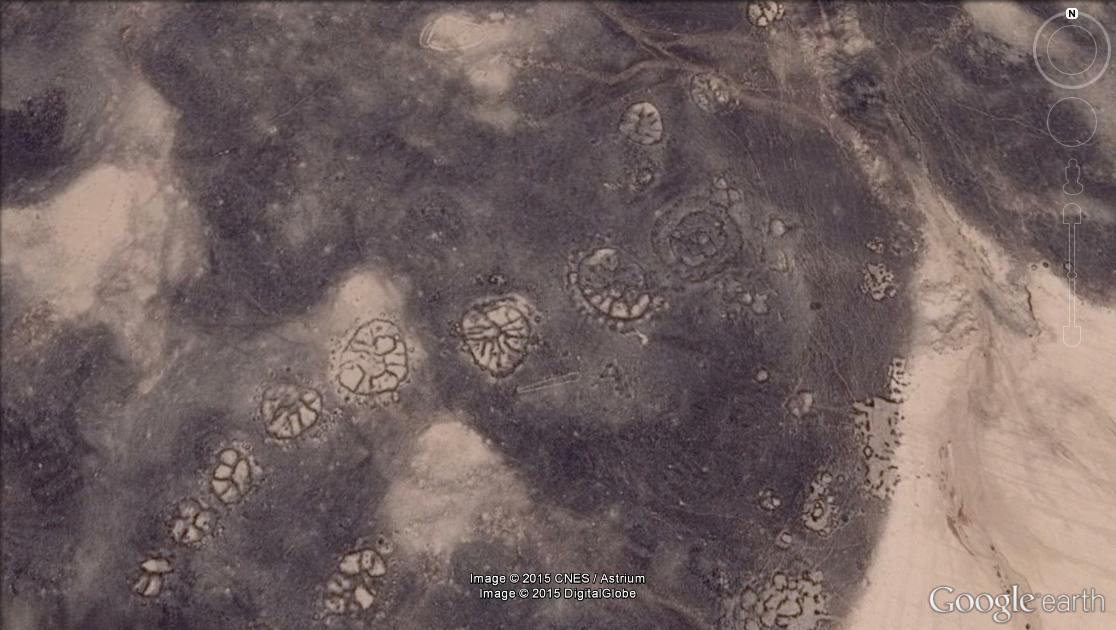
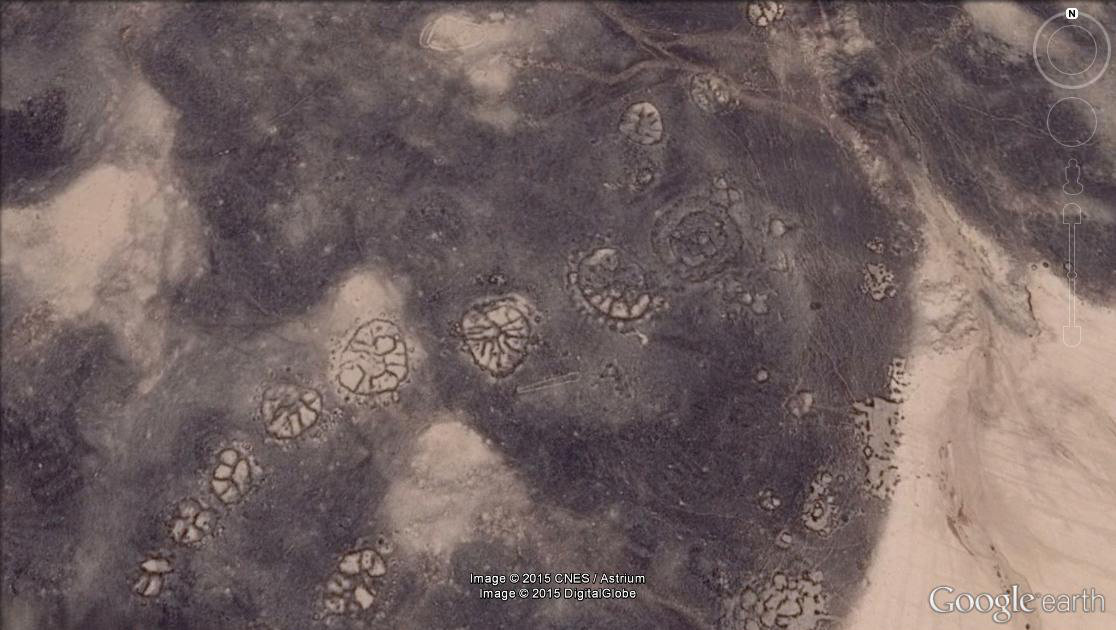
© Google EarthWheel structures in the Azraq Oasis in Jordan, as seen in this Google Earth image.
Thousands of stone structures that form geometric patterns in the Middle East are coming into clearer view, with archaeologists finding two wheel-shaped patterns date back some 8,500 years. That makes these "wheels" older than the famous geoglyphs in Peru called Nazca Lines.

And some of these giant designs located in Jordan's Azraq Oasis seem to have an astronomical significance, built to align with the sunrise on the winter solstice.

Those are just some of the findings of new research on these Middle East lines, which were first encountered by pilots during World War I. RAF Flight Lt. Percy Maitland published an account of them in 1927 in the journal Antiquity, reporting that the Bedouin called the structures "works of the old men," a name still sometimes used by modern-day researchers.

The "works of the old men" include wheels,which often have spokes radiating out from the center, kites (stone structures used for funnelling and killing animals), pendants (lines of stone cairns) and meandering walls, which are mysterious structures that meander across the landscape for up to several hundred feet.

The works "demonstrate specific geometric patterns and extend from a few tens of meters up to several kilometers, evoking parallels to the well-known system of geometric lines of Nazca, Peru," wrote an archaeological team in a paper published recently in the Journal of Archaeological Science. (Peru's Nazca Lines date to between 200 B.C. and A.D. 500.)

They "occur throughout the entire Arabia region, from Syria across Jordan and Saudi Arabia to Yemen," wrote the researchers. "The most startling thing about the 'Works' is that they are difficult to identify from the ground. This stands in contrast to their apparent visibility from the air."

New research on the Middle East lines was published recently in the Journal of Archaeological Science and the journal Arabian Archaeology and Epigraphy. Live Science also got an advance copy of an article set to be published in the journal Antiquity.

Comment: Nazca lines of Kazakhstan: More than 50 geoglyphs discovered

Riddle in the Sands: Thousands of Strange 'Nazca Lines' Discovered in the Middle East


Snowflake

The Yamnaya: 'Fourth strand' European ancestry began with hunter-gatherers isolated by the Ice Age

cave
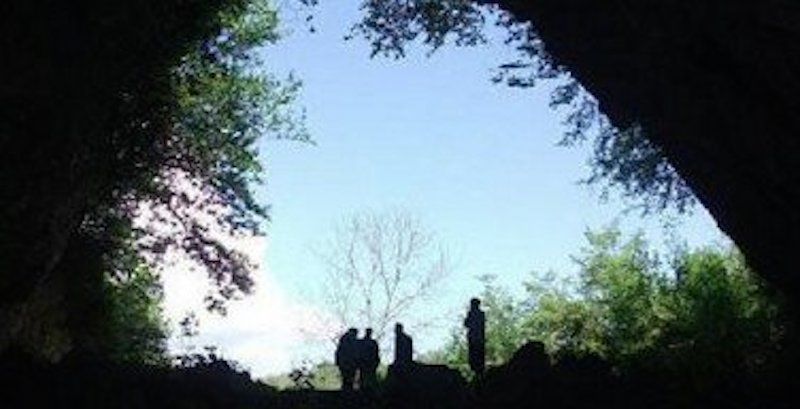
© www.messagetoeagle.comSatsurblia Cave, location of some of the bones found that indicate a fourth strand of ancestry for European hunter-gatherers.
"This is a major new piece in the human ancestry jigsaw, the influence of which is now present within almost all populations from the European continent and many beyond."

The first sequencing of ancient genomes extracted from human remains that date back to the Late Upper Palaeolithic period over 13,000 years ago has revealed a previously unknown "fourth strand" of ancient European ancestry. This new lineage stems from populations of hunter-gatherers that split from western hunter-gatherers shortly after the 'out of Africa' expansion some 45,000 years ago and went on to settle in the Caucasus region, where southern Russia meets Georgia today.

Here these hunter-gatherers largely remained for millennia, becoming increasingly isolated as the Ice Age culminated in the last 'Glacial Maximum' some 25,000 years ago, which they weathered in the relative shelter of the Caucasus mountains until eventual thawing allowed movement and brought them into contact with other populations, likely from further east.

This led to a genetic mixture that resulted in the Yamnaya culture: horse-borne Steppe herders that swept into Western Europe around 5,000 years ago, arguably heralding the start of the Bronze Age and bringing with them metallurgy and animal herding skills, along with the Caucasus hunter-gatherer strand of ancestral DNA - now present in almost all populations from the European continent.

Comment: As puzzle pieces find their niche, a fuller picture of human genomic ancestry appears with interesting influences of a past ice age.


Crusader

The entity of neutrality and the story of the black knights

Image
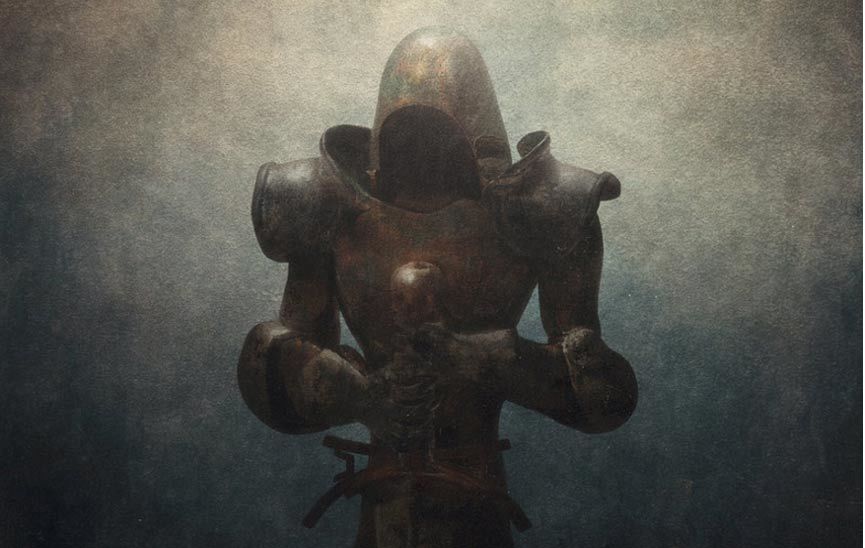
© theflickerees / deviantart‘The Black Knight’
Around the year 800, Black Knights began to appear in history and, since the 13th century, a series of legends mentioning the mysterious Black Knights, then known as 'the Sith', emerged. Although the Black Knights were said to have carried out good deeds and fought to protect cities from unjust rulers and other threats, texts referring to these legends were censored and banned by the Church during the medieval period. Nevertheless, the story of the legendary knight Ashor endured over the centuries.

The origin of Black Knights is closely linked to the legend of Ashor, a knight who had remained skilled and strong, despite his advanced age, and who specialized in the killing of kings and other nobles. Some time around the 13th or 14th century, there was a king with a powerful enemy - a king of another land who oppressed his people. Desperate to defeat his opponent, the good king sent a message calling Ashor to his court. One night, the king woke up to find Ashor near his bed. The assassin had entered his castle without detection, thus having proven his skill.