Puppet MastersS


Gem

Top international banks under investigation for precious metals price fixing

Image
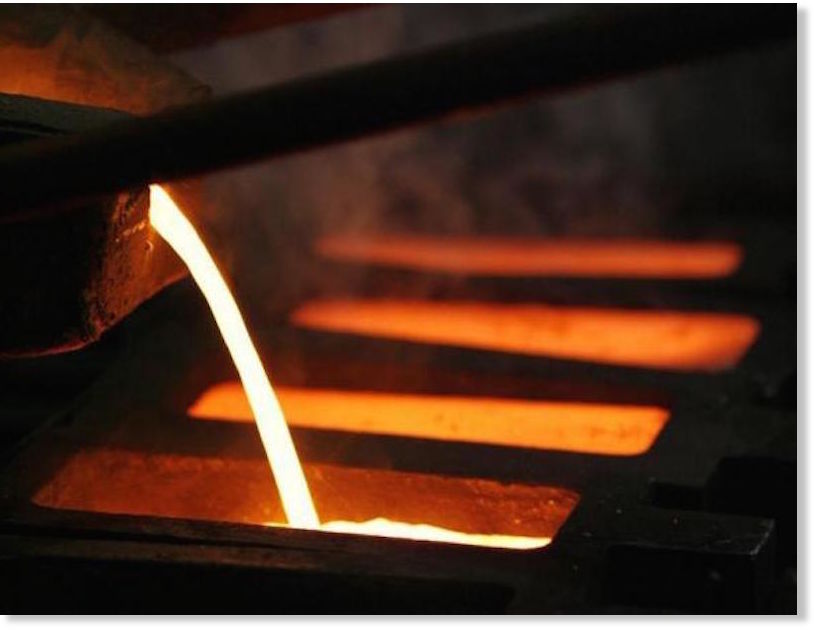
© REUTERS/BEAWIHARTAGold is poured into a mould during processing at the PT Antam Tbk. precious metal refinery in Jakarta January 15, 2009.
The US Department of Justice is in the early stages of an investigation into at least 10 international banks—including JPMorgan Chase, Goldman Sachs and Barclays—over alleged manipulation of the precious metals market.

HSBC included in its annual report, published Monday, that the antitrust division of the Justice Department asked the bank to submit documents related to an investigation into the price setting of gold, silver, platinum and palladium.

The report added that the US Commodity Futures Trading Commission (CFTC) subpoenaed HSBC Bank USA for information on its precious metals trading. The bank said it was cooperating with American officials.

According to reports, the other banks involved in the investigation include Bank of Nova Scotia, Credit Suisse, Goldman Sachs, JPMorgan Chase, Societe Generale, Standard Bank and UBS.

The banks have yet to comment, although HSBC confirmed the investigation was "at an early stage." Barclays will have to reveal if they are involved when it releases its annual report next week, accordingto The Independent newspaper.

Investors and jewelers in the US have already sued a handful of top financial firms for an alleged eight-year manipulation of platinum and palladium prices. Those accused include units of Goldman Sachs Group (the world's biggest global investment bank), HSBC Holdings (Europe's largest bank by market value), the metals unit of the world's largest chemical company, BASF and Standard Bank Group from South Africa — the world's largest producer of platinum and second largest producer of palladium after Russia.

USA

Documentary: Зaшto? (Why?) - Revisiting NATO atrocities in Yugoslavia

Image
Marking 15 years since the NATO invasion of Yugoslavia, Russia Today aired "Zashto?" ("Why?"), an exclusive documentary film produced by the channel's journalists.

Serbian Jelena Milincic and American Anissa Naouai talk to witnesses of the tragic events of 1999. The bombings of present-day Serbia were part of Operation Allied Force, which lasted 78 days and resulted in more than 2,000 civilian casualties, including 88 children. The Serbian government estimates that at least 2,500 people died and 12,500 were injured.

"Zashto?" premiered on RT International on March 24, 2014.


Comment: If the first video is not available, try "ЗАШТО (WHY)? Revisiting NATO atrocities in Yugoslavia after 15 yrs"


Dollars

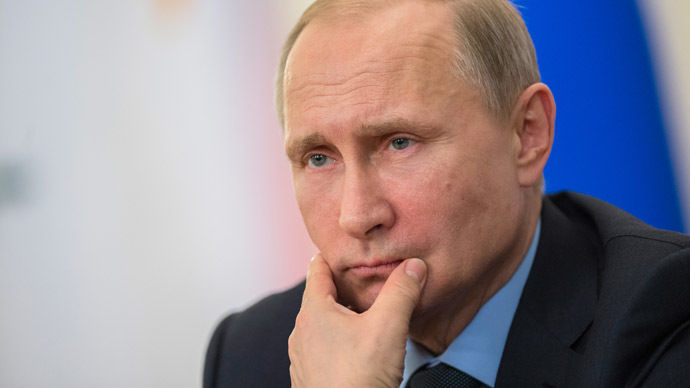
Putin: Gas supplies to Europe could suffer in 3-4 days if Kiev doesn't pay

Russian President Vladimir Putin
© RIA Novosti/Sergey Guneev
Russia will cut off gas supplies to Ukraine if Kiev fails to pay in "three or four days," President Vladimir Putin said, adding that this "will create a problem" for gas transit to Europe.

"Gazprom has been fully complying with its obligations under the Ukraine gas supply contract and will continue doing that," Putin told reporters after talks with the president of Cyprus on Wednesday. "The advance payment for gas supply made by the Ukrainian side will be in place for another three to four days. If there is no further prepayment, Gazprom will suspend supplies under the contract and its supplement. Of course, this could create a certain problem for [gas] transit to Europe to our European partners."

However, Putin expressed the hope that it would not come to that, stressing that "it depends on the financial discipline of our Ukrainian partners."

Comment: Will this be the last week Ukraine receives gas from Gazprom? Europe hopes not.


Black Magic

Why Minsk 2.0 was dead on arrival: U.S. wants war, not peace

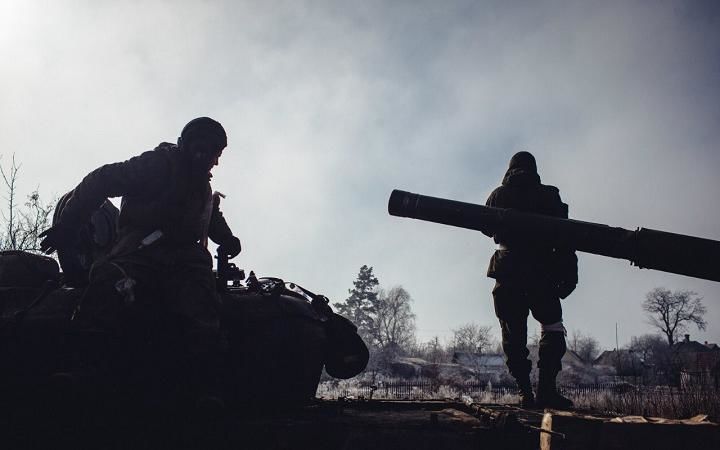
donbass
© UnknownSoldiers from Donbass battalion
When the Minsk II agreement was officially announced on February 12, 2015, there was, for the first time in many months, a real belief that a cessation of hostilities was at the very least possible, if only conceptually. It seemed that the parties to the conflict finally had a framework within which they could move toward a peaceful settlement to end the dreadful war that has claimed the lives of thousands of innocent civilians in Donetsk, Lugansk, and surrounding areas. But perhaps this was simply wishful thinking.

While the "Normandy 4" (France, Germany, Russia, and Ukraine) were negotiating the terms of the agreement, developments on the ground in Donetsk and Lugansk told quite a different story. Ukrainian forces continued their criminal shelling of civilians in Donetsk, while the anti-Kiev rebels continued sporadic fighting around Debaltsevo. Of course a war is always messy, and one cannot expect fighting to halt, or even necessarily decrease, while political leaders sit around the table.

But the continuation of military hostilities was not the only issue. Rather, actions taken by Kiev's military and fascist paramilitaries, in addition to their patrons in Washington, demonstrated that, rather than peace, the US-Kiev faction was interested in escalation.

Comment: If the Minsk agreements were followed, the conflict could be over. Ukrainians want that. Novorossiyans want that. But the U.S. doesn't. In that case, the U.S. might get what they've been provoking: a Russian response. But if the past sets any precedents, chances are it will be in a form they do not expect. See: Putin interviewed by VGTRK: "Extreme measures" if Kiev violates Minsk agreements?

But despite Kiev's intransigence, Novorossiya continues to follow the agreements, and have begun withdrawing heavy weaponry after Saturday's prisoner exchange:


Stock Down

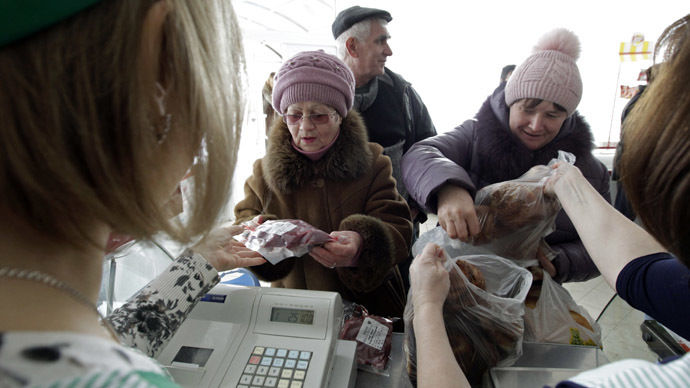
Ukrainian supermarkets impose rationing as falling hryvnia causes shopping binge

Image
© Reuters/Eduard Korniyenko
Ukrainian supermarkets have imposed rationing of basic products after the drastic fall in the value of the hryvnia. The currency has lost 70 percent of its value causing people to stockpile food and buy electronics as a hedge.

Restrictions apply for goods such as cooking oil, flour and sugar, Ukraine's news agency UNN reports Wednesday. Retailers may sell no more than two bottles of sunflower oil, and two packs of buckwheat per customer and, depending on the store, from 3 to 5 kilograms of flour and sugar.

Bread, rice, potatoes, meat and milk are not yet rationed, but are not so plentiful on supermarket shelves.

Stores have also seen higher demand for household appliances, as people consider consumer electronics an investment as prices increase on a daily basis, RIA reports. Inflation in Ukraine is expected to reach 27 percent by the end of 2015.

Comment: It's not looking good for the Kiev government as the economy spirals out of control and no consensus on how to solve the problem.

Ukraine PM demands urgent parliament coalition meeting on stabilizing financial system:
Ukrainian Prime Minister Arseniy Yatsenyuk has demanded on Wednesday an urgent meeting of the parliamentary coalition for adopting a number of laws to stabilize the country's financial system.

"I request the parliamentary coalition to immediately gather for an extraordinary parliament meeting on stabilizing the Ukrainian financial system," the premier said at a meeting of the Ukrainian government.

"The whole package of bills for getting IMF assistance part of which will be used for gold and currency reserves and make it possible to stop the panic and recover the [hrivnya] exchange rate is already in the parliament," Yatsenyuk said. "We've held consultations with all coalition factions, except the largest [Petro Poroshenko bloc]. There was no major disagreement on these bills."

"Together with Finance Minister [Natalya Yaresko] we'll go to [Petro] Poroshenko now and ask him to invite [National Bank head Valeria] Gontareva to report the real state of affairs - which measures are being taken and how to restore Ukrainians' confidence in the national banking system," said Yatsenyuk.


Gold Seal

Turn yourself in, Mr. Secretary of State! A Ukrainian's open letter to John Kerry

John Kerry
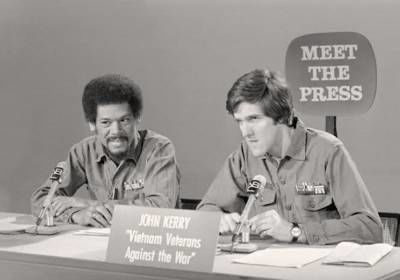
© UnknownUS Secretary of State John Kerry in 1971 protesting the war in Vietnam. When it comes to selling out John Kerry has no equals.
I am a citizen of Ukraine - a poor country, located in Eastern Europe. They say that George Bush Jr. couldn't find it on the map. Maybe that's why the war here began only now, after Yugoslavia, Afghanistan, Iraq, Libya, Syria and other countries were freed from authoritarianism and to which the great USA brought democracy and prosperity.

But our time has now come. Desperate Ukraine is becoming more and more like the good old USA of your youth - the USA of Senator Joseph McCarty, Dr. Strangelove and the war in Vietnam. Our economy is in deep crisis, the Euromaidan 'reforms' are bringing catastrophic success, and the army is heroically retreating before the enemy.

Comment: The US has a very long and complex history of instigating unconstitutional coups d'etat. But this time, in Ukraine, they are actively working with neo-Nazis to 'ethnically cleanse' the country. For more info, check out:


USA

Forced blood draws, DNA collection and biometric scans: What country is this?

"The Fourth Amendment was designed to stand between us and arbitrary governmental authority. For all practical purposes, that shield has been shattered, leaving our liberty and personal integrity subject to the whim of every cop on the beat, trooper on the highway and jail official. The framers would be appalled."—Herman Schwartz, The Nation
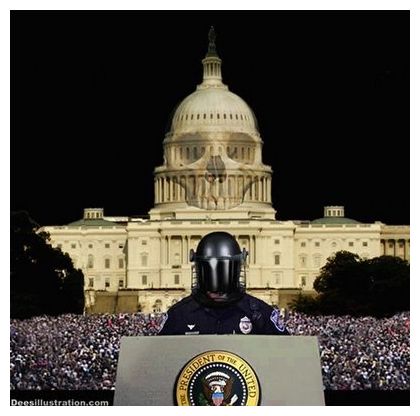
Ploce State US
© Global Research
Our freedoms—especially the Fourth Amendment—are being choked out by a prevailing view among government bureaucrats that they have the right to search, seize, strip, scan, spy on, probe, pat down, taser, and arrest any individual at any time and for the slightest provocation.

Forced cavity searches, forced colonoscopies, forced blood draws, forced breath-alcohol tests, forced DNA extractions, forced eye scans, forced inclusion in biometric databases—these are just a few ways in which Americans are being forced to accept that we have no control over what happens to our bodies during an encounter with government officials.

Worse, on a daily basis, Americans are being made to relinquish the most intimate details of who we are—our biological makeup, our genetic blueprints, and our biometrics (facial characteristics and structure, fingerprints, iris scans, etc.)—in order to clear the nearly insurmountable hurdle that increasingly defines life in the United States: we are all guilty until proven innocent.

Thus far, the courts have done little to preserve our Fourth Amendment rights, let alone what shreds of bodily integrity remain to us.

For example, David Eckert was forced to undergo an anal cavity search, three enemas, and a colonoscopy after allegedly failing to yield to a stop sign at a Wal-Mart parking lot. Cops justified the searches on the grounds that they suspected Eckert was carrying drugs because his "posture [was] erect" and "he kept his legs together." No drugs were found. During a routine traffic stop, Leila Tarantino was subjected to two roadside strip searches in plain view of passing traffic, during which a female officer "forcibly removed" a tampon from Tarantino. Nothing illegal was found. Nevertheless, such searches have been sanctioned by the courts, especially if accompanied by a search warrant (which is easily procured), as justified in the government's pursuit of drugs and weapons.

Close to 600 motorists leaving Penn State University one Friday night were stopped by police and, without their knowledge or consent, subjected to a breathalyzer test using flashlights that can detect the presence of alcohol on a person's breath. These passive alcohol sensors are being hailed as a new weapon in the fight against DUIs. However, because they cannot be used as the basis for arrest, breathalyzer tests are still required. And for those who refuse to submit to a breathalyzer, there are forced blood draws. One such person is Michael Chorosky, who was surrounded by police, strapped to a gurney and then had his blood forcibly drawn after refusing to submit to a breathalyzer test. "What country is this? What country is this?" cried Chorosky during the forced blood draw. Thirty states presently allow police to do forced blood draws on drivers as part of a nationwide "No Refusal" initiative funded by the federal government.

Eye 2

Best of the Web: Gulag archipelago: Chicago police are torturing and disappearing Americans at local 'black site' - How many more sites are there across the US?

Image
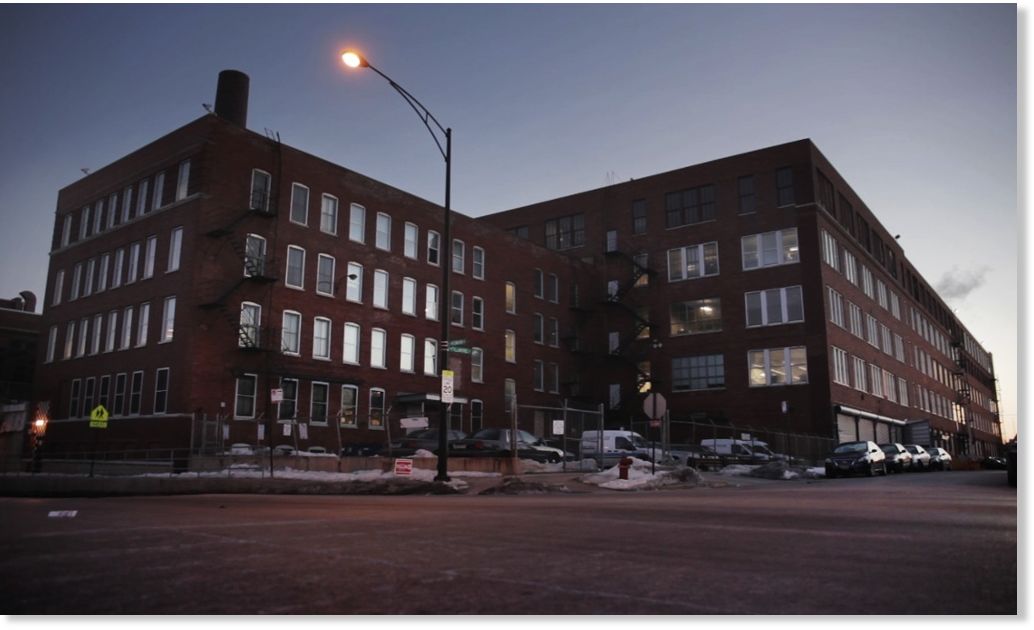
Chicago's Homan Square 'black site'

Comment: It looks like what the CIA has been applying its manuals on disappearing and torturing civilians in other people's countries over the past several decades has finally come home to roost. You reap what you sow; or rather, you reap what you turn a blind eye to.


The Chicago police department operates an off-the-books interrogation compound, rendering Americans unable to be found by family or attorneys while locked inside what lawyers say is the domestic equivalent of a CIA black site.

The facility, a nondescript warehouse on Chicago's west side known as Homan Square, has long been the scene of secretive work by special police units. Interviews with local attorneys and one protester who spent the better part of a day shackled in Homan Square describe operations that deny access to basic constitutional rights.

Alleged police practices at Homan Square, according to those familiar with the facility who spoke out to the Guardian after its investigation into Chicago police abuse, include:
  • Keeping arrestees out of official booking databases.
  • Beating by police, resulting in head wounds.
  • Shackling for prolonged periods.
  • Denying attorneys access to the "secure" facility.
  • Holding people without legal counsel for between 12 and 24 hours, including people as young as 15.
At least one man was found unresponsive in a Homan Square "interview room" and later pronounced dead.

Brian Jacob Church, a protester known as one of the "Nato Three", was held and questioned at Homan Square in 2012 following a police raid. Officers restrained Church for the better part of a day, denying him access to an attorney, before sending him to a nearby police station to be booked and charged.


Take 2

Beating a dead horse: U.S. considering even more sanctions against Russia

Image
© Evan Vucci/AP
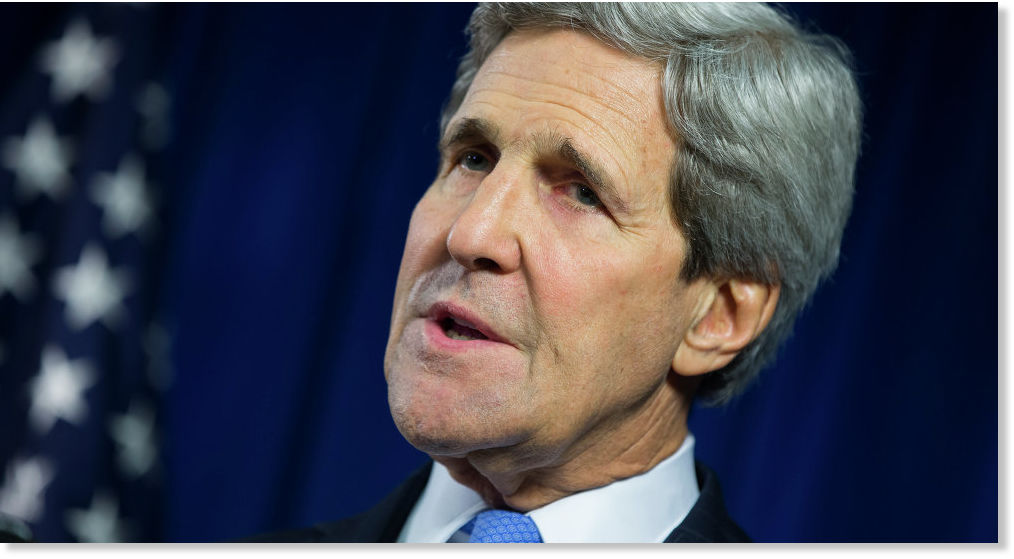
The United States will be considering further sanctions against Russia in the coming days depending on whether there is progress on the Minsk peace agreements, US Secretary of State John Kerry said.

"The next step, if we take one in the next days, which is under consideration depending on what unfolds, will bring us into synchronization [with the sanctions imposed by the European Union and Canada]. Not only will we come into synchronization, but there will probably be additional sanctions," Kerry said at a Senate Foreign Relations Committee hearing on Tuesday.

On February 18, Canada's Prime Minister Stephen Harper announced new economic sanctions and travel bans against 37 Russian and Ukrainian individuals as well as economic sanctions against 17 Russian and Ukrainian entities over their alleged role in the escalation of the situation in Ukraine.

The European Union ministers agreed on February 9 to freeze assets of individuals allegedly linked to eastern Ukrainian independence supporters, and ban their entry to the bloc.

Implementation of the new round of sanctions was put on hold because of the Ukraine reconciliation talks in Minsk, Belarus among the leaders of Ukraine, France, Germany and Russia.

During 2014, the United States and its allies imposed several rounds of sanctions targeting Russia's defense, energy and banking sectors, as well as certain individuals, over Moscow's alleged meddling in Ukraine's internal affairs.

Russia has repeatedly denied any involvement in the situation in Ukraine and has stressed that sanctions are counterproductive and hamper efforts to end the Ukrainian conflict.

Ice Cube

Gazprom notes Kiev cash-for-gas fail could cost EU its supply

Gazprom Ukraine
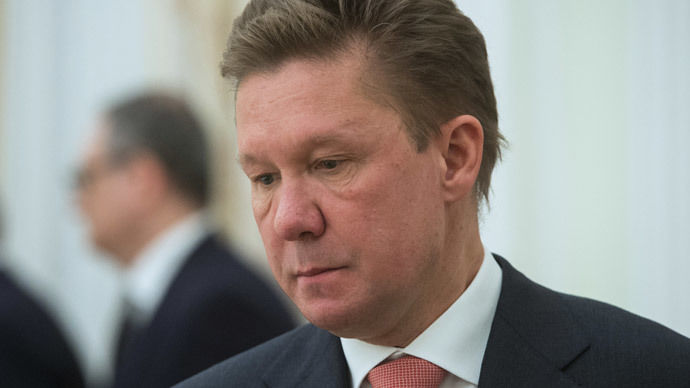
© RIA Novosti / Sergey GuneevAleksei Miller, Chief Executive Officer, Gazprom
Russia will completely cut Ukraine off gas supplies in two days if Kiev fails to pay for deliveries, which will create transit risks for Europe, Gazprom has said.

Ukraine has not paid for March deliveries and is extracting all it can from the current paid supply, seriously risking an early termination of the advance settlement and a supply cutoff, Gazprom's CEO Alexey Miller told journalists. The prepaid gas volumes now stand at 219 million cubic meters.

"It takes about two days to get payment from Naftogaz deposited to a Gazprom account. That's why a delivery to Ukraine of 114 million cubic meters will lead to a complete termination of Russian gas supplies as early as in two days, which creates serious risks for the transit to Europe," Miller said.
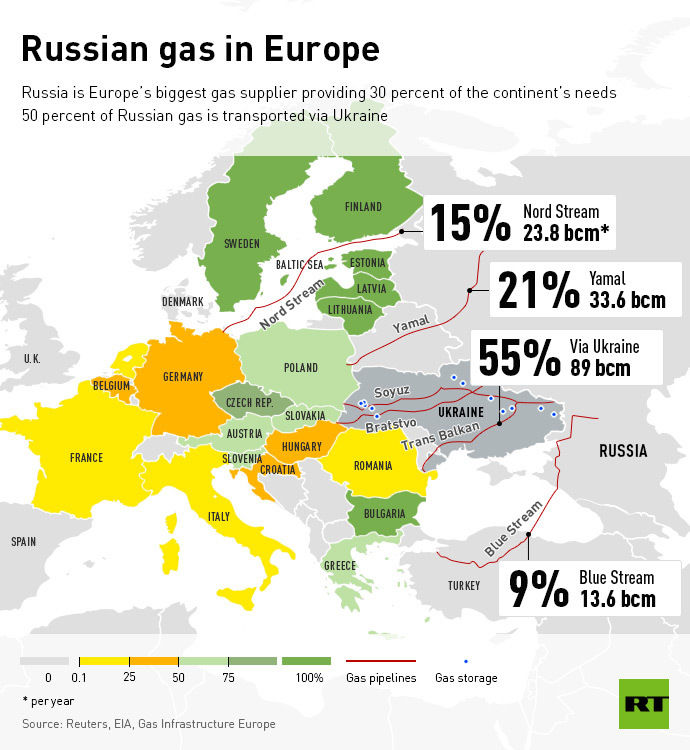
russian gas sales europe
© RT
Earlier this month, Russian Energy Minister Aleksandr Novak estimated Ukraine's debt to Russian energy giant Gazprom at $2.3 billion.

In the end of 2014, Kiev's massive gas debt that stood above $5 billion, forced Moscow to suspend gas deliveries to Ukraine for nearly six months. On December 9, Russia resumed its supplies under the so-called winter package deal, which expires on April 1, 2015.

Comment: Naftgaz is playing a dangerous game here. They are only the middleman for delivery of resources they don't own. Ukraine has declared its intention of adopting western culture and values. Well, here's one of the first rules of western-style capitalism: A vendor is within its rights to no longer deliver a commodity to a customer when that commodity is not being paid for. Ukraine can't have it both ways.