Best of the Web:


Cell Phone

Best of the Web: What's Wi-Fi doing to us? Experiment finds that shrubs die when placed next to wireless routers

Image
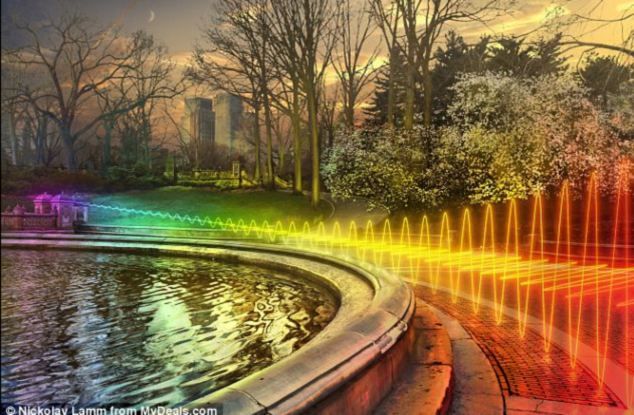
An experiment in Denmark claims to show that Wi-Fi signals are powerful enough to kill cress seeds after just 12 days of exposure.
A group of schoolgirls claims to have made a scientific breakthrough that shows wifi signals could damage your health - by experimenting with cress.

In a twist on the traditional science project of growing cress on a paper plate, the 15-year-olds set out to test whether mobile phone signals could be harmful.

They say the result could affect millions of people around the world.

Pupil Lea Nielsen said: 'We all thought we experienced concentration problems in school if we slept with our mobile phones at the bedside, and sometimes we also found it difficult sleeping.'

However, because they were not able to monitor their brain activity at their school in Denmark, they chose to monitor plants near wireless routers, which emit similar radio waves to mobile phones.

Comment: Cause for concern:


Handcuffs

Best of the Web: OUTRAGEOUS: Texas police can now obtain search warrants based on 'prediction of a future crime'

Welcome to the brave new world of 'pre-crime' policing.
Image
Last week, an appeals court in Texas ruled that police may obtain a search warrant based on the prediction of a future crime, heightening public fears that we may be heading toward a 'predictive policing' era in which we see police powers rapidly growing at the cost of our constitutional rights.

The decision arose from a 2010 incident where police officers took Michael Fred Wehrenberg and some associates into custody after watching his home for about a month because of a tip-off from a confidential informant that Wehrenberg and others were "fixing to" cook methamphetamine, Raw Story reported.

Hours later, without a search warrant, officers waltzed through Wehrenberg's front door and searched the house while he and his friends stood outside in handcuffs for an hour and half.

Before they seized the boxes of pseudoephedrine, stripped lithium batteries and materials used to make meth, the cops attempted to cover their tracks by obtaining a search warrant. However, they conveniently failed to mention the unlawful search in the warrant application and based their request entirely on the informant's tip.

Ice Cube

Best of the Web: How the global warming whopper is being buried under a jillion pounds of Arctic ice

Image

It was only five years ago in December that Al Gore claimed that the polar ice caps would be completely melted by now. But he might be surprised to find out that Arctic ice coverage is up 50 percent this year from 2012 levels.

"Some of the models suggest that there is a 75 percent chance that the entire north polar ice cap, during some of the summer months, could be completely ice-free within the next five to seven years," Gore said in 2008.

The North Pole is still there, and growing. BBC News reports that data from Europe's Cryosat spacecraft shows that Arctic sea ice coverage was nearly 9,000 cubic kilometers (2,100 cubic miles) by the end of this year's melting season, up from about 6,000 cubic kilometers (1,400 cubic miles) during the same time last year.

Eye 1

Best of the Web: NSA's bulk phone data collection ruled unconstitutional, 'almost Orwellian,' by federal judge

Image
In the nation's capital today, a federal judge has ruled that the National Security Agency's program of bulk phone record collection violates the reasonable expectation of privacy guaranteed to Americans by the Constitution. The judge ordered the federal government to stop gathering call data on two plaintiffs, and to destroy all previously-collected records of their call histories.

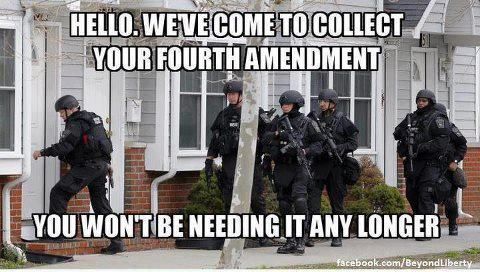
The ruling by Judge Richard Leon (PDF Link), a US district judge in the District of Columbia, is stayed pending a likely appeal--which may take months. In his 68-page memorandum, Leon wrote that the NSA's vast collection of Americans' phone metadata constitutes an unreasonable search or seizure under the Fourth Amendment.

"Father of the Constitution" James Madison would be "aghast" at the NSA's actions if he were alive today, wrote Leon. "The government does not cite a single case in which analysis of the NSA's bulk metadata collection actually stopped an imminent terrorist attack," the judge wrote.

Bad Guys

Best of the Web: America is the most inhumane developed country on the planet - are we going to let it stay that way?

Image
This week marked the 65th anniversary of the signing of the Universal Declaration of Human Rights. What would it be like if people in the U.S. knew they had these rights?

This week marked the 65th anniversary of the signing of the Universal Declaration of Human Rights. It was drafted by a commission of the United Nations that was chaired by Eleanor Roosevelt. The Convention became effective in 1951, the United States finally ratified it in 1988 and it was signed by President George H.W. Bush.

What would it be like if people in the United States knew they had these rights and demanded to have them realized? We believe it would be a very different world - the economy would be a more equitable with full employment, healthcare for all, no people without housing and more humane on every front. Instead, this week an annual report of Credit Suisse ranked the US as the most unequal of all advanced countries.

As a general guide for understanding human rights there are five principles that should be applied to every policy: universality, equity, transparency, accountability and participation. In a nutshell, universality means that policies apply to all people. Equity means that people have what they need in order to be at the same level as others. Participation means that people have input into the policies that affect their lives.

Harriet Tubman once said, "I freed a thousand slaves; I could have freed a thousand more if only they knew they were slaves." Similarly, we have human rights and our rights are being violated every day, yet many are not aware of this.

Comment: People are unaware of their rights because the pathocrats train them to be their blind obedient servants and such education prevents that. What happens when a society is governed by a small minority of psychopaths is that it starts the process of ponerization, where even normal conscientious people start acting like psychopaths, since those are the values that the society promotes.

Until the psychopaths in power are removed, the ponerization of society will continue unabated and we will continue to live in a world where America is the most inhumane country on the planet. It can be no other way.


Yoda

Best of the Web: Meet Uruguay's president José Mujica: A human leader in a world ruled by psychopaths

Image
© Mario Goldman/AFP/Getty ImagesJosé Mujica, the Uruguayan president, at his house in Montevideo.
If anyone could claim to be leading by example in an age of austerity, it is José Mujica, Uruguay's president, who has forsworn a state palace in favour of a farmhouse, donates the vast bulk of his salary to social projects, flies economy class and drives an old Volkswagen Beetle.

But the former guerrilla fighter is clearly disgruntled by those who tag him "the world's poorest president" and - much as he would like others to adopt a more sober lifestyle - the 78-year-old has been in politics long enough to recognise the folly of claiming to be a model for anyone.

"If I asked people to live as I live, they would kill me," Mujica said during an interview in his small but cosy one-bedroom home set amid chrysanthemum fields outside Montevideo.

The president is a former member of the Tupamaros guerrilla group, which was notorious in the early 1970s for bank robberies, kidnappings and distributing stolen food and money among the poor. He was shot by police six times and spent 14 years in a military prison, much of it in dungeon-like conditions.

Newspaper

Best of the Web: Judge Napolitano: A Conspiracy So Vast

Image
Readers of this page are well aware of the revelations during the past six months of spying by the National Security Agency (NSA). Edward Snowden, a former employee of an NSA vendor, risked his life and liberty to inform us of a governmental conspiracy to violate our right to privacy, a right guaranteed by the Fourth Amendment.

The conspiracy he revealed is vast. It involves former President George W. Bush, President Obama and their aides, a dozen or so members of Congress, federal judges, executives and technicians at American computer ISPs and telecoms, and the thousands of NSA employees and vendors who have manipulated their fellow conspirators. The conspirators all agreed that it would be a crime for any of them to reveal the conspiracy. Snowden violated that agreement in order to uphold his higher oath to defend the Constitution.

The object of the conspiracy is to emasculate all Americans and many foreigners of their right to privacy in order to predict our behavior and make it easier to find among us those who are planning harm.

A conspiracy is an agreement among two or more persons to commit a crime. The crimes consist of capturing the emails, texts and phone calls of every American, tracing the movements of millions of Americans and foreigners via the GPS system in their cellphones, and seizing the bank records and utility bills of most Americans in direct contravention of the Constitution, and pretending to do so lawfully.The pretense is that somehow Congress lessened the standard for spying that is set forth in the Constitution. It is, of course, inconceivable that Congress can change the Constitution (only the states can), but the conspirators would have us believe that it has done so.

Heart

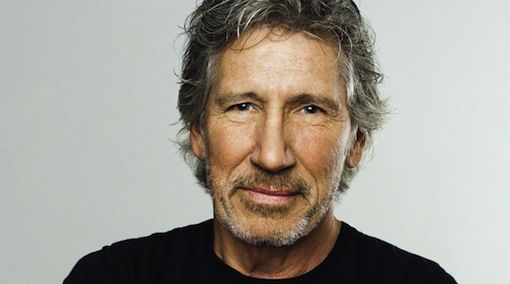
Best of the Web: Roger Waters: 'What Israelis do to Palestinians today is comparable to how the Nazis treated Jews last time around'

Image
On Music, the Political Role of Artists and His Activism for Justice Around the World, Including in Palestine.

Frank Barat: When did you make the decision to make the Wall tour (that ended in Paris in September 2013) so political? And why did you dedicate the final concert to Jean-Charles De Menezes?

Roger Waters: The first show was October 14th 2010. We started working on content of show with Sean Evans in 2009. I had already decided to make it much broader politically than it had been in 1979/80. It could not be just about this whinny little guy who didn't like his teachers. It had to be more universal. That's why 'fallen loved ones' came into it (the shows are showing pictures of people that died during wars) trying to universalise the sense of grief and loss that we all feel towards family members killed in conflict. Whatever the wars or the circumstances, they (in the non western world), feel as much lost as we do. Wars become an important symbol because of that separation between 'us and them,' which is fundamental to all conflicts. Regarding Jean-Charles, we used to do Brick II with three solos at the end and I decided that three solos was too much, it was boring me. So sitting in a hotel room, one night, I was thinking about what I could do instead of that. Somebody had recently sent me a photograph of Jean-Charles De Menezes to go on the wall. So he was in my mind and I thought that I should sing his story. I wrote that song, taught it to the band, and that's what we did.


Comment: Jean-Charles De Menezes was a young Brazilian contract electrician working in London, England at the time of the London Bombings in 2005. He was pursued and murdered by covert British military-intelligence operatives in the aftermath of the attacks and shot numerous times in the head in front of shocked onlookers. It's very likely the reason they were so desperate to terminate him was because he was working on the trains that were rigged for the false-flag terror attacks, knew the official story was bogus, and was threatening to go public with what he knew.

For more on this and the other evidence that 7/7 was carried out by the British government with assistance from the Mossad, check these out:

7/7 Ripple Effect: London Bombings documentary the British and Israeli governments want no one to see

London Bombings - The Facts Speak For Themselves


Sheriff

Best of the Web: U.S. gulag! Everything in American life has become a police matter

Image
© Truthout.org/Flickr
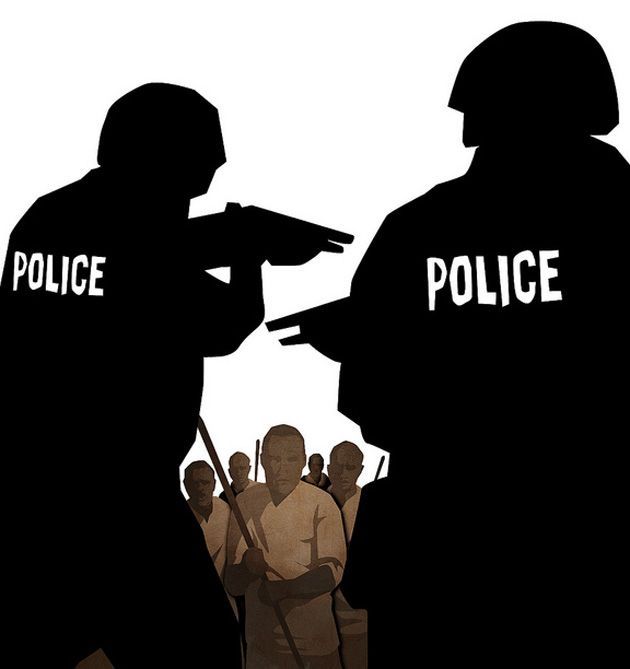
From the workplace to our private lives, American society is starting to resemble a police state.

If all you've got is a hammer, then everything starts to look like a nail. And if police and prosecutors are your only tool, sooner or later everything and everyone will be treated as criminal. This is increasingly the American way of life, a path that involves "solving" social problems (and even some non-problems) by throwing cops at them, with generally disastrous results. Wall-to-wall criminal law encroaches ever more on everyday life as police power is applied in ways that would have been unthinkable just a generation ago.

By now, the militarization of the police has advanced to the point where "the War on Crime" and "the War on Drugs" are no longer metaphors but bland understatements. There is the proliferation of heavily armed SWAT teams, even in small towns; the use of shock-and-awe tactics to bust small-time bookies; the no-knock raids to recover trace amounts of drugs that often result in the killing of family dogs, if not family members; and in communities where drug treatment programs once were key, the waging of a drug version of counterinsurgency war. (All of this is ably reported on journalist Radley Balko's blog and in his book, The Rise of the Warrior Cop.) But American over-policing involves far more than the widely reported up-armoring of your local precinct. It's also the way police power has entered the DNA of social policy, turning just about every sphere of American life into a police matter.

Eye 2

Best of the Web: The pathology of the elite class

On RAI with Paul Jay, Chris Hedges discusses the psychology of the super rich; their sense of entitlement, the dehumanization of workers, and mistaken belief that their wealth will insulate them from the coming storms


Paul Jay, Senior Editor, TRNN: Welcome to The Real News Network. I'm Paul Jay in Baltimore. And welcome to Reality Asserts Itself. A few weeks ago, we did a series of interviews with Chris Hedges, and one of the things we talked about was the weakness of the left, the weakness of the people's movement, if you will. Well, we're going to continue that discussion now. And Chris joins us again in the studio.

Chris, as everyone probably knows by now, is a Pulitzer Prize-winning journalist and a senior fellow at the Nation Institute. Along with Joe Sacco he wrote the New York Times bestseller Days of Destruction, Days of Revolt. And he writes a weekly column for Truthdig.

Thanks for joining us.

Chris Hedges, Journalist, Senior Fellow at the Nation Institute: Thank you.

Jay: So last time we talked a lot about something you had said in 2008 and you've written more recently about: one of the greatest weaknesses of the left was not creating a viable vision of what an alternative politics and economy looks like, a viable vision of a socialism. But you've written more recently about some other weaknesses, you could say, of the people's movement, and here's one. And I'll read it back. This is a piece you wrote called "Let's Get This Class War Started", which I guess is a play on Pink's song, is it? "Let's Get This Party Started". The quote is: "The inability to grasp the pathology of our oligarchic rulers is one of our gravest faults." What are you talking about?

Hedges: Because we don't understand the pathology of the rich. We've been saturated with cultural images and a kind of cultural deification of wealth and those who have wealth. We are being--you know, they present people of immense wealth as somehow leaders--oracles, even. And we don't grasp internally what it is an oligarchic class is finally about or how venal and morally bankrupt they are. We need to recover the language of class warfare and grasp what is happening to us, and we need to shatter this self-delusion that somehow if, as Obama says, we work hard enough and study hard enough, we can be one of them. The fact is, the people who created the economic mess that we're in were the best-educated people in the country--Larry Summers, a former president of Harvard, and others. The issue is not education. The issue is greed. And I, unfortunately, had the experience of being shipped off to a private boarding school at the age of ten as a scholarship student and live--I was one of 16 kids on scholarship, and I lived among the super-rich and I watched them. And I think much of my hatred of authority and my repugnance for the ruling elite comes from having been among them for so long.