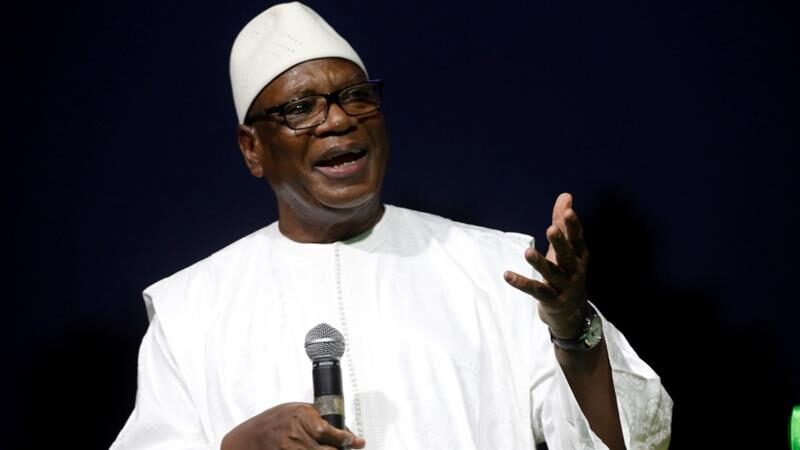
© Luc Gnago/ReutersIbrahim Boubacar Keita
Mali's president has resigned and dissolved parliament after mutinying soldiers detained him at gunpoint on Tuesday.
In a televised address, Ibrahim Boubacar Keita said his resignation, three years before his final term was due to end, was effective immediately.
"I wish no blood to be shed to keep me in power," he said, "I have decided to step down from office."
The mutinous soldiers behind the military coup, who identified themselves as the National Committee for the Salvation of the People, promised on Wednesday morning to organise new elections after their takeover.
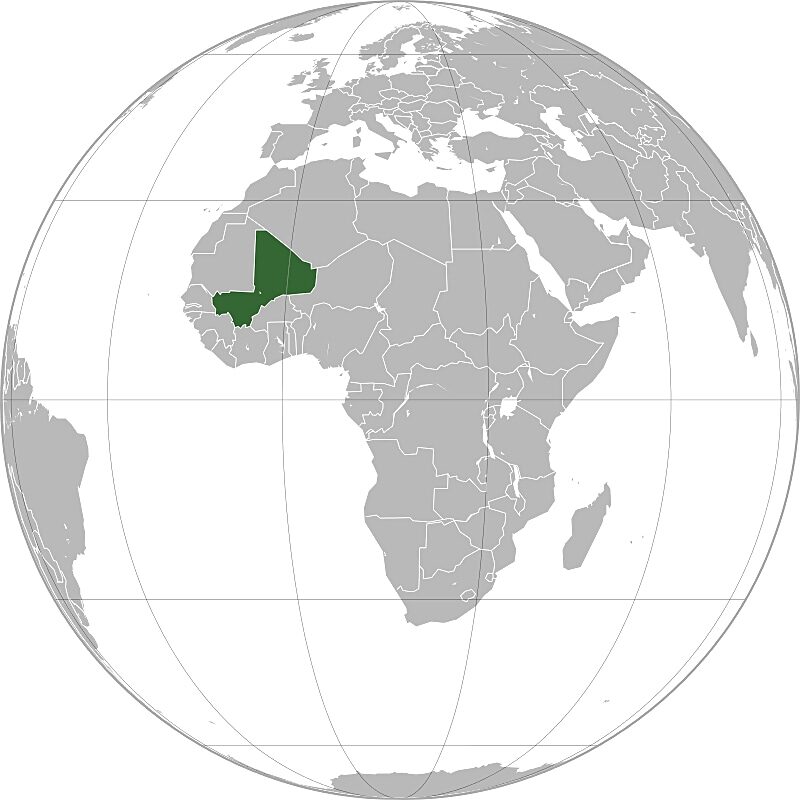
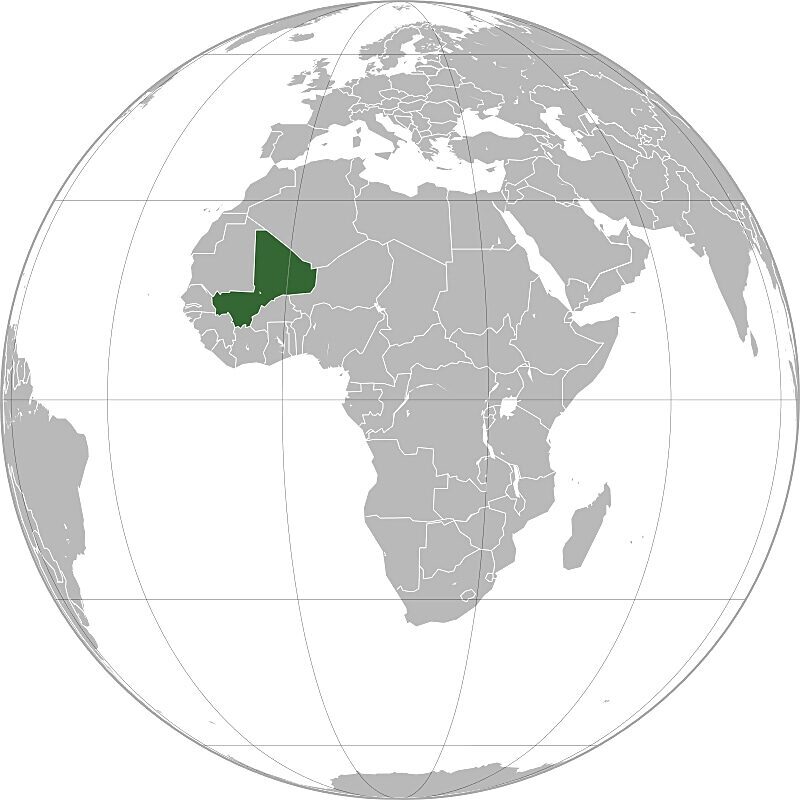
© WikimediaMali occupies a strategic area of northwest Africa
"With you, standing as one, we can restore this country to its former greatness," said committee spokesperson Colonel-Major Ismael Wague.
He also announced that borders were closed and the introduction of a curfew from 9pm to 5am.
The dramatic seizure of power follows months of protests demanding the ousting of Mr Keita, and plunges the west African country, which is already facing an eight-year jihadi insurgency and the coronavirus pandemic, further into crisis.
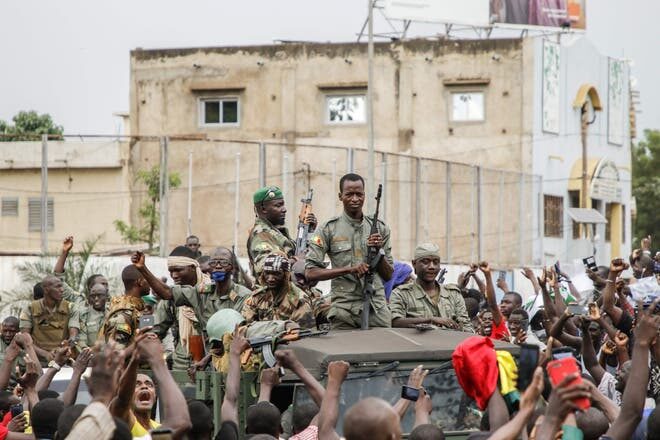
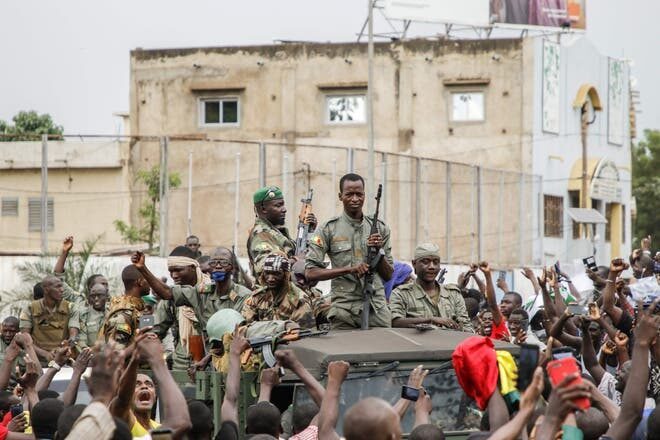
© AFP/GettyMalian armed forces are cheered on as they parade at Independence Square in Bamako after rebel troops seized the president
While anti-government demonstrators celebrated Mr Keita's departure, the international community, including former colonial ruler France and other allies, raised concerns of a potentially destabilising effect on the entire Sahel region.
The United Nations Security Council scheduled a closed meeting for Wednesday afternoon to discuss the unfolding situation in Mali, where the UN has maintained a 15,600-strong peacekeeping mission since 2013.
Antonio Guterres, the UN secretary-general, sought "the immediate restoration of constitutional order and rule of law", a spokesperson said.
Mr Keita, who was democratically elected by a landslide in 2013 and re-elected five years later, was detained along with the prime minister, Boubou Cisse, at a military camp near the capital Bamako on Tuesday.
Support for the president had plummeted over the government's handling of the jihadi insurgency, and calls for his resignation grew louder after he was accused of corruption and mismanaging the economy.
Regional mediators from the Economic Community of West African States had failed in recent weeks to break the impasse between Mr Keita's government and opposition leaders.
Comment: The coup plotters were
trained by the US military (but they seem to here be acting independently of US State Department instructions).
The coup has garnered a certain amount of
public support but it is hard to tell if it is truly grassroots or tactical destabilization in an area where France and other countries still have colonial interests:
The general public, as well as an opposition coalition, have been calling for Keita to resign and appear to be welcoming the detentions, as crowds of people could be seen celebrating the news on the streets of Bamako and showing their support for the military. The opposition coalition also backed the mutineers, saying that the developments were not a coup d'état but "a popular insurrection."
The dramatic developments in the West African nation follow massive anti-government protests demanding Keita's resignation over a grinding economic crisis, perceived government corruption and an inability to successfully combat armed jihadist groups in the country's north.
The detention of a president, who enjoyed support from France - Mali's former colonial power - and its western allies has set off alarm bells for both the UN and the African Union.
The rebels have stated they are
not seeking power:
The military said they staged Tuesday's coup to prevent the Western African nation from "sinking into chaos," and invited social and political movements to take part in creating the conditions for new elections.
"We are not keen on power, but we are keen on the stability of the country, which will allow us to organize general elections to allow Mali to equip itself with strong institutions within the reasonable time limit," a spokesman for the military group calling itself the National Committee for the Salvation of the People said in a TV address aired by the state broadcaster.
France, citing its UN mandate, did not feel the need
to consider the shift in political power in its former colony:
The French armed forces will pursue military operations against Islamic fighters in France's former colony Mali, despite the ousting of the president two days ago by a coup, Paris has said.
Concerns are growing that the coup could disrupt a military campaign against the jihadists, who are linked to Al-Qaeda and Islamic State (IS, formerly ISIS), which are operating in northern and central Mali and in West Africa's wider Sahel region.
"The Barkhane operation, asked for by the Mali population and authorized by the UN Security Council, continues," France's Minister of the Armed Forces Florence Parly tweeted on Thursday.
France has had around 5,000 troops in five West African countries since 2014, as part of Operation Barkhane. Supported by regional armies, they patrol the Sahel region, including Mali, where Paris intervened in 2013 against an Islamist uprising. The military deployment reportedly receives logistical support from the US Africa Command and intelligence from the US drone base in Agadez, Niger.
Mali has been roiled by factional fighting, including US-proxy ISIS, since at least 2013:
Two small excerpts from William Engdahl's 2013 indepth analysis
The War in Mali and AFRICOM's Agenda: Target China
Mali itself, like much of Africa is rich in raw materials. It has large reserves of gold, uranium and most recently, though western oil companies try to hide it, of oil, lots of oil. The French preferred to ignore Mali's vast resources, keeping it a poor subsistence agriculture country. Under the deposed democratically-elected President Amadou Toumani Toure, for the first time the government initiated a systematic mapping of the vast wealth under its soil. According to Mamadou Igor Diarra, previous mining minister, Malian soil contains copper, uranium, phosphate, bauxite, gems and in particular, a large percentage of gold in addition to oil and gas. Thus, Mali is one of the countries in the world with the most raw materials. With its gold mining, the country is already one of the leading exploiters directly behind South Africa and Ghana. [6] Two thirds of France's electricity is from nuclear power and sources of new uranium are essential. Presently, France draws significant uranium imports from neighboring Niger.
******
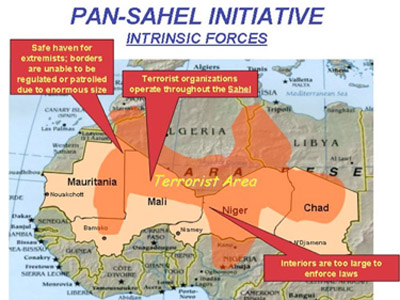
© GlobalResearch.ca...compared with USAFRICOM Pan-Sahal Initiative map of 'terror threat' in the Sahara today.





Well, at least now we know that if it's your bad luck/ sad life to work as a UN peacekeeper, we know where, since 2013, they send troublemakers: Not a temperate climate, either: R.C.