
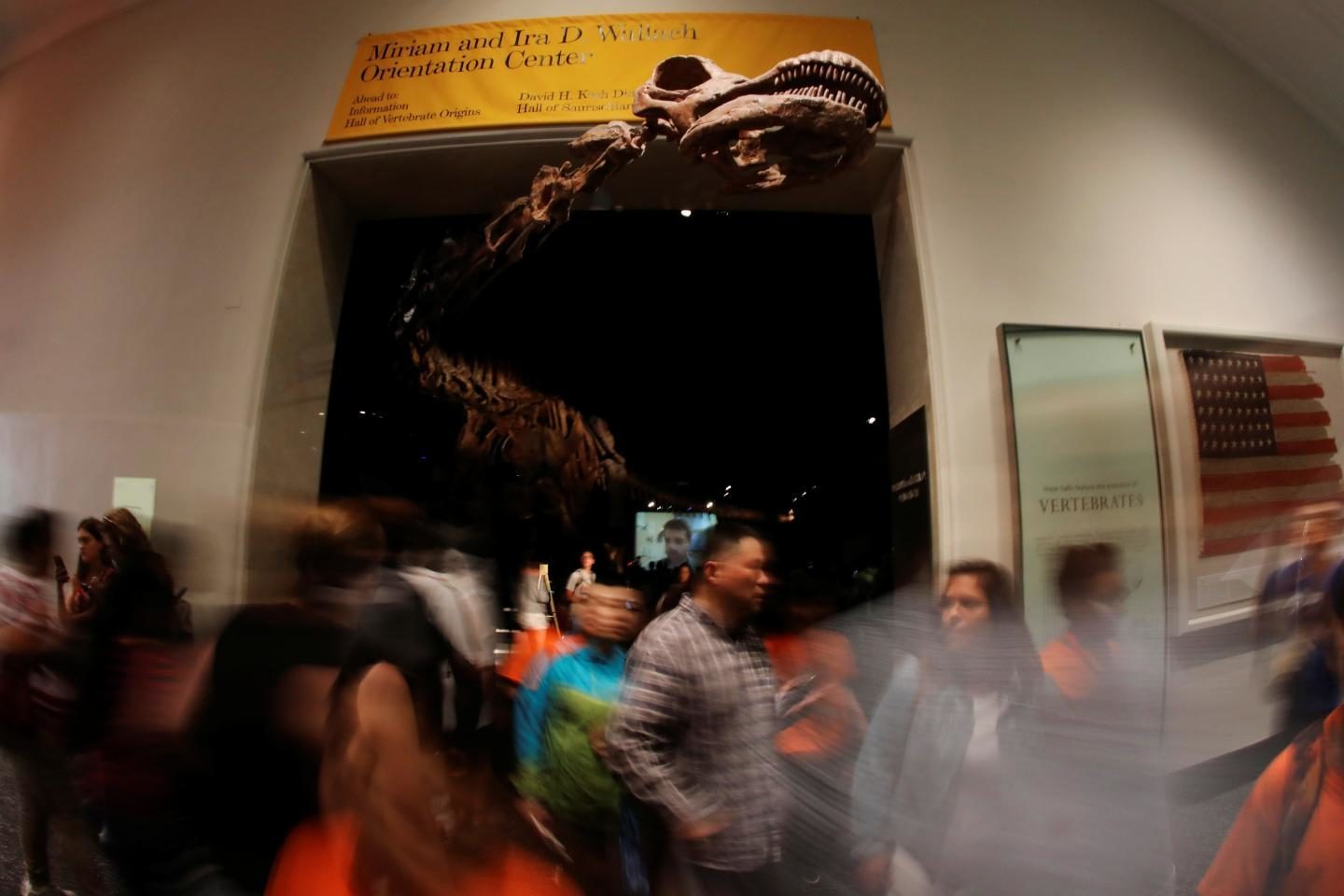
© Shannon Stapleton/REUTERSMuseum attendees walk by the head of the newly named Patagotitan mayorum, a 122-foot titanosaur, at the American Museum of Natural History, in New York. A generic dinosaur costume can be customized for a stylized Patagotitan look.
The Patagotitan was named the Biggest Land Animal Ever
In 2013, a Patagonian shepherd discovered the fossilized remains of an enormous long-necked dinosaur. For years it would remain nameless, simply called "The Titanosaur," referring to the taxonomic clade to which it belonged, in the halls of the American Museum of Natural History where visitors could see a life-sized skeleton reconstruction.
In 2017, scientists finally published a paper about the animal, including the declaration that it was the largest animal to ever walk the Earth. They also gave the dinosaur a name: Patagotitan mayorum.
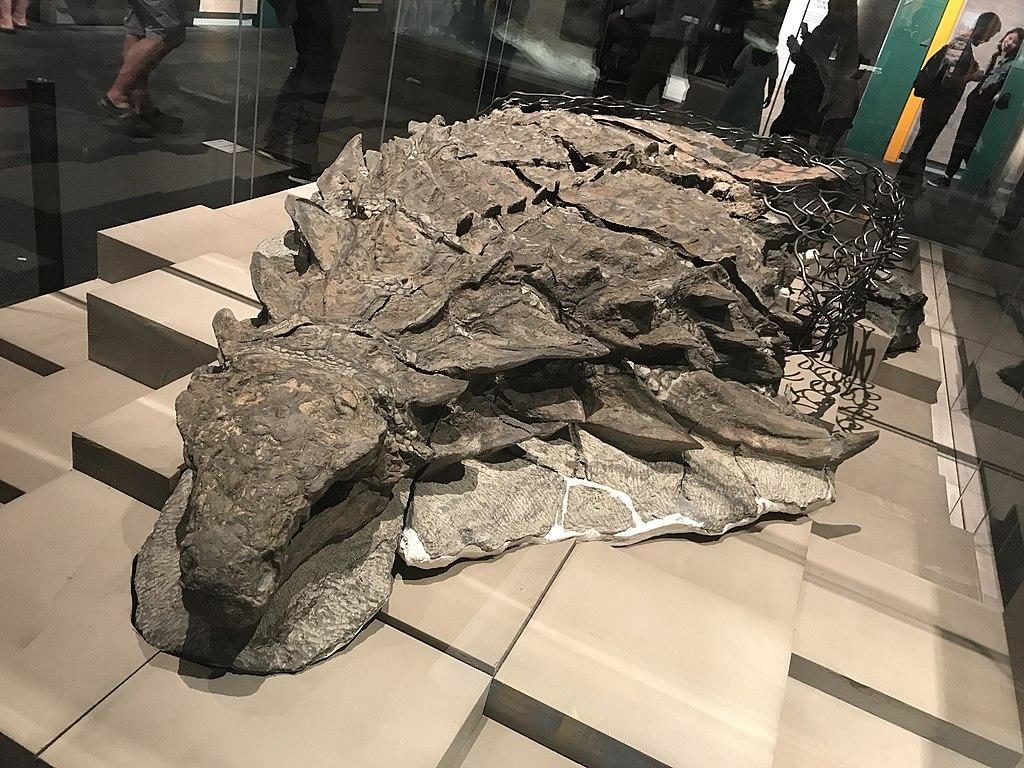
© WikipediaThe fossil nodosaur Borealopelta.
The dinosaur family tree may have been wrong this whole time
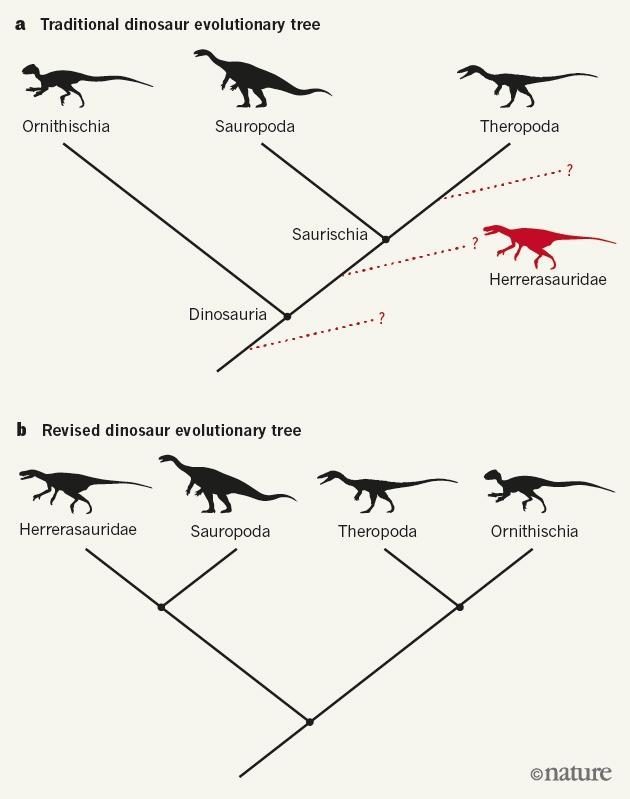
© NatureThe old dinosaur family tree and the proposed re-write.
For the last century, paleontologists have grouped sauropods (like long-necked dinos) and theropods (like T. Rex and Velociraptor) in the saurischia division of dinosaurs, and ceratopsians (like triceratops) in ornitshia. But, according to paradign-shifting research, theropods like T. Rex should move into ornittschians with Triceratops, and long-bodied, toothy herrarasaurs.
The new theory, which would mean dinosaur phylogeny would need to be completely revamped, hasn't been formally adapted into the field, but the science behind it is strong and may lead to major changes.
Paleontologists found a tick that had eaten dinosaur blood preserved in amber
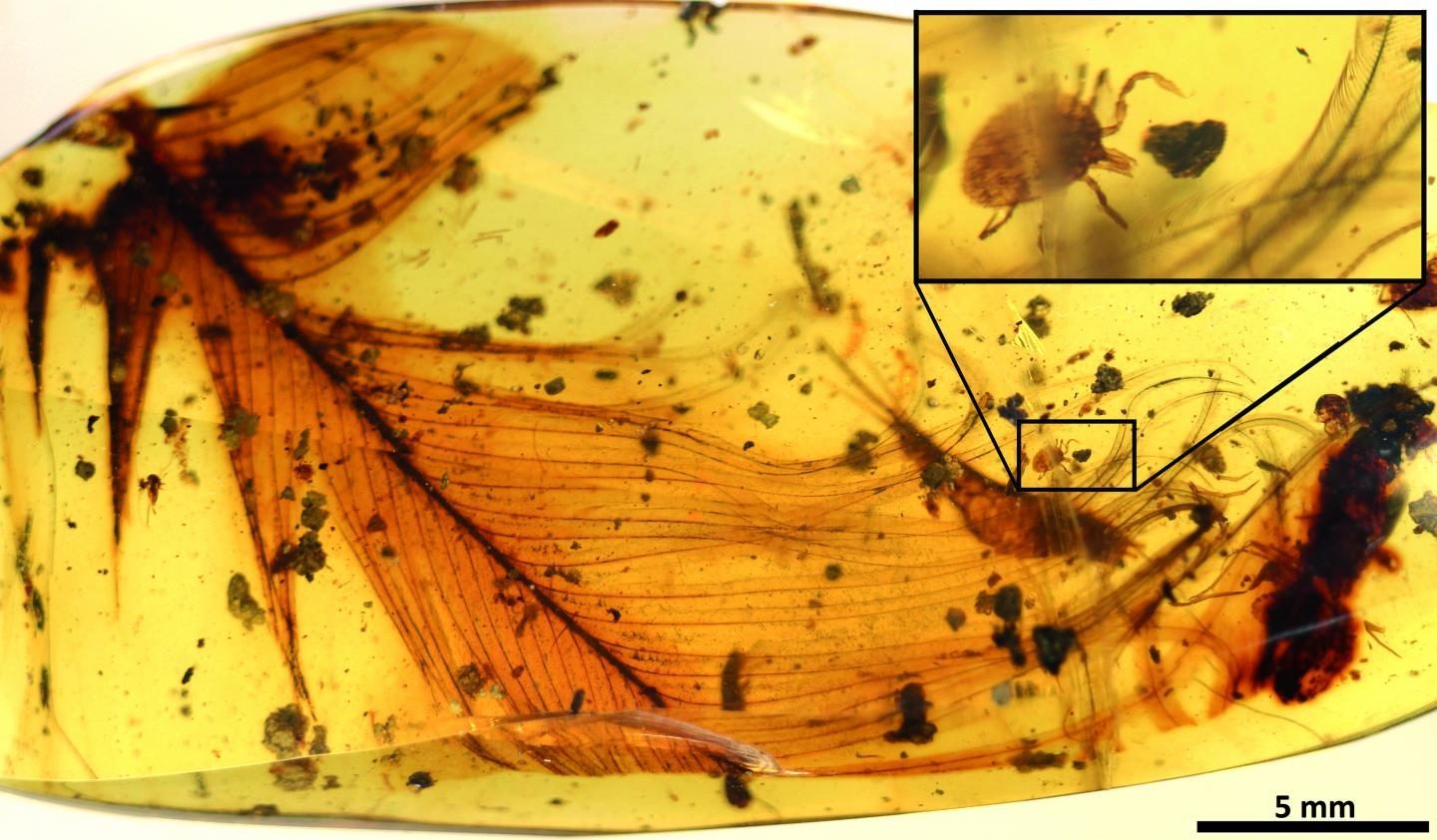
© Peñalver, Arillo, Delclòs, Peris, Grimaldi, Anderson, Nascimbene, Pérez-de la FuenteHard tick grasping a dinosaur feather preserved in 99 million-year-old Burmese amber. Modified from the open access article published in Nature Communications: 'Ticks parasitised feathered dinosaurs as revealed by Cretaceous amber assemblages.'
A world-record deposit of hundreds of pterosaur eggs was uncovered
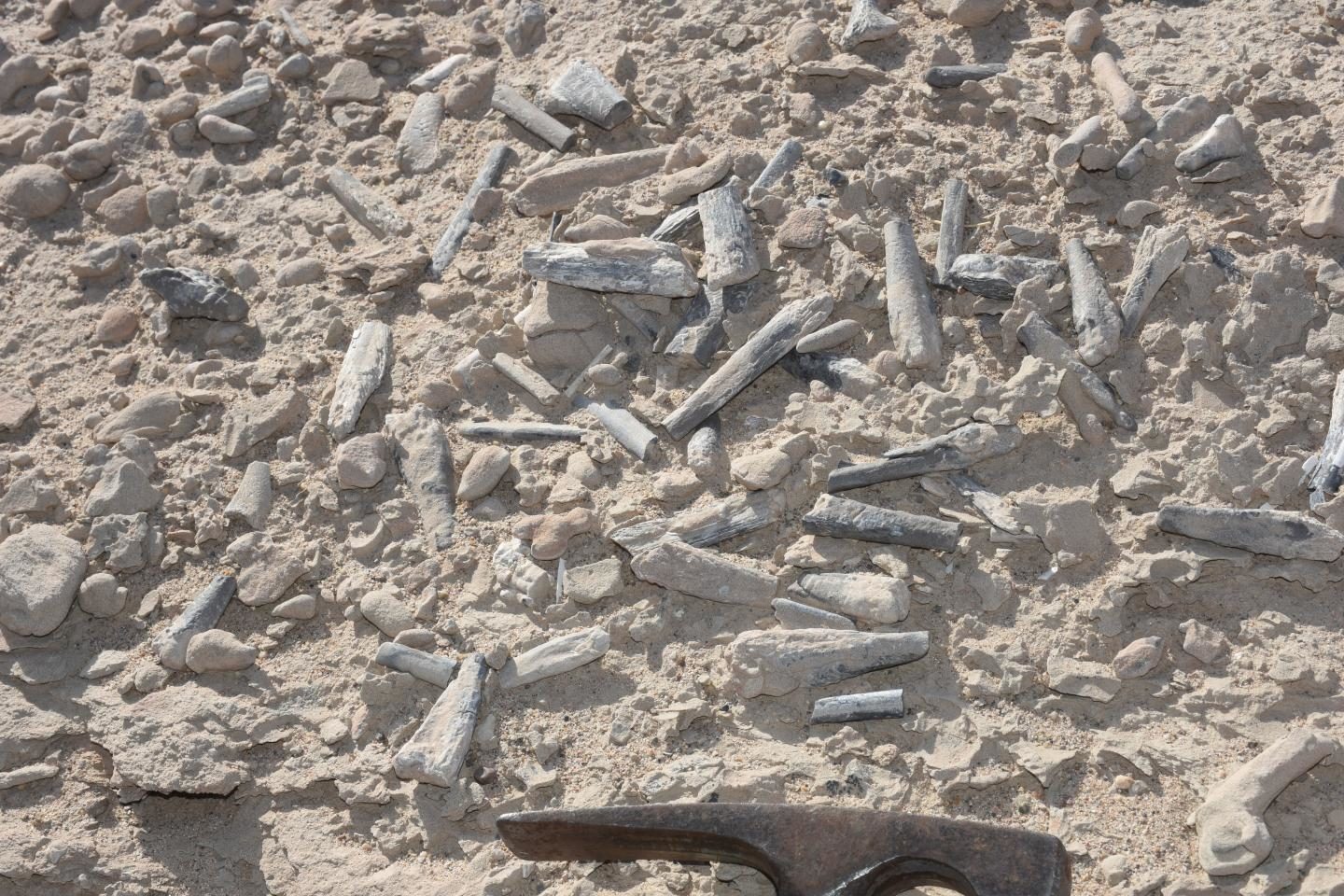
© Museu Nacional/UFRJHundreds of pterosaur bones on the surface, demonstrating the richness of these sites. Alexander Kellner
Researchers noticed that the wing bones in the embryos were less developed than the leg bones, which implies that the animals could walk but not fly when they were born. Further, paleontologists believe this means that the pterosaur parents must have stuck around to raise their young until they learned to fly.




Comment: Also See: