Animals
S


Info

Peacock death toll increases to 42 across Tharparkar, Pakistan

Image
At least eight more peacocks died of viral Newcastle disease in Bhopay village here on Thursday, increasing death toll to 42 across Tharparkar.

Due to scorching hot weather, Newcastle disease broke out in various areas of the drought-hit Tharparkar, according to wildlife officials. At least 42 affected peacocks died in two days, they said.

It is pertinent to mention here that the Newcastle is a contagious bird disease affecting many domestic and wild avian species; it is transmissible to humans. Tharparkar's drought and hot weather has started hitting the birds as dozens of peacocks have died in different villages of Diplo taluka - the worst-affected area of the district by the drought this year.

Dozens of birds visit each house of different villages early in the morning. "We serve these birds wheat and some other eatables available at home," said Desh Mukh, a local villager. After taking their share, these birds fly away, he said. "It is painful for us that our birds are dying in large number," he said.

Attention

Dead Minke whale marked with graffiti discovered beneath Central Pier, Atlantic City

Image
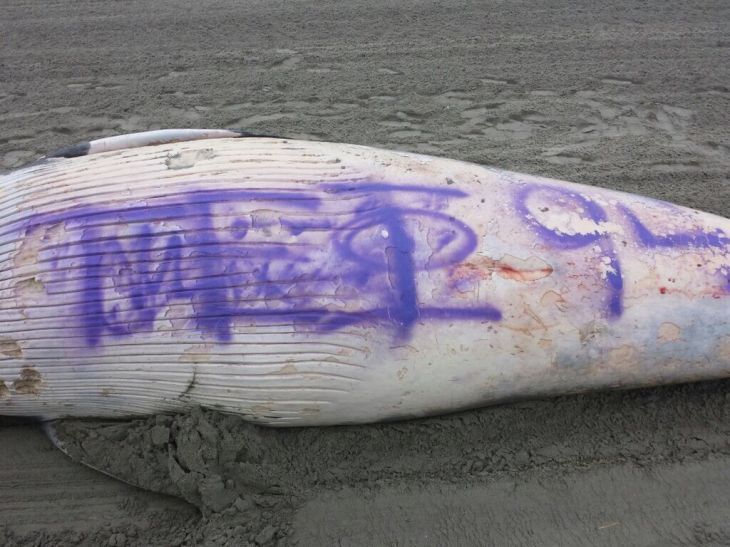
The belly of a dead minke whale appeared to be covered in purple graffiti. The whale washed up Thursday morning beneath Central Pier.
A minke whale, its underbelly tagged with purple spray paint, was found Thursday morning under Central Pier, where it had washed up.

Besides the graffiti-marred whale, a dead common dolphin was also found at the beach on Indiana Avenue, about a half dozen blocks away.

Atlantic City police said the graffiti marks were not gang-related. The discernible markings appeared to be Greek letters.

The whale, roughly 12 to 15 feet long, was dragged from beneath the pier down the beach to a site near Martin Luther King Boulevard using an excavator and chains.

The dolphin was about 5 feet long and weighed less than 200 pounds.

A state pathologist will take samples to determine the cause of death and then they will be buried on the beach, said Robert Schoelkopf, director of the Marine Mammal Stranding Center.


Eye 2

Symbolic? Albino snake swallows own tail

Image
Bizarre footage has emerged of a snake eating its own tail after mistaking it for lunch
Onlookers marvel as a snake thrashes around while devouring its own tail, lending literal truth to the saying "you are what you eat"

A female albino western hognose snake astonished onlookers when they found it lying writhing in a hoop in a water dish.

The snake, whose diet usually includes small rodents, appeared to be eating itself from the tail, and even drew blood.

Snake experts believe this behaviour occurs in sick animals that are unaware of what they are doing.

The western hognose is found throughout the Great Plains states of North America from Canada to Mexico.


Fish

Thousands of dead fish along Wisconsin shorelines after harsh winter

Image
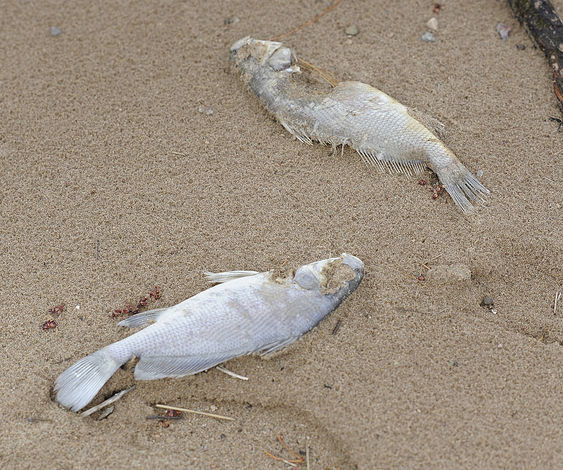
© AP Photo/Daily Tribune MediaIn this photo taken April 28, 2014, a pair of dead fish lies in the sand along the East shoreline of Lake Petenwell in Rome, Wis. Thousands of dead fish are washing up on the shores of some central Wisconsin lakes.
Thousands of dead fish are washing up on the shores of some central Wisconsin lakes.

Wisconsin's Department of Natural Resources says the phenomenon is likely the result of thick ice that trapped fish in waters with low oxygen, Daily Tribune Media reported (http://bit.ly/1rB4iJ6 ) Monday.

"They're all over the lake, probably thousands and thousands," said Rome bar owner Tom Koren.

Residents near Lake Petenwell are seeing a second unusual sight - pelicans have come to scoop up the dead carp, walleye and other fish.

"We don't normally have pelicans here," resident Jim Kiehl said. "Then, I saw dead fish lying on the bank."

DNR Fish Team supervisor Justine Hasz says it's likely the pelicans are turning up because their normal staging grounds on Lake Michigan are still frozen.

The DNR expects the cold winter will result in more dead fish in lakes throughout the state. The department expects winter kill to be worst in shallower, backwater areas. Castle Rock Lake also may have been hit hard, Hasz said.

Hasz said the DNR planned to investigate the issue further on Tuesday.

Source: Associated Press

Attention

Viral disease? More than 20 peacocks die in Tharparkar, Pakistan

Image
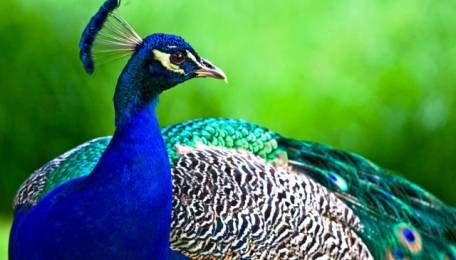
Peacocks, such as the one pictured above, are native to Tharparkar. Several of them have died in the past week as the authorities struggle to find out the cause behind these sudden deaths.
More than 20 peacocks have died in different parts of the drought-hit district of Tharparkar while several others are infected with a viral disease

Nasrullah Samoon, a resident of Malsirio village, said that at least 18 birds have died in the last five days and many more have fallen sick. "The wildlife officials are not giving any attention towards the issue," he complained. "We are taking our own measures and giving them medicine tablets so our birds can survive."

In the adjacent Nangarparkar taluka, the situation is no different. "The birds can survive if the government starts vaccinating the birds right away," he said.

Meanwhile, the officials denied that so many birds have died. An assistant conservator of Tharparkar, Lajpat Sharma, admitted that a few cases have surfaced but, he insisted, the deaths have not been this many. "These birds are very sensitive to the weather and they are dying from the rise in mercury," he claimed.

Sharma said that his department has conducted tests recently and they found no traces of the Rani Khet disease among the peacocks in the desert. "Different diseases have been reported in recent days, such as eye infections."

Eagle

Symbolic? Bald eagle crashes into boat on Interstate in Wisconsin and ends up trapped under shrink wrap

Image
© SCOTT KREGNESS, Lee Newspapers Scott Kregness of Tower, Minn., found this bald eagle inside the shrink wrap between to motors of a fire boat he was transporting after the bird crashed into the boat on Interstate 94 near Menomonie Friday morning.
Scott and Marilyn Kregness of Tower, Minn., got the surprise of a lifetime just before 9 a.m. Friday when a bald eagle used interstate highway speeds to take up residence in a fire boat being taken from Florida to northern Minnesota.

As the couple crossed over the Red Cedar River on Interstate 94 near Menomonie, the eagle dove across the top of the pickup truck and crashed through the shrink-wrapped boat, near the pilot house.

"We do a lot of traveling, and I've never had anything like this," Scott Kregness said.

An initial look over the crash site revealed a hole in the shrink wrap, but no blood or feathers, so the couple kept going. But a gentleman following them on the interstate pulled up beside them with his lights flashing and signaled for them to pull over. After pulling into the Menomonie rest stop, the other driver told Scott and Marilyn the eagle was still inside the boat.

Stormtrooper

Cop allegedly 'fought back a smile' after fatally shooting friendly dog

dog
© Unknown
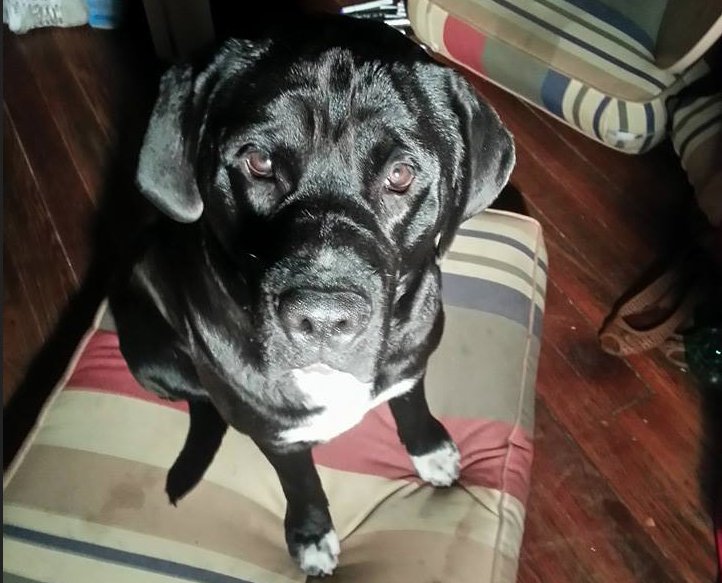
A traveler from Maine said a small-town Louisiana police officer smirked after fatally shooting his "incredibly friendly" dog on Monday.

Brandon Carpenter, 28, told The Huffington Post Tuesday that he and 21-year-old Logan Laliberte, both of Maine, had hopped off a freight train and were walking through the town of Sulphur, Louisiana, with Carpenter's dog -- a 14-month-old Labrador, Newfoundland, golden retriever mix named Arzy Kensington -- when it started raining. The men were on their way to visit friends in Lake Charles.

They climbed into the back of a parked box truck in the near-empty parking lot of the Southwest Daily News to take shelter, Carpenter said. Before long, a police car pulled up and an officer, gun drawn, ordered them out of the truck.

The officer, Brian Thierbach of the Sulphur Police Department, spotted Arzy and told the men to "get your dog," according to Carpenter. He said the officer watched him tie Arzy to a nearby fence with a 3 1/2-foot leash before Thierbach handcuffed both men, ordered them to the ground facing away from Arzy, and asked, "Is this dog going to bite me or attack me?"

"No," Carpenter said he responded. "He is an incredibly friendly dog."

Twenty seconds later, Carpenter told HuffPost, he heard a single shot.

Eric Midkiff, Southwest Daily News circulation manager, said his boss phoned him around 7 a.m., asking if he knew anything about the men in the parking lot. Midkiff "took off" and headed to the office, and by the time he arrived, "the officer already had Brandon and the other guy on the ground."

Midkiff, 33, told HuffPost he stayed about 20 feet from the men, and heard Thierbach asking if the dog was going to attack. Midkiff said Thierbach was standing on the bumper of the box truck petting Arzy.

"The dog was rubbing up against the cop," Midkiff said. "He would rub the dog's back and then push him away. All of a sudden, he just jumped down and shot the dog in the head."

Midkiff said he could see both Thierbach and the dog clearly. "That dog did not bite that officer," he said. "The dog was wagging his tail, his tongue was hanging out."

Igloo

Polar bears face threats to survival because of too little global warming

Polar Bears
© Townhall.com
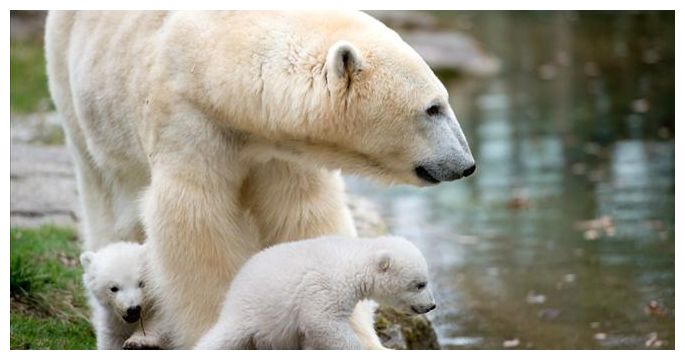
When the polar bear was put on the endangered species list back in 2008, it became the first species to be put on the list based on what might happen with the environment and their habitat. Environmental groups argued that global warming served as a major threat to the polar bear and therefore it must be added to the endangered list just in case someday it actually becomes endangered due to climate change.

Now just a few short years later, polar bears in Alaska are facing a major problem: too much ice. CNSNews has the details:
Five meters of ice - about 16 feet thick - is threatening the survival of polar bears in the Southern Beaufort Sea region along Alaska's Arctic coast, according to Dr. Susan J. Crockford, an evolutionary biologist in British Columbia who has studied polar bears for most of her 35-year career.

That's because the thick ice ridges could prevent ringed seals, the bears' major prey, from creating breathing holes they need to survive in the frigid waters, Crockford told CNSNews.com.

Fish

Half a million carp dead in Cumberland River, Kentucky

Image
© USGSThe silver carp is known for its explosive and high jumping that can be a danger to boaters.
Several sources in Kentucky - including our colleagues at WKMS in Murray - are reporting on a massive and sudden die-off of silver carp in the Cumberland River below the Lake Barkley dam, downriver from Nashville and Clarksville. Estimates of "tens of thousands", maybe as many as 500,000 of the invasive Asian carp species, are believed to have perished in a 24-hour period.

The cause of the die-off is unknown and being investigated, but Kentucky Department of Fish and Wildlife's Paul Rister has this to say to online newspaper KyForward:
"Whenever there is one species of fish, you are definitely thinking viral or bacterial. It's not anything water quality wise. If it was oxygen-related or chemical related you would see other species"
The silver carp - known for its high jumping skills that can be a danger to boaters - is one of four invasive carp that are illegal to "possess or transport" in Tennessee, according to the Tennessee Wildlife Resources agency.

The spread of silver carp is so worrisome that wildlife officials are researching special chemicals to poison them.

Here is some detailed information about Asian carp distribution in the U.S. as of last year.

Arrow Down

UK Barn owls suffer worst year on record due to bitterly cold spring of 2013

Image
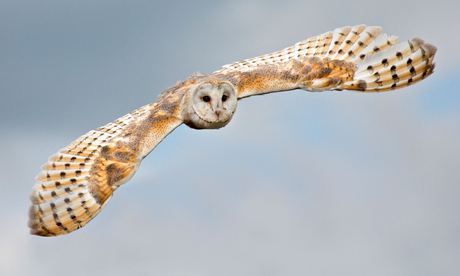
© Marlene Finlayson / AlamyA barn owl in flight.
Monitoring results show species struggled in the bitterly cold spring of 2013

Barn owls suffered their worst year on record in 2013 as they struggled in the bitterly cold spring, conservationists have said.

Results from barn owl monitoring schemes around the UK revealed the number of sites where nesting took place last year was significantly down in every area compared to previous years, and some surveys found no nests with eggs in at all.

Overall the number of occupied nests was down 71% on the average across all previous years, according to the Barn Owl Trust, which collated the information from 21 independent groups stretching from Jersey in the Channel Islands to south-west Scotland.

A survey in Berkshire which normally finds 14 nests in use and a surveyor in Yorkshire who normally finds 25-30 occupied nests both found none at all, while surveys in Buckinghamshire and Sussex were both down more than 90% on normal levels.

Conservationists described the situation as the "worst year ever recorded" for the flagship farmland species.