Animals
S


Attention

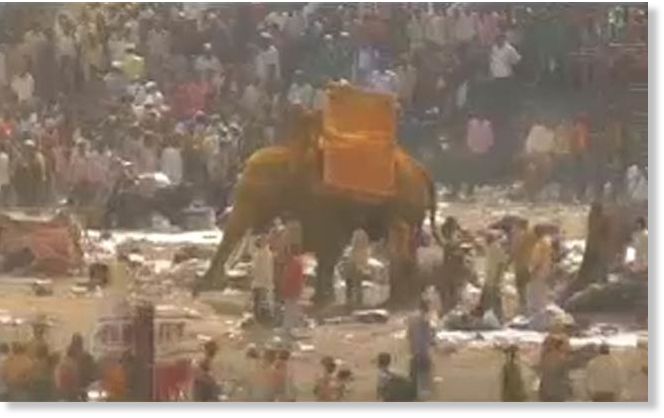
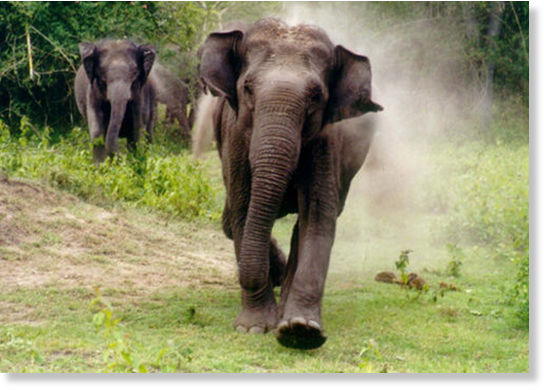
Temple elephant goes berserk and kills one person in Maharashtra, India

Image
The elephant went out of control during a procession which was part of Khandoba celebrations.
One woman was killed and another injured when a temple elephant went out of control during a temple procession in Maharashtra on Saturday. The incident took place in Pali village of Satara District, during a procession to celebrate the regionally popular Khandoba festival. Three lakh people were part of the procession and many had a lucky escape.

"There was a huge crowd. Two women were injured and amongst them one woman died. People were running helter-skelter to save their lives and that is when the accident took place," Police Sub-Inspector Mohan Tawde told reporters

"We were sitting in one place. Suddenly the elephant went out of control and trampled people," said an eyewitness.

Another eyewitness said, "The elephant suddenly charged towards us. People ran and in the chaos my son got hurt in the leg."


The incident once again brings to light the dangers of keeping elephants in captivity and using them in religious and marriage processions. While this a common practice in India it often leads to stress for pachyderms and lead to accidents.

Cow

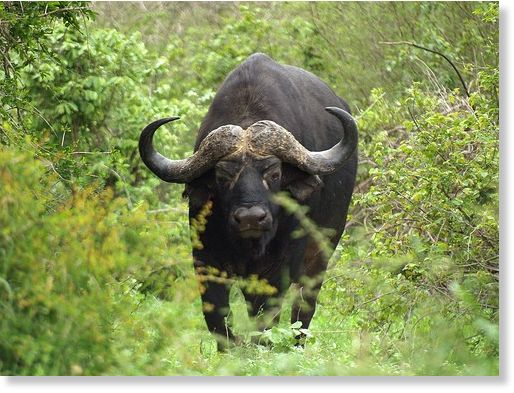
Zimbabwean man gored by cape buffalo

Image
A Zimbabwean man survived an attack by a charging buffalo by hanging on to its horns, The Chronicle reported on Tuesday.

His intestines protruding from a first goring by the buffalo, Given Ndlovu, 38, claims he managed to grab hold of the animal's horns and then its nose, hanging on until it gave up the attack.

"The lone buffalo came charging towards me as I was herding cattle on Saturday. It attacked me with its horns in the stomach and I fell down.

"I then held its horns as it attempted to attack me again. I then left the other horn and grabbed its nose and held it for some time," Ndlovu reportedly said from his hospital bed.

Afterwards, in his weakened state, Ndlovu stripped off his T-shirt and bandage his stomach before calling relatives. He had surgery and was recovering in a hospital in Bulawayo.

The attack happened in the Mvuthu district, near Victoria Falls and other game-rich forestry and safari areas in western Zimbabwe.

Officials reportedly suspect Ndlovu may have been trying to poach an animal in the area.

Source: Sapa

Smiley

Swedish bunnies tipped for Grand National win

Image
© YouTubeSwedish rabbits compete in London last year.
Four Swedish jumping rabbits capable of clearing up to three metres in a single hop are gearing up to compete in the Rabbit Grand National in England at the end of this month.

It is is the first time Sweden's floppy-eared athletes will compete at Yorkshire's Small Animal Show dubbed the 'Crufts of the small animal world' - since Cherie, a two-year-old bunny from Gävle, bounded to victory in the 2012 hurdle race.

The sport of bunny athletics originated in Sweden in the 1970s, speading to England in 2011, when Swedish bunnies first competed at the Great Yorkshire Showground in Harrogate.

Scandinavia still leads the world, with the Danish hopper Tosen holding the record for the highest jump (close to a metre), and another Dane, Yabo, holding the three metre long-jump record.

Karin Molin from Sweden, who is bringing the Scandinavian competitors to the show, hopes her prize rabbit can beat his personal record.


Attention

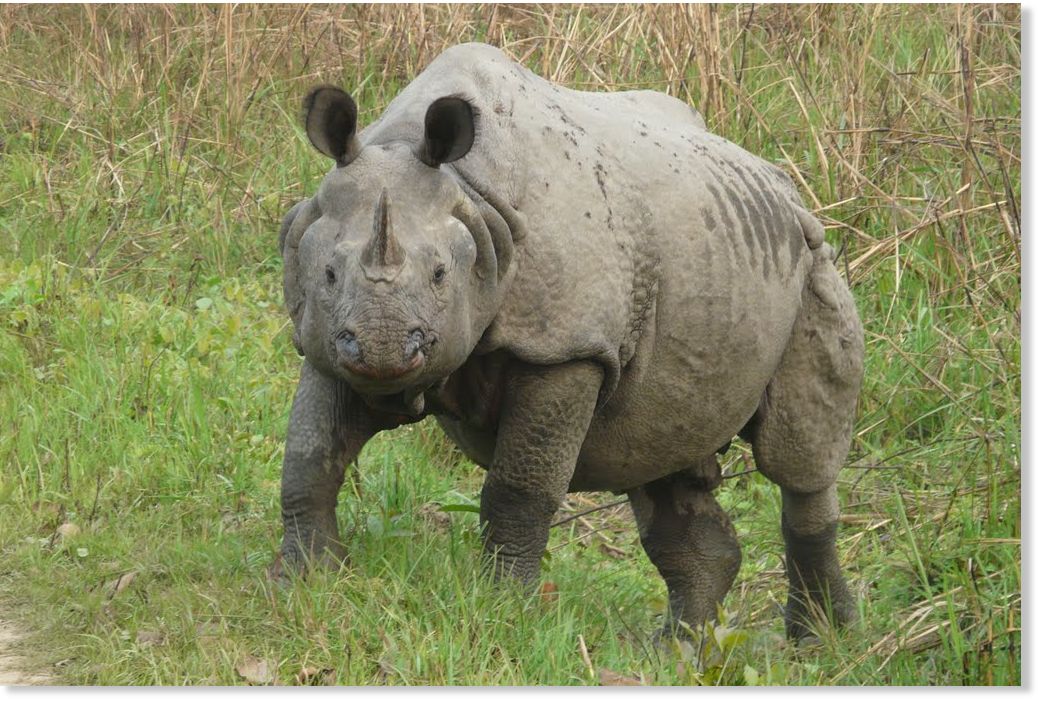
Elderly man killed by rhino in Nepal

Image
An elderly man attacked by rhino in Chitwan district has died on Saturday night.

According to the District Police Office, Chitwan, Sadabahar Community Forest member Chaudhari was attacked by a rhinoceros while inspecting the forest.

64 year old Nathuram from Megauli-5 died while receiving treatment.

He had suffered severe injuries on the leg, chest and head.

Binoculars

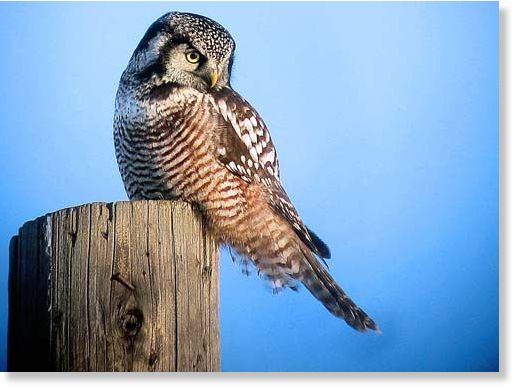
Rare northern hawk owl seen south of Eau Claire, Wisconsin

Image
© Anne GeraghtyA northern hawk owl like this one has been spotted south of Eau Claire
Since early December, a rare visitor - a northern hawk owl - has been hanging out just south of Eau Claire, to the delight of local bird-watchers.

"Usually, the crows will help you find it. There's four or five crows who like to harass it," said David Lund of rural Eleva, who has seen the bird several times in recent weeks.

The owl is only about 14 inches tall and is unusual among owls because it is just as happy hunting in the daytime as at night, which also has made the bird popular with local birders.

Attention

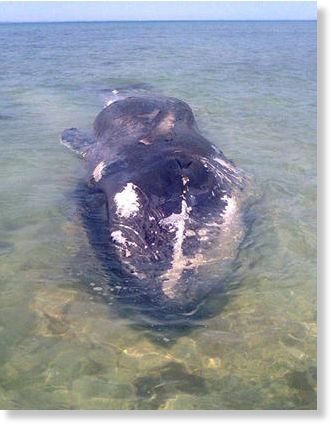
Dead blue whale found dead on coast of India

Image
The whale that was found washed ashore at Valai island off Periapattinam.
A giant Blue Whale was found washed ashore on Valai island, one of the 21 islands in the Gulf of Mannar region.

Wildlife Warden, Gulf of Mannar Marine National Park, Deepak Bilgi said the marine mammal was found dead near the shore of the island two days back and initial studies revealed that it had died long back.

As the whale was found away from the shore, post-mortem could not be conducted immediately, he said, adding the whale was expected to hit the shore on Friday. A veterinary surgeon would be taken to the island, situated six km off Devipattinam near here, for conducting the post-mortem, he said.

Eagle

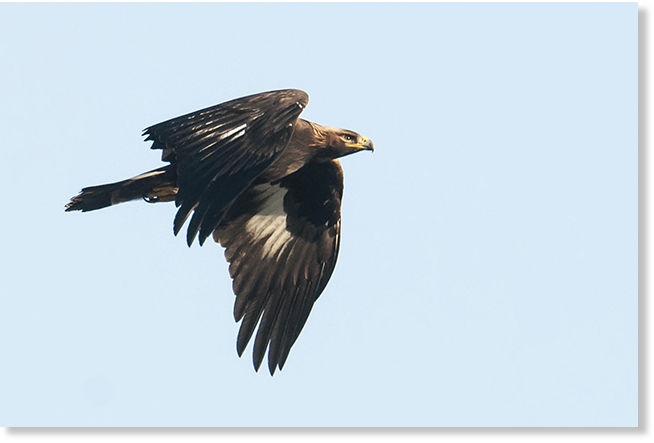
Symbolic? Rare golden eagle arrives in South Delta, Vancouver and dominates resident bald eagles

Image
© John GordonA juvenile golden eagle is making a rare appearance in the Boundary Bay area in South Delta.

A juvenile golden eagle is making a rare appearance in the Boundary Bay area in South Delta.

A golden eagle - a rare visitor to a region known for its bald eagles - had birders all aflutter on New Year's Day in south Delta.

"I have been here a couple of days for this guy," said Vancouver's Michelle Lamberson, taking her place in a line of photographers along 72nd Street near Boundary Bay. "I've got some decent shots."

The juvenile bird sat like an ornament atop a large poplar tree on the edge of a golf course about 75 metres from the roadside.

Lamberson, who is director of flexible learning special projects at the University of B.C. and a birder for eight years, added: "I've not seen one in the Lower Mainland before. Bald eagles don't like them."

Mark Wynja, a birder for more than 40 years who works in a bird-supply shop in Vancouver, said the golden eagle rules the roost along the Boundary Bay foreshore. He watched as the raptor flew into a stand of red alders and scattered four bald eagles from their perches, although they later returned.

"He tends to be the dominant bird," he said. "He's tougher than a bald eagle, which is a glorified scavenger."

Binoculars

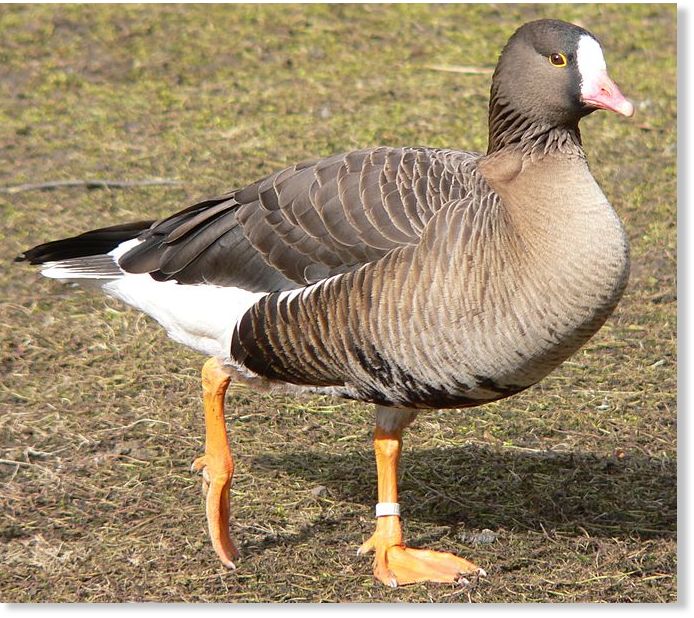
Rare goose from northern Asia turns up in Suffolk, UK

Image
© Wikimedia Commons.Lesser white-fronted goose
An extremely rare bird is reported to have roosted in a Suffolk nature reserve.

The lesser white fronted goose was reported to have crossed the North Sea on Tuesday night and taken up residence at RSPB Minsmere on the county's coastline.

Publicity officer Ian Barthorpe said the bird was a rapidly declining species that usually winters in the Black Sea and is very rarely spotted in Britain. The goose is likely to be one of the most sought-after species for spotters taking part in tomorrow's winter wildlife walks at the reserve.

Image
Distribution map

Comment: Similar recent reports of birds completely losing their way across the Northern Hemisphere: Rare Eurasian kestrel appears in Nova Scotia, Canada

Another completely lost avian species: Couch's Kingbird flies from southern Texas to New York

Warbler that should be wintering in western Mexico turns up in Louisiana

Bean goose from Eurasia takes a wrong turn and winds up on the Oregon Coast

Four lost flamingos fly NORTH for the winter and turn up in Siberia

Wrong place, wrong time: European robin turns up thousands of miles away in China

Rare bird from Mongolia turns up in Wakefield, UK

Wrong time, wrong place: Rare bird found in Barrie, Canada


Red Flag

Thirteen endangered animals we may have to say goodbye to in 2015

We have only ourselves to blame.

British broadcaster and naturalist Sir David Attenborough once asked: "Are we happy to suppose that our grandchildren may never be able to see an elephant except in a picture book?"

This year marked the 100th anniversary of the death of the last passenger pigeon, Martha, who managed to survive only 14 years in captivity after her species became extinct in the wild. More recently, Angalifu, a 44-year-old northern white rhinoceros, died at the San Diego Zoo, leaving just five other white rhinos worldwide, all in captivity. Chances are our grandchildren will never get to see this remarkable creature.

In fact, the world is losing dozens of species every day in what experts are calling the sixth mass extinction in Earth's history. As many as 30 to 50 percent of all species are moving toward extinction by mid-century - and the blame sits squarely on our shoulders.

"Habitat destruction, pollution or overfishing either kills off wild creatures and plants or leaves them badly weakened," said Derek Tittensor, a marine ecologist at the World Conservation Monitoring Centre in Cambridge. "The trouble is that in coming decades, the additional threat of worsening climate change will become more and more pronounced and could then kill off these survivors."

About 190 nations met last month at the United Nations climate talks in Lima, Peru to discuss action needed to curb rising greenhouse gas emissions. It ended with a watered-down agreement that seems unlikely to help much in the battle against global warming.

Corruption and illegal online trafficking also threaten conservation efforts. The illegal wildlife trade is an estimated $10-billion-a-year industry. It's the fifth largest contraband trade after narcotics, fueled by the rising demand for animals as pets, trophies, and ingredients in medicine, food and other products.

There's no doubt that we're facing an uphill battle against mankind's unsustainable greed and consumption, but it's a battle we can't afford to lose.


Comment: Insatiable greed driven by psychopaths and their effect on society.


"The thought of having to explain to my children that there were once tigers - real, wild tigers, out there, in the great forests of the world - but that we let them die out, because we were busy - well, it was bad enough explaining about the Tooth Fairy, and that wasn't even my fault," said English comedian Simon Evans.

Here are a few of the planet's most endangered animals who we may have to say good-bye to in 2015:

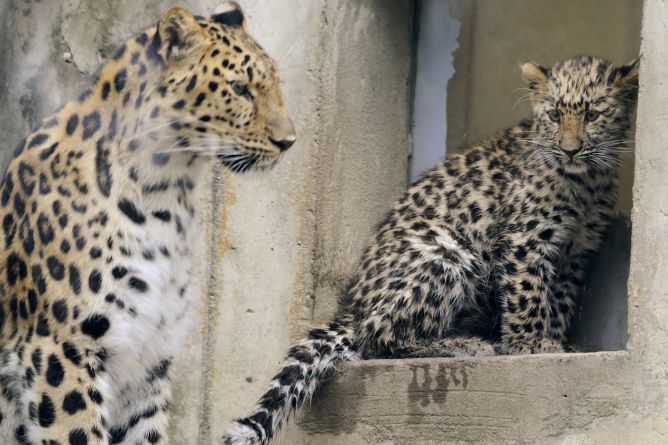
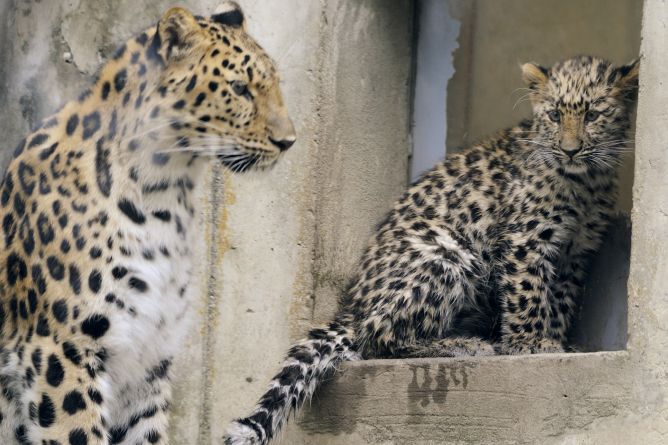
1) Amur leopard
Image
© Sebastien Bozon/AFP/Getty Images
Comment: There is no doubt that the psychopathic, pathologically greedy nature of the world we live in is destroying this planet. That has created significant voids in our ecosystem and we humans have allowed it. These extinctions are about more than just humanity's effect on this planet.
But it is important to us to realize that what happened 13,000 years ago was just the one of many extinction events. If this unbelievably violent cataclysm - in which almost all life on Earth was destroyed - came as a global empire was seeking domination over others, we may need to ask the question: does our living planet, its companions in the solar system, and its parent sun, manifest some sort of consciousness and do they, between them, have the resources to deal with humanity - or any other species - whenever things get 'too hot', so to say? Was Atlantis such an example? Did other destroyed and buried civilizations whose names were completely forgotten for hundreds, if not thousands, of years, become victims of their own hubris in like manner?

The Golden Age, Psychopathy and the Sixth Extinction
Cyclic cataclysms have wiped out the Earth before. Human beings are likely to be the next species to become extinct.

SOTT Talk Radio show #70: Earth changes in an electric universe: Is climate change really man-made?


Attention

2 women trampled to death by elephants in India

Image
Two women died in separate incidents after they were attacked by elephants in interior Thithimathi and Palibetta villages here on Monday.

The victims have been identified as Puttichanda Poovamma (70), a resident of Kavadi village near Ammatthi, and Lakshmi (35), a resident of Thithimati village.

According to the police, Poovamma was walking outside her daughter's house in Palibetta at around 7.30 am, when an elephant strayed into the front yard and trampled her to death.

She was severely injured and died on the spot, they said. Her body was sent to Gonikoppal for an autopsy, the police added.

In another incident, Lakshmi, a resident of Vinayaka Nagar in Thithimathi, was headed towards the forest at around 9.30 am, when a wild elephant attacked her. She died on the spot, the police said.

Assistant Conservator of Forest Sripathi, Matthigod Wildlife Division Range Forest Officer Kiran and Thithimati Division RFO Gopal visited the Hunsur wildlife division.