Volcanoes
S


Bizarro Earth

Second, larger eruption at Calbuco volcano in Chile creates surreal 'apocalyptic' scenes (Images)

Calbuco volcano eruption April 2015
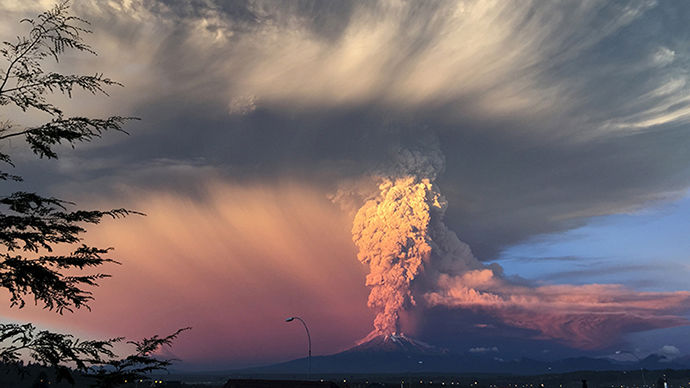
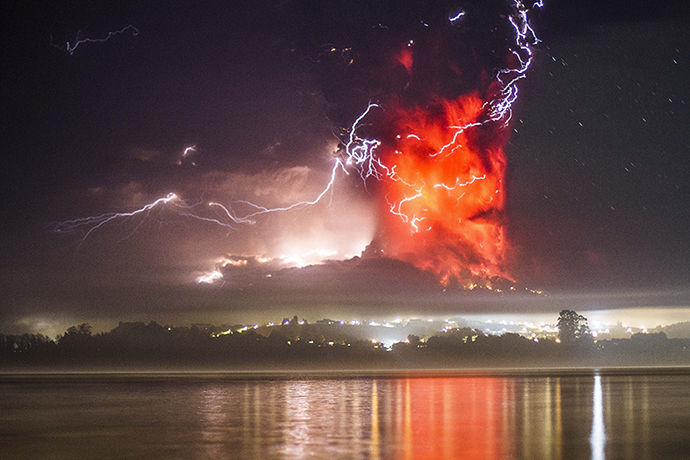
The record-breaking volcanic eruption in southern Chile is dramatically altering skies, as spectacular views emerge of white plumes creeping miles up into the sky after coloring the night orange. A second blast took place hours ago.

Nature's colossal power was aptly demonstrated by Calcubo, which erupted a second time just a few hours ago, with agencies reporting a stronger eruption than the first.

An electrical storm mixed with the raging spurts of lava overnight to create what looked like the jaws of hell opening to swallow the surrounding landscape.

Calbuco volcano eruption April 2015
© AFP Photo / David Cortes
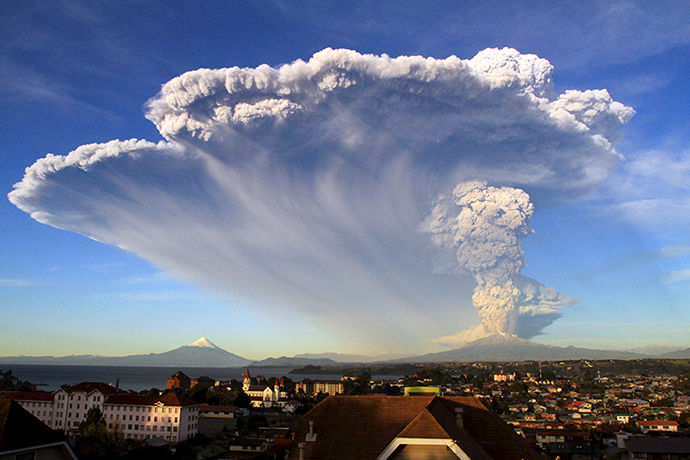
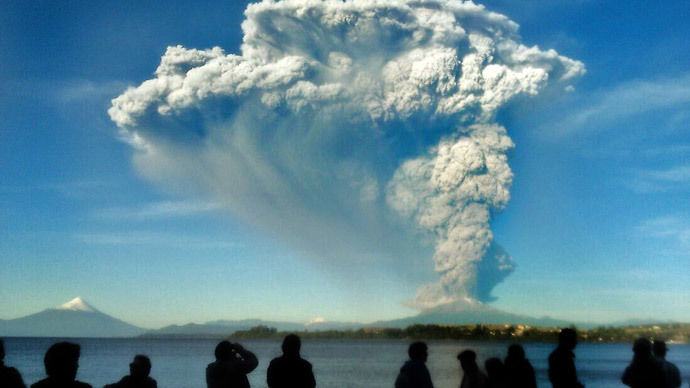
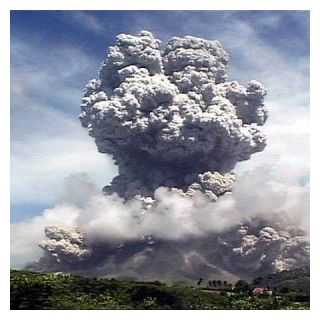
In scenes reminiscent of the movie Independence Day, white mushroom disks adorned the daytime skies, slowly claiming the city of Puerto Varas for their own.

Calbuco volcano eruption April 2015
© Reuters / Carlos Gutierrez
Even rarer and arguably more precious-looking views opened up against the setting sun, as the white disks collided with its glow.

Comment: Earth is 'opening up'.

Is the number of volcanic eruptions worldwide increasing? Yes.

The number of volcanoes erupting right now is greater than the 20th century's YEARLY average.


Arrow Up

Turrialba volcano in Costa Rica erupts again; spews ash 6,500 feet

Image
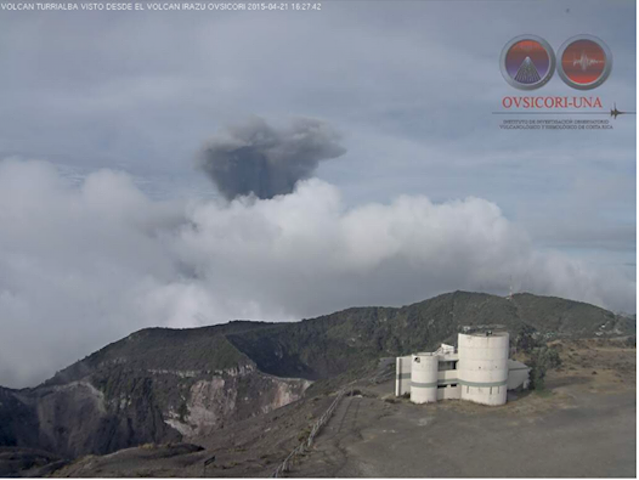
Costa Rica's Turrialba volcano erupted again Tuesday afternoon, producing a column of ash, gas, and water vapor that reached some 6,500 feet over the volcano's crater, according to the Volcanological and Seismological Observatory of Costa Rica (OVSICORI).The eruption began at 4:04 p.m. and continued for 22 minutes, according to OVSICORI. Constant seismic activity has been recorded at the volcano since Saturday, and local residents have reported a strong smell of sulfur for the last several days.

San Jose's Tobias Bolanos Airport announced a partial closure of the airport Tuesday evening due to potential ashfall, but was back to normal operation by Wednesday morning. An eruption of similar magnitude most recently occurred on Tuesday, April 7th. One of Costa Rica's most well-known volcanologists, Gino Gonzalez of the National Seismological Network (RSN), said in December that Turrialba could remain active and belching ash for as long as two years.

Dominoes

Nevado de Ruiz in Columbia volcano shaken by series of earthquakes, ash emissions; volcanic activity reported in Japan

Image
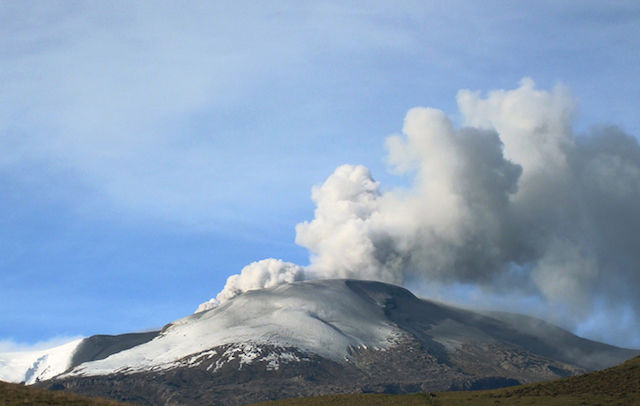
Nevado del Ruiz - Activity at the volcano has increased during the past week. Accompanied by elevated seismic activity, ash emissions have been occurring since 14 April. The strongest phase of activity was on 19 April, when ash plumes rose to estimated 900 meters above the summit. The Ingeominas volcano observatory in Manizales reported a change in seismicity detected since 12 April, when an increase in volcanic-tectonic (rock-fracturing) signals was detected, signs of pressurization and possible magma intrusion at depth.

Sakurajima (Kyushu, Japan): The volcano has been very active recently. Vulcanian-type explosions have been frequent (2-8 per day) and often relatively large. On 15 April, at least 8 explosions occurred, the largest of which produced ash plumes that rose to 15,000 ft (4.5 km altitude), i.e. 3.5 km above the volcano's summit.

Aso (Kyushu, Japan): Mild strombolian activity with low-level ash emissions continue from the Nakadake crater.

Attention

Chile on red alert as Calbuco volcano erupts

Image
© AFP Photo / Giordana SchmidtPuerto Varas, Chile, as the Calbuco volcano erupts on April 22, 2015.
Hundreds of people are being evacuated in southern Chile following a massive eruption of the Calbuco volcano - its first in over 42 years. The government has declared a red alert, as thick clouds of ash and smoke shot up several kilometers into the sky.

The volcano is located near the tourist location of Puerto Varas, about 1,000 km (625 miles) south of the nation's capital Santiago.

Phoenix

Scientists warn of supervolcanos with ability to destroy humanity, urge global governance to prepare

Image
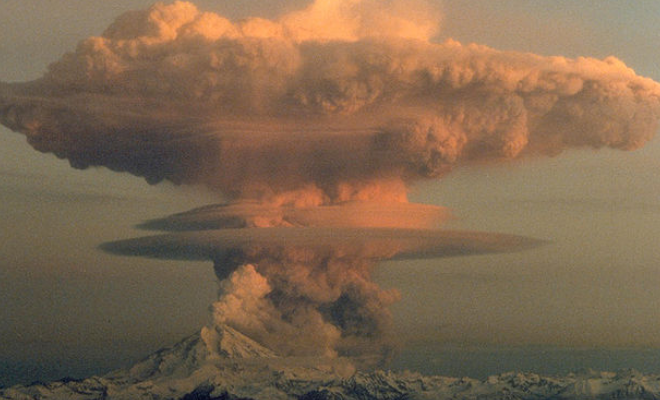
© USGSMount Redoubt Eruption on April 21, 1990

A report presented by experts at a leading scientific foundation details the possibility of a supervolcano that could return humanity to pre-civilization state, urges global community to prepare.


Special Report

A report by the European Science Foundation has concluded that a large volcanic eruption poses the greatest risk to humanity and that an, "informed global governance system," is needed to prepare for the possibility.

Calling the threat of low-frequency, high impact events, "grossly underestimated," in disaster risk reduction plans worldwide, the report highlights the fact that, "large volcanic eruptions have the potential to impact climate, anthropogenic infrastructure and resource supplies on a global scale."

The 72 page report is chalked full of interesting facts and, overall, paints a picture of a world struggling to grasp the dangers posed by these rarely occurring disasters. Although the report should be read in full by anyone seeking the whole picture, the authors did incorporate a section with their key findings.

Comment: The sheer power and potential destructive force of mother nature should be humbling in its realization. Incredible to think that our planet's natural processes are capable of so much more destruction than the results of the psychopathic drive towards annihilation - which we read about every day in the articles posted to the Puppet Masters section of SOTT.net. But even more incredible is to know that the psychopathic aims and actions that are referred to there actually do affect the Earth's changes in fascinating ways. Read Earth Changes and the Human Cosmic Connection to understand how.


Attention

Mexico's 'Volcano of Fire' in Colima spews colossal column of ash over Ciudad Guzman


Mexico's Colima volcano has spewed a giant 3.5-kilometre-high column of ash that rained down on a nearby city, authorities say. The Jalisco state civil protection agency said a "moderate" quantity of ash fell on Ciudad Guzman, a town near the western state of Colima, where the volcano is located.

A civil protection official said there were no reports of damage or injuries in the city of 100,000 people.

Officials urged the population to use masks if they venture out of their homes, remove excess ash from rooftops so they do not collapse and cover water drains.

Comment: See SOTT's latest coverage on increasing volcanic activity:


Bizarro Earth

The number of volcanoes erupting right now is greater than the 20th century's YEARLY average

Volcano Eruption
© endoftheamericandream.comVolcano Eruption.
Is the number of volcanic eruptions worldwide increasing? Yes. During the 20th century, there were a total of 3,542 volcanic eruptions globally. That works out to approximately 35 eruptions per year. That may sound like a lot, but according to Volcano Discovery there are 36 volcanoes erupting around the world right now. In other words, the number of volcanoes erupting as you read this article is greater than the 20th century's yearly average.

And all of this is part of a larger trend. In 2013, we witnessed the most volcanic eruptions worldwide that we had ever seen in a single year, and 2015 is already threatening to be another one for the record books. All over the planet, volcanoes that have long been dormant are beginning to wake up, and this is greatly puzzling many scientists.

Fortunately, most of the eruptions in recent years have been relatively small. But scientists tell us that if we do see a VEI 7 or a VEI 8 eruption today, the amount of energy that would be released would be somewhere in the neighborhood of a million nuclear bombs going off all at once, and such an eruption would completely literally transform our civilization almost overnight.

The last VEI 7 eruption that the world witnessed was in Indonesia in 1815.

According to the Express, that massive eruption resulted in a "year without summer" and created famine all over the globe...
The deadly eruption of Mount Tambora in Indonesia sparked what was known as the 'Year Without Summer' in 1815 as crops failed and livestock died in much of the Northern Hemisphere - causing the worst famine for hundreds of years.

However, academics have warned that the chances of a similar disaster happening in the next 85 years, which could see the Earth flung back into a "pre-civilisation state", was estimated to be as high as one in 10.

Due to dense population, an eruption which killed tens of thousands only two centuries ago would now be "cataclysmic" for today's population, the authors warned.

"Large volcanic eruptions have the potential to impact climate, anthropogenic infrastructure and resource supplies on a global scale," the panel of geologists, economists and climate scientists from the European Science Foundation have written in a new paper.
If you don't think that such a thing could happen today, you should keep in mind that global food production is just barely keeping up with global food demand. In fact, in some years the world actually eats more food than it produces. Global food reserves are at perilously low levels, and so a "year without summer" would be absolutely cataclysmic.

And right now, some of the biggest volcanoes in the world are starting to wake up.

Arrow Down

Ubinas volcano in Peru triggers massive mudslide

Image
© Weather Channel
Dramatic images have emerged from Peru after heavy snowfall, ash from the Ubinas volcano and warming temperatures triggered a massive mudslide earlier this week.

The Geophysical Institute of Peru (IGP) was conducting geogphysical measurements when the mudslide began to cascade down the mountain, and filmed the event

According to Peru This Week, towns in the Ubinas Valley are on alert for more volcanic activitiy, and residents have been advised to wear masks. Authorities in Peru have not ordered evacuations, the website reported.

The IGP reports that the landslide was due to ash deposits from the volcano's eruption on April 8 and heavy snow that fell April 10-11. As skies cleared and temperatures warmed on April 12-13, the snow melted and caused the mudslide.


Hourglass

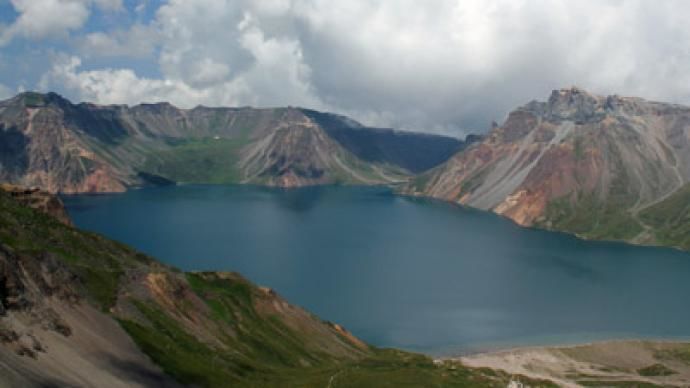
Experts warn North Korea's Mount Baekdu poised for eruption

Image
© Flickr/zarukaMount Baekdu
Mt. Baekdu, (Mount Paektu ) the symbolically charged volcano straddling North Korea and China, could erupt again soon, a study warns. Professor Yoon Sung-hyo of Pusan National University says there are indications that the volcano, though quiet for decades, could erupt any time and urged closer monitoring of the situation. The last eruptive activity at the volcano occurred in 1903, though prior past eruptions were among some of the largest in recorded history.

He says the concentration of helium in the volcano has been rising over the last decade or so, and magma levels are creeping up. Yoon has been warning of another eruption since 2010, the first Korean to add his voice to a growing chorus of regional seismologists.
Source: Chosun Media

Hardhat

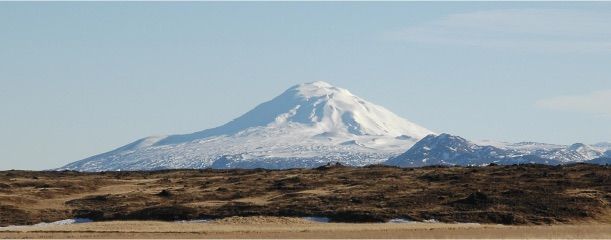
Hekla volcano in Iceland shaken by earthquake swarm

Image
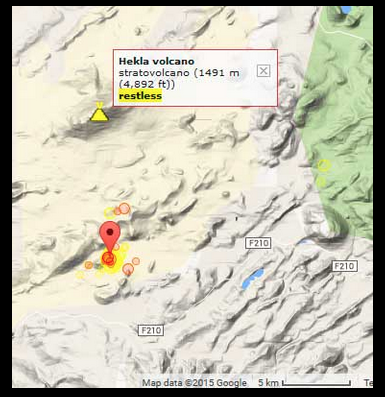
Small earthquake swarms occurred at shallow depths during the past days near the volcano. The quakes were located approx. 6-10 km south of Hekla volcano and at shallow depths around 5 km.
The largest quakes were two magnitude 2.6 events at 4 km depth on Thursday (9 April). It is impossible to say whether the earthquakes are linked to volcanic activity and thus might be precursors of a new eruption, but Hekla is probably the most likely candidate volcano for the next eruption to occur on Iceland.
Image
One of the country's most active, and the most frequently erupting volcano, Hekla has been believed to be "due" and have its magma chamber filled for several years now. Known for not giving much precursory signals (and only few earthquakes), an eruption would not be a surprise at all.

Kliuchevskoi (Kamchatka): After less than two weeks pause, the volcano started to erupt again - mild strombolian explosions at the summit crater and small ash emissions.