
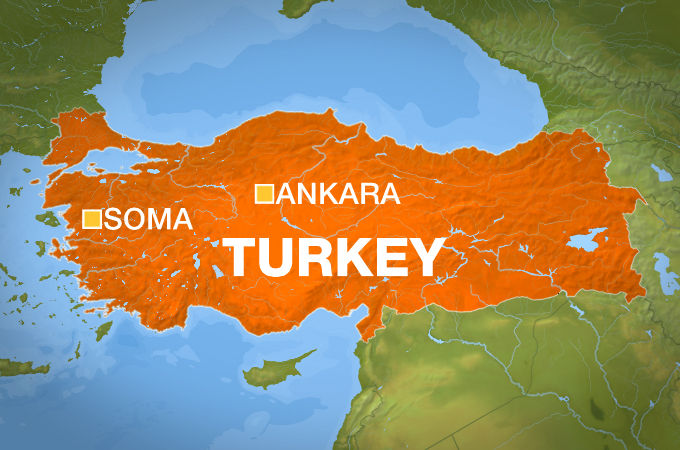
Local member of parliament Muzaffer Yurttas said 20 workers had been killed at the mine in Soma, citing health officials.
"Twenty workers were killed and 30 were wounded in the accident. They died of choking and burns," Yurttas told local TV station NTV.
Al Jazeera's Serpil Karacan reporting from Istanbul said the mine employed more than 500 people and at least 200 people had finished their shift, leaving 300 still trapped at the site.
Fire officials are trying to pump clean air into the mine shaft for those who remain trapped some two kilometres below the surface and four kilometres from the entrance.
"Four separate rescue teams are currently working in the mine. The fire is creating a problem but oxygen is being pumped into the mine shafts that weren't affected."










Comment: As Gilad Atzmon once said: