
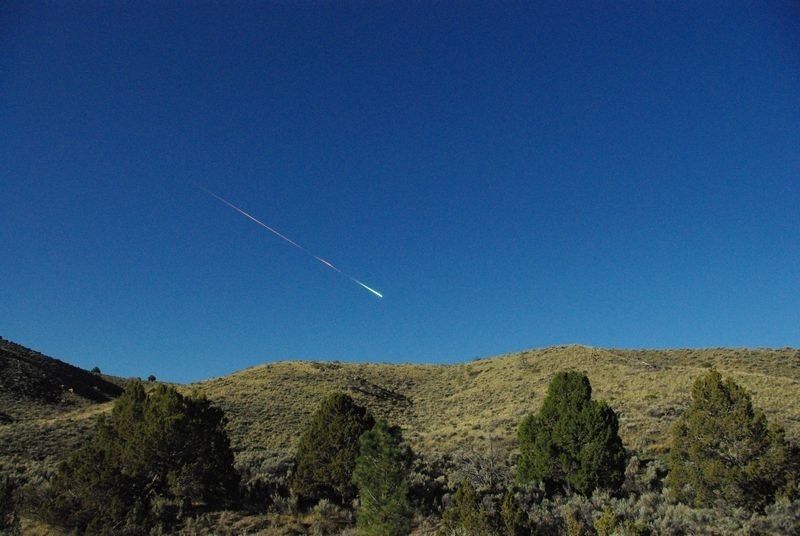
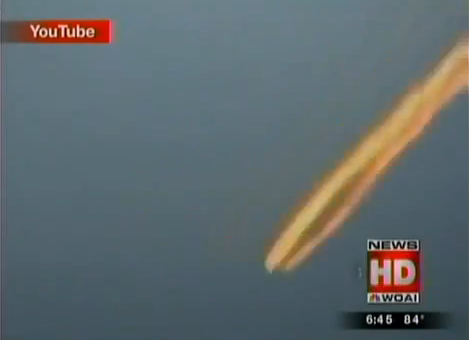
© Lisa Warren/NASA-JPL/APAn image provided by NASA's Jet Propulsion Laboratory shows a meteor over Reno, Nevada on April 22, 2012.
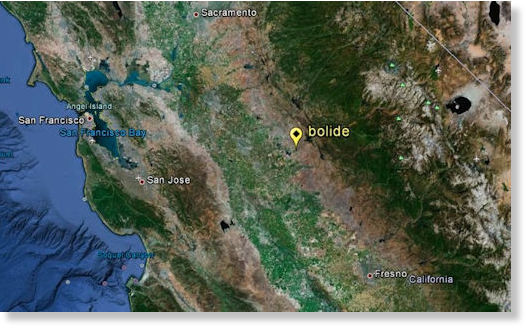
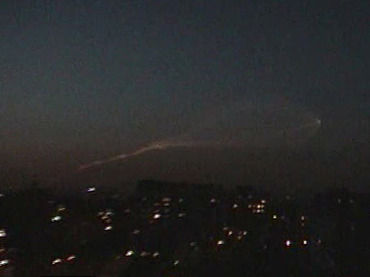
The former space rock entered Earth's atmosphere around 8 a.m. PT on April 22 and exploded over California's Central Valley, according to NASA, which pinpointed the location in a map posted on its website.
According to space.com, several witnesses initially thought they had experienced an earthquake.
"An event of this size might happen about once a year," said Don Yeomans of NASA's Near-Earth Object Program Office. "But most of them occur over the ocean or an uninhabited area, so getting to see one is something special."




Comment: We've noted for several years that the amount of space debris coming in or around the planet has been on the rise. Have a look at some of these articles for more info.
The Hazard to Civilization from Fireballs and Comets
Cosmic Changes, Planetary Instability and Extreme Weather
And keep an eye on this section: Fire in the Sky, as we continue documenting these occurrences.