Puppet MastersS


Light Saber

Activist Randy Short: 'Globalist agenda behind Russia blasts'

Image
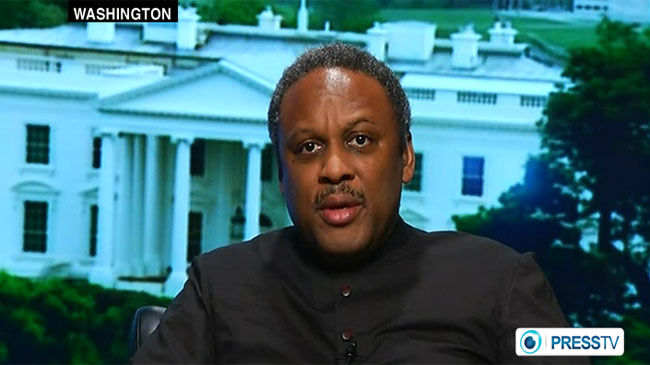
Dr. Randy Short, a member of the Dignity, Human Rights and Peace organization.
An American human rights activist has slammed the recent bombings in Russia, blaming the terror act on a US-led 'globalist agenda' rather than any sort of a religious effort since all major faiths forbid suicide.

Rejecting the notion that the terror act was the work of a Chechen Islamic movement, Dr. Randy Short said in a Tuesday interview with Press TV that suicide is strictly forbidden in Islam and against the teachings of its holy Prophet Mohammad (peace be upon him).

He also stated that suicide is indeed "against the teachings of the Torah as well as the Christian bible," adding that "all Abrahamic faiths reject suicide."

Dr. Short went on to say that such terror acts are the results of a joint US-UK bid to establish what he referred to as a "toxic Islam" to generate proxy wars as part of their global rivalry with the former Soviet Union and even today's Russia.

"This is a creation of a multinational globalist agenda against the resource-rich people who live in the Levantine areas and other oil-rich areas that Brzezinski called the Great Chessboard or the Great Game going back to the initial British invasion of Afghanistan; and going to Afghanistan in the 1970's where the CIA began to create this false Islam and trained these mujahedeen," said Dr. Short.

Star of David

Israel's democracy claim eroding sez UK ex-MP

Image
© Press TVClare Short, former British MP for Birmingham Ladywood and ex-Secretary of State for International Development.
Former Labour Member of the British Parliament Clare Short says "Israel's claim to be a democracy is eroding very fast" after being threatened with arrest by the Tel Aviv regime's officials.

Short's remarks came following a decision by Israel's former Minister for Strategic Affairs Moshe Ya'alon to outlaw the Council for European Palestinian Relations (CEPR).

The move, enacted two weeks ago but revealed on Tuesday by the Israeli newspaper Haaretz, means that all of the CEPR executives and directors could be detained upon arrival in Israel.

Short is also at risk of arrest as she is a member of the board of directors of the Brussels-based NGO.

Handcuffs

Ray McGovern: NSA stands for 'No Such Amendment'; intelligence agency violates U.S. Constitution

Image
© Press TVRay McGovern, a U.S. Army veteran and former CIA analyst
For the first time in history, all three branches of American government are complicit in violating the Fourth Amendment of the US Constitution by facilitating illegal surveillance, Ray McGovern, a former CIA officer, told RT.

The persecution-induced suicide of online activist Aaron Swartz, the sentencing of US Army whistleblower Chelsea Manning and the Edward Snowden asylum saga have all made 2013 the year that saw a clampdown on whistleblowers. Yet the US government's efforts to stifle this kind of activity will hardly stop the new tech-savvy generation from leaking sensitive data, McGovern believes, describing whistleblowing as "unstoppable."

The former CIA officer says the NSA has been dubbed 'No Such Amendment' for its bulk surveillance, which is in violation of the US Constitution, particularly its Fourth Amendment prohibiting groundless and warrantless searches and seizures.

RT: Do you think in the future the work of whistleblowers will be discouraged from all that we've seen this year, the clampdown on whistleblowers throughout the globe?

Ray McGovern: Yes, their work will be discouraged but it will be inevitable. In other words the discouragement will appear more and more crass, more and more ineffectual because the cat is out of the bag. There's this new generation, technical people, without whom people like NSA and General Hayden and General Alexander cannot exist. As Julian Assange said recently, he encourages this new generation to play the role that the industrial generation did in preparing the way for the 20th century. Seize the initiative, act courageously, realize what you have -- what Julian calls "extraordinary power" - they can't make the systems work without you and when you talk about a system's administrator, it is not just one system. It is the administrator that ties together a whole network of systems. The cat is out of the bag. Those who cannot bear, as Martin Luther King Jr. used to say, the natural medicines of air and light on what they are doing, are going to be very frantic, will try to stop this, but it is unstoppable and that's good news for the world and not just the United States.

Attention

The US police state in review, 2013

While some would have you believe the biggest stories of 2013 were about twerking celebrities and over-hyped real-life courtroom sagas, much bigger events were happening with far more lasting national significance. The foundation of an American police state is already laid and coming into full bloom, while most of the country remains blissfully focused on sports, reality shows, establishment pseudo-news, and other distractions.

While all of the injustices that took place in 2013 would require an encyclopedia to cover adequately, this list is designed to illustrate certain trends and significant stories from the past year. If Americans don't fix their apathy and disengagement toward causes that matter, we can expect these trends to continue toward their logical conclusions: an increasingly repressive police state dominating the lives people inside these borders and beyond.

Checkpoints, Warrantless Searches Become a Way of Life

US Police State in Review_1
© AP/The Sacramento Bee, Randall Benton
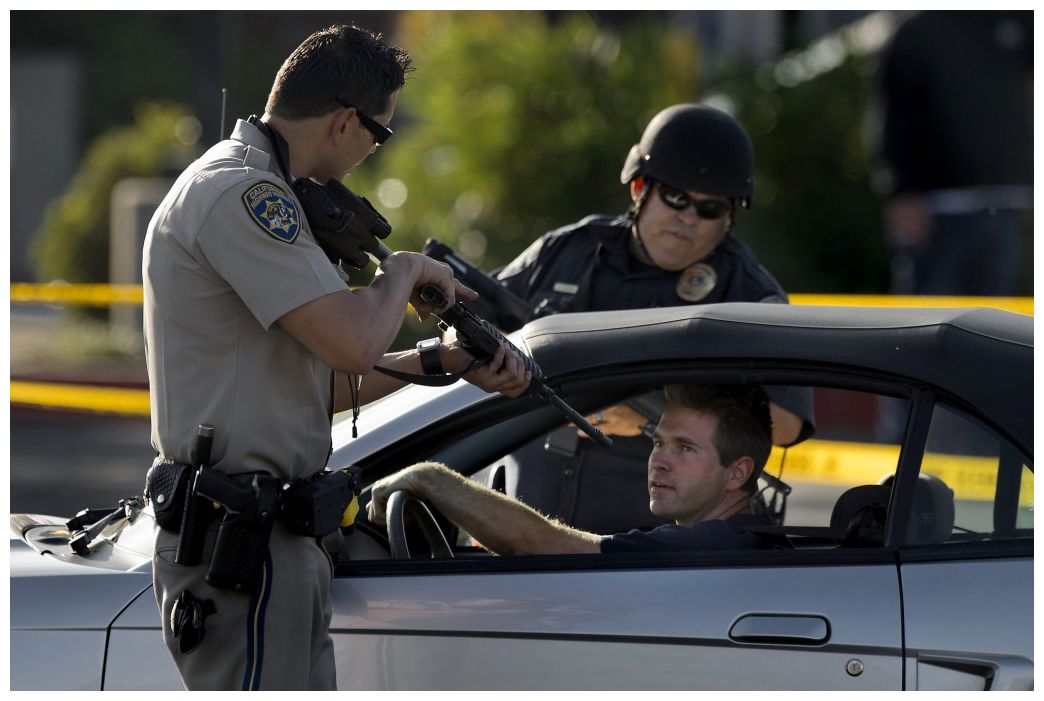
The state of the 4th amendment is in truly bad shape, given the prevalence of warrantless checkpoints and warrantless bag searches being used all around the country for various reasons. No longer restricted to airport terminals, the unconstitutional tactics are now being used in subways, bus stations, on bridges, at parades, and anywhere else the government can get away with them. This is facilitated by the palpable fear of terrorism and with financial incentives from the federal government.

In what was dubbed "Operation Independence," the federal government along with the Los Angeles Sheriff's Department staged a high-visibility terror drill in the LA subway this July. Deputies dressed in paramilitary garb teamed up with agents from the TSA and DHS to require travelers to open up their bags and prove their innocence before being allowed to commute. These tactics have sadly become commonplace in many major cities.

Bullseye

Anti-communist icon Lech Walesa blasts Obama on 'failed' moral leadership

Image
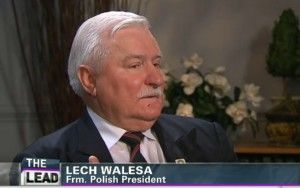
Lech Walesa, Nobel Peace Prize-winning former president of Poland, said President Obama has failed to reclaim America's role as a world leader, especially in terms of morality.

Newsmax noted that Walesa, 70, said the there was "hope in the world" that "Obama would reclaim moral leadership for America" after his election in 2008, but that "failed," he said in an interview CNN aired Wednesday.

Walesa - the famed leader of Poland's solidarity movement against communism in the early 1980s and who supported Republican Mitt Romney in the 2012 election - said "...in terms of politics and morality, America no longer leads the world."

"We have to do everything that we can to recreate, to reclaim America's role, and it seems that Obama would manage that, but he didn't accomplish that," Walesa said. "America did not regain its leadership status. We're just lucky that there were no bigger conflicts in the world, because if it had bigger conflicts, then the world would be helpless."

Books

Biggest law stories of 2013: Crucial cases poised to shape the legal and political landscapes for years to come

Image
The announcement of the year's most-searched news stories on Yahoo might fool you into thinking that the sensationalized murder cases of NFL star Aaron Hernandez, or boyfriend slayer Jody Arias, were the dominant legal events of the year. Hardly.

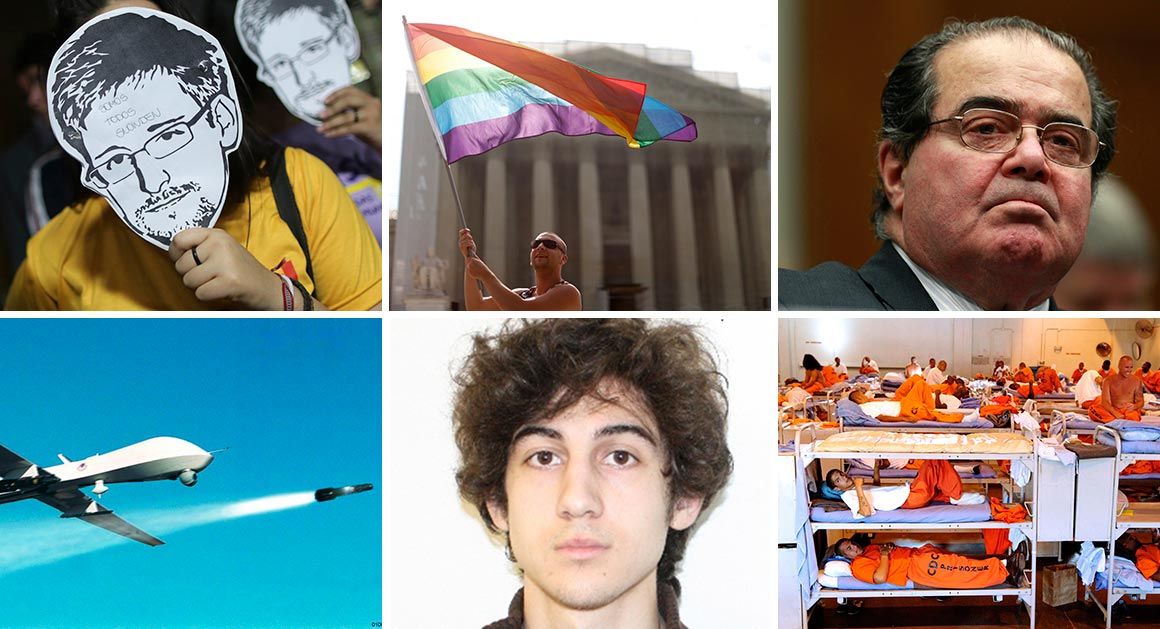
The fact is, 2013 featured a slew of crucial cases and legal developments that are poised to shape the legal and political landscapes for years to come. From gay marriage to government surveillance, here's a brief guide to the decisions and debates within the law that mattered most.

1. Supreme Court guts Voting Rights Act

The biggest legal story of the year - the United States Supreme Court's decision in June to strike down the heart of the Voting Rights Act - might actually prove to be the biggest political story of 2014. In Shelby County v. Holder, the court declared on a 5-4 vote that jurisdictions with long histories of racial discrimination in voting laws (mostly in the South) no longer had to get pre-approval from federal officials before changing their voting rules. The law violated equal protection by treating various voting jurisdictions differently, the conservative justices ruled.

Perhaps recognizing the bipartisan support that exists for the law (Congress had renewed the particular provision that offended the court, Section 4, as recently as 2006), the justices invited lawmakers to go ahead and fix what they ruled to be broken in the statute. But there is little reason to think that such a remedy is on the way: No amendment to the Voting Rights Act, no new and improved preclearance provision, is pending on Capitol Hill. And this means the 2014 midterm elections will be influenced significantly by voter-suppression efforts now underway in jurisdictions that once were covered by Section 4. In fact, just hours after the court struck down Section 4 in Shelby County, for example, eager officials in Texas moved to restore dubious voter identification requirements that had been blocked by the federal courts under Section 4.

2. Government surveillance finally goes too far

And by far the biggest political story of the year - the disclosure of widespread domestic surveillance efforts leaked by former CIA contractor Edward Snowden - may prove to be the biggest legal story of 2014. This is especially true in the wake of a dramatic ruling last week in Washington by U.S. District Judge Richard Leon, a George W. Bush appointee, who declared that portions of the NSA's surveillance program "likely" violated the Fourth Amendment rights of citizens to be free from unreasonable searches and seizures. The case, styled Klayman v. Obama, concerns the bulk gathering of phone call metadata and now heads to (the newly replenished) D.C. Circuit Court of Appeals on its way, perhaps, to the Supreme Court itself.

And this is just a prologue: From the Snowden surveillance revelations will soon flow a series of cases that will challenge in federal courts virtually all aspects of what we know about the program.

3. New fronts open in same-sex marriage fight

A pair of much-watched Supreme Court rulings on same-sex marriage in June gave gay and lesbian couples across the country greater rights and benefits - the justices struck down the core of the Defense of Marriage Act, the provision that defined marriage as only between a man and a woman, and they blocked a California referendum to halt same-sex marriages. But these landmark rulings don't mark the end in the legal or political war over same-sex marriage - and no justice suggested they did.

Already, in fact, we are seeing courtroom clashes that raise some of the questions the Supreme Court stoically refused to answer in June. For example, can a same-sex couple that is lawfully married in a state (like California) that recognizes such marriages get divorced in a state (like Mississippi) that does not? That lawsuit is only beginning to wend its way through the courts and in the year ahead, we'll see hundreds of these sorts of legal conflicts played out in state and federal courts all over the country. Just this past week, a federal judge in Utah struck down that state's same-sex marriage ban while the Supreme Court of New Mexico, in a unanimous decision, declared that the state's constitution could not preclude such marriages. The stakes will be high: Same-sex marriage proponents want to press the advantages they gained in 2013, and expand same-sex marriage rights. Opponents of same-sex marriage, embattled after the June rulings, want to draw their own lines, and keep same-sex marriage from spreading more than it already has. The justices in Washington won't revisit this issue in 2014. But they may have to in 2015.

Binoculars

Government spy cams in China can't see through the smog

Smog in China
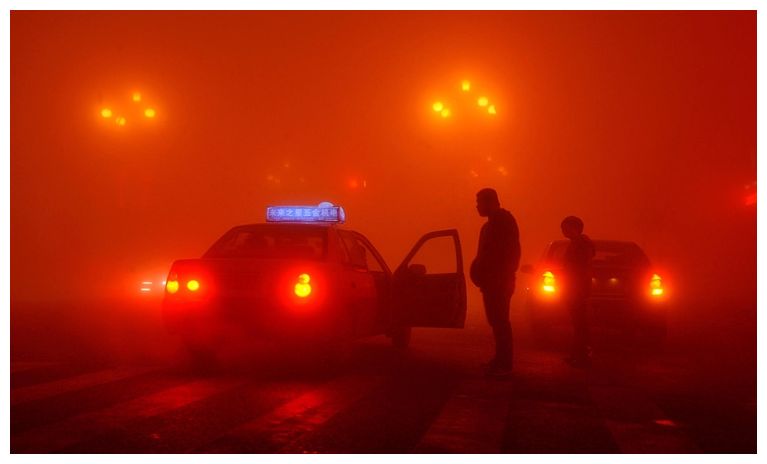
© China Foto PressAs well as health issues, heavy smog in cities such as Jilin is creating serious security concerns for authorities.
Last month the smog in China made international news when state media agencies ran whitewash stories about the countries pollution problems. The state media said that the smog actually had many benefits and that it bolstered national defense by creating a hazy target for enemies.

Now the government and state media in China has switched up their stance saying that the smog is a threat to national security. This recent change of heart is due to the fact that the governments spy cameras in the streets are having difficulty snooping on local citizens.

Kong Zilong, a senior project engineer with Shenzhen Yichengan Technology and an expert in video surveillance technology, said the security devices that could function in heavy smogs had yet to be invented.

"According to our experience, as the visibility drops below three metres, even the best camera cannot see beyond a dozen metres," he said.

Of course, the government is intent on finding a way around this issue.

Snakes in Suits

Welfare Kings: RBS boss gets £1.5m shares after three months in job as 115 Goldman Sachs executives pocket £3m each

Image
Goldman Sachs said 115 of its top staff around the world shared a cash pool worth £122million, or more than £1million each.
  • Ross McEwan only took over the State-backed bank in October
  • He was given stock as compensation for missing out on bonuses
  • Announcement made after markets closed for New Year holiday
  • Archbishop says foreign banks 'in denial' about their role in crisis
  • Barclays boss admits it could take decade for sector to win back trust
Fury over bankers' pay erupted again last night after the new boss of RBS was quietly handed an astonishing £1.5million in free shares.

Ross McEwan, who only took over the State-backed bank in October, was given the stock as compensation for missing out on bonuses at his previous employer.

The announcement was made after markets closed for the New Year holiday, and was seemingly designed to attract minimum publicity.

Mr McEwan's payout emerged as Goldman Sachs revealed 'obscene' pay deals worth more than £3 million each to 115 of its senior bankers.

The bumper packages were disclosed as Archbishop Justin Welby said foreign-owned banks in the City of London were 'in denial' about their role in the financial crisis, and Barclays boss Antony Jenkins admitted it could take a decade for the sector to win back public trust.

Deborah Hargreaves, of the High Pay Centre, said: 'When you look at the pay everyone else is getting, to see bankers on that kind of salary is just not justified.'

Dollar

Congress letting 55 tax breaks expire at year-end (again)

Image
© Getty Images
In an almost annual ritual, Congress is letting a package of 55 popular tax breaks expire at the end of the year, creating uncertainty - once again - for millions of individuals and businesses.

Lawmakers let these tax breaks lapse almost every year, even though they save businesses and individuals billions of dollars. And almost every year, Congress eventually renews them, retroactively, so taxpayers can claim them by the time they file their tax returns.

No harm, no foul, right? After all, taxpayers filing returns in the spring won't be hurt because the tax breaks were in effect for 2013. Taxpayers won't be hit until 2015, when they file tax returns for next year.

Not so far. Trade groups and tax experts complain that Congress is making it impossible for businesses and individuals to plan for the future. What if lawmakers don't renew the tax break you depend on? Or what if they change it and you're no longer eligible?

"It's a totally ridiculous way to run our tax system," said Rachelle Bernstein, vice president and tax counsel for the National Retail Federation. "It's impossible to plan when every year this happens, but yet business has gotten used to that."

Laptop

Federal court violates Constitution: Upholds laptop searches at U.S. border

Image
© Unknown
A federal court has tossed out a lawsuit trying to prevent the government from searching laptops, cellphones and other devices at U.S. border checkpoints.

The circuit judge's decision to uphold the Department of Homeland Security (DHS) policy on Tuesday was a blow to civil liberties groups that argued the practice violated the Constitution's protection against unreasonable search and seizure.

According to government documents, officials at the border search and copy the contents of thousands of people's devices each year. Border agents are allowed to look into the devices and detain them for a short period of time without a reasonable suspicion that the traveler has committed a crime.

The American Civil Liberties Union (ACLU) and the National Association of Criminal Defense Lawyers filed a lawsuit challenging the DHS policy in 2010, on behalf of the National Press Photographers Association and Pascal Abidor, a French-American man whose laptop was confiscated at the Canadian border.

But in his opinion on Tuesday, Judge Edward Korman wrote that the groups did not have standing to dispute the DHS searches because "there is not a substantial risk that their electronic devices will be subject to a search or seizure without reasonable suspicion."