Puppet MastersS


Cards

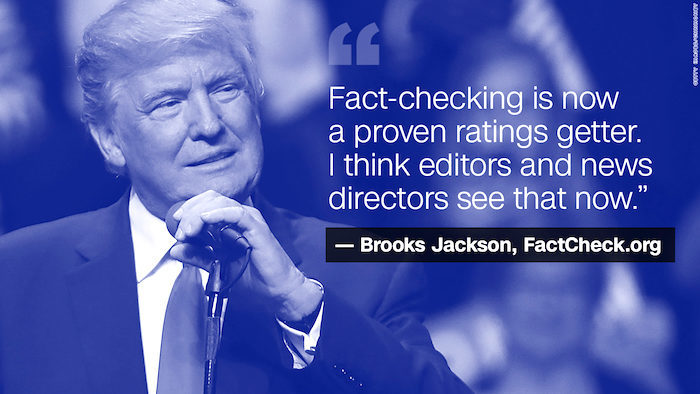
Sorry, media, Mr. Trump has already won his war with you because no president will ever again play by your rules

Trump factcheck
© CNNTrump made fact checking great again!
Joe Scarborough tried last week to warn Donald Trump that there's no way Trump can win a war with the media. The media will always have a bigger megaphone, Scarborough insisted, and if nothing else they can outlast and outtalk any president. This has been conventional media wisdom for decades.

And it's wrong. Trump has already won his war with the media, no matter how his presidency goes. Even if his presidency goes badly and he's constantly under seige by the media - to the point where his approval ratings crater and he fails to win re-election - the media are mortally wounded. They will never again be the force they once were.

The reason Scarborough and others don't see this is that Trump is playing a much longer game than what they're seeing, which is to say he's changing the rules of the game, permanently. Other presidents will follow Trump's lead. Now it's certainly possible a more conventional politician may succeed Trump in office, and may get there in part by publicly renouncing Trump's combative tactics. But once in office, even a president like this will largely follow Trump's playbook - albeit maybe not using the same style as Trump.

Comment: Recalibrating the relationship with a media out of control was a risk worth taking...not only for the president and his administration, but for the American public as well. Hindsight will prove this a necessary course-correction. Unfortunately, it may be a long hindsight for those who delude themselves that they are serving the public by dishing up bias, innuendo and manipulation towards a particular agenda.


Attention

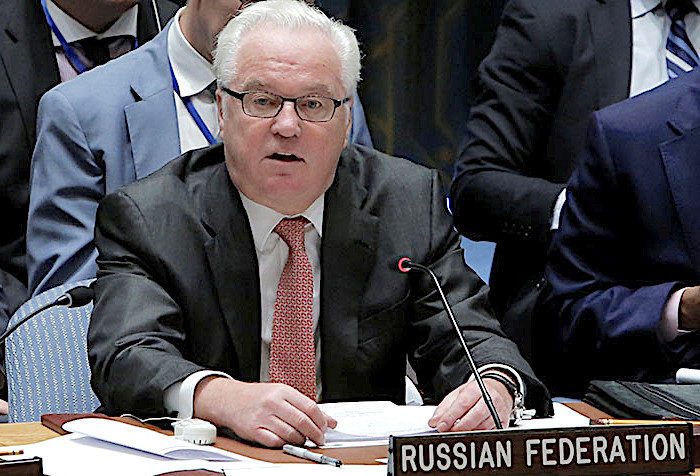
Churkin: Trump's tensions with Iran, China - an emotional reaction overriding reason

Churkin
© Andrew Kelly / ReutersGet a grip, not shoot from the hip!
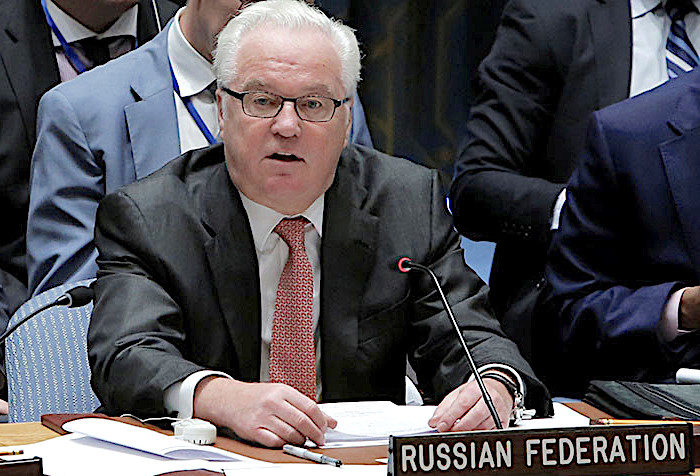
Moscow hopes the tensions between the new White House administration, Iran and China will not result in any serious international showdown, the Russian envoy to the UN told RT, adding that the current rhetoric appears to be an emotional response to reality.

Ambassador Vitaly Churkin, Russia's Permanent Representative to the United Nations, spoke to RT's Alexey Yaroshevsky ahead of the planned meeting between the newly-confirmed US Secretary of State, Rex Tillerson, and Russian Foreign Minister Sergey Lavrov.

Commenting on recent remarks by US President Donald Trump, who branded Iran terrorist threat No.1, Churkin pointed to the active role the Islamic Republic is playing in the fight against Islamic State (IS, formerly ISIS/ISIL). With Russia having close relations with Iran, while US-Iranian relations are increasingly strained, Churkin acknowledged that Washington and Moscow "have differences in a number of areas, including on the role of Iran."

With that, Churkin believes that some of the recent US rhetoric on Iran might have been influenced by emotions rather than rational policy-making and cold, hard facts. "In international life, you have to differentiate between your emotions, what you want to see and what you have the right to expect from another country," he said.

"This outcry about Iran's ballistic missile launches. I was surprised to hear even American experts speaking on CNN and calling it a violation of bans by the UN Security Council. Those bans were there before, all those bans were lifted," Churkin said. The UNSC resolution only "calls" on Iran not to conduct tests of ballistic missiles capable of carrying nuclear weapons but does not impose any ban, he explained. Moreover, any such capability has to be proven before accusations are voiced, he argued.

Comment: It is currently unclear what Trump and crew are aiming to achieve in the international arena by displaying the forceful front. The downsides and fallout are obvious: hostilities (at best) with Iran, a 'put-off' to Russia, jeopardizing useful partnerships in fighting ISIS, hostilities (even if contained to trade one-upsmanships) with China... Trump's plans had best be better than enigmas.


Bad Guys

U.S. needs to stop lying about Crimea

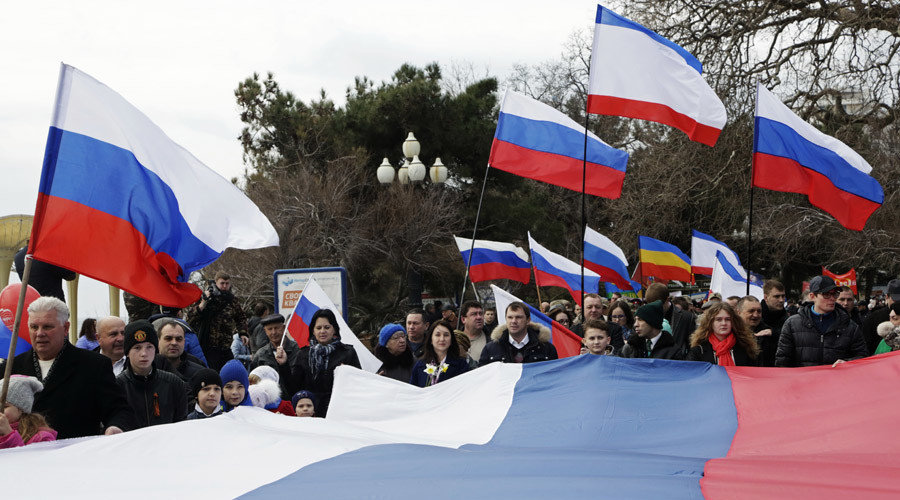
Participants of second anniversary of Crimea
© Maks Vetrov / Reuters Participants of a festive event dedicated to the second anniversary of Crimea reuniting with Russia in Yalta.
SUMMARY

Unless the U.S. government's lies about Crimea — the 'Russia seized Crimea' narratives — become acknowledged to be lies, war between the U.S. and Russia can only continue to become increasingly likely, because the world is sliding toward World War III based upon these lies, and will therefore inevitably continue that slide until these lies are publicly repudiated by the U.S. government, which is their sole source. The liar on this is clearly the U.S. and not Russia: the U.S. is the entire source for the alleged cause for war between the U.S. and Russia.

The preparations for war between the U.S. and Russia continue naturally apace until the United States publicly acknowledges that Russia had not 'seized' Crimea — acknowledges that the cause for all of these war-preparations by the U.S. and its NATO and other allies against Russia is fake, a U.S. lie, and that Russia is purely America's victim in this entire matter and acting in a 100% defensive way against America's aggressions in this matter.

Comment: Further reading: Iran war rhetoric and the 'Trump-ordered' dawn raid in Yemen: WWIII isn't 'coming' - It's happening NOW
What is unfolding in Yemen - and Syria, and Iraq, and elsewhere - is that the US is gradually being forced out of the Middle East, thanks to a set of coordinated moves by Russia, China and Iran. Envisioning 'World War III' as a 'grand spectacle' between great powers that ends in nuclear holocaust keeps people in fear and 'on side', distracting them from the ugly business of divvying up the planet's natural (including human) resources, and the real day-to-day horrors this brings to places like Yemen and Libya and Syria. It's not winner-takes-all 'world war'; it's risk-assessed proxy warfare. Non-western countries have learned the (until recently) hidden rules of the game; and they're in the process of applying those rules to turn the tables on the Empire.

'World War III', as it is actually being fought out - and as it has been since 9/11 - is the great unfolding civilizational struggle between 'the West' and 'the rest'.


Eye 1

U.S. Army prepares for war in America's streets

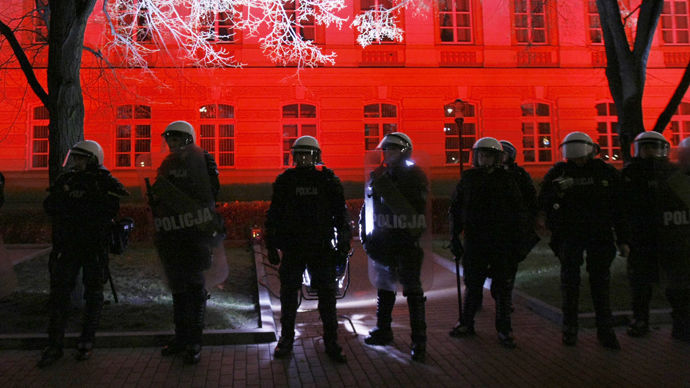
police line poland riot
© Reuters / Kacper Pempel
There will be war in the streets of America. Things have been engineered that way.

The scenarios are many, the issues are complex. The current anger from the left, who are violently protesting against President Trump, is just one aspect of it.

But the Pentagon and the U.S. national security structure is increasingly looking towards the shifting demographics around the globe - people have moved from rural areas, and shifted into cities. Where ever conflict stirs, there will be a need for military and SWAT response to the call. Entire cities will be locked down; door to door sweeps will often have violent ends.

Info

Dance of the Five Powers on the Korean Peninsula

South Korean protesters
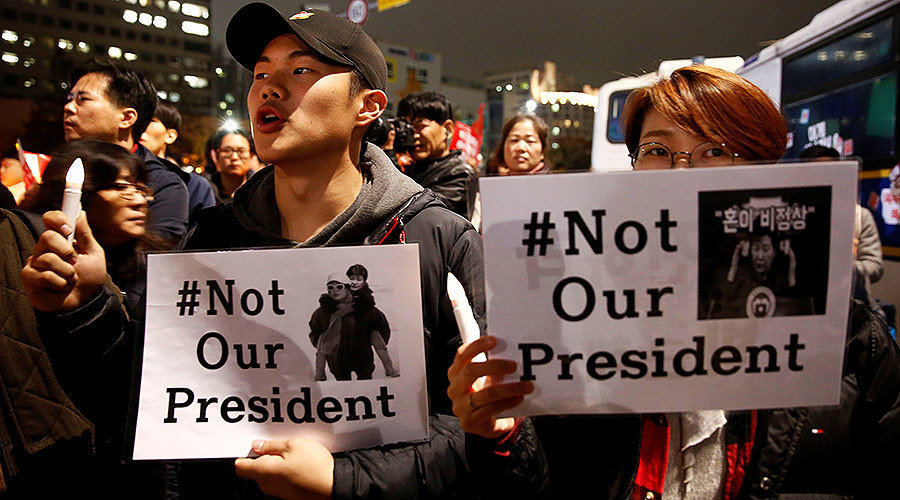
© Kim Kyung-Hoon / Reuters Protesters shout slogans after they are blocked by riot policemen in a road nearby the presidential Blue House during their march calling South Korean President Park Geun-hye to step down in Seoul, South Korea, November 19, 2016.
Arguably no Asian nation has suffered more in the modern era, or resisted more fiercely, than Korea. Today it is still the battleground of empires, divided and beset by powerful outside forces.

Five competing agendas intersect on the Korean peninsula: those of South Korea, North Korea, China, Japan, and the United States. The United States, in order to advance its interests and meet its alliance obligations, has to thread a difficult and winding path.

James Mattis visited South Korea on his first trip as Secretary of Defense. Here's what he has to deal with.

North Korea

The biggest dilemma for America, obviously, is North Korea a.k.a. the Democratic People's Republic of Korea or DPRK.

The DPRK is cast as a maniacal enemy of the world order in general and the United States in particular. It is neither.

Comment: Lee's latest China Watch episode for Newsbud:


Bad Guys

First Deputy Foreign Minister Vladimir Titov says provocations of US security services toward Russian diplomats 'common practice'

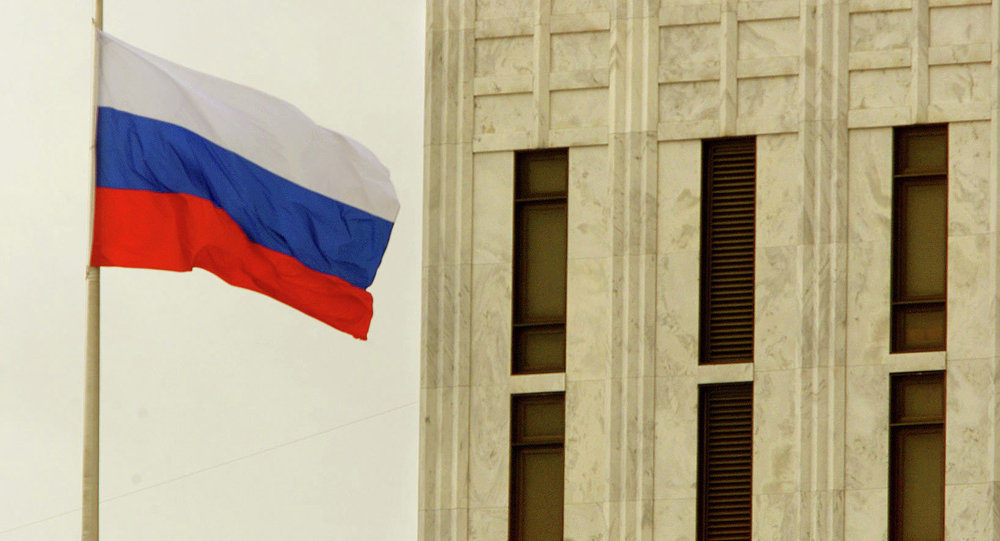
The Russian Federation flag flies above the Russian embassy in Washington, DC
© AFP 2016/ Mario TAMAThe Russian Federation flag flies above the Russian embassy in Washington, DC
On January 17, Russian Foreign Minister Sergei Lavrov recounted during his big press conference several instances where Russian diplomats have been pressured by US intelligence services. He noted the growth of active attempts to recruit Russian diplomats over the past years, including an April 2016 incident in Washington involving a Russian Embassy minister counselor.

He said Russian diplomats saw attempts by US agents to recruit them spike last April. The Russian minister counselor was approached, Lavrov said, while another senior diplomat found $10,000 in cash and a note offering cooperation in his car.

"Provocative actions of the US security services toward our employees in the United States have unfortunately become common practice. It is not a secret that similar campaigns are being organized with US backing or by the US security services themselves in third countries," Titov told the Rossiyskaya Gazeta newspaper.

Comment: See also:


Rocket

SOTT Focus: Iran war rhetoric and the 'Trump-ordered' dawn raid in Yemen: WWIII isn't 'coming' - It's happening NOW

yemen dawn raid
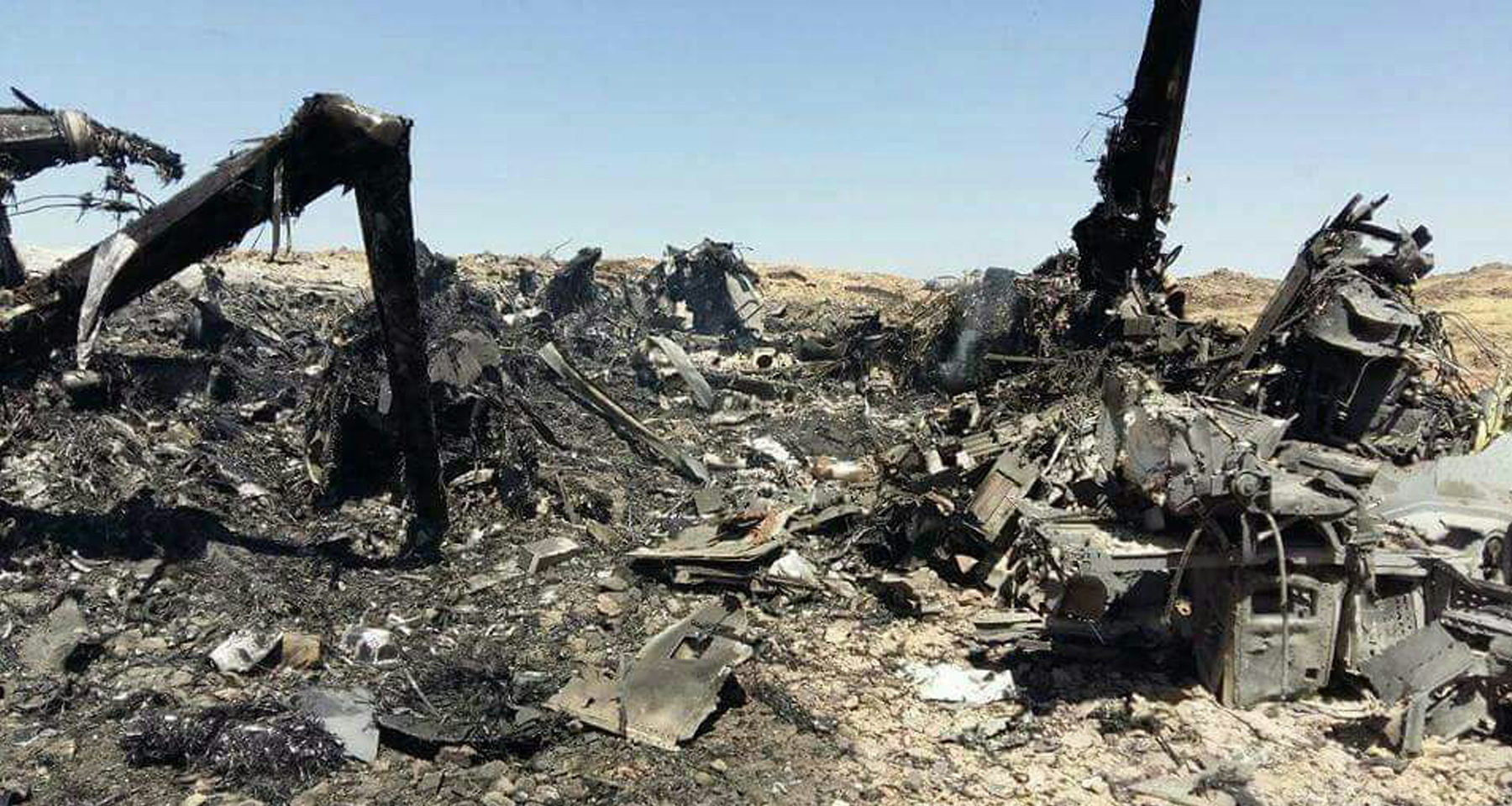
© kokpit.aeroUnconfirmed photograph showing wreckage of the US MV-22 Osprey tilt-rotor aircraft, which suffered a "hard landing" during a "dawn raid against Al-Qaeda" in al-Bayda, central Yemen, 28th January 2017
US government rhetoric against Iran has lately hit levels not seen since the Bush administration, and a string of events over the last couple of weeks in and around Yemen appears to be the reason for it. US drone strikes and airstrikes against targets in Yemen took place before, during and after Trump's inauguration, but it was the US Special Forces (Navy Seals 6) raid in central Yemen on January 28th that got the US media's attention.

Two days after Trump's inauguration, US drones "killed five Al-Qaeda operatives" in central Yemen. This operation took place without Trump's knowledge (and thus without his approval) because his predecessor freed the Pentagon from executive oversight when it comes to drone warfare. The US war machine is, in a sense, sentient. It generally operates without any official leadership, decision-making or input from 'the civilian government'. The same goes for the multiple drone strikes conducted in 'ISIS-occupied' Syria and Iraq over the course of Trump's inauguration and first days in office.

So while most people might assume that all such operations would cease during the few days between the removal of the old administration and the institution of the new, yet that is not what happens, which is pretty clear evidence that US foreign policy operates independently of the White House.

Seals' Dawn Raid in Central Yemen

But then came something that apparently did involve Trump. On Sunday January 29th, US Central Command (CENTCOM) issued an incredible press release, which stated that "one US service member was killed and four more injured" during a counter-terror "raid against al-Qa'ida-in-the-Arabian-Peninsula (AQAP) in Yemen on January 28." The operation, they said, killed an estimated "14 AQAP members and the capture of information that will likely provide insight into the planning of future terror plots." Oh, and a US MV-22 Osprey tilt-rotor aircraft used in the operation "experienced a hard landing," so it had to be "intentionally destroyed in place [by US Marine jets]."

Cult

Soros funding 'Muslim Ban' Lawsuits

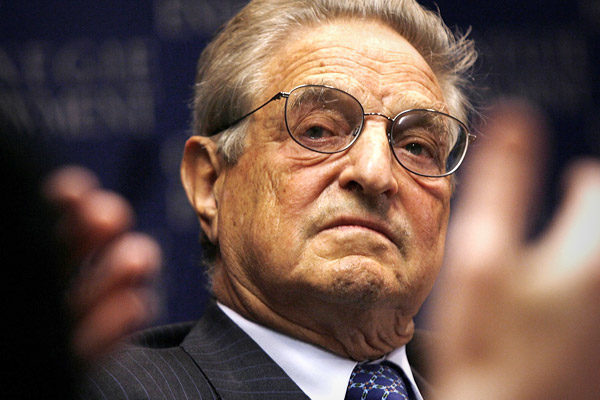
George Soros
More than a dozen lawsuits and counting have been filed against President Donald Trump's executive order that temporarily blocks visas from Iraq, Iran, Syria, Libya, Sudan, Somalia and Yemen. As of last Friday, one such lawsuit heard by Federal District Judge James Robart, a Bush appointee, in Seattle effectively blocked the enforcement of the executive order nationwide (see here for details: "Judge Blocks Trump Travel Ban Nationwide; White House Vows To Challenge 'Outrageous Order'").

Of course, mounting this scale of legal crusade is extremely costly, a concern which, as we noted last week, was seemingly alleviated by a massive surge in contributions to the American Civil Liberties Union. According to the Washington Post, the lawsuits filed by the ACLU prompted a tidal wave of donations which totaled over $24 million in a single weekend, or roughly 6 times the organization's average annual donation tally.
Update: the @ACLU just ran the numbers again. Spokesman says the group received 356,306 online donations totaling $24,164,691 this weekend.

— Brian Stelter (@brianstelter) January 30, 2017
But raising that kind of money that quickly is difficult to do at $20 a pop. Which is why we weren't terribly surprised to see a note from LifeZette this morning confirming what is likely implicitly understood by most people already, namely that the lawsuits filed against Trump's immigration executive order largely stem from organizations bankrolled by billionaire leftist George Soros and Democratic state attorneys general.

Comment: See also: Bringing America down as groups funded by George Soros are litigating to keep ports-of-entry wide open to terrorists


Monkey Wrench

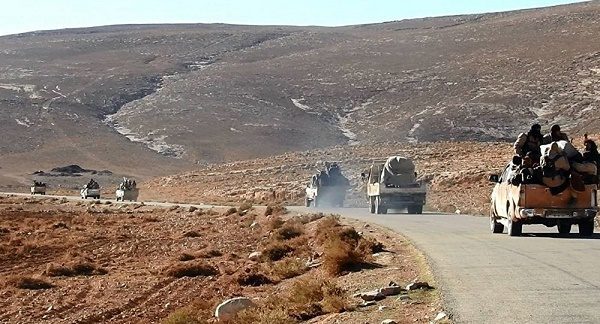
Foreign Fighters disillusioned with Daesh citing deteriorating conditions and image problems as primary reasons

Daesh
© AP Photo/ Militant Photo
Daesh has long boasted of its efficient recruitment efforts, but the inflow of foreign fighters has apparently dramatically decreased and is unlikely to recover, Aymenn Jawad al-Tamimi, Jihad-Intel Research Fellow at the Middle East Forum, told Radio Sputnik, citing deteriorating conditions and image problems as primary reasons.

The analyst specializing in militant groups added that these trends have been apparent for some time and they are only "becoming worse."

Many foreign fighters have become disillusioned with Daesh, which controlled large swathes of land in the Middle East and promised to create a full-fledged state at the height of its power. Aymenn Jawad al-Tamimi said that there are internal and external reasons pointing to the fact that the brutal group has become less attractive to foreign recruits.

Comment: See also: Syrian army prepares anti-Daesh offensive in Al-Bab, amid Turkish attempt to liberate city


Top Secret

James Corbett: Declassified CIA records open source investigation

 Central Intelligence Agency (CIA) flag
© Yuri Gripas / ReutersThe Central Intelligence Agency (CIA) flag
As Corbett Reporteers will know by now, the Central Intelligence Agency is one of the organs through which the deep state manipulates the overt government in Washington. It is not without good cause that the initials "CIA" have been said to refer to "Criminals In Action."

And so the latest "release" of 930,000 documents from the CIA's archives needs to be treated with a healthy dose of realism. Criminals generally do not advertise their criminality, let alone put those advertisements in neatly organized, web-accessible databases for the public to peruse.

For those not in the know, President Clinton issued Executive Order 12958 in 1995 mandating the automatic declassification of all historically valuable government records older than 25 years (with "exemptions" for all sorts of "national security" reasons, of course). This includes the CIA, which in 2000 set up a system called "CREST" (CIA Records Search Tool) that the public can use to browse its declassified documents.

One problem with CREST: It has only ever been available to researchers at the National Archives at College Park, Maryland. This seemed rather unfair to researchers elsewhere, what with this being the internet age and these documents being electronic, so in 2005 people started agitating for internet access to these documents.

Comment: Corbett's first video on the archive: