Science & TechnologyS


Ladybug

Mars rovers find new evidence of 'habitable niche': perilous third winter approaches

Inch by power-conserving inch, drivers on Earth have moved the Mars rover Spirit to a spot where it has its best chance at surviving a third Martian winter -- and where it will celebrate its fourth anniversary (in Earth years) since bouncing down on Mars for a projected 90-day mission in January 2004.

Meanwhile, researchers are considering the implications of what Cornell's Steve Squyres, principal investigator for NASA's Mars Exploration Rover mission, calls "one of the most significant" mission discoveries to date: silica-rich deposits uncovered in May by Spirit's lame front wheel that provide new evidence for a once-habitable environment in Gusev Crater.
©NASA/JPL-Caltech/University of Arizona/Cornell/Ohio State University
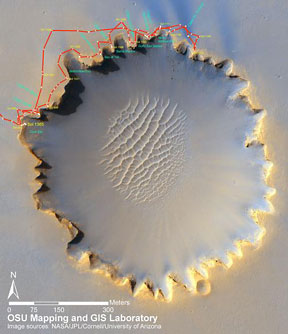
Victoria Crater, about 800 meters (one-half mile) in diameter, has been home ground for NASA's Mars Exploration Rover Opportunity for more than 14 of the rover's first 46 months on Mars. This view shows the rover's path overlaid on an image of the crater taken by the High Resolution Imaging Science Experiment on NASA's Mars Reconnaissance Orbiter.

Hourglass

Da Vinci drawings affected by mold

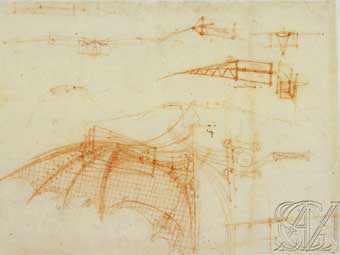
Leonardo da Vinci's Codex Atlanticus, the largest collection of drawings and writings by the Renaissance master, has been infiltrated by mold, officials said Friday.

The extent of any damage is not yet known to the roughly 1,120-page Codex containing his drawings and writings from 1478-1519 on topics ranging from flying machines to weapons, mathematics to botany.

But officials say any conservation measures will be very expensive and there are no funds for the work.

©Unknown
Codex Atlanticus

Attention

Asteroid may hit Mars in next month

LOS ANGELES - Mars could be in for an asteroid hit. A newly discovered hunk of space rock has a 1 in 75 chance of slamming into the Red Planet on Jan. 30, scientists said Thursday.

"These odds are extremely unusual. We frequently work with really long odds when we track ... threatening asteroids," said Steve Chesley, an astronomer with the Near Earth Object Program at NASA's Jet Propulsion Laboratory.

Comment: Not afraid but excited??? Are they nuts?


Telescope

Mars Magic: Red Planet Shines Bright

Mars is closer to Earth now than any time until the year 2016, offering skywatchers a great look.

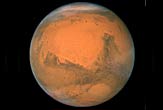
The Hubble Space Telescope took advantage of the opportunity, too, photographing the red planet earlier this month. The images were pasted together into a video showing Mars' full rotation.

The red planet is now the brightest "star" in the evening sky, easily visible by mid-evening until dawn. It comes closest to the Earth today at 6:46 p.m. EST, when it will be 54,783,381 miles (88,165,305 kilometers) from us.

Mars looks like an orange star to the naked eye, but it's revealed as a disk with many features in modest telescopes. It will put on a good show all month.

©NASA, ESA, the Hubble Heritage Team (STScI/AURA), J. Bell (Cornell University), and M. Wolff (Space Science Institute, Boulder)
Mars makes its closest approach since 2003 on Dec. 18, 2007 at 6:46 p.m. EST.

Telescope

Full Moon Meets Mars

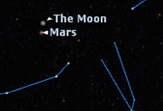
If skies are clear in your area on Sunday night, Dec. 23, you'll be able to partake in a rather unusual sight as the full moon appears to glide very closely above the planet Mars.

Mars, which made its closest approach to the Earth on Dec. 18, will be only hours from a Christmas Eve opposition with the sun and is now shining prominently with a bright yellow-orange glow.

And if you're favorably positioned in certain parts of the Pacific Northwest, western Canada, or Alaska, you'll actually see the moon occult (hide) Mars for a short time as the pair sits low above the east-northeast horizon. A similar encounter in 2003 created a great photo opportunity.

©unknown
Look east on the evening of December 23 to see the Moon and Mars so close together that you'll be able to see them in the same pair of binoculars.

Ambulance

Dead Stuff Makes Mercury More Deadly

It is well known nowadays that people should be careful around broken thermometers and moderate their consumption of tuna to avoid contact with mercury, a highly potent neurotoxin.

Now, scientists have figured out one of the things that makes water-borne mercury even more toxic - dead stuff.

The decayed remains of plants and other organic materials may help convert mercury in waterways to forms that are highly toxic to humans, a new study shows.

Mercury is present throughout Earth's environment - it is found in small quantities in rocks and in watery environments, including lakes, wetlands and oceans. Pollution, especially from the burning of coal for electricity, adds to these levels in the environment.

Bulb

Trick of Light Bends Beams

Light beams are supposed to be perfectly straight, aren't they? Yet a new trick of optics now appears to make light rays curve in midair.

Light beams can get curved if they pass through areas where space-time is warped by powerful gravitational fields, such as one created by a black hole - a phenomenon known as gravitational lensing. But the new technique scientists have developed to manipulate light does not involve warping space-time.

Instead, researchers at the University of Central Florida employed a liquid crystal display (LCD) screen - like those found on pocket calculators and laptops - about the size of a watch. The 500,000 pixels of this screen were programmed to control how light rays passing through each of them got bent.

©Demetrios Christodoulides, University of Central Florida
The rays of light are curved by an LCD screen.

Frog

New Species Found in Mysteriously Diverse Jungle

This Behind the Scenes article was provided to LiveScience in partnership with the National Science Foundation. Chris Austin's fieldwork takes him to some of the most inaccessible places on Earth in the pursuit of knowledge about the diversity of the world's amphibians and reptiles. He serves as assistant curator of Herpetology and assistant professor of Biological Science at the Louisiana State University Museum of Natural Science and Department of Biological Science. This story relates some of the trials, tribulations, and triumphs of field work in remote New Guinea.

The island of New Guinea, located just south of the equator and north of Australia, is the world's largest and tallest tropical island. New Guinea's steamy lowland jungles give way to montane moss forests, cloud forests, alpine grasslands and finally tropical glaciers that cap the mountain peaks that exceed 16,400 feet (5,000 meters).

The myriad habitat zones, packed into an area one-tenth the size of the United States, harbor some of the most diverse and exquisite life on Earth: from kangaroos that live in trees to lizards with green blood.

The diversity of life on the island is so varied it has been called megadiverse and it is so vast and unspoiled it has been identified as one of the world's five High Biodiversity Wilderness Areas.

©Chris Austin, Louisiana State University.
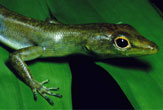
The green tree skink (Prasinohaema virens) is one of five described species of green-blooded lizards from New Guinea.

Robot

Lab comes one step closer to building artificial human brain

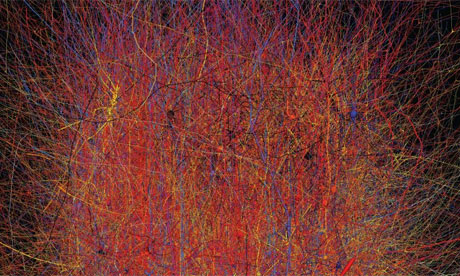
An ambitious project in Switzerland was scoffed at - but researchers have just succeeded in simulating a rat's brain in silicon

©IBM
Computer model of a single neocortical column from a rat's brain

In a laboratory in Switzerland, a group of neuroscientists is developing a mammalian brain - in silicon. The researchers at the Ecole Polytechnique Fédérale de Lausanne (EPFL), in collaboration with IBM, have just completed the first phase of an ambitious project to reproduce a fully functioning brain on a supercomputer. By strange coincidence, their lab happens to lie on the same shores of Lake Geneva where Mary Shelley dreamt up her creation, Dr Frankenstein.

Arrow Down

Russian scientists claim if asteroid hits Mars, Earth unaffected

An asteroid, which is believed to be on a collision course with Mars, will not affect the Earth if it hits the 'Red' planet in January 2008, a Russian Academy of Science spokesman said on Friday.

Sergei Smirnov said the asteroid, which is traveling at 8 miles per second, was discovered in November by American scientists.

He said the explosion could be on a scale equal to the Tunguska event, when a meteorite, which crashed into central Siberia in 1908 caused destruction on a nuclear scale. The enigma still thrills scientists all over the world.