Science & TechnologyS


Sherlock

A Third of Dinosaur Species Never Existed?

T Rex
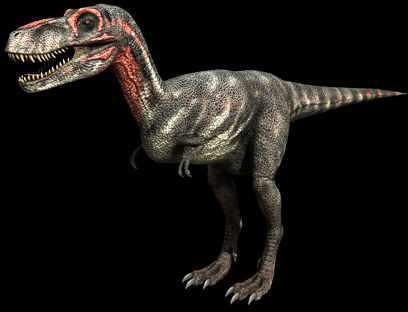
© NGCMany fossils of young dinosaurs, including T. rex relatives (above, a computer-generated image of a young T. rex), have been misidentified as unique species, paleontologists said in October 2009.
Many dinosaurs may be facing a new kind of extinction - a controversial theory suggests as many as a third of all known dinosaur species never existed in the first place.

That's because young dinosaurs didn't look like Mini-Me versions of their parents, according to new analyses by paleontologists Mark Goodwin, University of California, Berkeley, and Jack Horner, of Montana State University.

Instead, like birds and some other living animals, the juveniles went through dramatic physical changes during adulthood.

This means many fossils of young dinosaurs, including T. rex relatives, have been misidentified as unique species, the researchers argue.

Attention

Indus Script Linguistically Dravidian: Expert Reports

The Indus script is Dravidian linguistically and culturally closer to the old Tamil polity than what has been recognised so far, eminent epigraphist Iravatham Mahadevan has said.

He shared some of his recent and still-not-fully-published findings relating to the interpretation of the Indus script, in an endowment lecture on 'Vestiges of Indus Civilisation in Old Tamil' at the 16th annual session of the Tamil Nadu History Congress, which opened here on Friday.

Mr. Mahadevan said that though the claim could be met with incredulity, the evidence he had gathered over four decades of intensive study of the sources - the Indus texts and old Tamil anthologies - had led him to the conclusion.

Meteor

What (Maybe) Didn't Kill the Dinosaurs: Comets

Comet
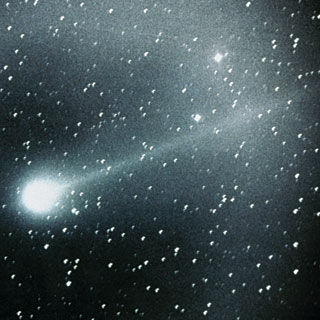
© Bettmann CorbisCometary commotion: A new mechanism for how icy bodies get past Jupiter and Saturn suggests that comet showers did not play a big role in Earth's extinctions.
A new model for comet production revises the theory of their origins

The chunks of ice and dust that make their home in the Oort cloud, far beyond the orbit of Pluto, sometimes become dislodged and head into the solar system as streaky comets. Some disruptions, caused by passing stars and other interactions with the Milky Way galaxy, are severe enough to send Oort comets into orbits that buzz or even collide with Earth. New simulations have revealed a novel mechanism for their entry into our part of the solar system, a method that also suggests that comet showers may not have been strongly involved in major extinctions on Earth.

Comet dynamics depend heavily on Jupiter and Saturn: their huge gravitational fields tend to keep objects away from Earth. Comets that manage to skirt Jupiter and Saturn, the conventional thinking goes, had to have originated in the outer reaches of the Oort cloud, where perturbations from outside the solar system can be felt most strongly and are writ large across vast cometary orbits that take hundreds of years to complete. Only during comet showers caused by close stellar passages, the theory holds, have extreme gravitational disruptions brought inner Oort cloud comets into the mix.

Sherlock

Armenia: Archeologists Say They've Found Remains of World's Oldest Human Brain

An Armenian-American-Irish archeological expedition claims to have found the remains of the world's oldest human brain, estimated to be over 5,000 years old. The team also says it has found evidence of what may be history's oldest winemaking operation. The discoveries were made recently in a cave in southeastern Armenia.

An analysis performed by the Keck Carbon Cycle Accelerator Mass Spectrometry Laboratory at the University of California, Irvine confirmed that one of three human skulls found at the site contains particles of a human brain dating to around the first quarter of the 4th millennium BC.

"The preliminary results of the laboratory analysis prove this is the oldest of the human brains so far discovered in the world," said Dr. Boris Gasparian, one of the excavation's leaders and an archeologist from the National Academy of Science's Institute of Archaeology and Ethnology in Yerevan. "Of course, the mummies of Pharaonic Egypt did contain brains, but this one is older than the Egyptian ones by about 1,000 to 1,200 years."

Info

Hawking Gives Up Academic Title

Hawking
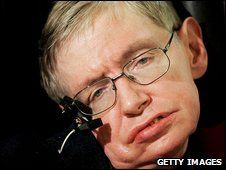
© Getty ImageA new Lucasian Professor will be appointed in the near future
Professor Stephen Hawking has given up a prestigious academic title.

The physicist, who has motor neurone disease, is completing his last day as Cambridge University's Lucasian Professor of Mathematics.

The university said it was policy for holders of the title to retire at 67 and Prof Hawking was 67 in January.

Prof Hawking, who is one of the world's leading cosmologists, will continue working at the university and a new Lucasian Professor will be appointed.

Previous holders of the title, founded by MP Henry Lucas in 1663, include Sir Isaac Newton, Charles Babbage, Sir Joseph Larmor and Sir James Lighthill.

Info

Genetic Testing of African Refugees Raises Outcry From Scientists

Testing
© iStockphoto
Scientists in the United Kingdom are outraged over a new program that seeks to determine asylum seekers' nationalities through DNA and the isotopes present in their hair and fingernails. "Horrifying," "naïve," and "flawed" are among the adjectives geneticists and isotope specialists have used to describe the "Human Provenance pilot project," launched quietly in mid-September by the U.K. Border Agency [Science Insider]. The experts say the tests simply aren't accurate enough to pinpoint a person's country of origin.

The program will be tried out on asylum seekers from the Horn of Africa, and will seek to establish whether applicants from Kenya or Ethiopia are masquerading as refugees from war-torn Somalia. Yet scientists say the Border Agency's goals confuse ancestry or ethnicity with nationality. David Balding, a population geneticist at Imperial College London, notes that "genes don't respect national borders, as many legitimate citizens are migrants or direct descendants of migrants, and many national borders split ethnic groups" [Science Insider].

Satellite

European Union Launches Satellite System to Fine-Tune GPS

Free network may help pilots, drivers and the blind

The European Union launched a free satellite navigation network on Thursday that could help pilots, drivers and blind people by fine-tuning the accuracy of the U.S. global positioning system (GPS) to around 2 meters.

The EGNOS system will use three satellites and 34 ground stations to narrow the horizontal accuracy of GPS from around 7 meters previously and improve its vertical accuracy to help pilots during landings.

The "Safety-of-Life" service for aircraft navigation could be in place next year, the EU executive said in a statement.

Magnify

Myth of Ancient Greece's 'Heroes' Blown Away

Alexander
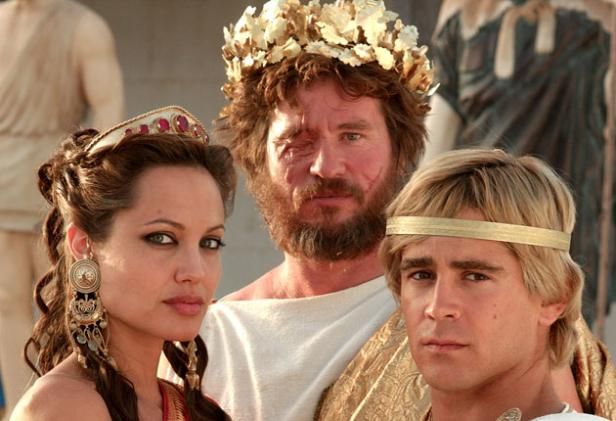
© AP PhotoAngelina Jolie, Val Kilmer and Collin Farrell in 'Alexander'
Spartans! Prepare for, well, embarrassment. It seems that far from being elite, noble warriors, each worth 1,000 of any rival soldiers, King Leonidas' crack troops were a bunch of bullying thugs. And Alexander the Great? A mummy's boy: in fact, his mum was a better fighter by a long chalk and died a soldier's death on the battlefield.

They and other figures from antiquity are to have their reputations shattered by a new British study which reveals the "truth" behind long-established legends. Michael Scott, a classicist at Cambridge University, points to evidence that could change the way we think about our classical heroes.

The heroic Spartans of Thermopylae, whose valiant standoff with an enormous Persian army is immortalised in the Hollywood film 300, are unmasked by Dr Scott as little more than war-mongering bullies of the ancient world who policed Athens with near-mindless violence, destroying anything they took a dislike to.

Binoculars

Best of the Stones: The Ancient Structures at Stonehenge are Truly Rocks of Ages

Stone
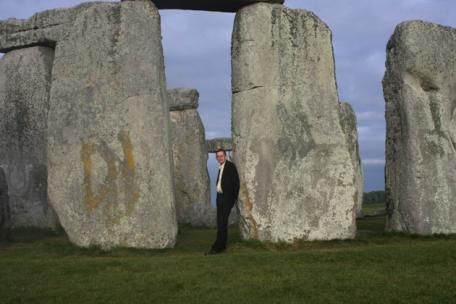
© S. CalderBeyond the velvet rope: Simon Calder gets inside the stone circle
You know Stonehenge, of course: a haunting silhouette from the past that stands gaunt and defiant on the chalky grassland of Wiltshire, just where the busy A303 and A344 meet. This inspirational stone circle, a triumph of the human spirit, was bequeathed millennia ago. It is now protected by English Heritage and forms part of a Unesco World Heritage Site.

Last year, almost 900,000 visitors stepped from their cars and coaches to get closer to the neolithic wonder. An enriching experience, set to become better still when a new visitor centre opens next year. It is tantalising, though, to be so close to the stones, yet unable to wander through them and wonder at the forces that brought them here. Since 1978, they have been off-limits because of worries about vandalism and erosion caused by rising visitor numbers.

How much more rewarding it would be to be able to walk unfettered beyond the "velvet rope" that keeps visitors at bay. Well, an average of 1,000 people a month are lucky enough to get up close for a personal experience of the stone circle. On a range of days throughout the year, people who book ahead can get access to the heart of the site, in groups no larger than 26.

Sherlock

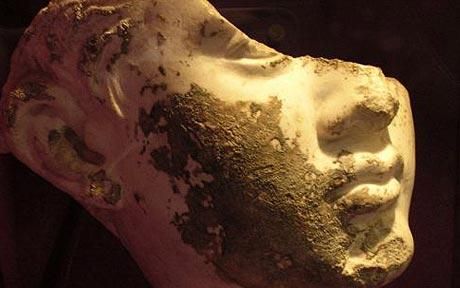
Mystery Head Could Be Rare Statue of Emperor Nero

Head
© SolentThe damaged head will be scanned and recreated to see if it is a rare marble statue of Nero as a young boy.
A piece of a marble statue discovered at a Roman site in Sussex could be one of only three in existence depicting the Emperor Nero.

The chunk of stone, which is the right side of a boy's head and his lower face, is to be scanned using sophisticated technology and the remainder generated by computer to suggest what he may have looked like.

Archaeologists suspect the sculpture, which was found at Fishbourne Roman Palace in West Sussex, is of Nero as a young boy.

The only other known statues of Nero are in the Italian National Museum of Antiquities in Parma and the Louvre Museum in Paris.