Science & TechnologyS


Blackbox

"Mirrors in Your Brain": Does an Epic Discovery Do for Psychology What DNA Did for Biology?

Mirror
© David Sambells
A recent paradigm-shattering discovery in neuroscience shows how our minds share actions, emotions, and experience - what we commonly call "the monkey see, monkey do" experience. When we see someone laugh, cry, show disgust, or experience pain, in some sense, we share that emotion. When we see someone in distress, we share that distress. When we see a great actor, musician or sportsperson perform at the peak of their abilities, it can feel like we are experiencing just something of what they are experiencing.

Only recently, however, with the discovery of mirror neurons, has it become clear just how this powerful sharing of experience is realized within the human brain. In the early 1990's Giacomo Rizzolatti and his colleagues at the University of Parma discovered that some neurons had an amazing property: they responded not only when a subject performed a given action, but also when the subject observed someone else performing that same action.

These results had a deep impact on cognitive neuroscience, leading the the world's leading experts to predict that 'mirror neurons would do for psychology what DNA did for biology'.

Vilayanur Ramachandran is a neurologist at the University of California-San Diego and co-author of Phantoms in the Brain: Probing the Mysteries of the Human Mind writes that "Giacomo Rizzolatti at the University of Parma has elegantly explored the properties of neurons - the so-called "mirror" neurons, or "monkey see, monkey do" neurons. His research indicates that any given cell in this region will fire when a test monkey performs a single, highly specific action with its hand: pulling, pushing, tugging, picking up, grasping, etc. In addition, it appears that different neurons fire in response to different actions."

The astonishing fact is that any given mirror neuron will also fire when the monkey in question observes another monkey (or even the experimenter) performing the same action. "With knowledge of these neurons, you have the basis for understanding a host of very enigmatic aspects of the human mind: imitation learning, intentionality, "mind reading," empathy -- even the evolution of language." Ramachandran writes.
Blackbox

In the Beginning, the Universe Was a Liquid

Liquid Universe
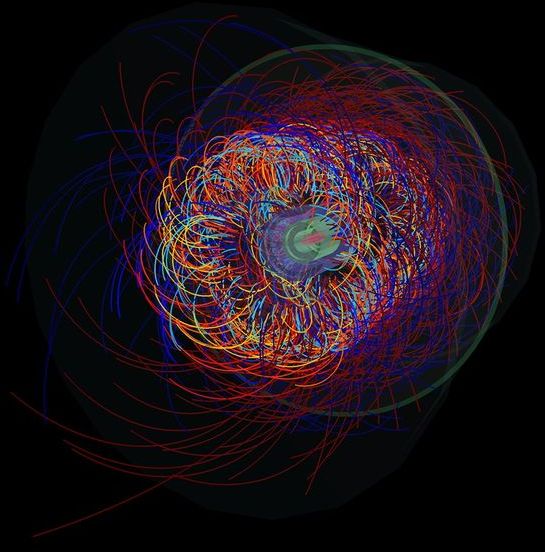
© CERN/ALICEThe aftermath of a lead ion collision: paths of newborn particles tracked by the ALICE detector.
After colliding lead ions at close to the speed of light, physicists at the Large Hadron Collider (LHC) using the ALICE detector have discovered the Universe acted like a fluid in the moments immediately after the Big Bang. Also, the ATLAS and CMS detectors have observed a phenomenon known as "jet quenching" for the first time.

Until recently, the LHC only accelerated protons and collided them inside the particle accelerator mainly to search for the infamous Higgs boson and other exotic particles. But earlier this month, heavier lead ions were injected into the LHC. This is when the quantum party really got started.

Smashing Lead

For three weeks, lead ions have raced around the accelerator ring at relativistic speeds, crashing head-on with other lead ions traveling in the opposite direction.

Lead ions are significantly bigger than protons, so they carry more energy. When they collide, they release so much energy that physicists often refer to the lead-lead collisions as "micro-Big Bangs."

Each ion collision can, quite literally, recreate the conditions just after the Big Bang, some 13.75 billion years ago.

For a brief moment, these mini-Big Bangs flashed up to an estimated temperature of 10 trillion degrees Kelvin (that's more than 500,000 times hotter than the center of the sun), giving the ALICE detector a peek into how matter would have acted right at the Universe's superheated birth.

Laptop

Microsoft Appeal on i4i Patent Goes to Top Court

Image
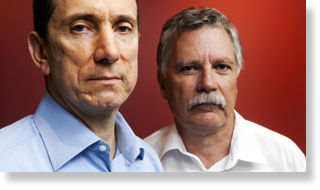
© Mark Blinch/ReutersLoudon Owen, left, i4i chair, and founder Michel Vulpe first sued Microsoft for patent infringement in 2007.
The U.S. Supreme Court will hear a $290-million US dispute between Microsoft Corp. and Canadian technology company i4i Inc. over complaints that the former's ubiquitous Word program violates one of i4i's patents.

The high court on Monday agreed to hear an appeal from the Redmond, Wash.-based Microsoft, which wants the multimillion-dollar judgment against it erased.

In its appeal, the world's largest software maker says the lower court that handles patent cases makes it too hard for those accused of infringement to argue that a patent should never have been granted initially. Tech giants Apple Inc. and Google Inc. have taken the unprecedented step of publicly backing their rival Microsoft in the dispute.

In Microsoft's appeal, Apple told the justices that the patent system "is tilting out of balance," giving disproportionate power to people who secure patents of questionable legitimacy, Bloomberg reported.

Info

Unraveling the Mystery of Why We Give, or Don't

Brain
© Sam Ward, USA TodayThe origins of giving probably are deep in the brain's circuitry, researchers say.

South Bend, Indiana - Generous impulses often are described in fundraising appeals, conversation and greeting cards as coming "from the heart."

In fact, the origins of giving probably are deep in the brain's circuitry.

Exactly how the complicated workings of the brain stimulate or suppress giving and how families, co-workers and values affect generosity remain a mystery despite years of study. The University of Notre Dame is leading a new research initiative that will merge economic, sociological, neurological and psychological studies to explain why some people give and some don't and to create a new academic field.

With a $5 million grant from the John Templeton Foundation, Notre Dame created the Science of Generosity Initiative in 2009. Research is underway here and at universities across the nation.

Project director Christian Smith, a Notre Dame sociology professor, hopes to unravel the physiological and behavioral mechanisms that make people generous - or not: Why do some people give blood? Why do some people go out of their way to help strangers?

Info

Dark Jupiter May Haunt Edge of Solar System

Comet Sliding Spring
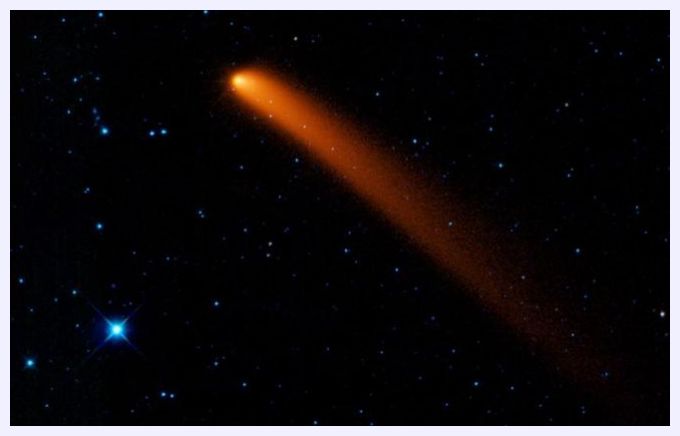
© NASA/JPL-Caltech/UCLAComet Sliding Spring, a visitor from the Oort Cloud, was captured by WISE in Jan. 2010.

A century of comet data suggests a dark, Jupiter-sized object is lurking at the solar system's outer edge and hurling chunks of ice and dust toward Earth.

"We've accumulated 10 years more data, double the comets we viewed to test this hypothesis," said planetary scientist John Matese of the University of Louisiana. "Only now should we be able to falsify or verify that you could have a Jupiter-mass object out there."

In 1999, Matese and colleague Daniel Whitmire suggested the sun has a hidden companion that boots icy bodies from the Oort Cloud, a spherical haze of comets at the solar system's fringes, into the inner solar system where we can see them.

In a new analysis of observations dating back to 1898, Matese and Whitmire confirm their first thought: In this area 20 percent of the comets visible from Earth were sent by a dark, distant planet.

This thought was a reaction to an earlier notion that a dim brown dwarf or red dwarf star, ominously dubbed Nemesis, has pummeled the Earth with deadly comet showers every 30 million years or so. Shortly research suggested that mass extinctions on Earth don't line up with Nemesis's predictions, so many astronomers now reckon the object doesn't exist.

Bulb

Clarity in short-term memory shows no link with IQ

Storage capacity by numbers, not resolution, fuels fluid intelligence, Oregon researchers say.

One person correctly remembers four of eight items just seen but is fuzzy on details. Another person recalls only two of the items but with amazingly precise clarity. So what ability translates to higher IQ?

According to a University of Oregon study, the answer is very clear: More items stored in short-term memory is linked to greater fluid intelligence, as measured in IQ tests. The resolution of those memories, while important in many situations, shows no relationship with fluid intelligence.

The notion that numbers of items is vitally important to short-term memory has been shown in previous studies at the UO. Those studies found that people, generally, have a capacity to temporarily store three to five items in short-term memory. Previous research has shown that capacity in short-term memory is a reliable predictor of an individual's IQ.

Sun

Rapidly Developing Sunspot

New sunspot 1130 is rapidly developing near the center of the sun's disk and "it is crackling with activity," reports Michael Borman of Evansville, Indiana. Using a backyard solar telescope, he took this picture of a B-class explosion from the active region on Nov. 28th:

Image
© Michael Borman
So far, the flares have been relatively minor, but if the sunspot's growth continues apace, geo-effective blasts could be in the offing.

Laptop

New Tissue-imaging Technique Faster, More Accurate than Biopsies

Image
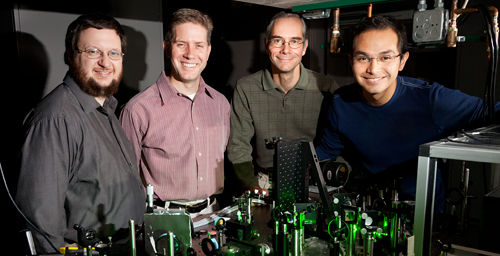
© L. Brian StaufferStephen A. Boppart and his research team
Researchers from the University of Illinois have created a new tissue-imaging technique that is easy to read, accurate, quick and could eliminate the need for invasive biopsies.

Stephen A. Boppart, study leader and physician at the University of Illinois, has developed a microscopy technique capable of providing easy-to-read results, and is also much faster than biopsy results.

Current diagnostic methods can take more than 24 hours to receive results. In addition, these tests are based on interpretations of cell structure and shape, meaning this type of testing is subjective. This type of testing requires the tissue in question to be drawn from the patient, and then mixed with a stain to make the cells easier to see. Then, under a microscope, the cells are observed and visually interpreted as either healthy or cancerous.

But the new technique, called nonlinear interferometric vibrational imaging (NIVI), offers color-coded images of tissues that highlight tumor boundaries clearly, making the test 99 percent accurate. Another major benefit is that results are generated in five minutes or less.

Info

The Oldest Salt Mine Known to Date Located in Azerbaijan

Salt Mines_1
© Séverine Sanz / CNRSDuzdagi - Entrance to the modern mine.

French archeologists have recently provided proof that the Duzdagi salt deposits, situated in the Araxes Valley in Azerbaijan, were already being exploited from the second half of the 5th millennium BC. It is therefore the most ancient exploitation of rock salt attested to date. And, to the researchers' surprise, intensive salt production was carried out in this mine at least as early as 3500 BC. This work, conducted in collaboration with the Azerbaijan National Academy of Sciences and published on 1st December 2010 in the journal TUBA-AR, should help to elucidate how the first complex civilizations, which emerged between 4500 BC and 3500 BC in the Caucasus, were organized.

The economic and symbolic importance of salt in ancient and medieval times is well known. Recent discoveries have shown that salt most probably played a predominant role in protohistoric societies, in other words those that preceded the appearance of writing. How is salt obtained? The two most widely used techniques are based on the extraction of rock salt, in other words a sedimentary deposit containing a high concentration of edible salt, and the collection of sun-dried salt in salt marshes, for example. Knowledge of the techniques used in former times to exploit raw materials such as salt, obsidian or copper enables archeologists to deduce essential information on the needs and the level of complexity of ancient societies. In the Caucasus, the first traces of intensive exploitation of rock salt appeared at the very moment when these protohistoric societies were undergoing profound economic and technological changes, particularly with regard to the development, for the first time, of copper metallurgy.

Einstein

Harvard and MIT Scientists Examine Face ID and Gender

Scientists from Harvard and MIT have discovered that human brains tend to perceive a face as either male or female depending on where it appears in our field of view, according to a recently published study.

On a computer, the team generated a number of faces ranging from extremely female, to androgynous, to extremely male. They then flashed these faces at various locations on a computer screen and recorded which gender the subjects observed.

The researchers discovered that more androgynous-looking faces, when shown in certain parts of the visual field, would sometimes look male and sometimes look female.

But the researchers also found that the regions that recognize a given face as male or female differ from person to person. That is, a face that looks male in a certain portion of the visual field might not appear male to another person when displayed in the same visual field.

"You expect the same face to look the same everywhere," said Arash Afraz, a post-doctoral fellow at MIT and the lead author of the study. "When you examine it carefully you notice a huge difference."