
© Sputnik / Dmitry Astakhov
Germany's Bild tabloid newspaper published a photo on Tuesday of an East German secret police (Stasi) identity card purportedly issued to Vladimir Putin when he served as a KGB officer in Dresden during the Cold War.
The green identity card bears the official name of the Stasi - the Ministry for State Security - along with a photograph of Putin and an ID number printed along the bottom.
Bild claimed the document was found in the Dresden Stasi office's department of "cadres and education"and was issued to a Major Vladimir Putin on December 31, 1985, remaining valid until the end of 1989.
If the ID card is legitimate, it would mean that when Putin was serving in Germany, he "wouldn't have had to tell anyone he worked for the KGB," according to Konrad Felber, the head of the Dresden authority in charge of studying the Stasi archives. That would have made it easier for him to recruit agents - one of his roles with the KGB, which has been the cause of much fascination and speculation among Western media.
But does the card mean that Putin worked directly for the Stasi? Not exactly.
Retired FSB general Alexander Mikhailov told Russian news service Ria Novosti that Bild could speculate all it wanted, but that the card was "most likely" just a pass which would have "allowed entry"to the Dresden Stasi building. That building, he said, might have had a room "where our officers could write and store files" - a common practice at the time, he explained.
It was a similar situation back in the USSR, where officers from Warsaw Treaty intelligence services also required entry permits to work at KGB offices in Moscow, and those passes "looked like KGB IDs,"Mikhailov said.
The Kremlin itself neither confirmed nor denied the reports, but didn't seem too fazed by the topic. Presidential spokesperson Dmitry Peskov said that during the time period in question, the KGB and Stasi were "partner services" and therefore "you couldn't rule out exchanges of such IDs."
There's also a curious detail about the card which seems to have been overlooked. If this really was a photograph taken for an ID card, it's strange that Putin is looking towards the right in the picture rather than straight ahead at the camera, which is normal practice for official identity documentation.
The diagonally-striped tie Putin is wearing in the picture also seems to have been one of his favorites from his days in Germany. He was also seen wearing it in family photographs with his wife and daughter.
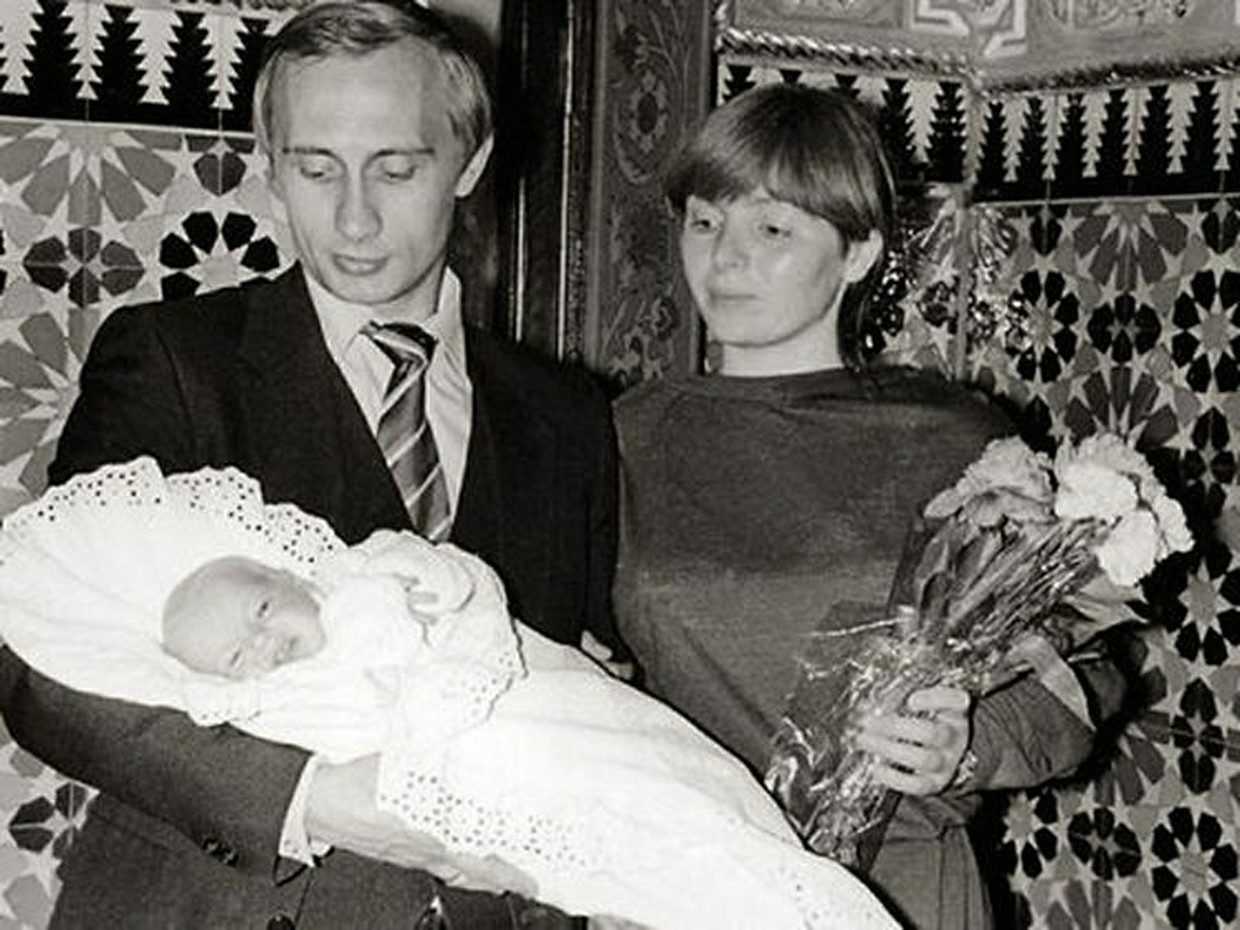
© Global Look PressCirca 1986 - Russia - Young Vladimir Putin with his wife Lyudmila and daughter



Reader Comments
East Germany was a vassall of the Soviet Union, thus the KGB was superordinate. This "Stasi officer" crap in a below-zero-level tabloid is nothing but sand in your eyes. In the 09's, Putin was heavily involved in gangland activities while being advisor to the mayor of St. Petersburg. And don't forget the "caucasian terrorist" bombing affairs in Moscow during his presidential periods. It is ridiculous to believe he was not in the know.
I'd like to comment on this:
" strange that Putin is looking towards the right in the picture rather than straight ahead at the camera, which is normal practice for official identity documentation. "
It is quite possible that this was normal for official IDs.
I live in one of the past Warsaw-pact countries (not Germany), and the normal practice here for official ID's photos was actually looking slightly to the side, so part of the profile and one ear (left) had to be visible. It was a requirement, hence the word "practice" doesn't do the justice. Just like the formal requirement now is to look forward, and this is called the biometric photo. The change was made quite some time after the fall of communism, I believe with the advent of facial recognition software, and also to make it more compatible with most other countries. First it was changed for passports only, then also for personal IDs, issued by government, which are mandatory here.
Actually, it seems that some photo studies still make the one with partial view of left profile, they call it "non-biometric", and these are intended for non-governmental ID, for example school IDs. However, the electronic student IDs (used for higher education students) have the same formal requirements as official personal ID and passport, i.e. frontal view (biometric photo).