
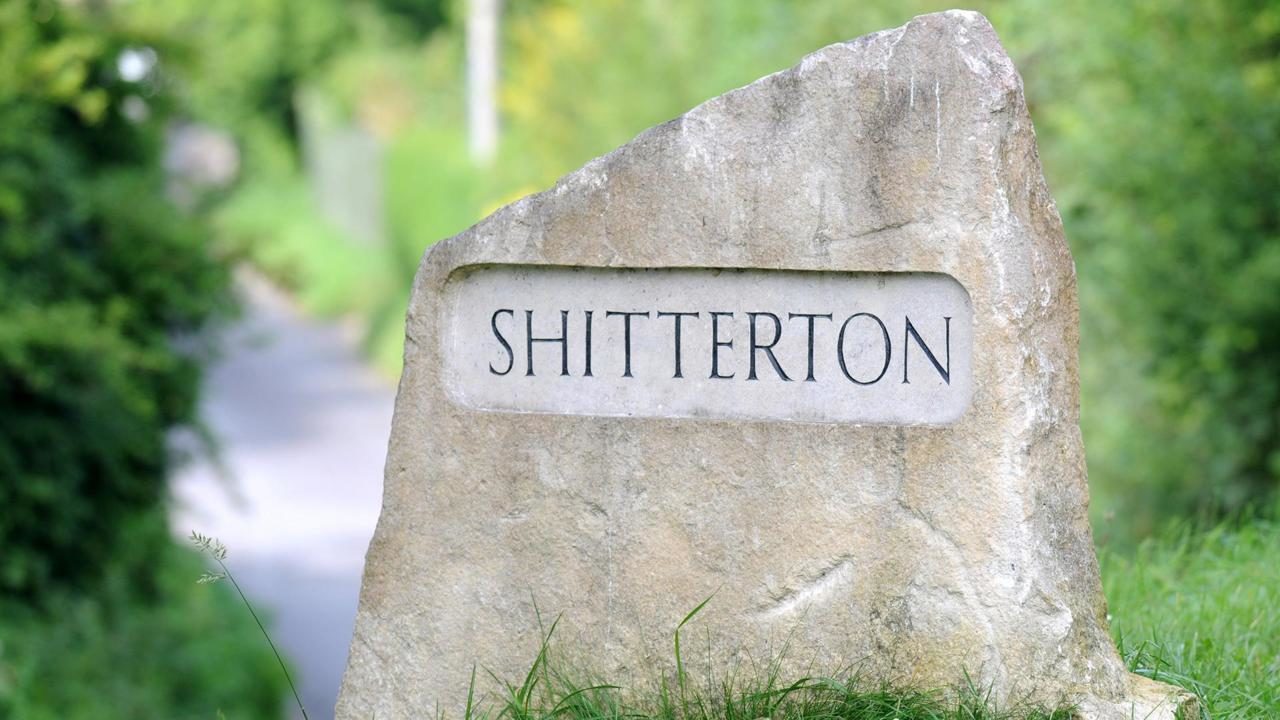
© Dorset Media Service/AlamyThe name of this Dorset hamlet has Anglo-Saxon (and unfortunate) roots: it stems from the town's stream, which once was used as an open sewer
And just like that, in an hour and a quarter, you will have covered the great sweep of British history: from the Celts through the Romans, Anglo-Saxons, Scandinavians, and Normans to modern times - all as displayed in Britain's place names. (You can check out our map, not meant to be exhaustive, of some of Britain's stranger names at the bottom of this page).
British history didn't start with the Celtic peoples (Stonehenge didn't build itself, after all). But the Celtic tribes that arrived during the Iron Age, which started around 800BC, were the first to give a clear linguistic contribution that has lasted to modern times. They came in groups from the continent; those in the north spoke Goidelic (the source of Gaelic), while southerners spoke Brittonic.
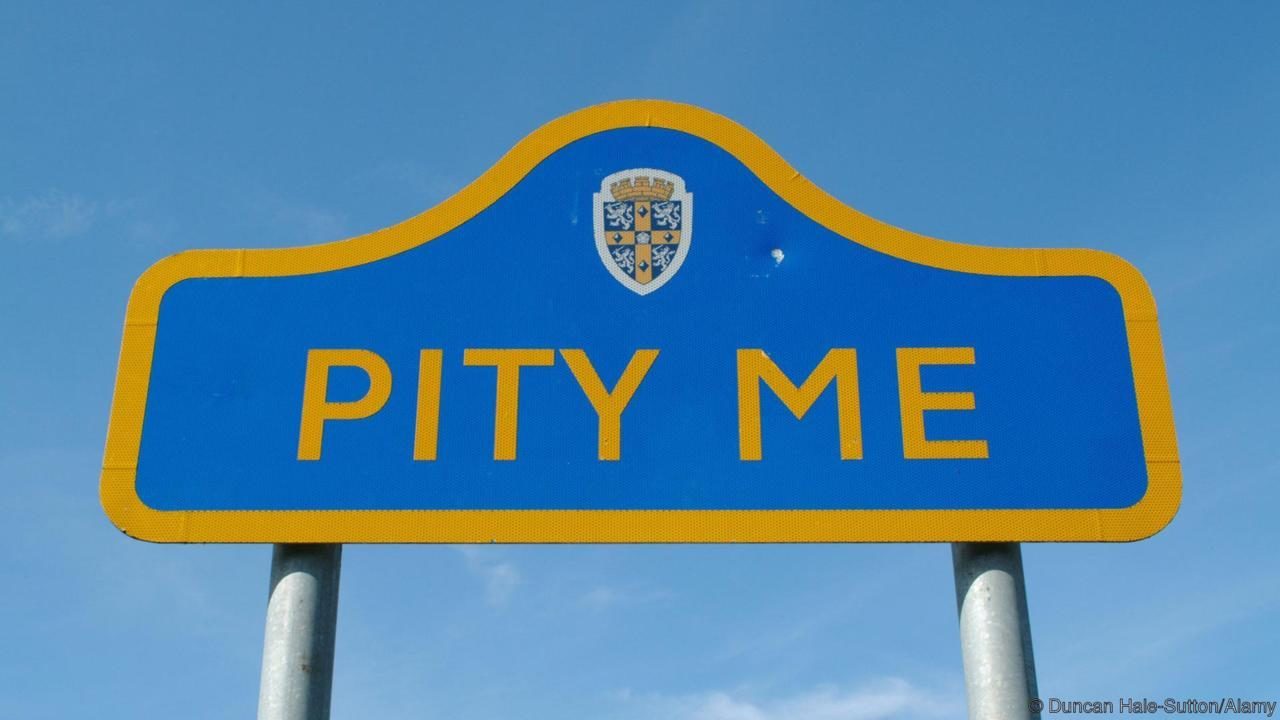
© Duncan Hale-Sutton/AlamySome towns have such strange names that no one can be sure what their origins are, like the village of Pity Me outside Durham
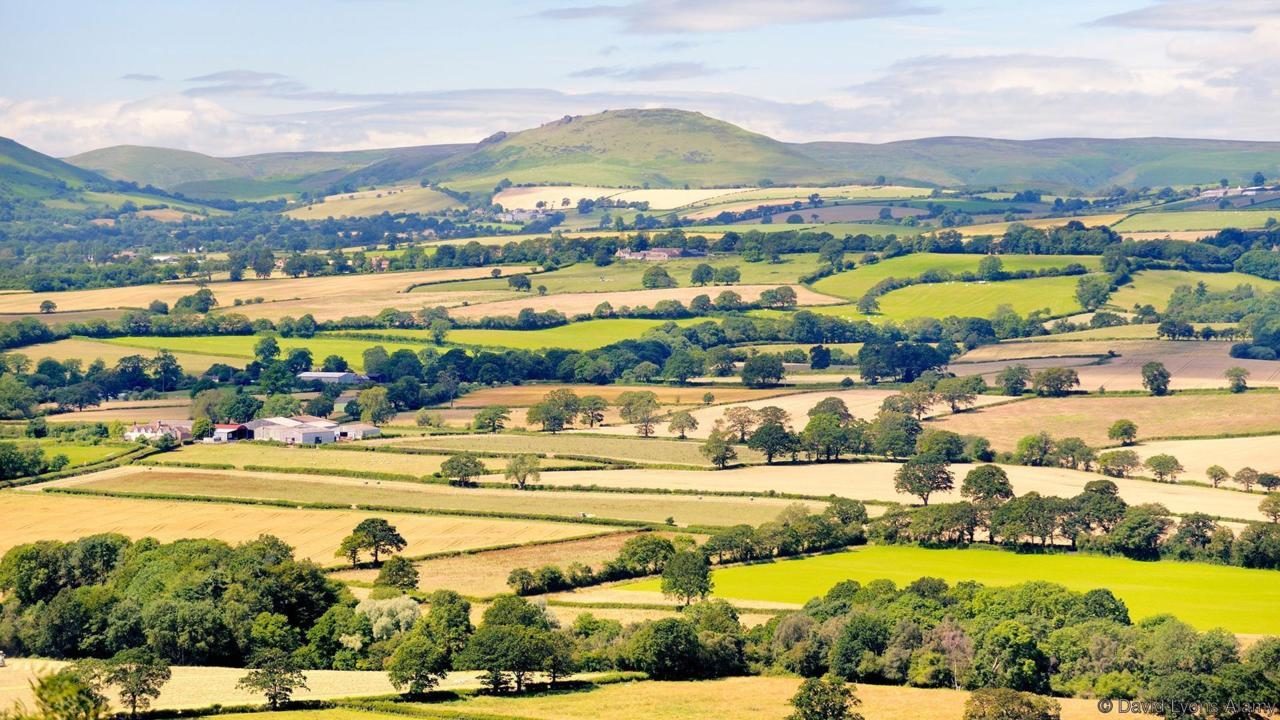
© David Lyons/AlamyThis view from Wenlock Edge, located near Much Wenlock in the Midlands, takes in Easthope, Ape Dale, Caer Caradoc and The Long Mynd
Fighting words
The Romans invaded Britain too, even before the Anglo-Saxons, first trying in 55 BC but at last succeeding in AD 43. But their linguistic influence, like their culture, left less of a mark: they built towns and garrison outposts, but they never truly made Britain their home. Roman contributions to British place names come mainly through their Latinisation of pre-Roman names. A Celtic name that had been rendered by earlier Greek visitors as Pretanniké became the Roman Britannia; an ancient name of obscure meaning became Londinium. The other major Roman contribution comes from the Latin castra ('fort'). Taken into Anglo-Saxon, it became ceaster ('town, city', pronounced rather like 'che-aster') - which has mutated to chester (Chester, Manchester), caster (Lancaster, Doncaster) and cester (Leicester, Cirencester).
Unlike the Romans, however, the Anglo-Saxons did not come to establish an outpost or colony. They came to move in. The Anglo-Saxons did build forts - the word burh ('fortified place') gives Britain all of its -burghs and -burys - but what they really wanted to do was farm, build towns and conduct trade. If they encountered a forest (called a wald, wold, weald, holt or shaw) or a grove (graf, now -grove and -grave), they might clear it to make a leah (now -ly, -lay, -ley and -leigh). They would enclose land to make a worthig (-worth), ham (the source of 'home'), or tun (now -ton and the source of 'town'). Since ham was more common in the earlier years and tun later on, there are more -hams in the south, where the Anglo-Saxons first came, and more -tons in the north and west.
Then the Scandinavians arrived. They started in the 8th Century with raids: Danes from the east and Norsemen, coming around Scotland by sea, from the northwest. In the mid-9th Century, they staged a full-scale invasion and began to settle in the areas they controlled. At the height of Scandinavian power in Britain, they controlled an area known as the Danelaw that covered most of England north and east of a line from Liverpool to the Thames - a line you cross at Watling Street (an ancient road) as you drive northeast toward Ashby-de-la-Zouch.
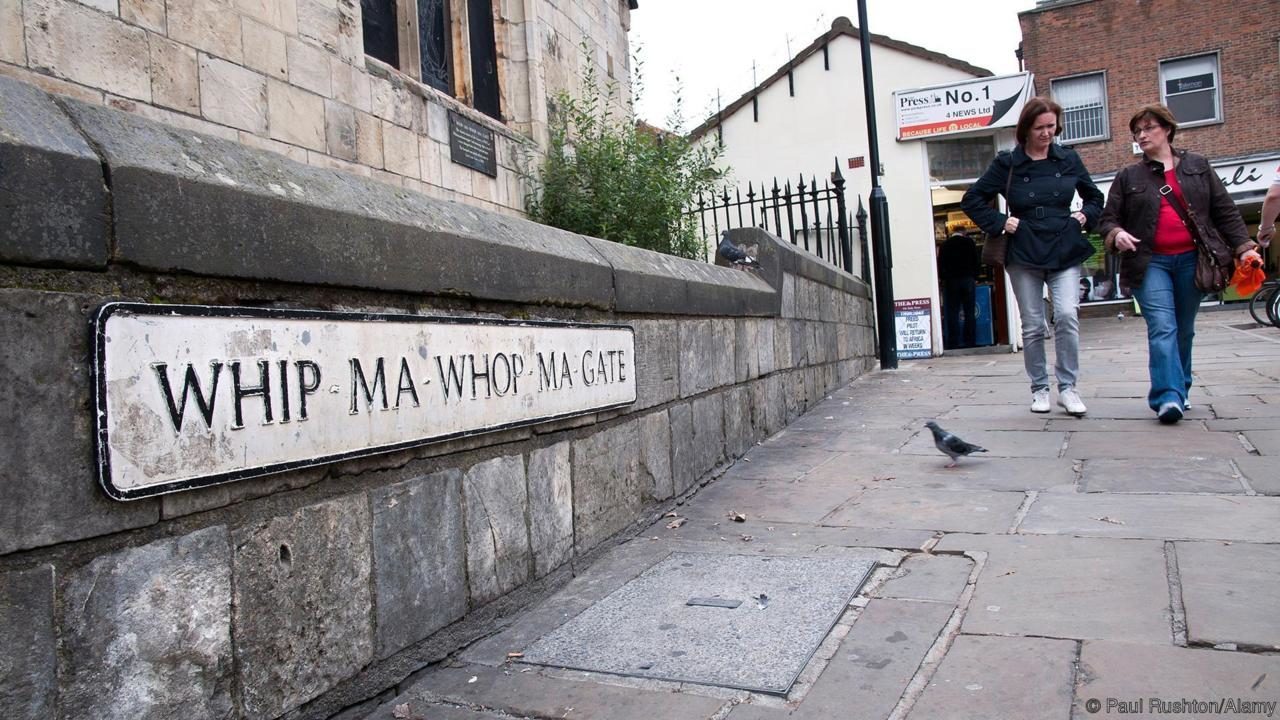
© Paul Rushton/AlamyAs well as oddly-named towns, Britain has streets like York's Whip-Ma-Whop-Ma-Gate, which may come from Norse for ‘Neither one thing nor the other’
French connection
In 1066, the Normans came: Frenchmen, many of whom were descended from assimilated Viking invaders of France. William took over the government and gave ownership of many places to knights who had supported him. Ashby was given to the de la Zuche family; Newton ('new town or enclosed settlement') was given to the Burgilons (now Newton Burgoland). The invasion also led to French versions of English originals, such as Rievaulx, translated from Ryedale. There are pure French names that later were shaped by English influence, such as Beamish from beau mes ('beautiful mansion'), Bewdley from beau lieu ('beautiful place') and Ridgemont from rouge mont ('red hill'). The Normans' scribes, educated in Latin, also gave Latin additions such as Appleby Magna and Lyme Regis - and even the occasional full name, such as Pontefract (pons fractus, 'broken bridge').
But the Norman French did not settle in with the same comfort as the Anglo-Saxons and the Scandinavians, and certainly not in the same numbers. The commoners - made up of Anglo-Saxons, Scandinavians and remaining Celts - kept speaking English, which was still evolving and came to add many French words.
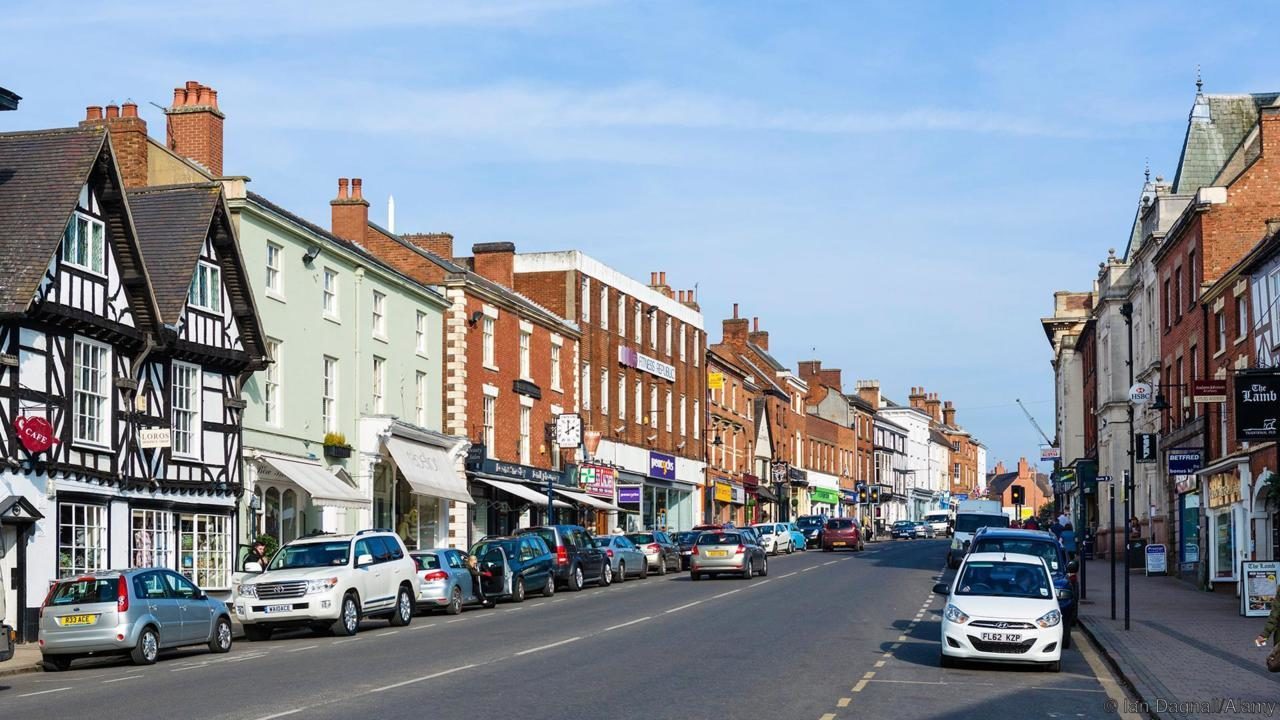
© Ian Dagnall/AlamyAshby-de-la-Zouch may once have been the 'ash tree farmhouse belonging to the Norman de la Zuche family', but it is as English as market towns come
And so it is that you can, in 60 miles, go from the Celtic hills, through the Anglo-Saxon and old Celtic towns, across the pre-Celtic, Celtic, and Anglo-Saxon rivers, past faint traces of the Romans, cross into Danish territory, and find the French nobility.



[Link]
Seems like most idiot regime changers, they go for headlines, no matter if they make sense or not... as in this case, with the villagers of Wool pointing out the name "derives from the old English word for well or spring rather than any association with animals."