Animals
S


Blackbox

US experts probe beaching that killed 17 whales

Image
US scientists are to investigate what led 22 whales to beach themselves in Florida—killing 17 of them—one of three such incidents in North America over the weekend.
The dead whales will be "dispersed at different labs across Florida for necropsy," or animal autopsies, Blair Mase, regional stranding coordinator for the National Oceanic and Atmospheric Administration, told AFP on Sunday. Only five of the 22 pilot whales survived after beaching themselves Saturday morning at Avalon Beach State Park, on the east coast of Florida, despite efforts by volunteers and experts to save the group. So far, it is unclear why the whales swam ashore. Mase said experts would collect data to try to find out why the whales stranded themselves.

The survivors, four juveniles and one calf, are "stable" and "swimming on their own," Mase said. They are currently at the Harbor Branch Oceanographic Institute and will likely be transported later to SeaWorld in Orlando. However, two other groups of whales swam onto beaches in North America - one in Cape Cod on Saturday and another in Canada on Sunday - an occurrence that Mase said merited further investigation.

Life Preserver

Rescuers help 39 stranded dolphins on Cape Cod

Animal rescuers helped move 39 dolphins to deeper water after they became stranded at a Cape Cod beach.

A spokeswoman for the International Fund for Animal Welfare told the Cape Cod Times that members of her group responded Saturday night to a report of stranded dolphins at Thumpertown Beach in Eastham.

The spokeswoman, Kerry Branon, says all 39 dolphins appear to be safe for the time being. She believes the dolphins are part of a larger pod that includes up to 100 dolphins.

Stop

Mystery shrouds cranes' deaths

Image
© Kulbir Beera/HTOfficlas of forest and wild life departemnt showing dead cranes at Pakki Tibbi village in Bathinda on Sunday.
India - Something mysterious is killing common cranes at their newfound habitat near Pakki Tibbi village of the Lambi constituency. Hundreds of the birds have already died this season, while dozens are falling prey daily.

Pakki Tibbi village was never known for its wildlife attractions but the problem of water logging provided favourable conditions to the common cranes to make colonies on kikar trees along the Abohar-Fazilka railways line adjacent to the village.

"Young birds of the specie die every year when their attempts to fly fail, but deaths of mature cranes this season is new phenomenon. Now, the death rate has decreased, but around 40-50 cranes were dying daily till a few days back," said Amreek Singh, a villager.

Four common cranes died during an hour-long stay of the HT team at the colony of cranes on Sunday. Birds fell unconscious before dying.

A few days back, forest range officer Jeeta Singh had collected some of the dead birds. However, no postmortem was conducted to find out the reason behind their deaths.

Arrow Up

One-Fifth Of World's Invertebrate Species Face Extinction

Twenty percent of the invertebrate species across the globe - spineless creatures ranging from earthworms to bees to butterflies to lobsters and beyond - are facing the possible risk of extinction unless more is done to protect them, say researchers from the Zoological Society of London (ZSL).
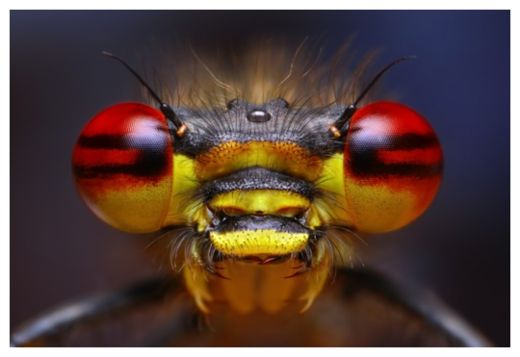
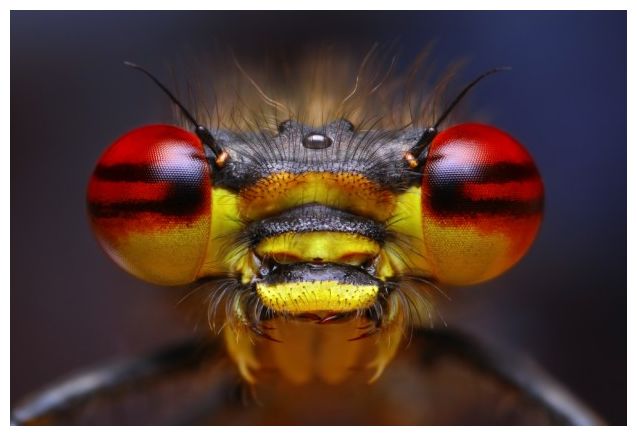
Red Damselfly
© tomatito / ShutterstockClose-up of a large red damselfly (Pyrrhosoma nymphula).
As part of their 87-page study, ZSL scientists joined forces with the International Union for Conservation of Nature (IUCN) to review more than 12,000 invertebrate species listed on the organization's Red List of Threatened Species.

They discovered that an estimated one-fifth of those species are threatened to the point that they could eventually die out, with freshwater creatures most at risk of extinction, followed by terrestrial invertebrates and marine creatures without backbones, the organization said in an August 31 online report.

"The highest risk of extinction tends to be associated with species that are less mobile and are only found in small geographical areas," the ZSL said. "For example, vertebrate amphibians and invertebrate freshwater mollusks both face high levels of threat - around one third of species. In contrast, invertebrate species which are more mobile like dragonflies and butterflies face a similar threat to that of birds, and around one tenth of species are at risk."

The scientists report that the creatures face a vast array of different threats, with mollusks suffering from pollution originating from agricultural sources and construction and crayfish facing threats from invasive species and illness. Furthermore, they told Alister Doyle of Reuters that the creatures, which lack internal skeletons, have also been threatened by global warming, habitat loss, and over-exploitation.

Question

The Mysterious Disappearance Of 200 Pigeons Has Been Boggling Bird Lovers

Image
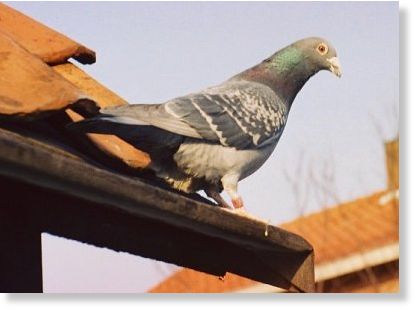
© BenTheWikiManScientists still don't fully understand the biological mechanisms behind a pigeon's ability to navigate

Hundreds of racing pigeons have been disappearing over a sleepy pocket of North East England, earning the region a reputation as the "Birdmuda Triangle."

On Saturday (Aug. 25), the Telegraph reported, one club of pigeon fanciers released a flock of 230 birds from North Yorkshire. Only 13 birds arrived at their destination in Scotland.

Some of the aggrieved hobbyists - who routinely release trained pigeons tasked with finding their way home from distances of hundreds of miles - are now considering grounding their remaining birds until the mystery is solved.

Pigeons have long baffled scientists with their uncanny navigational abilities. Earlier this year, researchers at Baylor College identified one component of the birds' internal GPS when they showed that their brains contain a specialized group of cells that measure the strength and direction of the Earth's magnetic field, serving as a compass.

But what special property of a triangular region in North East England - marked off by places called Wetherby, Corsett and Thirsk, and measuring 65 miles (105 km) on its longest side - could be capable of short-circuiting a pigeon's sense of home?

Bizarro Earth

Flesh Eating Gulls Devour Whales Alive

Whale
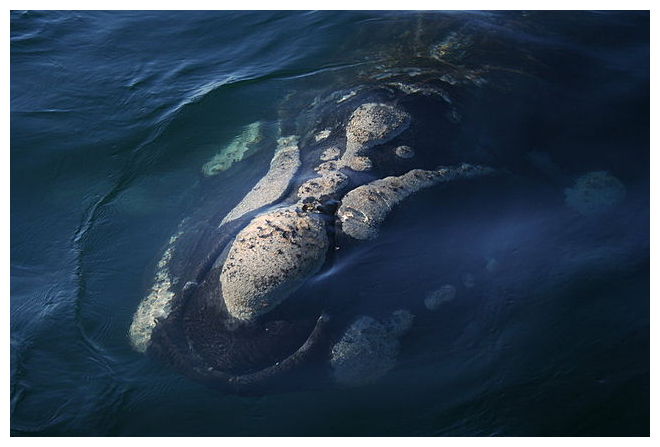
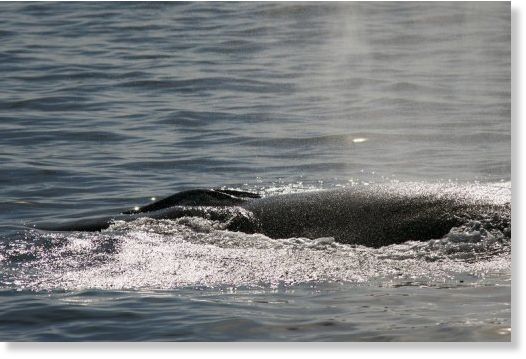
© Michaël Catanzariti, Wikimedia CommonsSouthern right whale off the Valdez Peninsula, Patagonia, Argentina.
Right whales (Eubalaena australis) off the coast of Argentina face the gruesome threat of being slowly eaten alive by birds every time they take a breath. The menace has become so great that local officials are planning to declare open season on the gulls and allow hunters to knock problem birds out of the sky, reported the AP.

The macabre torment of the whales sounds like a punishment from vengeful gods in a Greek myth or the plot of a Edgar Allan Poe story, but the real reason gulls have turned on the whales may be a bunch of garbage. Open air trash heaps near coastal cities have fueled a massive population boom in gulls. Fishermen add to the problem when they throw fish parts back into the ocean.

About eight years ago, the burgeoning gull population around the city of Puerto Madryn learned that they can get fresh meat from the whales. As more gulls learned the trick, the problems for whales increased. The gulls wait until a whale surfaces for air, then tear holes in the whales' flesh and rip off pieces of skin and blubber. Each time the whales come back up, the gulls go in for more.

"It really worries us because the damage they're doing to the whales is multiplying, especially to infant whales that are born in these waters," Marcelo Bertellotti, of the National Patagonia Center, a government-sponsored conservation agency, told the AP.

Cow Skull

Sixth Extinction, not man-made climate change: El Salvador Earthquake Destroys Rare Turtle Eggs

Image
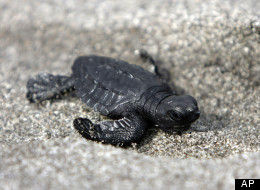
© AP Photo/Luis Romero A baby sea turtle advances towards the ocean waters of a beach in San Diego, El Salvador, on Saturday Oct. 1, 2011.
Wildlife authorities say a strong earthquake in the Pacific Ocean late Sunday destroyed more than 45,000 endangered sea turtle eggs on the coast of El Salvador.

The director of the turtle conservation program for the El Salvador Zoological Foundation says the 7.4-magnitude undersea quake sent at least three waves at least 30 feet high up the beach and destroyed thousands of nests and just-hatched turtles. It also washed up on about 150 people collecting eggs in order to protect them in special pens hundreds of feet up the beach. The waves injured three.

Program director Emilio Leon said that in the last year and a half the foundation has successfully hatched and released 700,000 turtles from four species at risk of extinction.

Comment: Tunguska, Psychopathy and the Sixth Extinction

The Golden Age, Psychopathy and the Sixth Extinction


Question

Mysterious illness killing bats in U.S. - could it add to the West Nile Virus threat?

In a season of growing concern about the West Nile Virus, a mysterious illness that has killed millions of mosquito-eating bats has added to the worry about that infection, and about bats in general.


It's called white nose syndrome, a fungal growth on the noses and wings of many species of bats, some of them already endangered. It was first observed in a cave in New York in 2006 and has spread throughout much of the northeastern United States.

Stop

Peacocks fall prey to mystery disease in Gr Noida, India

Poaching and a mysterious disease are killing peacocks, India's national bird, in one of their richest habitats here in Uttar Pradesh. The El Salvador area in Greater Noida, near Delhi, is home to a huge peacock population.But as many as 30 of the birds have died in the last fortnight in Patwadi village, according to locals. Of these, 10 died within a week.

On July 6, the UP forest department rescued five peacocks which had fallen ill in the village. One of the birds died while in the department's custody. The five peacocks were meant to be shifted to a veterinary hospital but were reportedly confined inside a nursery in Dadri. The nursery lacked the basic facilities and veterinary care.

According to official sources, district magistrate M K S Sundaram called an urgent meeting on July 7 to discuss the deaths.

He asked the forest department to send the sick peacocks to the Indian Veterinary Research Institute at Bareilly. Jitendra Agarwal, a villager, alleged that the wildlife department did not make efforts to send the birds to Bareilly until one of them died.
"The blood samples were also not taken to identify the exact cause of the deaths although we kept requesting them," he said.

Sheeple

Grizzly mauls hiker to death at Denali National Park

Image
© Unknown
A backpacker hiking inside Denali National Park was killed by a grizzly bear after a violent struggle, the park said in a statement Saturday. The death was the first fatal bear mauling inside the huge park in Alaska.

Rangers discovered the body after three day-hikers found a backpack, as well as torn clothing and blood, along the Toklat River on Friday afternoon, the park stated.

The rangers arrived at the site Friday night but were unable to immediately recover the remains due to the presence of at least one bear in the area and the approaching darkness.

All hiking in the area was banned until further notice.

The park estimates that some 12 grizzlies have been residing in the area this summer.

Besides recovering the remains, park rangers were also trying to locate the predatory bear.

Denali in June saw the tragic deaths of four Japanese climbers swept up by an avalanche on Mount McKinley.