Animals
S


Crusader

Bald eagle crashes into window as crowd chants 'USA! USA!'


A special spirit day at Oral Roberts University took a tragicomical turn last week when a bald eagle released into the school's Christ Chapel by a professional handler crashed into a window just as students began chanting "USA! USA!"

The eagle was unharmed, but many of the students could be heard screaming at the sight of America's national animal wiping out in metaphorical fashion.

The bird had apparently become disoriented from the crowd's patriotic hollering.

"It was a bit shocking to see, but we're thankful the eagle is OK," an ORU spokeswoman told Tulsa World.

After the eagle's trainer recovered the bird, university president Dr. William M. Wilson continued with the service, at one point urging students to become "eagles for Christ."

In other words, get led astray by the mindless repetition of an arrogant conviction until you eventually crash into an invisible construct.

Red Flag

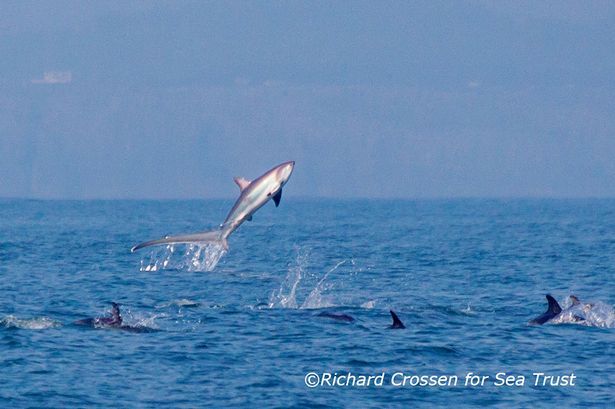
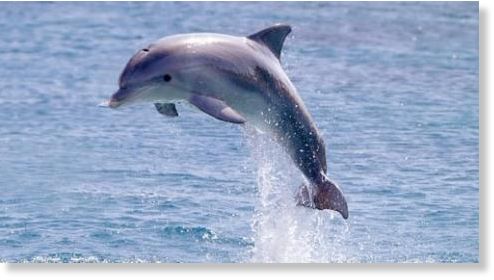
Rare thresher shark pictured leaping from water off Welsh coastline

Shark, believed to weigh 1,000lb and be up to 16ft in length, spotted among pod of dolphins off Welsh coastline on Monday

Image
© Richard Crossen/Sea TrusThe thresher shark off the coast of Milford Haven
A huge shark has been sighted leaping from the water among a group of hundreds of common dolphins just off the coast of Pembrokeshire.

This spectacular photograph of the rare thresher shark was taken from half a mile away off Milford Haven, by a photographer who was surveying dolphins in the outer Bristol Channel with the Sea Trust.

Sea Trust director Cliff Benson, who was also on the boat, said: "It was a good sized animal. I would say its body was at least eight to ten feet long and its tail was another five to six feet long. It would have weighed at least 1,000lb."

He added: "This was an extremely rare sighting. Unlike dolphins, which breathe air, sharks rarely come to the surface of the water. If you offered to pay someone £1,000 to get a photograph like this, they would not be able to."

The shark was seen on Monday afternoon, among a pod of several hundred dolphins - many of which had small calves.

Arrow Down

Avian botulism killing thousands of waterfowl; molting birds cannot leave Tule Lake refuge, California

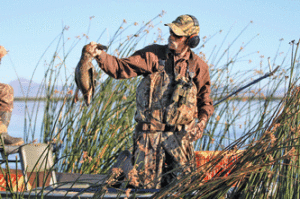
Thousands of birds are dead and dying in wildlife refuges south of from avian botulism.
The botulism has spread mostly to mallards, which are being fished out daily by refuge staff and volunteers riding in fan boats.
Image
© Steven Silton

Drought conditions have relegated flightless waterfowl to limited habitat in Tule Lake in lieu of the larger, but currently dry, Lower Klamath Lake.

"When ducks molt, they lose all their flight feathers and are completely flightless for about a month," said refuge biologist Dave Mauser. "It doesn't help that for a month they're stuck in a marsh with disease."

Blue Planet

Bear stalks 2 women in 3-hour ordeal

Image
© Unknown
Annapolis Valley pair flee to hunter's shack.


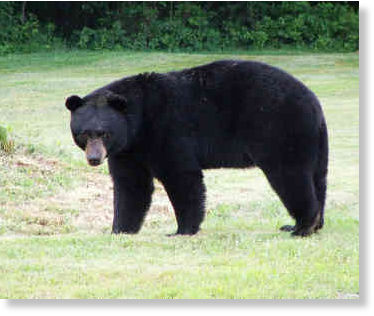
Two Nova Scotia women say they had a close escape from a black bear while travelling in the Annapolis Valley.

The three-hour ordeal ended with the pair cowering in an old hunter's shack while the bear pawed the walls of the building outside.

Nikki Latta, 23, and Lindsay Jones, 25, headed into the woods near Port George on the Bay of Fundy shore Monday evening. Latta was familiar with the area, but Jones wasn't. The two joked about a bear attack - Jones is terrified of them.

Then a passing dog got spooked and ran away.

Bomb

A grizzly bear ate a black bear in Banff

Image
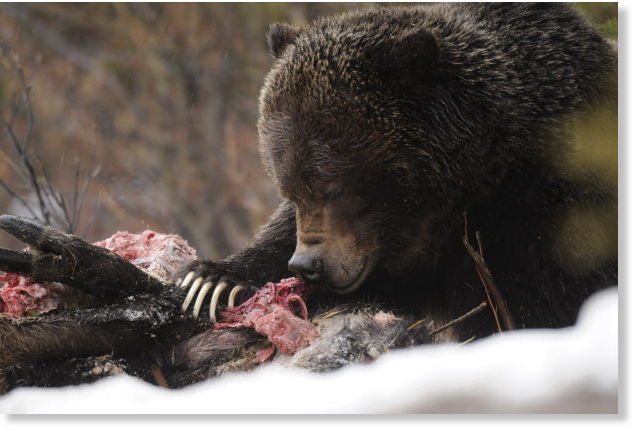
© Dan Ralfa, Parks Canada/Calgary HeraldGrizzly Bear #122 feeding on a moose carcass. The picture was taken in April 2013.

Never get between No. 122 and his dinner - or you might become his dinner.

That's the large male grizzly bear in Banff National Park who earlier this month ate a black bear.

Officials reopened the the Sundance Canyon area in Banff National Park on Tuesday after they were sure No. 122 had moved on. A group of hikers stumbled upon the giant bear feasting on a carcass earlier in August, which an investigation by park officials revealed to be the remains of a small black bear.

"It had been completely consumed," Steve Michel, a human wildlife conflict specialist with Banff National Park, told the Calgary Herald. "There was nothing remaining other than a skull, a hide, the four paws and some bones."

Sherlock

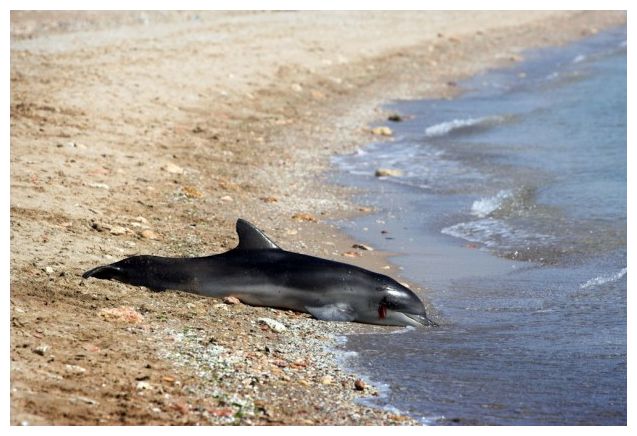
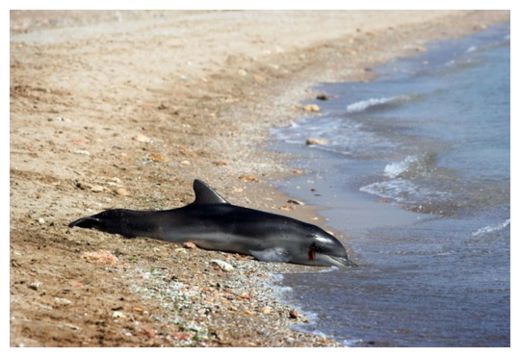
Scientists find culprit for mysterious dolphin deaths

Image
© Unknown
Nearly 500 dolphins have washed up on the eastern seaboard this year, almost four times the usual number, and the mystery has left many oceanographers scrambling for possible causes. But after intensive testing, the National Oceanic and Atmospheric Administration has found a likely culprit: morbilivirus. It's a measles-like contagion that can cause pneumonia-like symptoms in dolphins, and has been linked to previous die-offs in 1988 and 1992. NOAA is reporting that all of the 27 carcasses they've examined have either tested positive for the disease or are suspected for infection based on visible symptoms.

Wolf

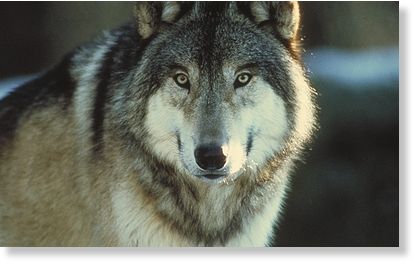
Teenager survives first confirmed wolf attack in Minnesota

Image
© JungleWalk.com
It's being called the first confirmed attack of a person by a gray wolf in Minnesota history, according to the Department of Natural Resources. Now, a 16-year-old Solway boy is home recovering from a vicious bite wound to the head.

It happened early Saturday morning at the West Winnie Campground on Lake Winnibigoshish in north central Minnesota. The campground is operated by the U.S. Forest Service and was temporarily closed following the wolf attack, reports CBS affiliate WCCO in Minneapolis.

The gray wolf, also known as a timber wolf, was captured by trappers with the U.S. Department of Agriculture. The wolf was shot and killed to permit testing for rabies at the University of Minnesota veterinary diagnostic lab.

According to Col. Ken Soring, enforcement director for the DNR, Saturday's attack was freakish and unprecedented.

Comment: See also: Another atypical animal attack on humans: Villagers viciously attacked by a pack of starving wolves in China

'Super pack' of 400 wolves terrorise remote Russian town after killing 30 horses in just four days


Eye 2

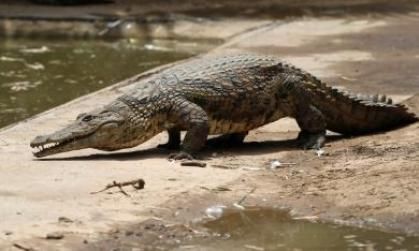
Body of 26-year-old man recovered after crocodile attack in Australia

Despite many signs and warnings not to swim man took to river

The body of Sean Cole, a 26-year-old swimmer, and the crocodile that killed him have been recovered by Australian police from a notorious Outback river at the weekend.

Cole and a friend made the fatal decision to swim across the Northern Territory's dangerous Mary River. They had been in the water a short time when a 15 foot crocodile snapped its jaws around Cole's chest as fifteen of their friends looked on in horror from the bank.
Image
© Google ImagesThe body of Sean Cole (26) has been recovered after a crocodile attack in the Outback of Australia

Northern Territory wildlife ranger Tom Nichols told the press that Cole's body and the dead crocodile floated to the surface early today. The crocodile was shot by rangers within hours of the deadly attack on Saturday, but it sunk away into the river before it could be retrieved.

The Mary River is a famous habitat for the dangerous reptiles and police are mystified as to why Cole decided to swim in it.

Black Cat 2

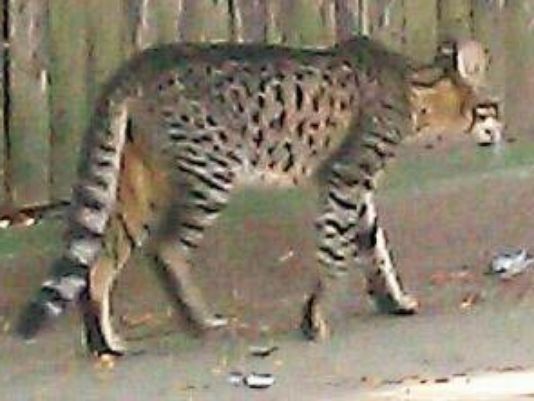
Big cat has Detroit neighborhood on edge

A Humane Society officials said it's unclear whether the cat is feral or domesticated and what breed it is.

Image
© Detroit Free PressThis photo taken by a resident shows the big cat has been roaming a Detroit neighborhood

Ambling down the block a couple of weeks ago with his 1-year-old daughter perched on his shoulders, Antwaun Asberry sensed something was behind him.

He turned around and spotted a tall creature that appeared to be a cat, only a lot bigger.

"His tail is longer than my arm," Asberry, a 6-foot-5 Detroiter with a lanky build, said of the cat. "I was like, what the (expletive) ... I don't know what it is. I just want it gone."

So do other residents in the northeast Detroit neighborhood, who said they're unnerved by this supersize cat roaming the streets in recent weeks. They've tried calling Detroit police and Animal Control, but have gotten no response. On Friday, the Michigan Humane Society said it will investigate the case and try to find the cat.

"We're going to put some effort into this," said Nancy Gunnigle, a director with the Humane Society. Cats this size, she said, are "not easy to catch."

The area around Joann Street south of 8 Mile doesn't have roaming dogs - an issue publicized in news media reports this past week.

It's the cat that has bothered residents.

Question

Massive dolphin die-ff could be from measles-like virus

Dead Dolphin
© Thinkstock
Researchers from the University of Pennsylvania's School of Veterinary Medicine have turned a large laboratory designed to treat four-legged animals into a research facility to get to the bottom of one of this summer's greatest tragic mysteries.

Some 70 miles away, dolphins are turning up dead along the Jersey shore and other coastal communities and, at this point, the cause still remains largely unknown. More than 200 dolphins have washed ashore since June and many have ended up on UPenn's New Bolton Center research tables where veterinarians look to find an answer.

The UPenn lab was specifically called upon for this task due to close ties with the Marine Mammal Stranding Center (MMSC) in Brigantine, NJ, which handled many of the deceased creatures that turned up on nearby shorelines.

The Center, located in Kennett Square, PA, sits in the southeastern part of the state near the Delaware line. The board-certified veterinary specialists have performed detailed necropsies on each of the dolphins brought into the lab to hunt out and identify potential abnormalities. Hours upon hours are then spent examining tissues under microscopes and researchers conduct tests with antibodies, hoping to uncover the cause of death in these intelligent marine mammals.

After painstakingly long processes, some evidence has turned up.

"One of the saddest things to see on these creatures is some have horrible pneumonias and ulcers so you know that they are suffering. And the shark bites are kind of sobering to look at," Dr. Perry Habecker, chief of large-animal pathology at the New Bolton Center, told USA Today's Kristi Funderburk.