Divided, The Perils of Our Growing Inequality, edited by David Cay Johnston (New York: The New Press, March 2014)
Truck drivers do an essential job. No society can exist without them. Truck drivers work hard; they drive long hours, they sleep in their trucks, and they hardly see their families. Why are truck drivers making only a meager living, then? Sociologist Lisa Dodson, the contributor of the last chapter in this page-turner of a book, posed this question to Joe [not his real name], a truck driver. "That money came from somewhere, didn't it?" Joe responded. "It came out of my pocket and my kids' mouths." Is inequality really the result of the rich taking money that belongs to the poor? And if so, why do the poor let them? [Full disclosure: I am one of the 46 contributors included in
Divided.]
The route from pocket to pocket that Joe sees is direct. But the most popular explanation for the growing inequality in the US involves an indirect route. When managers can threaten workers that they would shift work overseas, the workers have no choice but to agree to low wages; and when they do, managers can then pay themselves huge salaries and bonuses and they can also consume huge quantities of perquisites, such as corporate jets, on the job. Thus, the falling wages workers and the rising incomes of executives in the US are both attributed to globalization.
If one looks only at the United States, this appears to be true. This review is written a day after the workers in a Volkswagen factory in Chattanooga, Tennessee, voted against having a union. Wages in the VW plant are low. The workers who managed to become VW employees are paid $19.50/hour, lower than most other
auto workers in the US. New employees make even less. They are hired by and work for Aerotek, a staffing contractor and their wage is only $12.50/hour. Several weeks before the vote the majority of the VW employees (Aerotek employees do not get to vote) signed cards that indicated their preference for a union and it appeared that they would have a union. But then a senator claimed that if they were to vote for a union Volkswagen would shift a new factory that was intended for Chattanooga to Mexico instead.
Christopher Jencks, a professor of social policy at Harvard, points out, however, that globalization does not have the same effect elsewhere. Inequality was quite similar among rich countries in the 1970s,
but today the degree of inequality in the US is by far the highest. In those other countries work still pays, and
Jencks attributes the difference to a difference in political systems. In The US there are just two parties and the winner takes all. Workers are therefore just one faction in a party that represents a great number of interests. In Europe, because of proportional representation, there are many parties, and workers can therefore have parties that represent them exclusively. The result of this difference, according to Jencks, is that in Western European countries the law protects workers from the race-to-the-bottom that in the US is blamed on globalization.
One law that protects workers in Germany, for example, is the law that requires that half of the members of board of directors in all companies with more than 2,000 employees be workers' representatives (this is far from true equality, though, because the tie breaker is the chairman of the board, who is not a workers' representative). Several European countries also have "extension laws" that permit the government to extend the benefit of a union contract that is negotiated in some workplaces to all workplaces, regardless of whether these workplaces are themselves union shops or not. These laws assure that employers who pay union wages are not at a disadvantage.
It is notable that Germany, with its strong pro-labor legislation, had a significantly lower rate of unemployment than the US throughout the sub-prime crisis, and this advantage continues today.






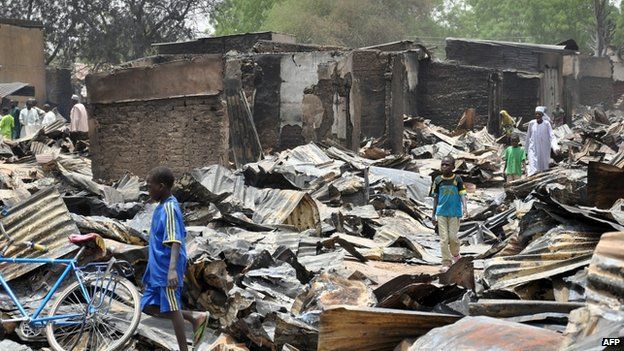


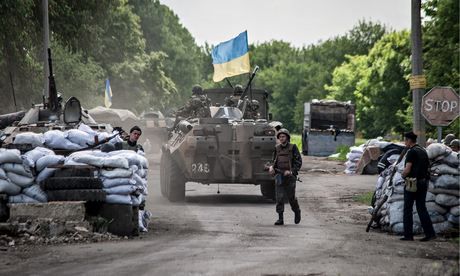



Comment: The fascists have sent tanks, armoured vehicles and helicopters against their own people and used heavy weaponry. They have declared people who don't submit to their rule as being terrorists and have burned dozens alive including policemen simply for protesting. No wonder the people are furious and have realized that talking alone is not going anywhere, as the fascist in power do no care about them.
What is perhaps even more shocking is the fact that the Western leaders don't care about these people either, but are siding 100% behind the fascist junta. That should give food for thought and does not bode well for the coming demonstrations in Europe as austerity measures start to hurt big time.