

© Raime Fronstin/NPSA dead seal found on a beach near Kotzebue, Alaska, May 24, 2019.
Since June 1 2018, NOAA has received reports of 282 dead ice seals in the Bering and Chukchi seas. In 2018, there were 119 ice seal strandings reported, while 163 have already reported this year. NOAA said they typically receive reports of about 29 ice seal strandings a year.
By mid-June this summer, communities along Alaska's western coast were noticing scores of dead ice seals.
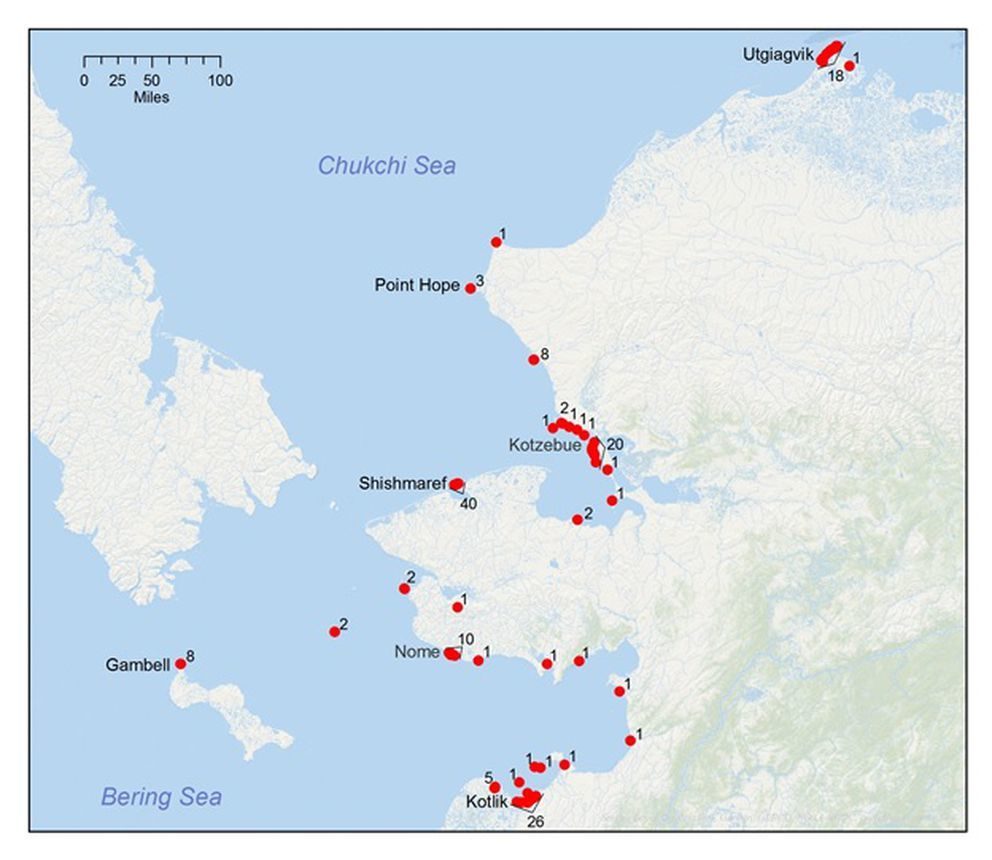
© NOAAA map of the 2019 ice seal strandings in the Bering and Chukchi seas, February 12 through September 4, 2019.
A team of investigators - including veterinarians, biologists and ice seal experts - have not yet determined what has led to the strandings, which they've declared an "unusual mortality event."
"We know the past two summers have been warmer than usual, and there has been a decreased amount of sea ice," said Julie Speegle, a public affairs officer with NOAA. Warm weather can also lead to harmful algal blooms, she said, and virus or bacterial infections have also not been ruled out.
Mass ice seal deaths occurred in 2011 to 2016. Officials determined the seals were having an abnormal molt, but were unable to identify a definitive cause for the abnormality.
Also this year in the water's off of Alaska's coasts, an unusual number of dead gray whales, mussels and krill has concerned officials.



Reader Comments