
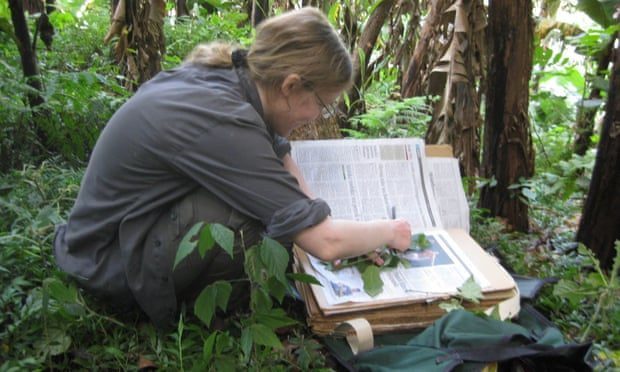
© Kew Gardens“Plants underpin all life on Earth. They provide the oxygen we breathe and the food we eat, as well as making up the backbone of the world’s ecosystems – so plant extinction is bad news for all species.”
They found 571 species had definitely been wiped out since 1750 but with knowledge of many plant species still very limited the true number is likely to be much higher. The researchers said the plant extinction rate was 500 times greater now than before the industrial revolution, and this was also likely to be an underestimate.
"Plants underpin all life on Earth," said Dr Eimear Nic Lughadha, at the Royal Botanic Gardens, Kew, who was part of the team. "They provide the oxygen we breathe and the food we eat, as well as making up the backbone of the world's ecosystems - so plant extinction is bad news for all species."
The number of plants that have disappeared from the wild is more than twice the number of extinct birds, mammals and amphibians combined. The new figure is also four times the number of extinct plants recorded in the International Union for Conservation of Nature's red list.
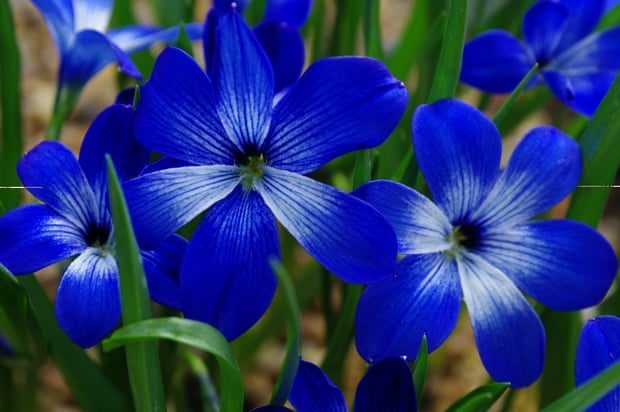
© Kew GardensThe Chilean crocus, Tecophilaea cyanocrocus, was rediscovered in 2001 after years of searching and is categorised by the IUCN as critically endangered.
She said the true extinction rate for plants could easily be orders of magnitude higher than that reported in the study, published in the journal Nature Ecology and Evolution. There are thousands of "living dead" plant species, where the last survivors have no chance of reproducing because, for example, only one sex remains or the big animals needed to spread their seeds are extinct.
It takes many years to be sure a plant has been wiped out, meaning there are many species awaiting formal confirmation. "How are you going to check the entirety of the Amazon for your lost plant?" Vorontsova said. And some plant species may have gone extinct before ever being discovered. Botanists find about 2,000 new species a year.
A sixth mass extinction of life on Earth is under way, according to some scientists. A landmark report in May said human society was in jeopardy from the accelerating decline of the Earth's natural life-support systems, with 1 million species of plants and animals at risk of extinction.
The plant analysis found Hawaii had the most recorded extinctions (79), followed by the Cape provinces of South Africa (37), with Australia, Brazil, India and Madagascar also among the top regions. However, there may well have been as many extinctions in places that have been less well studied.
The main cause of the extinctions is the destruction of natural habitats by human activities, such as cutting down forests and converting land into fields for farming. Vorontsova saw this firsthand in Madagascar when searching for an unusual-looking grass, Sartidia perrieri, that was collected just once, in 1914.
"We scoured the hills and mountains ... but it was not there," she said. "In the places where it would be growing, there are cattle grazing, regular fires and people growing rice." Vorontsova's search for spiny wild aubergines in Tanzania and Kenya ended the same way. "We found a coastal forest completely destroyed. I was shocked."
Among the other plants lost are the Chile sandalwood, exploited into oblivion for its aromatic wood, and the Saint Helena olive, the last two specimens of which succumbed to a termite attack and fungal infections in 2003.
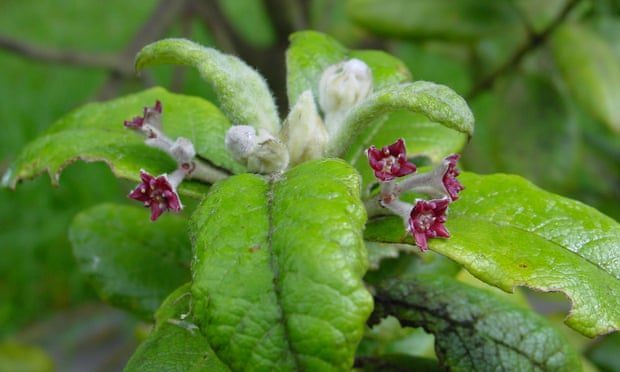
© Kew GardensThe Saint Helena olive, Nesiota elliptica, first discovered in 1805. A sample of its DNA is kept in Kew’s DNA bank.
"Millions of other species depend on plants for their survival, humans included, so knowing which plants we are losing and from where will feed back into conservation programmes," said Nic Lughadha.
Other scientists said the analysis was important and robust. Bjorn Robroek, an ecologist at Southampton University, said: "The finding that extinction rates are highest in biodiversity hotspots that are at risk due to land-use change is alarming."
Alan Gray, of the UK's Centre for Ecology and Hydrology, said: "Scientists have not studied the vast majority of the world's plants in any detail, so the authors are right to think the numbers they have produced are large underestimates. To address this extinction crisis, humanity will need to devise solutions that target funding towards conservation research and action. It's time to ask not what biodiversity can do for us but what we can do for biodiversity."
Vorontsova said: "We suffer from plant blindness. Animals are cute, important and diverse but I am absolutely shocked how a similar level of awareness and interest is missing for plants. We take them for granted and I don't think we should."





Comment: Many signs point to the fact that the earth is of undergoing another extinction event, which appears to be part of a natural cyclic process. What's obscene is that the media uses such studies to persuade people to adopt ludicrous 'climate change' and other 'progressive' agendas by putting ALL the blame on human activities. More on this and other extinction events: