
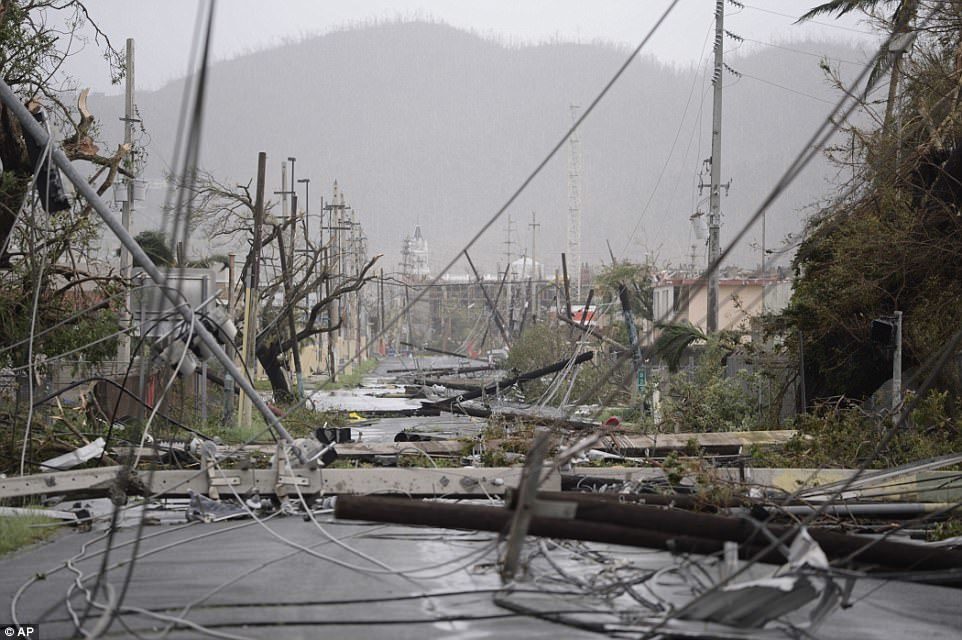
Rosselló also said that at least one person was killed in the storm on the island when a board was ripped from a house it had been nailed to and hit a man. He said that the number of deaths could increase in the next few days. Pictured above are downed power lines and poles on Wednesday on the island
By 2 p.m., the weakened storm had moved into open water but the danger was far from over.
The top winds were still clocking in at 115 miles per hour - still a major life-threatening Category 3 storm - and punishing rain was expected to drench Puerto Rico through the rest of the day. The U.S. National Weather Service was predicting up to 18 inches of rain through Friday, with "life-threatening flash floods and mudslides." News footage showed the muddy Guayama River overflowing and rushing in a brown torrent down streets .
"The truth is the danger continues," Gov. Ricardo Rosselló told the island's largest newspaper, El Nuevo Día. "It's going to keep raining hard. Flood zones are at critical levels. We're still going to have a full day of rain."
The eye of Hurricane Maria exited Puerto Rico on Wednesday afternoon, but only after carving a vicious path that toppled trees, sheared roofs, engorged rivers and obliterated the electric grid - cutting off power for the entire island of 3.5 million people.
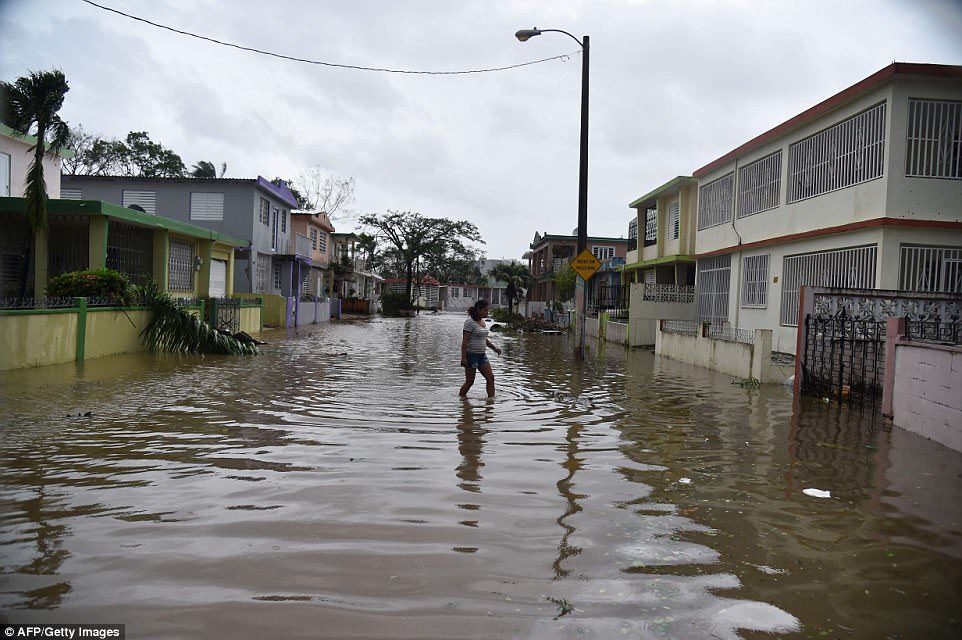
Puerto Rico has been left devastated after Hurricane Maria hit the island with 155mph winds on Wednesday after it had already been hit by Hurricane Irma the week before
The top winds were still clocking in at 115 miles per hour - still a major life-threatening Category 3 storm - and punishing rain was expected to drench Puerto Rico through the rest of the day. The U.S. National Weather Service was predicting up to 18 inches of rain through Friday, with "life-threatening flash floods and mudslides." News footage showed the muddy Guayama River overflowing and rushing in a brown torrent down streets .
"The truth is the danger continues," Gov. Ricardo Rosselló told the island's largest newspaper, El Nuevo Día. "It's going to keep raining hard. Flood zones are at critical levels. We're still going to have a full day of rain."
Northwest of Puerto Rico, Maria was also expected to dump lethal amounts of rainfall on the Dominican Republic and Haiti while heading toward Turks & Caicos and the Bahamas later in the week. If Maria continues on its predicted path, the storm should not pose a danger to Florida but it was still too early to completely rule out some effects along the East Coast of the U.S.
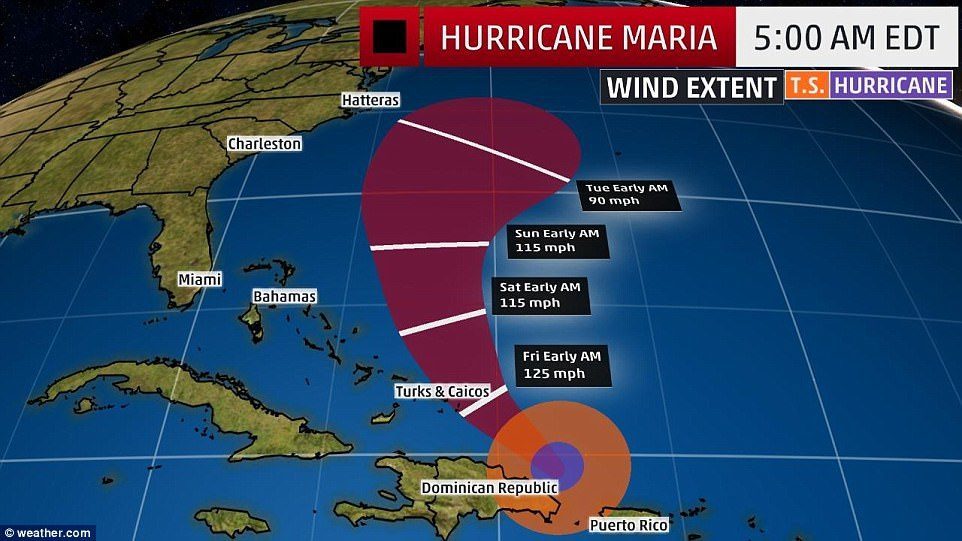
The deadly hurricane is expected lose wind speed as it passes by Turks & Caicos. It should have 90mph winds by Tuesday morning
"What I'm seeing is incredible," said retiree Rosita Galguerra, 66, who was riding out the storm with her husband in the Rio Piedras neighborhood of San Juan. "The rain is horizontal and all the trees are on the ground.
"The house is trembling - and my house is made of concrete with a concrete roof. The winds are like out of a horror movie and it's gusts, gusts, gusts. The island is going to be completely destroyed."
Across the island, the full extent of the damage has come only in snippets as authorities have been unable to emerge and survey the damage and rescue those in need of help.
Emergency managers and local reporters were swamped with reports of burst windows, flooded buildings and downed communications - including the phone lines at WKAQ, where staffers had to evacuate one of the radio studios because of damage.
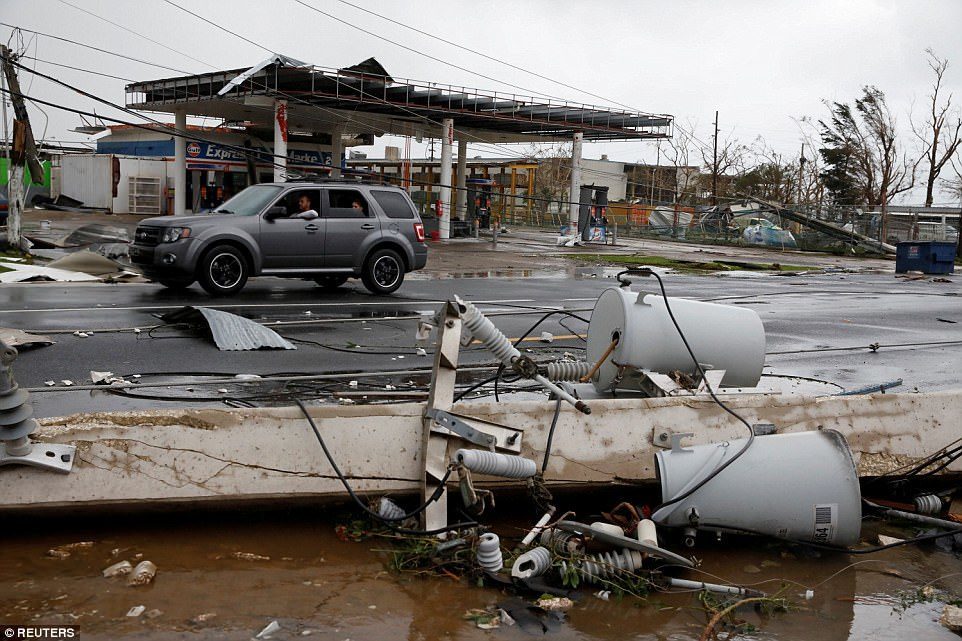
The governor said that as a result of the powerful Category 4 hurricane, no one on the island has power from utilities since the power grid is 'a little bit old, mishandled and weak'. Above a damaged electrical installation.
More than 700 refugees sheltered at the Roberto Clemente Coliseum sports arena had to clear the bottom floor because of a roof leak, while staffers used a chain to keep the doors from blowing open. By the end of the morning, the shelter had no power or running water and the roof was "in pieces" although structurally sound, according to Mayor Carmen Yulín Cruz.
"The question is, when will we open the doors - as soon as the hurricane is gone, and we inform you it's safe," Yulín told refugees in the darkened arena.
Wind from Hurricane Maria pushed open some shutters and rattled windows near San Juan in the early morning of Wednesday, Sept. 20, 2017.


Comment:
Update: (Sept. 22)
Puerto Rico battled dangerous floods Friday after Hurricane Maria ravaged the island, as rescuers raced against time to reach residents trapped in their homes.The death toll has climbed to 33, including 15 in Dominica, three in Haiti and two in Guadeloupe. Although the southeast coast suffered the worst damage, no part of the island escaped the storm's wrath. Of the 27 river gauges on the island, 13 of them are in flood. The National Weather Service reported rainfall of between five and 7 inches an hour.
Maria has already torn through several Caribbean islands, claiming the highest toll on Dominica, which has a population of around 72,000 and has been largely cut off from the outside world.