
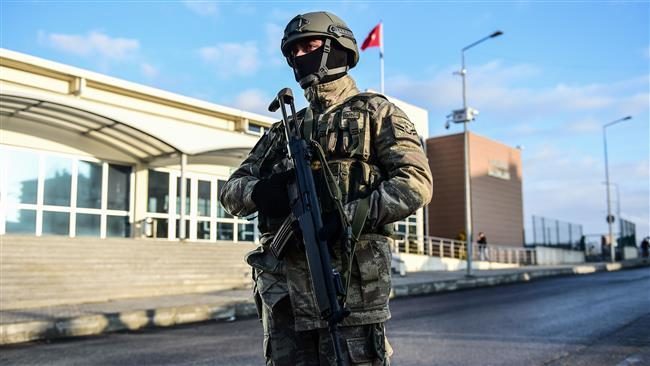
© AFPA member of the Turkish special forces stands guard at the entrance of the courthouse at Silivri district in Istanbul, Turkey, January 23, 2017.
According to reports by the German public TV chain ARD and the Der Spiegel weekly news magazine on Saturday, citing unnamed sources, the military servicemen had been relived from their duties earlier by Ankara on suspicions of having alleged roles in the mid-July failed military coup back in their home country against President Recep Tayyip Erdogan.
Der Spiegel quoted some unnamed officials from the Federal Office for Migration and Refugees (BAMF) and the Federal Ministry of the Interior as saying that the case was treated as all others.
Meanwhile, lawmaker Stephan Mayer, a senior member of the Christian Social Union (CSU) political party and spokesman for Home Affairs of CSU and the Christian Democratic Union (CDU) parliamentary group, said there was no doubt that Berlin could not extradite these soldiers since "they would land in jail immediately" upon their arrival in Turkey.
Furthermore, legislator Norbert Rottgen, a top member CDU and the chairman of the Bundestag's Committee on Foreign Affairs, also strongly asserted that political considerations should not play any role in the asylum procedure.
This is reportedly the second time a group of Turkish troops request asylum in Germany. Back in November, some four months after the botched putsch, several other Turkish military personnel, who worked at the NATO headquarters in the Palatinate of Ramstein, asked for asylum. NATO at the time did not specify the exact number of the Turkish servicemen.
In both incidents NATO officials declined to comment on the asylum cases.
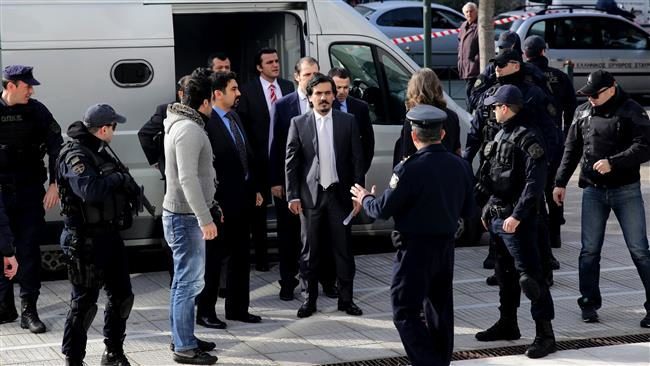
© AFPTurkish officers are escorted by Greek special police forces as they arrive at the Greek Supreme Court in Athens, for a hearing concerning a possible extradition of the officers over July's failed coup in Turkey, on January 23, 2017.
On Thursday, however, the Greek Supreme Court rejected the Turkish government's extradition request for the eight servicemen, including two commanders, four captains and two sergeants, a move that further anger Ankara over the issue.
Turkey has arrested over 37,000 people and dismissed or suspended more than 100,000 others in the civil service, judiciary, police, military and elsewhere since the abortive putsch.
On Friday, Turkish foreign ministry announced that German Chancellor Angela Merkel would visit Turkey on February 2 to discuss mainly the refugee crisis and the cooperation against the terrorism threat with the Turkish leader. It is quite likely that the case of asylum-seeker soldiers and their possible extradition become a hot issue during Merkel's official visit to the Middle Eastern country.



Reader Comments