
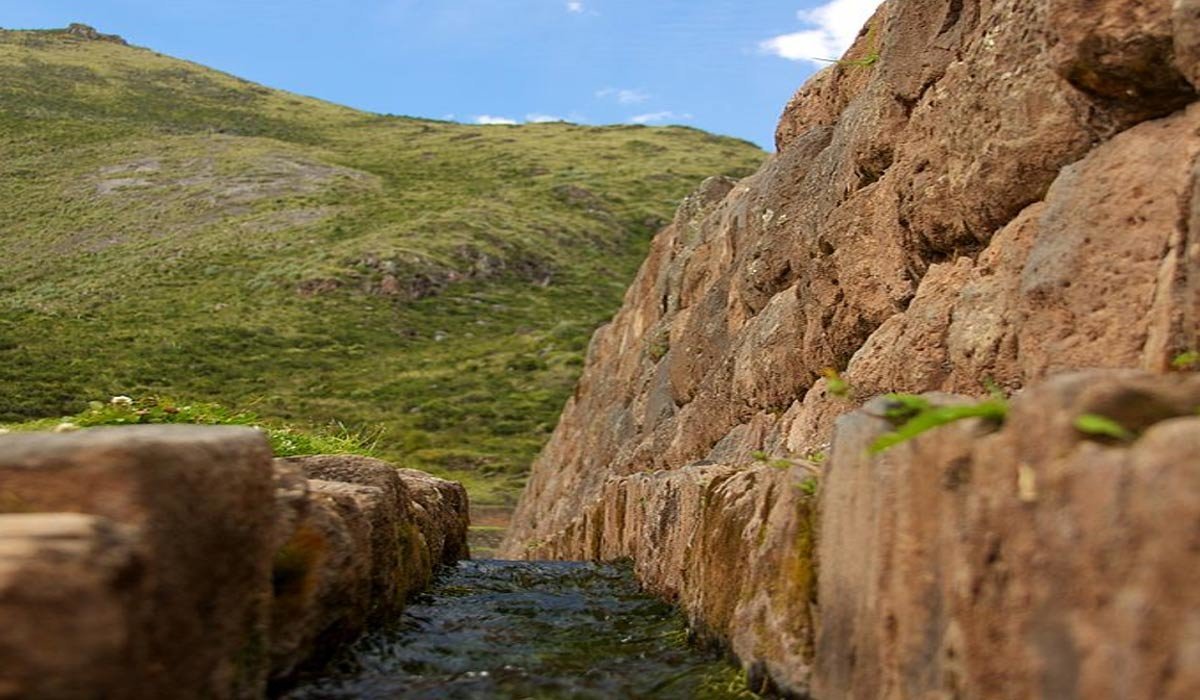
© Wikimedia CommonsAn Inca-era water canal at Tipón, Peru
In April, 2015, a new plan was put forward by Lima's water utility company, Sedapal, to revive an ancient network of stone canals that were built by the Wari culture. EFE reports that pre-hispanic canals are now being utilized to serve the water needs of Lima.
Peru's highly populated arid Pacific coast depends on water from glacial melt to compensate for the region's lack of rainfall, but Peru's glaciers have been retreating at a rapid and increasing rate, leaving many areas without adequate access to water. Lima's failing public water system has been unable to address the problem, and privatization has been the preferred formula of the government for fixing the deficiencies - a move that is widely unpopular with the majority of the Peruvian people.
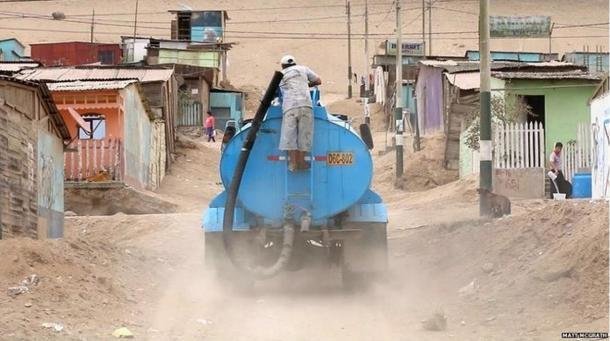
© Matt McGrath / BBC Paying for water delivered by truck is part of the daily routine for many inhabitants in Peru.
"The legacy of pre-hispanic canals built by the Lima culture and extended by the Wari, Ichma, and Inca today makes possible the existence of parks and other public green areas," reports EFE researcher and journalist Javier Lizarzaburu, promoter of the campaign Millennial Lima [via El Espectador ].
Read the rest here.




That privatization was never a serious choice. As with US prisons, the new facility was leased to private owners and stuffed with "minor drug felons" uninitiated into prison culture. The water privateers also use the company ownership for profit by raising rates. Maintainence is either done at state expense BEFORE privatizing or delayed for the select territory covered. Lip service only goes to expanding the system.