
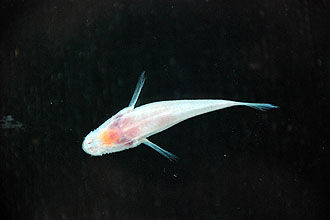
© Agence France-PresseThis picture of a newly discovered eyeless fish, the Cavernicole, was released by the Expedition of Lengguru-Kaimana 2010.
The researchers from the Institute of Research and Development (IRD) in Montpellier, southern France, studied caves, underground rivers and jungles in the remote Lengguru area of New Guinea island.
'In terms of discoveries almost everything remains to be done in this area, which is very difficult to access but which has exceptionally rich biodiversity,' IRD scientist Laurent Pouyaud told AFP.
For seven weeks, the team including biologists, paleontologists and archaeologists explored the vast limestone 'labyrinth' where species have evolved in isolation for millions of years.
In one previously undocumented cave they found a new species of fish which had developed without eyes or pigmentation.
The team's archaeologists were 'overwhelmed' by cave paintings and tools made of shell which provided further evidence of the ancient migration of people from Asia to the Australian continent some 40,000 years ago, he said.
Source: Agence France-Presse



Reader Comments
to our Newsletter