Storms
S


Tsunami

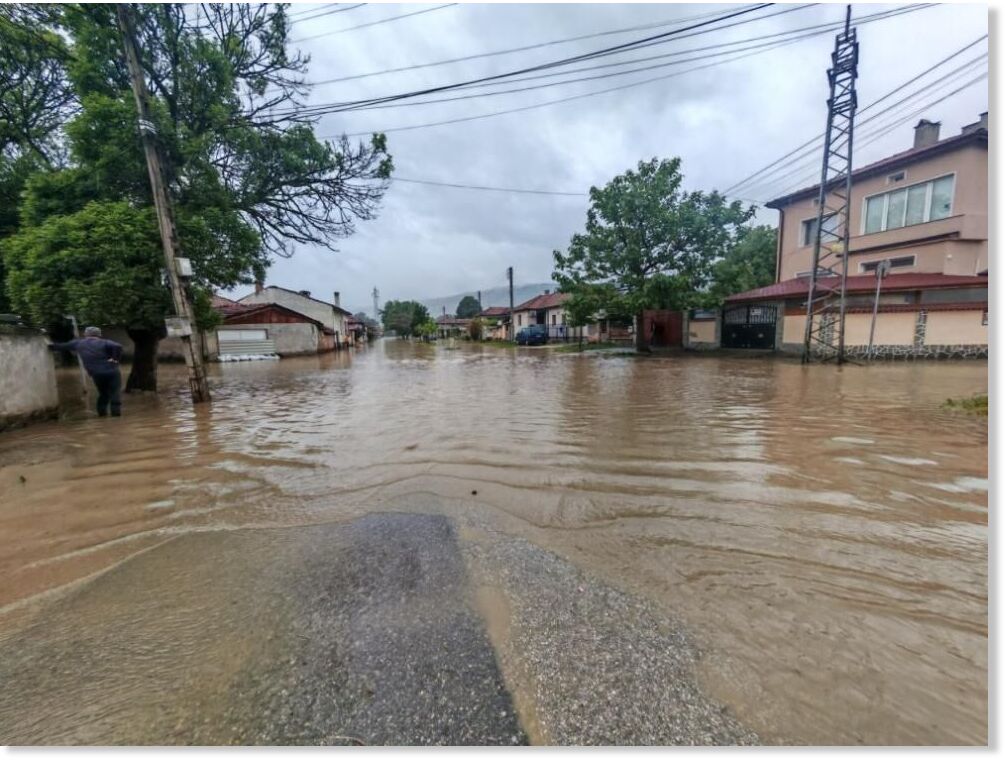
Several days of heavy rain in northern Bulgaria causes severe flooding

nnnnnn
Tragedy in Bulgaria just now! Large-scale water drowned houses, emergency in Sevlievo

Several days of heavy rain in northern Bulgaria have caused rivers to overflow, flooding settlements and forcing evacuations in several regions, including Veliko Tarnovo, Sevlievo, Apriltsi, and parts of Gabrovo.

Authorities warn that the situation remains unstable as water levels continue to rise. Emergency services are operating throughout the region, and officials describe the situation as one of the most severe in recent years.

Meanwhile, in Veliko Tarnovo, the Yantra River has reached a height of approximately 7.56 meters and remains at a dangerously high level.


Cloud Precipitation

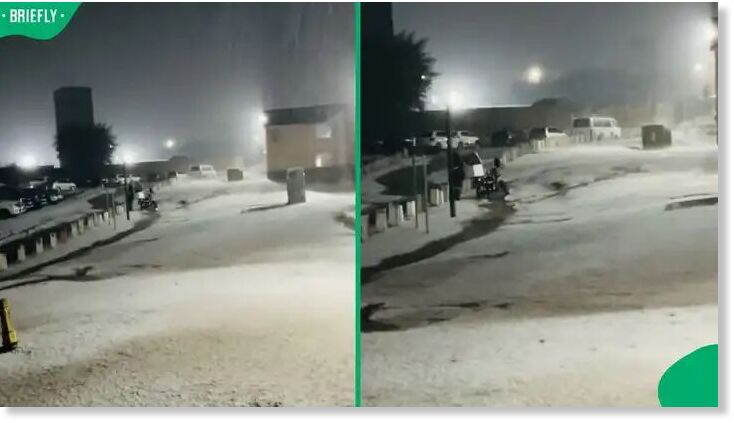
Freak hailstorm casts white blanket over Pietermaritzburg, South Africa

mmmmm
© Samke BandzScreenshots taken from the clip showing the aftermath of the hailstorm.
An agrometeorologist says climate change may be contributing to increasingly unpredictable and severe weather patterns after an unprecedented hailstorm battered Pietermaritzburg on Saturday night, leaving parts of the city blanketed in thick ice and residents and motorists "snowed in".

Pelham Residents were left stunned after the storm dumped thick layers of hail over roads, homes and vehicles for more than 30 minutes, leaving motorists stranded and residents spending hours shovelling hail from driveways and roads well into Sunday morning.

Large parts of the city resembled snow-covered landscapes, with some residents describing the buildup as "calf-deep" in certain areas.


Tornado2

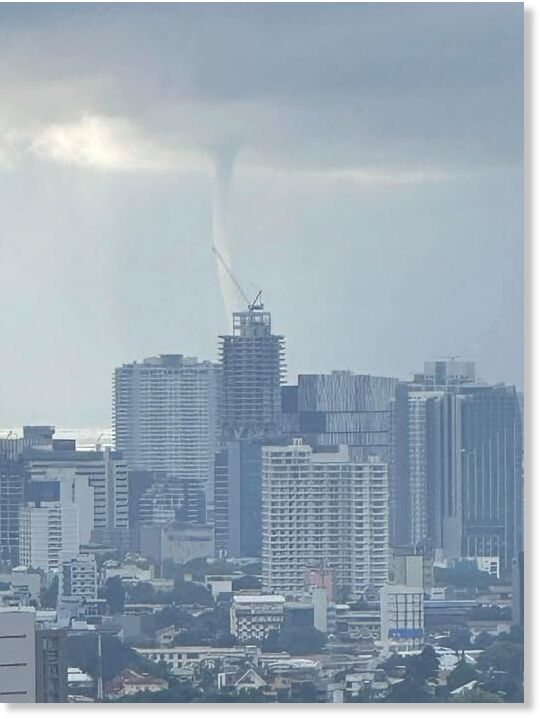
Waterspout spotted off the coast of Cebu, Philippines

Stunning water spout spotted Saturday morning in Mactan #Cebu. 05.23.2026
© Adrian LeeStunning water spout spotted Saturday morning in Mactan, Cebu. 05.23.2026
A waterspout was spotted off the coast of Lapu-Lapu City, Cebu early Saturday morning, as captured in a video shared with The Freeman by netizen Janelle Rose.

The phenomenon was seen from a high-rise building in the Mactan Newtown area, where the tornado-like formation appeared over the sea following a rainy weather this morning.

Waterspouts are tornado-like columns of air and mist that form over water and are commonly associated with unstable weather conditions.


Tsunami

Locals capture 'some of the worst flooding' New York City has ever seen

nnnnnn
New Yorkers captured footage of a wild storm that almost drowned the city late Wednesday night.

Queens alone reported a downfall of 2.57 inches.

One X user claims the floods hit within a "span of 25 minutes."


Winds reached 60-mph as commuters desperately tried to avoid being swept off their feet.

Queens Village native Charlton D'Souza said it was "some of the worst flooding" he had ever seen.


Snowflake

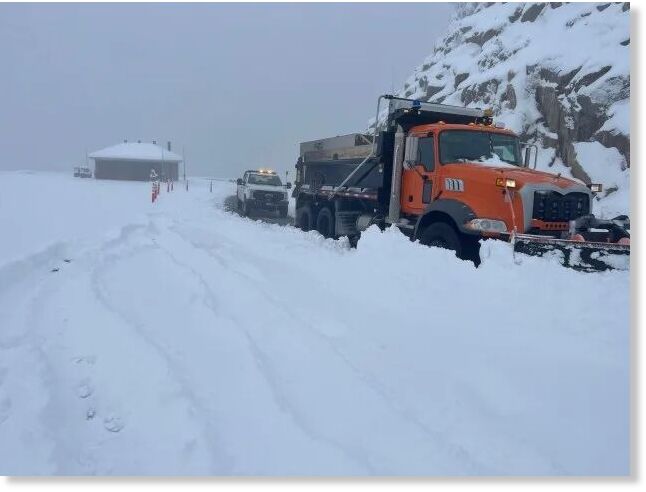
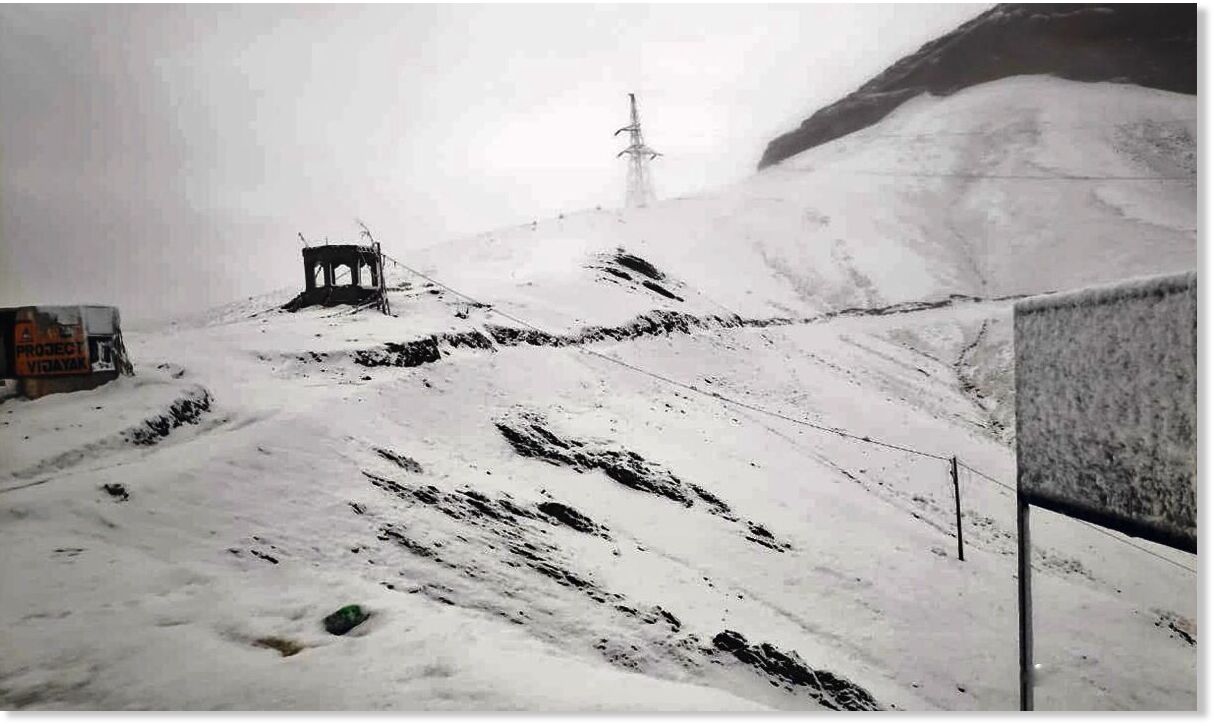
It's nearly Memorial Day, but Rocky Mountain National Park, Colorado just got buried in heavy snow up to a foot deep

A plow truck clearing snow on the road at Rainbow Curve, taken on the morning of May 19, 2026.
© Rocky Mountain National ParkA plow truck clearing snow on the road at Rainbow Curve, taken on the morning of May 19, 2026.
Summerlike weather has made an appearance across much of the United States recently, but winter is not done with the high country in Colorado.

Rocky Mountain National Park was coated in heavy snow to start the week, with more than a foot reported in the higher elevations.

"It's May 18 and winter is back in Rocky Mountain National Park," the park posted on Facebook.

Plow crews were sent out, and roads that are usually busy this time of year were shut down because of the wintry weather, including part of U.S. 34. It is unclear when the road will reopen.


Tsunami

Best of the Web: Severe flooding across central and eastern China after record rainfall of 5.5 FEET in 3 days - at least 25 killed, 20 missing (UPDATED)

mmmmm
Heavy rains swept across central and eastern China over the weekend, hitting provinces including Jiangxi and Hunan, with more downpours expected.

The National Meteorological Center (NMC) forecasts that over the next three days, heavy rainfall will gradually move eastward and southward.

Since Friday evening, torrential rain in Ganzhou city, Jiangxi, has raised river levels and caused localized flooding. Shangyou county was hardest hit, especially Dongshan township, where rising waters disrupted electricity and water supplies, submerged streets and swept away vehicles.

By 4:30 pm Saturday, the county government had relocated 1,147 residents across a number of townships. No casualties or missing persons were reported, according to local media.


Comment: Update May 19

The Independent reports:
At least 12 people were killed as torrential rains continued across southern and central China on Tuesday, with widespread flooding that also closed schools and businesses, and disrupted transport and power supplies, authorities said.

China's weather agency maintained elevated orange alerts on Tuesday for heavy rain and severe stormy weather, warning that the huge precipitation system has entered its strongest, most destructive stage.

The China Meteorological Administration (CMA) said areas of Jiangxi, Anhui, Hunan, Hubei, Guizhou, Guangxi, Guangdong and Hainan faced a high risk of rain-related disasters, including landslides, flash floods and severe urban flooding and waterlogging. Authorities said they ⁠were launching emergency responses in several affected areas.

Many residents in Jingzhou, a city in central Hubei, were knee-deep in water and able to catch fish swimming in the streets, according to images posted on Chinese video platform Douyin.

Some cars were nearly completely submerged on roads surrounded by residential and commercial buildings.

Torrential rainfall hit the upper reaches of the Baishui River, part of Xuan'en county, with precipitation reaching 292.6mm. The rainstorm caused river water levels to surge rapidly, inundating multiple homes along the Baishui River. Some houses collapsed, while roads and communication services were disrupted.


At least eight people were confirmed dead after a pickup truck carrying 15 farm workers fell into a flooded river in China's southwestern region of Guangxi amid heavy rain, state broadcaster CCTV reported. In ‌separate incidents, three people were killed by flash floods ‌in a low-lying village in Hubei, while another person was killed in southern Hunan province, CCTV said.

Torrential rains also battered Shimen county in Hunan province from 7am Sunday, leaving one person dead and two others missing as of Monday evening, according to Xinhua.
Update May 20

Gulf Today reports:
Death toll reaches 25 in China rain, 20 more missing

The death toll from heavy rains across central and southern China since the weekend has risen to 25, state media reports showed Wednesday, with 20 more people still unaccounted for.

Natural disasters and extreme weather events are common in China, particularly in the summer, when some regions experience intense rainfall while others bake in searing heat.

Several areas across China have been hit by "record-breaking rainfall" in recent days, state-run broadcaster CGTN said, triggering school and work suspensions as well as allocation of relief funds.


Lightning

5 horses killed in lightning strike at Texas equine rescue, nonprofit says

mmmmm
Five rescue horses were killed in an apparent lightning strike during a powerful East Texas storm.
An equine rescue in Texas said five horses were killed in a lightning strike during a storm earlier this week.

Hooker Ranch Equine Refuge on Wednesday shared emotional posts on social media, saying staff and volunteers are "heartbroken and devastated" following the deadly strike. One post included two photos of the horses being tended to.

"The reality of death.," the rescue wrote. "Dealing with the aftermath of a lightning strike which killed 5 of our sweetest rescues -- I'm sorry if the pictures are not for you just keep scrolling, but I think it's important that people understand how things are done."

The rescue, which is located in Winnsboro, said each horse was loaded onto a flatbed trailer and "respectfully" covered with tarps before being removed from the property.

The nonprofit organization explained that horses are rarely buried onsite except in emergency situations because decomposing large animals can pose health and safety risks to humans, as well as other animals.


Windsock

Heavy sandstorm hits Iraq as hospitals battle respiratory issues

mmmmm
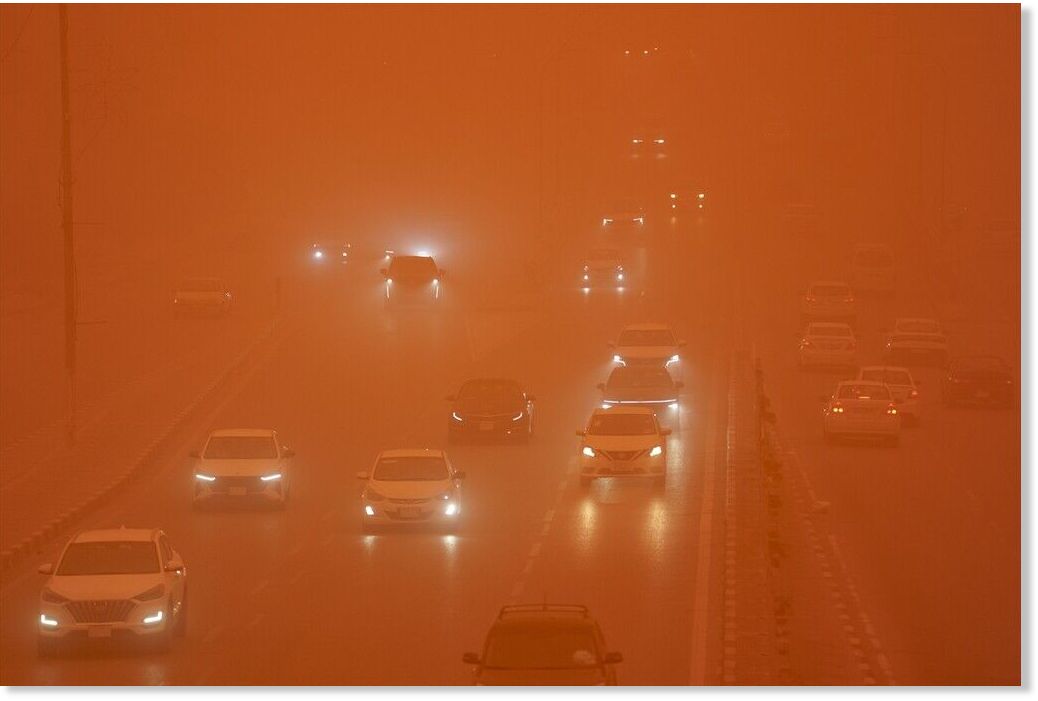
A view of a sandstorm sweeping through the city of Najaf, Iraq, affecting daily life and reducing visibility in traffic on May 18, 2026.
A powerful dust storm has swept across Iraq, including Najaf and Baghdad, sending people to hospital with breathing difficulties.


Arrow Down

WHO in 'panic mode' as World Health Assembly kicks off

WHO Meeting
© Off-Guardian Org
Today is first day of the World Health Organization's 79th annual World Health Assembly, where delegates come together to set policies and priorities for global health.

Essentially, it's a week-long exercise in saying, as loud and long possible, "We're really important."

And thank goodness it came along when it did, because...wow.

The hantavirus outbreak is tearing through the world at the unstoppably terrifying rate of five whole deaths every two months.

That's about 30 deaths in a year or about 0.25% of the number of people who'll died from falling down stairs.

In Africa, the Ebola virus went from zero to "emergency" in no time at all, and the African CDC had no choice but to go into panic mode.
A new strain of Ebola virus has been declared an international public health emergency by the World Health Organisation.

More than 300 suspected cases have been identified - with at least 80 deaths reported. The outbreak is mostly confined to the Democratic Republic of the... pic.twitter.com/LIP0LG6MtD

— Sky News (@SkyNews) May 18, 2026
These twin outbreaks, combined with a "growing anti-vaccine movement", and funding cuts to research show the world is "not ready for the next pandemic", according to Al Jazeera.

And - of course - climate change might mean more hantavirus outbreaks could happen!

And "Experts" are now saying the world is becoming more vulnerable to these infectious disease outbreaks.

Be afraid - be very afraid!

Arrow Down

WHO tells itself to declare global climate health emergency 'to save millions'

WHO Climate
© joannenova.com.au
The WHO is itching to trigger the climate and health "emergency" powers Act or whatever legalistic bomb our patsy governments signed on our behalf.

Apparently millions of people will die if we don't have a UN rubber stamp called "Emergency" — because, obviously the big rich countries would never think to send boatloads of fuel, food and clothes all by themselves. (And if they did, Lordy! Without being a conduit for millions of our dollars, how could the UN run it's own grift and graft machine?)
Exclusive: Commission says alert would trigger coordinated international response that could help avoid millions dying

Anna Bawden Health and social affairs correspondent, The Guardian

The climate crisis should be declared a global public health emergency by the World Health Organization, or millions more people will die unnecessarily, leading international experts have said.
Presumably the "Emergency" declaration gives them the tools to declare mandatory vaccines, or ban drugs they don't like, or to funnel lots of cash.

So the WHO set up a committee to tell the WHO to declare an emergency, eh?
The independent pan-European commission on climate and health, which was convened by the WHO, concluded the climate crisis was such a worldwide threat to health that the WHO should declare it "a public health emergency of international concern" (Pheic).
And the thing that makes 2026 so awful is a tsunami, asteroid, volcano,... It's a bunch of things which are the same every year:
The international spread of vector-borne disease, such as dengue and chikungunya, as well as the health impacts of extreme weather events, global heating, food insecurity and air pollution make a Pheic necessary, said the commission's report, which will be presented to European ministers on Sunday before the WHO's world health assembly starts on Monday.
Don't miss the lingo — a Pheic is a "public health emergency of international concern". They are the highest level of health alert. So when Ebola goes global or an asteroid lands in Nevada, that's it, they get the same rating as chikungunya.