
The Met Office revealed that the sun shined 40 per cent less than usual between December and the end of February.
London was particularly gloomy, with only 98.2 hours hours of sunlight at Heathrow over the period, making it the darkest winter since monitoring began in 1957.
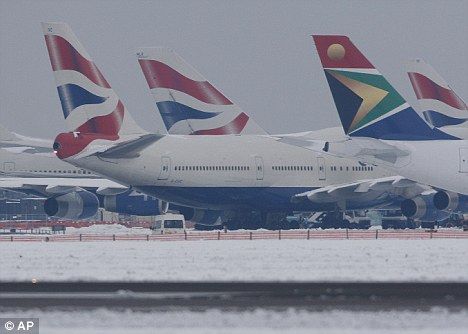
© APBleak: London was particularly gloomy, with only 98.2 hours hours of sunlight at Heathrow over three months, making it the darkest winter since monitoring began in 1957
Even Scotland basked in 20 per cent more shine than usual.
But a beaming sun didn't necessarily mean warm weather. In fact, it was partnered by high pressure systems and freezing temperatures.
But although it may have felt like the coming of a new ice age, it was only the 15th chilliest winter of the last century.
And what began as the most brutal early winter since 1890, with mercury in parts of the highlands plummeting to -21C (-6F), it got uncharicteristically warmer as the period drew on.
It culminated in a particularly pleasant February, the ninth warmest since 1910 and in the top 20 warmest Februaries since 1659.
Dryness levels raised eyebrows in weather stations across Britain where, despite the heavy snow, precipitation over the UK was 22 per cent below normal.
The Met Office's Barry Gromett told The Times: This was typical of cooler winters, when the weather becomes blocked by high pressure which brings cold winds but little precipitation.
'And snow doesn't actually contain as much water as you might think; a 10cm snowfall is only equivalent to 1cm rain.'


Uh-oh, this is not a good sign for the UK and French coast's! This could mean there is non-viscous geoplasma/earthquake potential in the area sometime soon, if the whales are being sent off course. I'm keeping my eyes open for any other anomalous beachings, die-off's or earthquake ligts in the sky. This area off the coast of Kent is where my gut has been warning me about a potential large quake happening for a few months now.
[Link]