
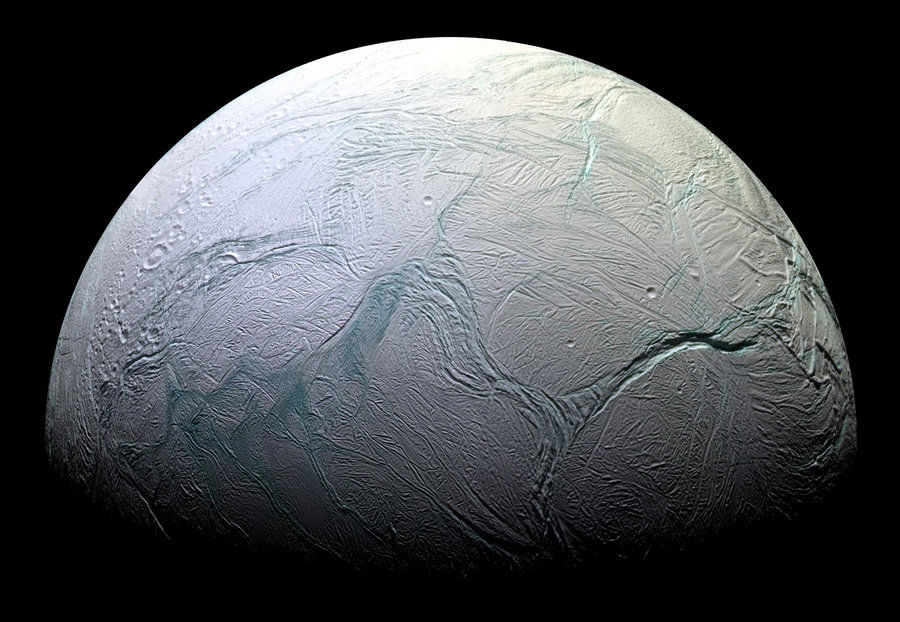
© www.npr.orgNew research suggest warm oceans beneath Enceladus' icy crust.
NASA's Cassini spacecraft transmitted photographs of Saturn's icy, volcano-covered moon, Enceladus.
The photographs show that the moon is still geologically active, meaning that NASA will consider the moon for further exploration as a habitable environment beyond Earth. The Cassini spacecraft will also send probes of the moon's gas and ice plume to analyze it for signs that the moon harbors signs of alien life.
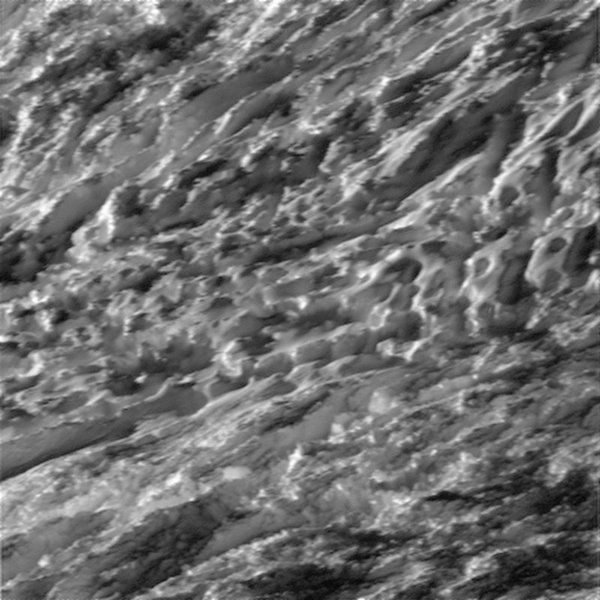
© © NASA. JPL-CALTECH/SSIDuring its closest ever dive past the active south polar region of Saturn's moon Enceladus.
Enceladus is relatively small compared to Earth: it has a diameter of 500 kilometers (313 miles) compared to Earth's roughly 12,740 kilometers; Earth's own Moon is 3,474 km wide. It also has a surface gravity that is around 100 times less than Earth's. The moon's water-based nature and geological activity could mean that it is suitable for habitation by alien lifeforms.
The Cassini-Huygens mission is a cooperative project between NASA, ESA (European Space Agency) and the Italian Space Agency which was launched in 1997.



Comment: See also:
Enceladus' electrical connection to Saturn
Freeze-thaw cycle may explain Saturn moon's odd activity