Science & TechnologyS


Nebula

Two supermassive black holes may collide 100 years from now ‪ — ‬ and Earth would feel it

black hole collision artist representation
© Mark Garlick/Science Photo Library via Getty ImagesAn illustration showing two black holes beginning to collide.
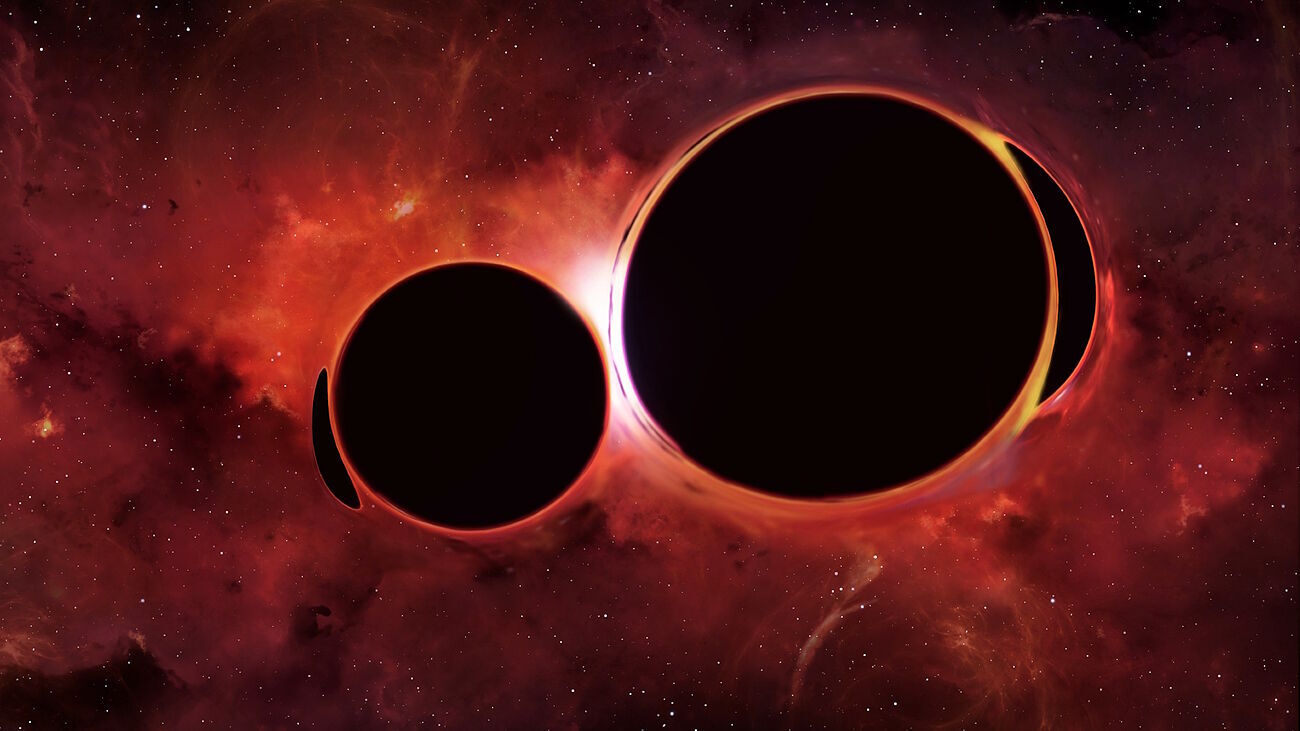
In a galaxy 500 million light-years away, two supermassive black holes could merge, spreading gravitational waves across the universe.

Astronomers may have discovered an extreme pair of light-spewing black holes that are spiraling toward an enormous collision — the effects of which could be felt in the next century.

Using decades of radio telescope observations, the astronomers studied an ultrabright object that was previously thought to be a blazar — a glowing core of a galaxy usually powered by a black hole — some 500 million light-years from our solar system. The observations revealed a hidden jet of energy that suggests the intensely bright object is actually two black holes on the verge of colliding, perhaps less than 100 years from now.

Comment: From Science Focus:
The two black holes orbit each other roughly every 121 days, separated by only 250-540 times the Earth-Sun distance - vanishingly small for objects of such colossal mass.

In June 2022, the geometry aligned so perfectly that light from the second jet was bent by the foreground black hole's gravity into a so-called 'Einstein Ring', adding further weight to the likelihood that the system is indeed two supermassive black holes.

"The binary model provides a self consistent solution," Britzen said. "Since these jets are directed towards us, an Einstein ring supports the scenario."

When the pair finally merge, the collision will send gravitational waves rippling across the Universe, far more powerful than those produced by the stellar-mass black hole mergers so far detected by observatories like LIGO.


Galaxy

Scientist suggests 'dark matter' could be product of black holes from a different universe

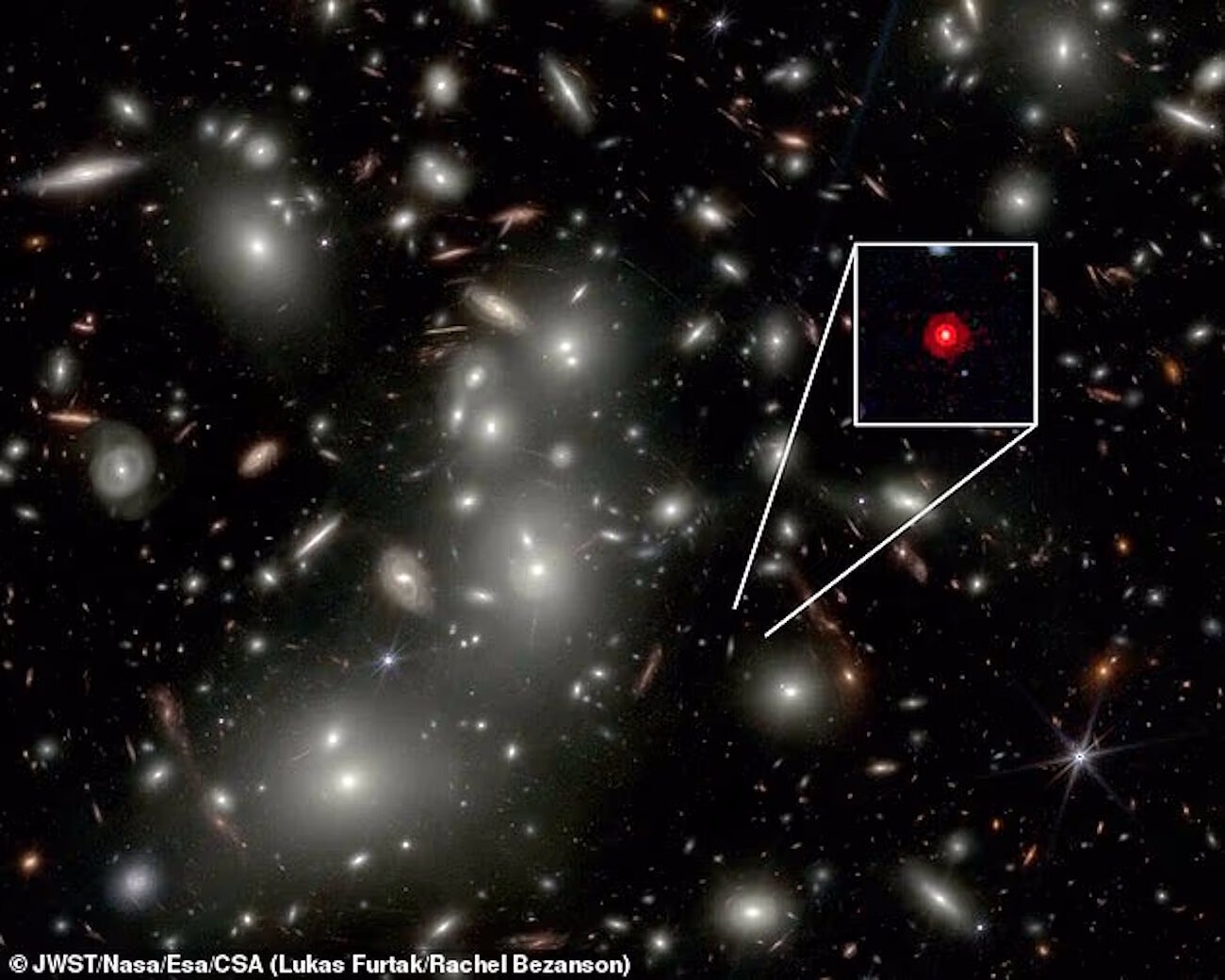
red dot black hole JWST
The existence of these 'relic' black holes could explain the mysterious 'little red dot' black hole discovered by the James Webb Space Telescope, just a few hundred million years after the Big Bang
Claims relic black holes from a pre-Big Bang 'bounce' solve the universe's biggest mystery

While the scientific establishment has spent decades chasing invisible particles that never quite show up, a leading cosmologist has dropped a theory that turns everything on its head: dark matter isn't some exotic new particle. It could be ancient black holes that survived from an entirely different universe.

This idea, laid out by Professor Enrique Gaztanaga of the University of Portsmouth, doesn't just tackle one cosmic puzzle. It offers a clean fix for the Big Bang's thorniest problems and lines up with fresh observations that have astronomers scrambling.

Gaztanaga argues the elusive substance that makes up roughly 27 per cent of the universe's mass may actually be "relic" black holes formed in a previous collapsing phase of the cosmos.

Brain

Neurobiologists map and activate brain circuits linked to placebo pain relief

brain pain circuits fluorescent mapping
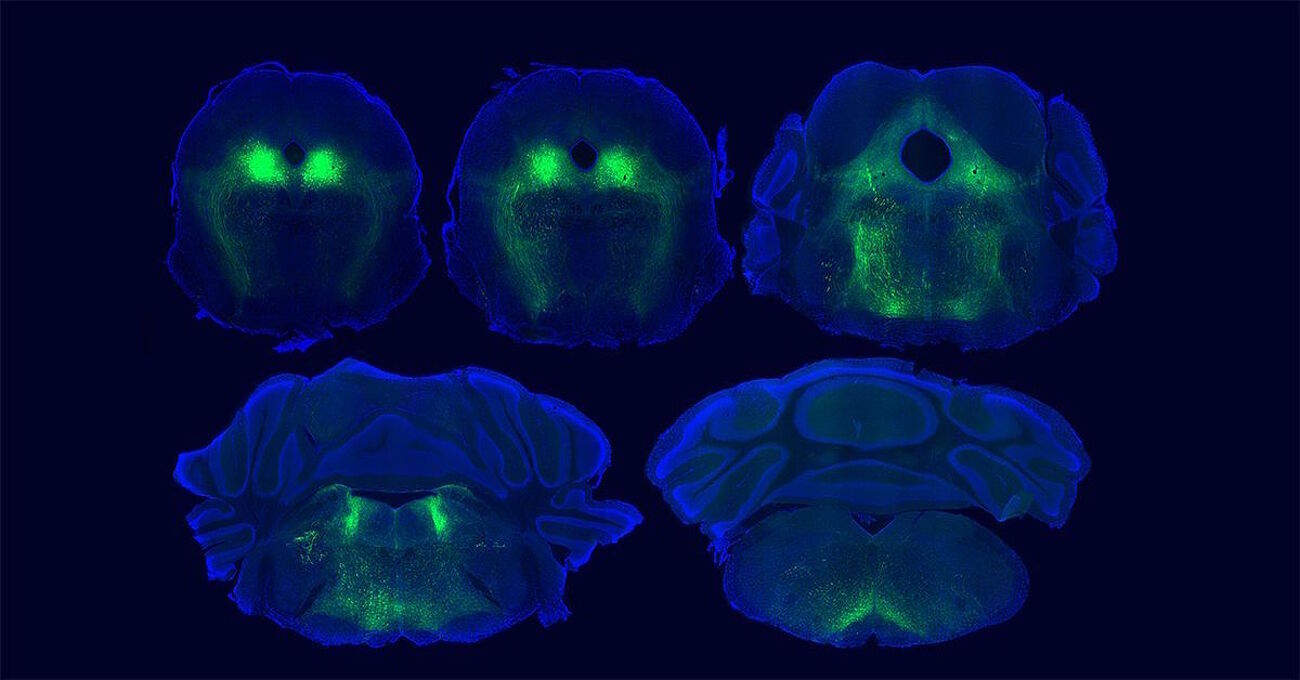
© Janie Chang-WeinbergFluorescent images of a key brain circuit involved in placebo pain relief in mice. Pain-regulating neurons located in the ventrolateral periaqueductal gray (vlPAG) are labeled in green, with their cell bodies visible as green spots and their wire-like axons extending to the brainstem to suppress pain.
Researchers demonstrate that placebo pain relief generalizes across different types of pain, offering hope for opioid-free pain management strategies

Placebo effects, in which patients experience relief without therapeutic treatment, increasingly have been considered as potentially powerful clinical treatments for ailments such as depression and pain. Yet the neurological mechanisms underlying such processes are not fully understood. Now, a multi-institutional team led by the University of California San Diego's Matthew Banghart, an associate professor in the School of Biological Sciences, has pinpointed the brain circuitry responsible for placebo pain relief. Their findings, reported in the journal Neuron, describe brain regions that support placebo effects and identify sites where endogenous opioid neuropeptides (commonly referred to as endorphins) provide signals that are critical for placebo pain relief.

The study is the first to establish placebo mechanisms using a "reverse translation" method, in which a placebo protocol that works in humans was directly adapted to mice. Importantly, working with labs at the University of Pennsylvania and UC Irvine, they detected activity in mouse brain areas that correspond to those previously implicated in human studies. By precisely mapping neural pathways and manipulating brain activity in mice, the researchers uncovered essential roles for neural circuits linking the cortex to the brainstem and spinal cord during placebo pain relief.

Fireball 5

The deepening mystery of the March fireballs

If you love a good mystery, look no further than the night sky in March 2026. There were no major meteor showers scheduled for March, yet suddenly fireballs started appearing everywhere.

"During the month of March, reports of very bright fireballs to the American Meteor Society (AMS) suddenly doubled," says Mike Hankey, who manages the AMS's fireball reporting system. "Many of them were visible in broad daylight and created loud sonic booms."
March 2026 Fireballs
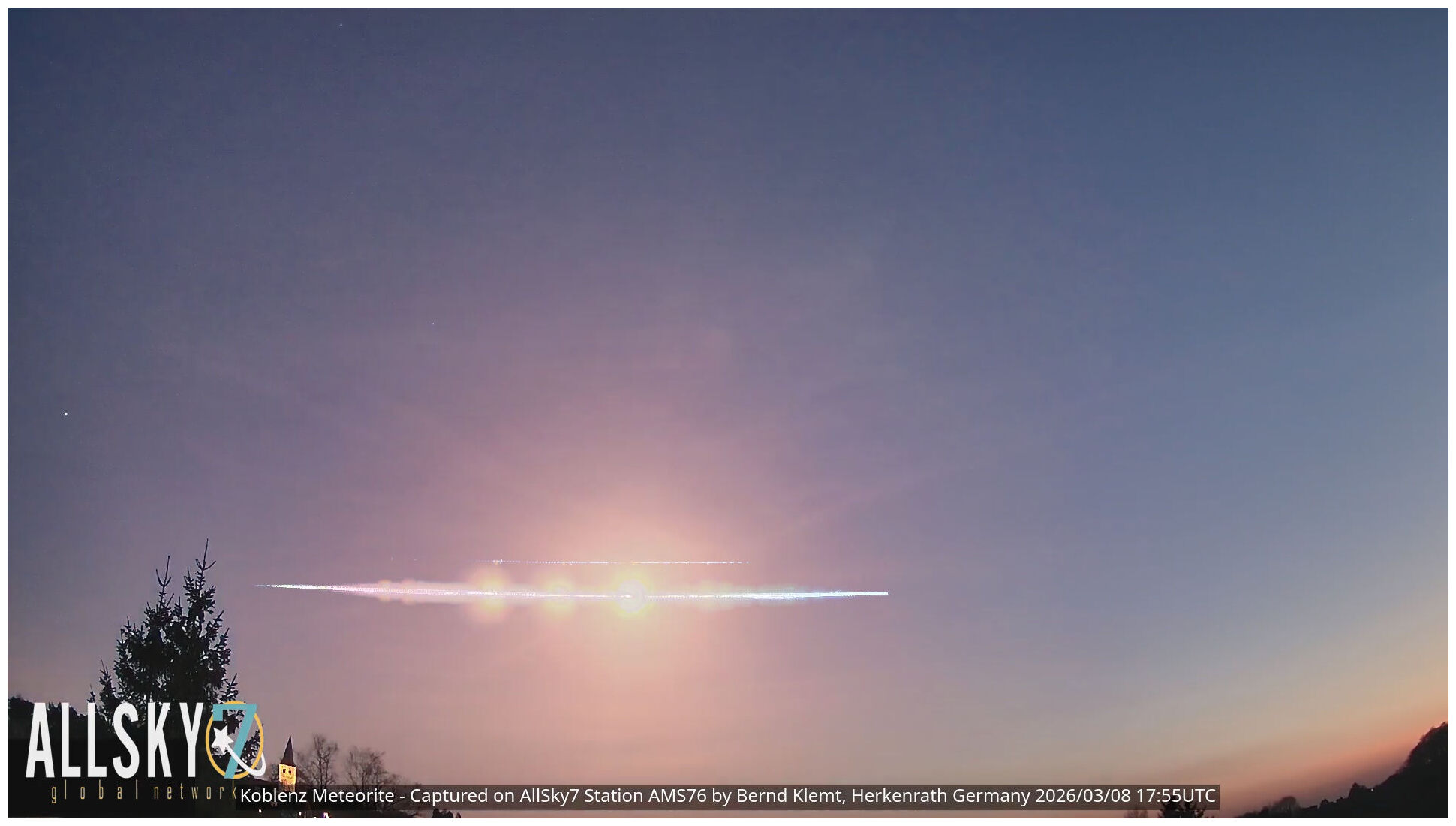
© SpaceWeather.comAbove: The fireball over Koblenz, Germany, that started the "March Madness." [movie].
A daytime fireball over Western Europe on March 8th drew more than 3,200 witness reports. Nine days later, a 7-ton asteroid exploded over Ohio with the force of 250 tons of TNT. On March 21st, a fireball broke apart above Houston, sending a fragment through the roof of a house. And those were just the headliners.

Hankey has been running the fireball reporting system for nearly 15 years (indeed, he wrote much of the software himself), so he knew something unusual was happening. When the reports kept piling up, he dove into the data -- and what he found is genuinely puzzling.

"The total number of fireballs people saw was not dramatically unusual," Hankey explains. "But the fraction of big fireballs really surged."

Fireball 5

Rubin observatory announces 11,000 new asteroids

The Vera C. Rubin Observatory will discover up to half a million solar system objects every year. It's already starting to deliver on that promise.
New Asteroids
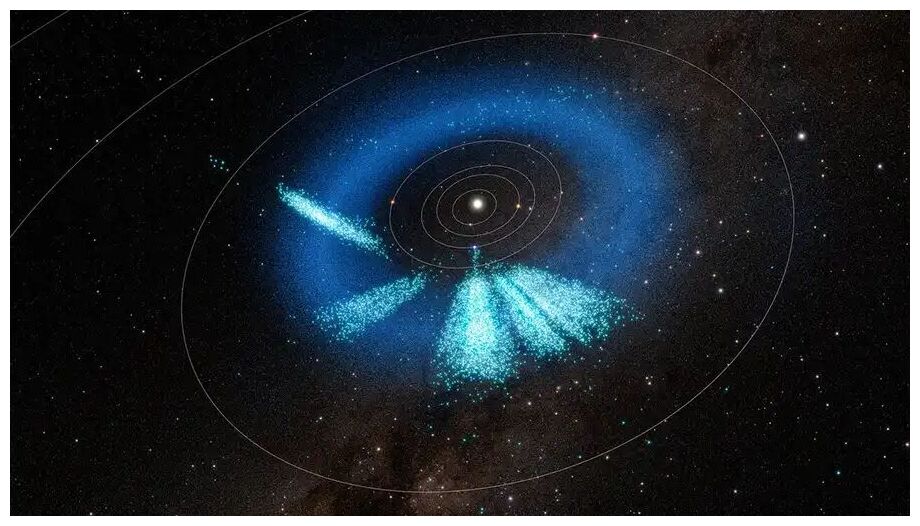
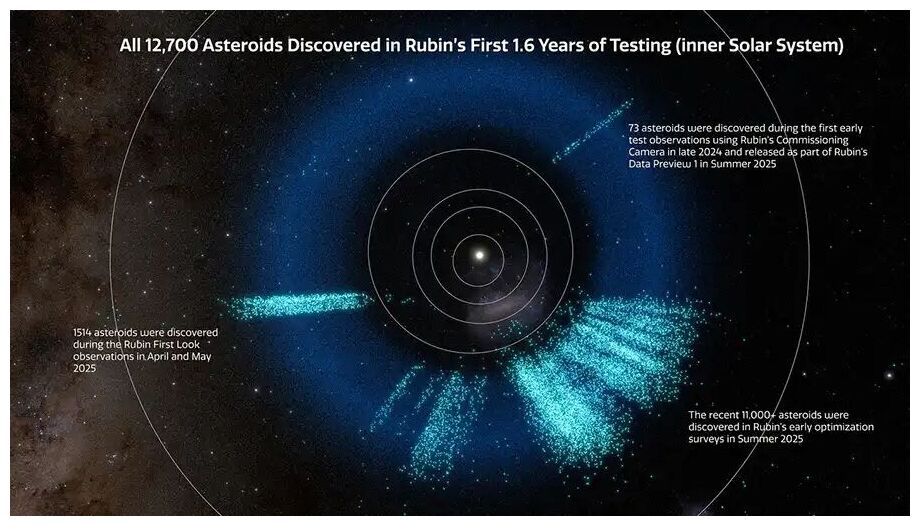
© NSF–DOE Vera C. Rubin Observatory / NOIRLab / SLAC / AURA / R. Proctor; Star map: NASA GSFC SVS; Gaia DR2: ESA / Gaia / DPAC Image processing: M. Zamani (NSF NOIRLab)The model shows a total of almost 12,700 asteroids that were discovered with Rubin over the span of 1.6 years (light teal). Known asteroids are dark blue. These are the August 2025 locations of the discovered objects.
The Vera C. Rubin Observatory promised to discover up to half a million new solar system objects each year of operation. It isn't fully operational yet, and it's already delivering on that promise.

Last week, the International Astronomical Union's Minor Planet Center confirmed the discovery of more than 11,000 new asteroids captured by Rubin during a 1½-month observation period. That period wasn't even part of its planned Legacy Survey of Space and Time (LSST), just a test run to check systems and optimize observations. Still, it was enough for Rubin's powerful 8.4-meter Simonyi Survey Telescope to make thousands of discoveries. While most of them are in the main asteroid belt, the list includes 380 trans-Neptunian objects (TNOs) that orbit beyond Neptune, and 33 previously unknown near-Earth objects.

This latest submission to the Minor Planet Center (MPC) included approximately 1 million individual observations that tracked about 90,000 objects, of which 80,000 were already known. This tally includes several "lost" objects that were discovered at some point but with orbits too uncertain to keep track of them. By reverting these orbits back in time, researchers at the MPC could backtrack their location at the time of discovery, confirming that they were the same objects. All of these numbers are additional to the 1,500 or so other asteroids identified during Rubin's "First Look" observation campaign, from when the observatory went online last year.
locations of objects
© NSF–DOE Vera C. Rubin Observatory / NOIRLab / SLAC / AURA / R. Proctor; Star map: NASA GSFC SVS; Gaia DR2: ESA / Gaia / DPAC Image processing: M. Zamani (NSF NOIRLab)This diagram shows the locations of objects at the time of each object’s discovery, labeled by date.
"The significance of this is that Rubin is just starting," says Mario Jurić (University of Washington), leader of Rubin's solar system team. Currently, there are about 1.5 million asteroids known in our solar system. At that discovery rate, the observatory is expected to bump that number by fivefold in less than a decade, well into the 6 million range. "So, this is a 'it's here, it's working, it's coming' type of demonstration," Jurić adds.

Network

Tests suggests Google's AI Overviews tell millions of lies per hour

google artificial intelligence logo ai
© GoogleGoogle's Gemini
Is 90 percent accuracy good enough for a search robot?

Google doesn't much like this test. Google spokesperson Ned Adriance tells the Times that Google believes SimpleQA contains incorrect information. Its model evaluations often rely on a similar test called SimpleQA Verified, which uses a smaller set of questions that have been more thoroughly vetted. "This study has serious holes," Adriance told the Times. "It doesn't reflect what people are actually searching on Google."

Benchmark problems

Evaluating new AI models sometimes feels more like art than science, which is part of the problem. Every company has its own preferred way of demonstrating what a model can do, and the non-deterministic nature of gen AI can make it hard to verify anything. These robots can get a factual question right and then completely miss it if you rerun the query immediately. Oumi even uses AI tools to run its assessments, and those models can hallucinate, too.

Comment: As the author recommends, one could exert their brain, search for pages on the needed, then read and synthesize. Voila! Actual learning. AI is really just a soup-ed up search engine, as even Google acknowledges.


Info

Super magma reservoirs discovered beneath Tuscany

A Swiss-Italian team has discovered 6,000 km³ of magma beneath Tuscany.
magma reservoirs
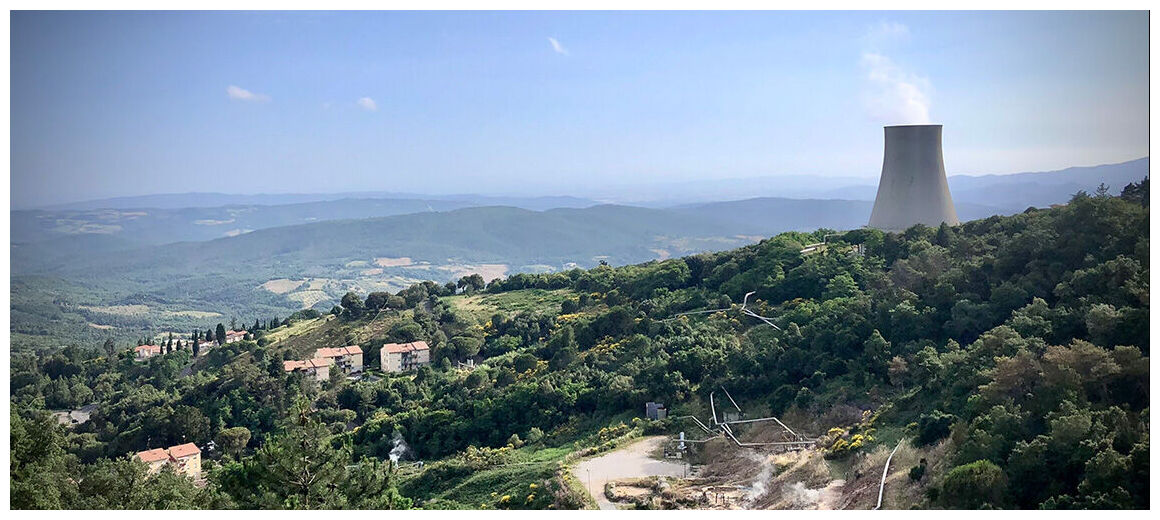
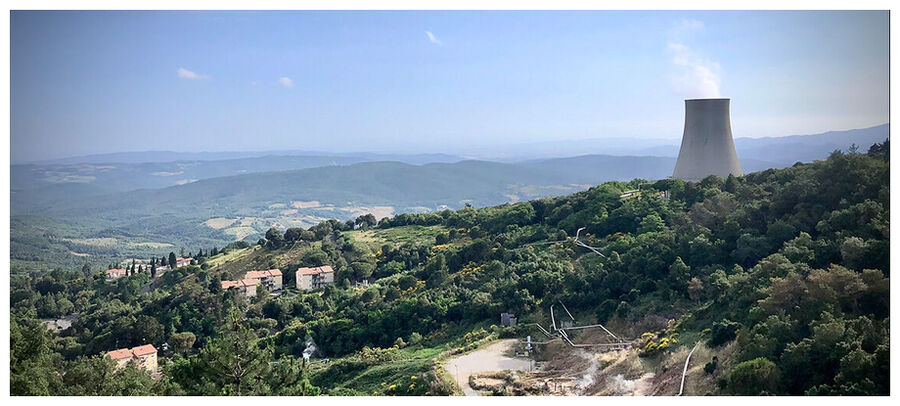
© Matteo LupiRenowned for its geothermal activity (here, the Larderello power plant, the oldest in the world), Tuscany also hides vast magma reservoirs beneath its landscapes, similar to those found at Yellowstone in the United States.
How can magma buried 5, 10, or even 15 km underground be detected without any surface indicators? The answer lies in ambient noise tomography, a technique that analyses natural ground vibrations with high precision. A team from the University of Geneva (UNIGE), the Institute of Geosciences and Earth Resources (CNR-IGG), and the National Institute of Geophysics and Volcanology (INGV) has identified a vast reservoir containing approximately 6,000 km3 of magma beneath Tuscany. Beyond its scientific significance, this breakthrough paves the way for faster and more cost-effective exploration methods to locate resources such as geothermal reservoirs, lithium, and rare earth elements, whose formation is closely linked to deep magmatic systems. The study was published in the journal Communications Earth & Environment.

Yellowstone National Park in the United States, Lake Toba in Indonesia, or Lake Taupo in New Zealand: these iconic volcanic sites harbor immense magma reservoirs measuring several thousand km3 beneath their surfaces. Their presence has been revealed through surface evidence such as eruptive deposits, craters, ground deformation, and gas emissions. However, in the absence of such signals, large volumes of magma can remain hidden and unsuspected deep within the Earth's crust.
These results are important both for fundamental research and for practical applications, such as locating geothermal reservoirs or deposits rich in lithium and rare earth elements.
This was precisely the case in Tuscany, where reservoirs containing approximately 6,000 km3 of volcanic fluids at depths of 8-15 km within the continental crust were discovered by a team from the UNIGE, with contributions from researchers at the Institute of Geosciences and Earth Resources (IGG-CNR) and the National Institute of Geophysics and Volcanology (INGV).

Although this magma body could, in theory, contribute to the formation of a supervolcano over geological timescales, it currently poses no threat. "We knew that this region, which extends from north to south across Tuscany, is geothermally active, but we did not realize it contained such a large volume of magma, comparable to that of supervolcanic systems such as Yellowstone," explains Matteo Lupi, associate professor in the Department of Earth Sciences at UNIGE's Faculty of Science, who led the study.

Igloo

Cold Kills — New huge US study links colder months to 40 times as many deaths as warmer ones

We are killing people by making energy expensive

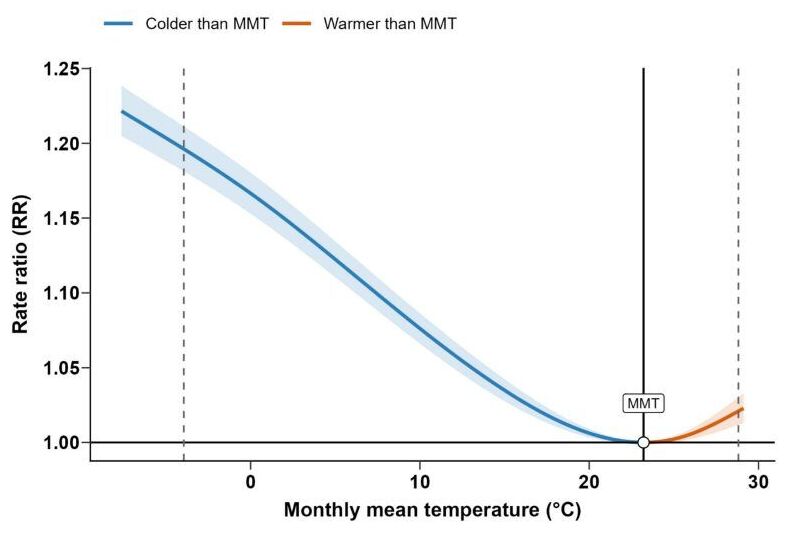
Researchers followed 80% of the US population for two decades, and found that cold temperatures contributed to a whopping 800,000 deaths while hot temperatures were linked to only 2,000.

They were looking at monthly temperature data in 819 locations across the US. Then they checked the cardiovascular death rates and found the burden of excess deaths is "quite substantial".

During cold periods our blood vessels contract to reduce heat loss, which is why our skin looks slightly bluer or whiter in colder weather. But even a small reduction in volume makes our blood pressure rise. So it is not surprising that colder months are linked to significantly higher death rates from heart attacks, strokes, and coronary artery disease compared to milder periods. As the population ages and kidney disease and diabetes get worse, the

Nearly every dollar we pour into preventing heat deaths will end up killing more people than it saves. It's time Climate Ministry's put more accurate costings on any policy aiming to reduce global temperature. We want numbers, and during cold months the people need oil to keep them warmer.

Look at the shape of the curve. Wow!.
Cold Temperature
The ideal temperature for homo sapiens, at least to avoid a cardiovascular death, is apparently 23°C (or 74°F) .

Bulb

US lab unlocks secrets of superconductors that ensure no energy is lost during electricity flow

superconductor breakthough
© Representational image/Wildpixel/CharlesSmall differences in how atoms are arranged in a crystalline lattice can strongly affect superconductivity.
Superconductors allow electricity to flow without resistance, meaning no energy is lost as heat.

Researchers in the United States have unlocked secrets of high-temperature superconductors.

Researchers at the U.S. Department of Energy's (DOE) Argonne National Laboratory have discovered how tiny changes in superhydride structure enable superconductivity at near room temperatures but extreme pressure — offering clues for designing more practical superconductors.

"These experiments show what the upgraded APS can do. We can now study atomic-level structures with unprecedented detail in materials under extreme pressure," said Maddury Somayazulu, Argonne physicist.

Comment: Further reading:


Moon

Artemis II performs closest moon flyby amid communication loss

Moon flyby
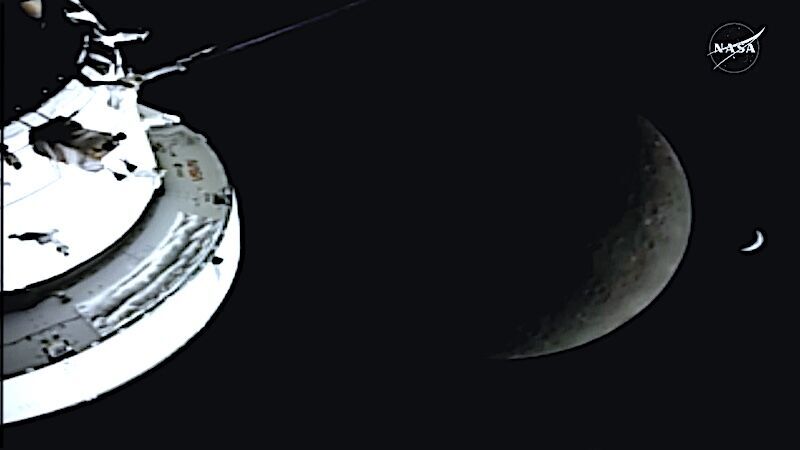
© NASA/AP1 The Orion Spacecraft, the Earth and the Moon are seen from a camera as the Artemis II crew and spacecraft travel farther into Space • Monday, April 6, 2026
The four astronauts of NASA's Artemis II mission have ventured farther from Earth than any humans before them.

The Orion spacecraft, carrying three NASA astronauts and a Canadian Space Agency astronaut, performed its long-awaited lunar flyby, coming within roughly 4,070 miles (6,550 km) of the lunar surface and entering the Moon's gravitational sphere of influence.

In a planned and highly anticipated phase of the journey, Mission Control in Houston lost contact with the crew at around 6:43pm ET for approximately 40 minutes. The communication blackout occurred as the Moon's body blocked radio and laser signals between the Earth-based Deep Space Network and the Orion spacecraft.

While out of contact, NASA astronauts Reid Wiseman, Victor Glover, and Christina Koch, along with Canadian Space Agency (CSA) astronaut Jeremy Hansen, focused on their scientific objectives, photographing and observing the lunar far side - including the 600-mile-wide Orientale basin.