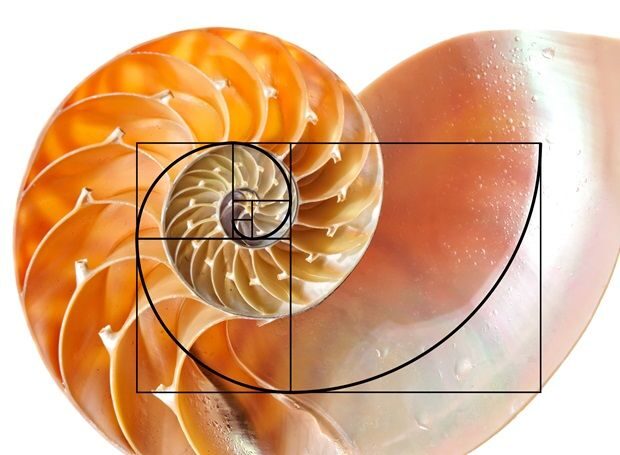
Seashells display a Golden Spiral
Perhaps the most fundamental distinction between naturalism and intelligent design is where each metaphysical framework draws the line at irreducibility. Leading intelligent design theorists Michael Behe, William Dembski, and Stephen Meyer, for example, have asserted that the specified complexity of living systems cannot be reduced to natural law. Scientific atheists, aka naturalists, deny this, insisting that what is truly irreducible is natural law itself. That is,
scientific atheism is based on the belief that all of reality ultimately reduces to matter and energy, and the natural law that governs the interactions between them.Naturalism, aka materialism, aka scientism, rests irrevocably on that discrete metaphysical position. Without it, the edifice of scientism or naturalism must collapse. In writing at Evolution News on the
science of purpose, my goal has been to deconstruct that foundational assertion. The next step in that undertaking is to demonstrate the reducibility of natural law itself.















Comment: See also: