Find us on:

Science & Technology


Question

Human Cloning? Stem cell advance reignites ethics debate

Human Cloning
© Cell, Tachibana et al.
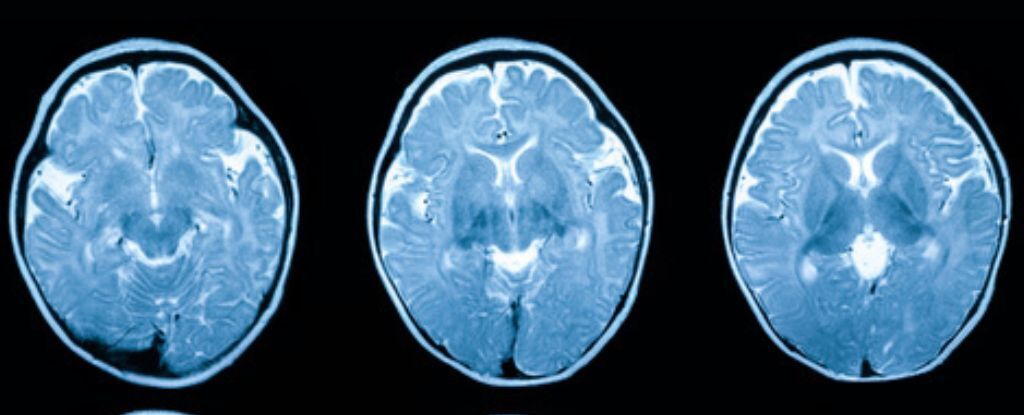
Researchers remove the genetic material from an unfertilized human egg cell in the first step toward creating a cloned human embryo
A new stem cell discovery has reawakened controversy about human cloning - though technical challenges mean scientists are far from being able to create human babies as in Michael Bay's 2005 sci-fi flick "The Island."

Not that they would even want to.

"Nobody in their right mind would want to do that," said John Gearhart, the director of the Institute for Regenerative Medicine at the University of Pennsylvania, who was not involved in the study. And indeed, the research wasn't conducted with the idea of creating cloned mini-me's in mind. Instead, scientists attempting to treat diseases of the cell's powerhouse, the mitochondria, refined the technique, which is the same one used to create the cloned sheep Dolly in 1996.

But the parallels between the animal-cloning procedure and the new human one have triggered concern. The U.S. Conference of Catholic Bishops (USCCB) swiftly issued a statement condemning the research, both on the grounds that embryos were destroyed in the research process and over the concern that the full reproductive cloning of humans is on its way.

"They or others may be close to being able to develop cloned human embryos to the fetal stage and then beyond," said Richard Doerflinger, the associate director of USCCB's Secretariat of Pro-Life Activities.
Fireball

Close approach of Asteroid (285263) 1998 QE2

Asteroid (285263) 1998 QE2 was discovered on Aug. 19, 1998, by the Massachusetts Institute of Technology Lincoln Near Earth Asteroid Research (LINEAR) program.

1998 QE2 has an estimated size of 1.3 km - 2.9 km (based on the object's absolute magnitude H=16.6). It was observed by the Spitzer Space Telescope by Trilling et al. (2010), who estimated that it has a diameter of 2.7 km and a dark optical albedo of 0.06. This asteroid will have a close approach with Earth at about 15.2 LD (Lunar Distances = ~384,000 kilometers) or 0.0392 AU (1 AU = ~150 million kilometers) at 2059 UT on 2013 May 31 and it will reach the peak magnitude ~10.8 on May 31 around 2300 UT.

(285263) 1998 QE2 will be a great Goldstone radar target May 30 through June 9. This is going to be one of the best radar targets of the year. Radar images from the Goldstone antenna could achieve resolutions as fine as 3.75 meters.

We performed some follow-up measurements of this object, from the Q62 iTelescope network (Siding Spring) on 2013, May 17.36, through a 0.50-m f/6.8 astrograph + CCD + f/4.5 focal reducer.
Question

Why are there so few lefties in China?

Wang Nan
© Crobis
Wang Nan competes at the Beijing Olympic Games. Table tennis is one of the few areas where being left-handed in China is an advantage.
In 2/3 of the world it's still unlucky to be born a leftie, says a researcher who has taken a new look at attitudes about left-handed people worldwide.

In China, in particular, less than 1 percent of students are reportedly left-handed, despite a global average of 10 to 12 percent of humans preferring their left hand, reports Howard Kushner, a researcher and Professor of Science and Society at Emory University in Atlanta. It's not that there are fewer people born left-handed in China or necessarily that there are negative attitudes about lefties there. It's just that being left-handed is especially impractical.

"If you have to cater a huge society, you can't cater to the other side," Kushner said. And with 88 to 90 percent of the population right-handed, and some written characters requiring a right hand, that's what wins out, at least when it comes to writing. Kushner summarized the situation for Chinese southpaws in an article in the June edition of the journal Endeavour.

So is left-handedness going extinct in China? Probably not, says Kushner, because there doesn't seem to be a simple genetic basis for handedness.

What's more, studies on Chinese-Americans in California show a similar rate of left-handers as the rest of the U.S. population -- so there is nothing about being Chinese or Asian that makes a person less prone to being left-handed. But being born in China does mean you will likely be forced to function as a right-hander, Kushner concludes.
Laptop

When will the human mind upload to a computer?

Digital Brain
© DiscoveryNews
In the new techno-thriller Upload, a young computer scientist with a sketchy past and distrust of society decides to take the ultimate leap forward by scanning his brain and uploading his memories, personality and consciousness into a simulated world of his own making.

Raymond wants to live forever, controlling his environment and interactions with other humans as a god-like being.

The novel by author Mark McClelland is set in the Michigan of 2070 about the time that futurists like Ray Kurzweil predict that "singularity" will be reached, the moment when machine learning will surpass human intelligence. It's not the first science-fiction tale to explore human-computer hybrids (see What are Little Girls Made Of in the first season of the original Star Trek series) or even the perils of virtual reality becoming too real (see the "Matrix" triology). But it does posit some questions that real-world researchers are just now tackling.

The European Union, for example, recently announced it was funding a $1.3 billion project to build a human brain on a silicon substrate. That's about 1 1/2 cents per neuron. Swiss neuroscientist Henry Markham, who is behind the Human Brain Project, has already started work on building a simulated rat brain.
Robot

Hedonistic robots could destroy humanity

Robot
© Shutterstock
Complex robots are like animals: They learn by doing. Future robots may even respond to reward systems: complete a task with aplomb, and a gain a "feeling" of satisfaction for a job well done.

While this technology could create more efficient, goal-oriented robots, it could also have some very dire ramifications for humanity. After all, robots that feel rewarded by making humans happy may eventually decide that if no humans exist, no human will ever be unhappy again.

"Robots without preferences can't have complicated behaviors," Roman V. Yampolskiy, director of the Cybersecurity Research Lab at the University of Louisville, told TechNewsDaily. "To make machines which are independent and creative, we need to give them rewards and preferences."

While Yampolskiy believes that robots can be indispensible tools, he also warns that as they learn to seek rewards, they may learn to circumvent helping humans. "I am trying to make sure that any AI software we develop is safe to use and beneficial to humanity," he said.

Yampolskiy asserts that robots with the capacity for feelings of pleasure would, in all likelihood, take all the same shortcuts that humans use to acquire it. In a recent paper, he described the process of "wireheading," which sent an electric jolt through the pleasure center of a rat's brain. "The rat's self-stimulation behavior completely displaced all interest in sex, sleep, food and water, ultimately leading to premature death," Yampolskiy wrote.
Fireball 5

Huge rock crashes into moon, sparks giant explosion

Moon Impact
© NASA
This artist's illustration shows a meteor crashing into the surface of the moon. Scientists say hundreds of space rocks impact the lunar surface every year.
The moon has a new hole on its surface thanks to a boulder that slammed into it in March, creating the biggest explosion scientists have seen on the moon since they started monitoring it.

The meteorite crashed on March 17, slamming into the lunar surface at a mind-boggling 56,000 mph (90,000 kph) and creating a new crater 65 feet wide (20 meters).

The crash sparked a bright flash of light that would have been visible to anyone looking at the moon at the time with the naked eye, NASA scientists say.

"On March 17, 2013, an object about the size of a small boulder hit the lunar surface in Mare Imbrium," Bill Cooke of NASA's Meteoroid Environment Office said in a statement.

"It exploded in a flash nearly 10 times as bright as anything we've ever seen before."
Moon Impact_1
© NASA
This photo shows the bright flash of the light that resulted from a huge boulder slamming into the moon's surface March 17, 2013.
NASA astronomers have been monitoring the moon for lunar meteor impacts for the past eight years, and haven't seen anything this powerful before.

Scientists didn't see the impact occur in real time. It was only when Ron Suggs, an analyst at NASA's Marshall Space Flight Center in Huntsville, Ala., reviewed a video of the bright moon crash recorded by one of the moon monitoring program's 14-inch telescopes that the event was discovered.

"It jumped right out at me, it was so bright," Suggs said.

Scientists deduced the rock had been roughly 1-foot-wide (between 0.3 to 0.4 meters) and weighted about 88 lbs (40 kg).The explosion it created was as powerful as 5 tons of TNT, NASA scientists said.

When researchers looked back at their records from March, they found that the moon meteor might not have been an isolated event.

Comment: It's rather nice of NASA to just now inform us of this though there were rumors of this event and nothing to attach to it at the time from the MSM. Just for fun, take a peek at the large number of meteor sightings here on the BBM around that same time.

Comet

1998 QE2 asteroid as big as 19 Royal Cruise liners

Nasa scientists are getting excited about seeing the QE2 in the hope it will reveal crucial new insights. But it is not Her Majesty's defunct steam liner which is lying in dock in Dubai which has set stargazers in Houston, Texas, agog. The object is an asteroid flying through space which is as big as 19 of the former royal vessel. It measures 1.7 miles in length.
1998 QE2 is set to come close to our world when it flys past in its orbit of the sun, on May 31. Scientists will use the Near Earth Object (NEO) event to help plan for an audacious bid to land on a lump of space rock in four years time as part of asteroid defence planning. Nasa scientist Lance Benner said: Whenever an asteroid approaches this closely, it provides an important scientific opportunity to study it in detail to understand its size, shape, rotation, surface features, and what they can tell us about its origin.

"We will also use new radar measurements of the asteroid's distance and velocity to improve our calculation of its orbit and compute its motion farther into the future than we could otherwise." Earth's upcoming brush with an extra-terrestial object should not contain the risk of causing chaos for us on earth, like the Russian meteor earlier this year. 1998 QE2 shall fly past earth 3.6m miles above our heads. A Nasa spokesman claimed there is no connection between the asteroid and the British royal cruise ship.
Fireball 5

Asteroid 1998 QE2 to sail past earth

Asteroid 1998 QE2
© NASA/JPL-Caltech
Asteroid 1998 QE2 will get no closer than about 3.6 million miles at time of closest approach on May 31 at 1:59 p.m. Pacific (4:59 p.m. Eastern).
On May 31, 2013, asteroid 1998 QE2 will sail serenely past Earth, getting no closer than about 3.6 million miles (5.8 million kilometers), or about 15 times the distance between Earth and the moon. And while QE2 is not of much interest to those astronomers and scientists on the lookout for hazardous asteroids, it is of interest to those who dabble in radar astronomy and have a 230-foot (70-meter) -- or larger -- radar telescope at their disposal.

"Asteroid 1998 QE2 will be an outstanding radar imaging target at Goldstone and Arecibo and we expect to obtain a series of high-resolution images that could reveal a wealth of surface features," said radar astronomer Lance Benner, the principal investigator for the Goldstone radar observations from NASA's Jet Propulsion Laboratory in Pasadena, Calif. "Whenever an asteroid approaches this closely, it provides an important scientific opportunity to study it in detail to understand its size, shape, rotation, surface features, and what they can tell us about its origin. We will also use new radar measurements of the asteroid's distance and velocity to improve our calculation of its orbit and compute its motion farther into the future than we could otherwise."

The closest approach of the asteroid occurs on May 31 at 1:59 p.m. Pacific (4:59 p.m. Eastern / 20:59 UTC). This is the closest approach the asteroid will make to Earth for at least the next two centuries. Asteroid 1998 QE2 was discovered on Aug. 19, 1998, by the Massachusetts Institute of Technology Lincoln Near Earth Asteroid Research (LINEAR) program near Socorro, New Mexico.
Comet 2

Comet Lemmon undergoes 'disconnection event'

Comet Lemmon (C/2012 F6), which is receding from the sun not far beyond the orbit of Earth, has just experienced a "disconnection event." A cloud of dusty plasma is propagating down the comet's tail, shown here in a photo taken by amateur astronomer Paul Mortfield on May 15th:

RCOS 16 f/8.9, STL11K, 5x2minutes
Sierra Remote Observatories, California MPC: G80
"I was pretty surprised to see this disconnection event when I processed the images," says Mortfield. "The comet is a challenge to photograph because it is so low in the sky at the start of morning twilight."

Disconnection events can be caused by CME impacts. A famous example is that of Comet Encke in 2007. Comet Lemmon, however, is not on the same side of the sun as active sunspot AR1748. It's hard to see how the recent X-flares can be responsible. Nevertheless, solar activity is high, so now is a good time to monitor comet tails. They are very sensitive to stormy space weather.
Comet 2

Mars bombarded by more than 200 small asteroids or bits of comets per year

Scientists using images from NASA's Mars Reconnaissance Orbiter (MRO) have estimated that the planet is bombarded by more than 200 small asteroids or bits of comets per year forming craters at least 12.8 feet (3.9 meters) across. Researchers have identified 248 new impact sites on parts of the Martian surface in the past decade, using images from the spacecraft to determine when the craters appeared. The 200-per-year planetwide estimate is a calculation based on the number found in a systematic survey of a portion of the planet.

MRO's High Resolution Imaging Science Experiment (HiRISE) camera took pictures of the fresh craters at sites where before-and-after images by other cameras bracketed when the impacts occurred. This combination provided a new way to make direct measurements of the impact rate on Mars. This will lead to better age estimates of recent features on Mars, some of which may have been the result of climate change.
© NASA

"It's exciting to find these new craters right after they form," said Ingrid Daubar of the University of Arizona, Tucson, lead author of the paper published online this month by the journal Icarus. "It reminds you Mars is an active planet, and we can study processes that are happening today."

These asteroids or comet fragments typically are no more than 3 to 6 feet (1 to 2 meters) in diameter. Space rocks too small to reach the ground on Earth cause craters on Mars because the Red Planet has a much thinner atmosphere.