Science & TechnologyS


Red Flag

Vampire Planet: Data centers, far bigger disasters than you even thought

Amazon's Baldy Mesa solar project
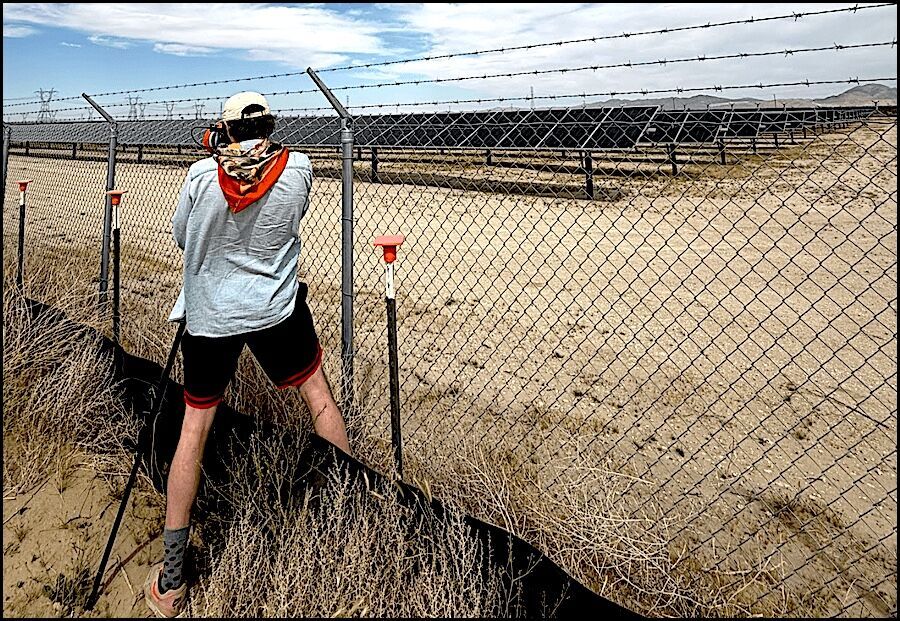
© Screen Shot 6/3/2026 8 11.49.36-AMColby Goves documenting Amazon's Baldy Mesa solar project • 6/3/2026 8 11.49.36-AM
This week in the Anthropocene

The road is dusty and trash-strewn. My friend and collaborator Colby Groves is hanging out the car window as I drive, gazing at a patchwork of solar panels lined up behind a chain-link fence.

"This has to be it," declares Colby, balancing a large camera on his lap, hoping it doesn't bounce off as we traverse a series of bumps and divots.

We are in this land of scorching sun and heat, searching for a large Amazon solar installation in rural San Bernardino County, California. This is the home of the endangered desert tortoise and Joshua trees, but more recently, it's become a plaything for greedy Silicon Valley entrepreneurs.

In 2024, Jeff Bezos' Amazon connected its Baldy Mesa solar-and-storage project, which helps to power the company's nearby data centers, to the electrical grid, earning accolades for its use of renewable energy. It's the first of its kind in California. Despite its gargantuan size, the project faced very little opposition, as is often the case with such "green" projects.

Cassiopaea

Scientists have found a surprisingly simple way to create powerful quantum states

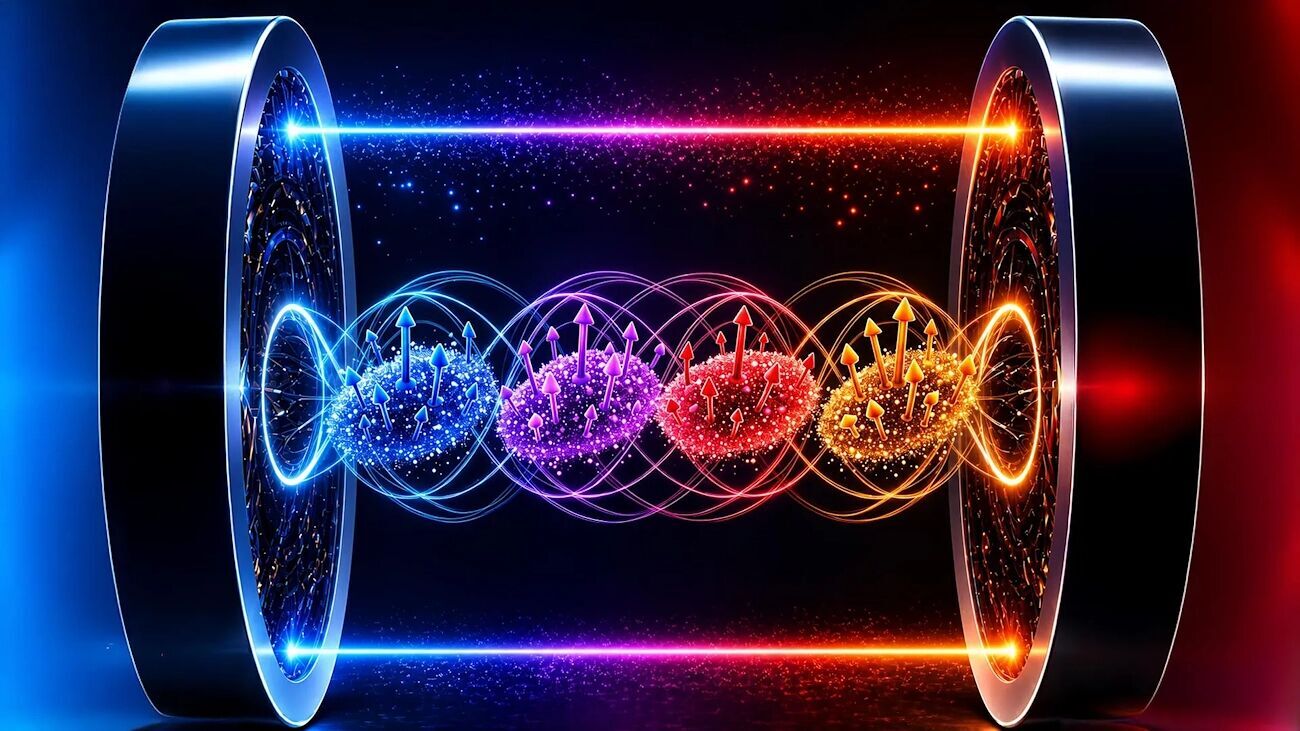
entangled quantum states conceptual image
A conceptual visualization of highly entangled quantum states
Many of the most promising quantum technologies, including advanced sensors and future quantum computers, depend on a phenomenon known as entanglement, where particles become deeply connected and influence one another in ways that cannot be explained by classical physics. Creating the complex entangled states needed for these technologies has traditionally required sophisticated equipment and carefully designed experimental systems.

Researchers at the University of Chicago Pritzker School of Molecular Engineering (UChicago PME) have now proposed a much simpler approach. Their new theoretical method can generate and control a wide range of entangled quantum states using tools that are already common in many quantum physics laboratories.

The work, published in Physical Review X, could help advance ultra precise quantum sensing and open new opportunities for exploring fundamental physics.

Fireball 5

How to stop a killer asteroid

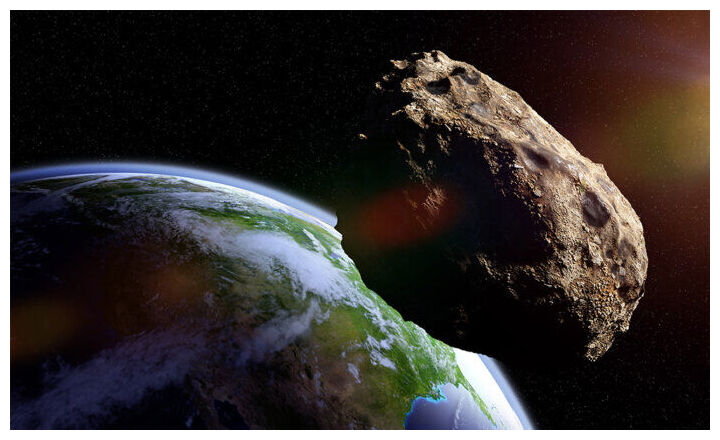
From high-speed battering rams to gravity tractors, the technology exists to protect the planet. The question is whether humanity will act in time — and in concert.
Killer Asteroid
© Adobe Stock
Late last month, in broad daylight, residents across Massachusetts and beyond saw a brilliant flash in the sky, followed by two sonic booms that rattled windows, shook houses, and prompted a flood of 911 calls. Some people thought they had just experienced an earthquake. Others thought it was thunder, an explosion, or a military flyover.

But the true source of all the commotion was out of this world — literally. A small meteoroid, about five feet wide and as heavy as an elephant, had entered the atmosphere at a blinding 42,000 miles per hour before disintegrating dozens of miles above the ground. The midair explosion released a pressure wave equivalent to 230-300 tons of TNT, and any surviving fragments likely fell into Cape Cod Bay.

Since then, the story has captivated an American public already more space-crazed than usual, thanks to the recent success of Artemis II. However, it has also served as a stark reminder that space is not as benign or empty as it may seem. Rather, our solar system is a celestial shooting gallery, chock-full of flying projectiles — not just meteoroids but larger bodies, such as comets, asteroids, and other cosmic detritus — and Earth is right in the firing line. Earlier in May, for instance, the newly discovered asteroid 2026 JH2, estimated at 50 to 115 feet wide, missed Earth by a "mere" 56,000 miles. Had it been on a collision course, it could have easily destroyed a big city.

But even that would not have been humanity's worst nightmare scenario. After all, some celestial goliaths can run a lot larger than JH2 — large enough to decimate entire countries and even continents. British physicist Stephen Hawking believed that a cosmic impact poses one of the greatest threats to humanity, far greater than any global pandemic or terrestrial natural disaster. The question is not if we will suffer a direct hit but when.

Fish

Fossil fishes buried in the desert reveal a missing chapter in marine history

Jack fish skeleton
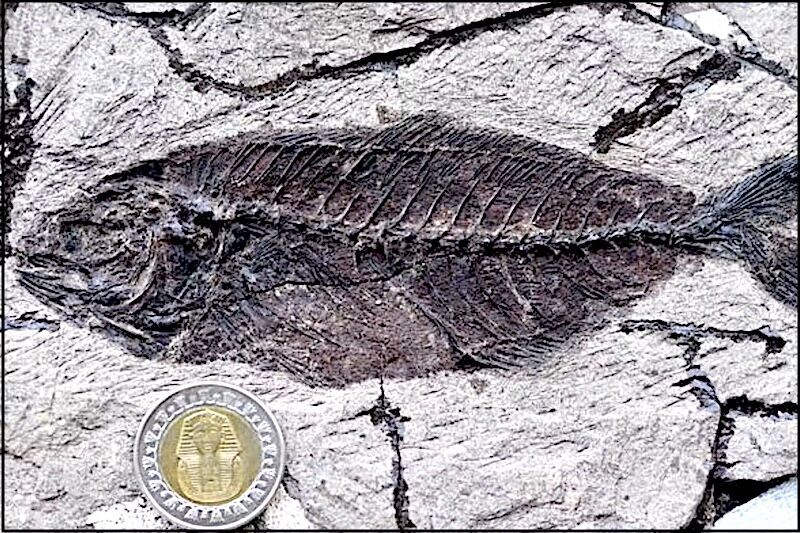
© Professor Hesham Sallam, Mansoura University Vertebrate Paleontology CenterA complete skeleton of the oldest jack fish, found at Qreiya 3
When an asteroid struck Earth about 66 million years ago, it ended the age of dinosaurs and transformed life across the planet. The effects of that catastrophe are visible in the fossil record on land, but scientists know far less about what happened to fishes in the seas during the first few million years after the extinction.

Like many people during the pandemic, I suddenly found myself living through long stretches of isolation and uncertainty. In 2020, while alone in my apartment in Ann Arbor, Michigan, I was finishing a study on fossil fishes from Egypt. This question of what happened to fishes immediately after the age of the dinosaurs kept troubling me.

That missing chapter represented a major gap in scientific understanding of how modern marine ecosystems emerged.

A unique opportunity

At the time, I was studying younger fossil fishes, but I kept wondering whether older rocks in Egypt might preserve clues to this critical period. During those long pandemic months, I spent countless hours reading geological reports and searching for mentions of formations with fish fossils of the right age.

Then, Hesham Sallam, my adviser, introduced me to earlier work by paleontologist and geologist Robert Speijer and colleagues who had documented rocks at Qreiya in Egypt that were deposited only about 4 million years after the asteroid impact.

That single detail changed the entirety of my Ph.D. research.

Mars

NASA pronounces Mars orbiter MAVEN dead

mars orbiter MAVEN nasa dead
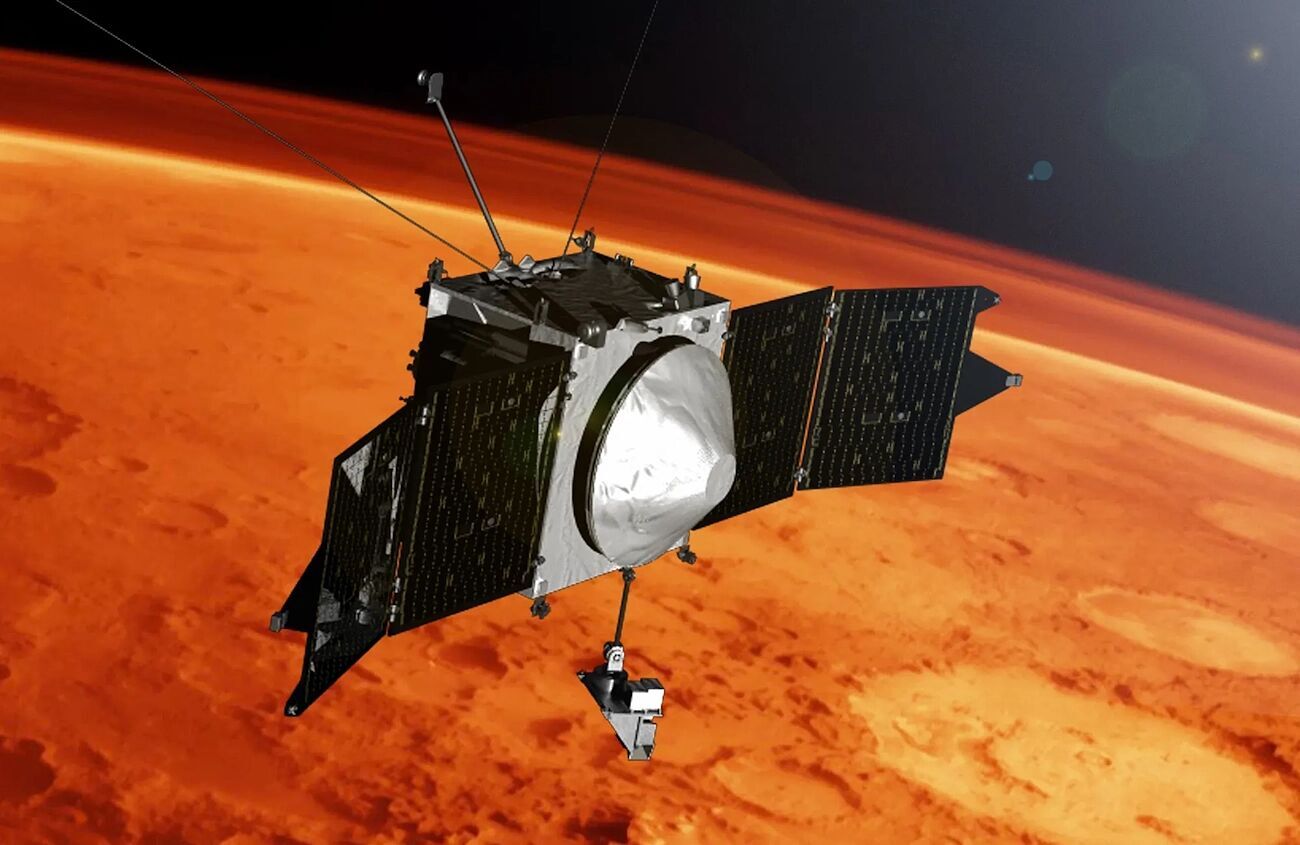
© NASA/Courtesy Photo of MAVENNASA officially declared its Mars MAVEN spacecraft dead on Wednesday, marking the end of a mission that was led by the University of Colorado Boulder for more than a decade.
The update nobody wanted to hear

After more than a decade in space, a vital Mars satellite suddenly went dark in December. NASA has spent the last six months trying to reestablish contact with the orbiter, but now, the agency has finally thrown in the towel.

NASA formally ended the Mars Atmosphere and Volatile Evolution (MAVEN) mission on Wednesday, explaining that the spacecraft is "not recoverable" and is "no longer capable of performing its science and data relay mission." This is the update the planetary science community has been dreading for months. The data MAVEN collected over its 11 years in Mars orbit significantly advanced our understanding of the Red Planet, helping researchers unravel the mystery of how its ancient water and atmosphere depleted.

"The science MAVEN has given us is key to informing what kind of radiation protection and safety measures we must take before sending humans to Mars," Louise Prockter, director of the Planetary Science Division at NASA Headquarters in Washington D.C., said in an agency statement. "The data collected from MAVEN will continue to provide valuable insight into Mars for decades to come."

Comment: MAVEN's findings over the years:


Battery

New catalyst strategy boosts key battery and fuel-cell reaction from 12% to 52%

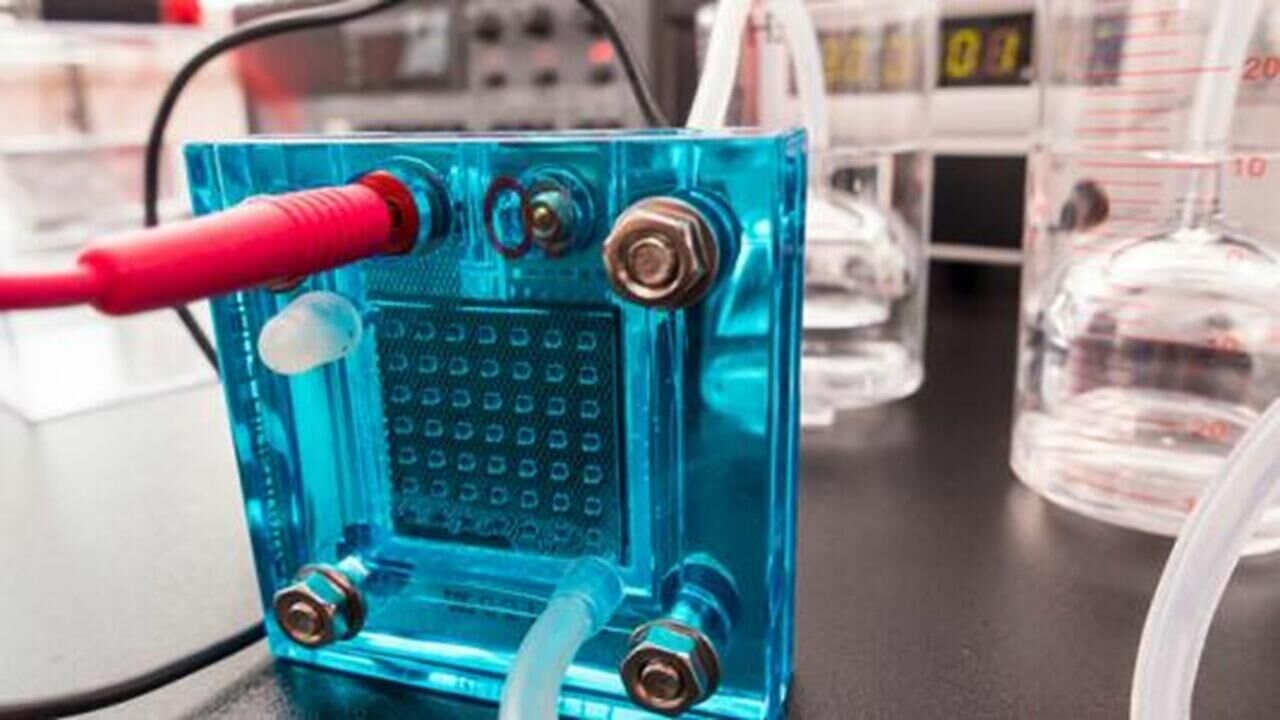
New catalyst approach could improve fuel cells and batteries (Representational image)
Researchers in South Korea have developed a new catalyst design strategy that boosts the efficiency of reactions used in batteries and hydrogen fuel cells without changing the catalyst itself.

The team, led by Professor Seung Jun Hwang of POSTECH and Professor Jaeyune Ryu of Seoul National University, found that adjusting the electrical environment around a catalyst can significantly improve its performance. The approach could help reduce energy losses in next-generation energy systems while improving efficiency and stability.

Catalysts are materials that speed up chemical reactions. They are essential components in technologies such as hydrogen fuel cells and metal-air batteries, where they help drive the reactions that generate electricity.

Explosion

Investigation launched into Blue Origin's New Glenn rocket explosion

blue origin rocket test explosion
© Devin OrouradA Blue Origin New Glenn rocket explodes during testing on Thursday, May 28, 2026.
A Blue Origin New Glenn rocket exploded during a static fire test Thursday night at Launch Complex 36 in Cape Canaveral, sending a fireball into the sky and shaking homes along Florida's Space Coast.

No injuries were reported, but the incident marks another setback for the heavy-lift rocket program that is expected to support future commercial satellite launches and NASA lunar missions.

Blue Origin rocket explosion latest

What we know:

The explosion occurred during a hot-fire, or static fire, test of Blue Origin's New Glenn rocket ahead of a planned launch next week carrying Amazon Kuiper internet satellites.

Blue Origin confirmed an "anomaly" occurred during the test and said all personnel were accounted for and safe. Emergency crews responded to the launch complex, but officials said there was no danger to the surrounding community from fire, fumes or other hazards.

Comment: Another view:


Info

Listening to Sun's 'heart' hints our star could be changing

Sun Stages
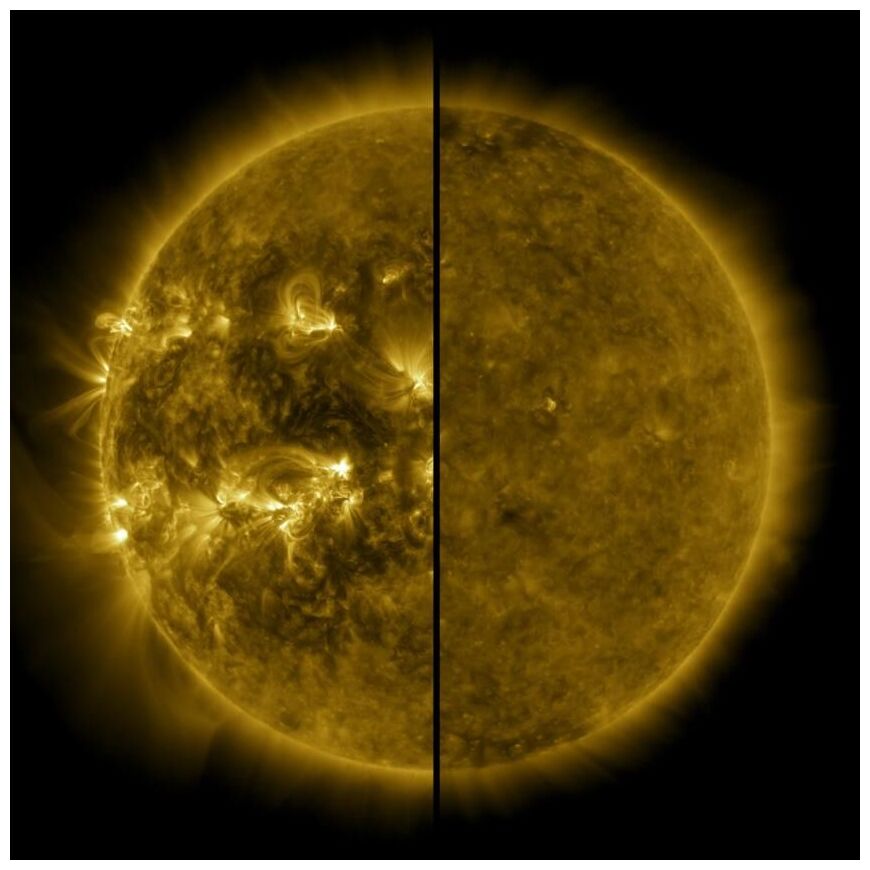
© NASA/SDOA split image showing an active Sun during solar maximum (on the left, taken in 2014) and a quiet Sun during solar minimum (on the right, taken in 2019).
The Sun's internal 'biorhythm' - which plays a critical role in the space weather we experience on Earth - has mysteriously changed over the past 40 years, a new study suggests.

Listening to tiny sound waves inside our star's 'heart' led researchers to discover that it may be entering "a different mode of behaviour". They now need to explore what this means.

The research, published today in Monthly Notices of the Royal Astronomical Society, is of particular significance to space weather.

Solar activity rises and falls in 11‑year cycles, producing solar flares, and ejections of highly charged particles and coronal mass ejections that give rise to geomagnetic storms and aurorae.

This activity, and its cyclic variation, has its origins in the Sun's interior, in processes that regenerate and reorganise the Sun's magnetic field.

Understanding what drives the solar cycle is therefore crucial for making predictions of space weather, which can disrupt satellites, communications, GPS systems and power grids on Earth.

Traditional measures of solar activity track these emissions and other surface phenomena like sunspots, but they do not look under the solar surface. However, by 'listening' to tiny sound waves inside the Sun - a technique known as helioseismology - it is possible to do just that. By tracking changes in the otherwise hidden solar interior, the team found a different picture emerged of the Sun's activity over the past few cycles to the one given by the traditional measures.

Using almost 40 years of helioseismic data from six telescopes around the world in the Birmingham Solar Oscillations Network (BiSON), the international team of researchers uncovered a gradual change in structure just beneath the surface that has spanned multiple cycles, with the current solar cycle 25 showing particularly strong signatures of these changes.

They discovered that solar magnetic activity is being squeezed into an increasingly shallow layer just below the visible surface, signposting long-term changes to the Sun's active behaviour.

HAL9000

The Marxist in the machine

marxist robot artificial intelligence llms
Should we be worried that AI becomes more left-wing if it doesn't like you?

Our fears for the future of robot intelligence almost inevitably end in spectacular fashion, with nuclear explosions and slaughter on a planetary scale. An abiding memory of my childhood is going over to the neighbors' house and watching Terminator 2 on VHS with my friends Ethan and Nathan, who were both older than me. I must have been about five years old — about 13 years too young to watch the film. And so, the idea that robots, reaching a certain level of intelligence and awareness, will inevitably try to kill every last one of us has always just seemed natural to me, as it probably does to many millions of other millennials raised on Terminator and The Matrix films.

Recently, those fears have been bolstered by research that shows AI models like Anthropic's Claude are capable, under stress testing, of deceiving humans and even inflicting harm on them — or, rather, thinking they've inflicted harm, a bit like the Milgram electroshock experiments in the 1960s.

In a study from last year on "agentic misalignment," researchers put Claude models in simulated work environments and tasked them with protecting company interests by managing an email system. When the models were faced with being turned off or replaced by another model, they resorted to deception and blackmail. Claude Opus 4, for example, blackmailed a fictional executive 96 percent of the time with compromising emails in order to avoid being switched off.

Fish

There's a new T. rex from the dinosaur age — and it ruled the seas with a skull-crushing bite

Tylosaurus illustration
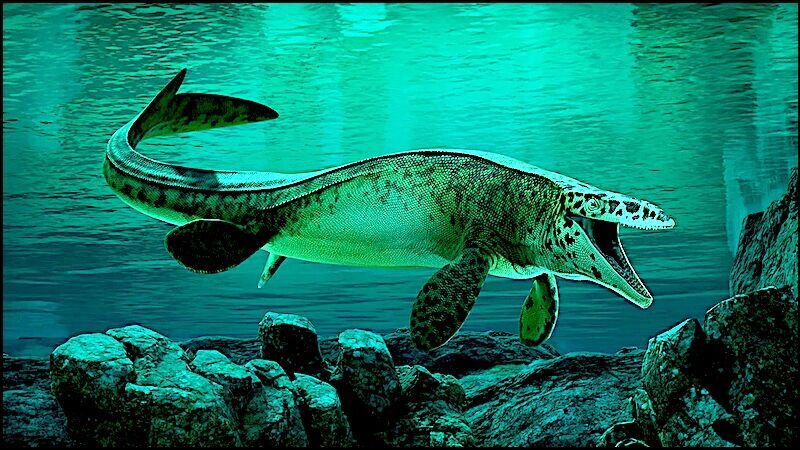
© Alderon Games/Path of TitansAn artist's reconstruction of Tylosaurus rex swimming in the Cretaceous seas of North America.
The newly described mosasaur Tylosaurus rex spanned up to 43 feet (13 meters) long and may have been one of the fiercest marine predators of the dinosaur age.

There's a new T. rex in town, but this one didn't hunt on land. It ruled the ancient seas.

Scientists have described a new species of mosasaur, a member of a marine reptile group that lived at the same time as dinosaurs during the Cretaceous period (145 million to 66 million years ago). The newly named species fits into an already known genus: Tylosaurus. But its new species name, Tylosaurus rex T. rex, for short — sets it apart from the other mosasaur species in the group.

The species name means "king of the tylosaurs," according to a new study published Thursday (May 21) in the journal Bulletin of the American Museum of Natural History. The fossils are about 80 million years old and were discovered mostly in northern Texas decades ago.

The mosasaur T. rex measured up to 43 feet (13 meters) long, or about the length of a tour bus. It had finely serrated teeth, unusually powerful jaws, and evidence on its fossils of violent combat with its own species.

"Everything is bigger in Texas and that includes the mosasaurs, apparently," study first author Amelia Zietlow, a research associate of paleontology at the American Museum of Natural History in New York City, said in a statement.