Science of the SpiritS


Bizarro Earth

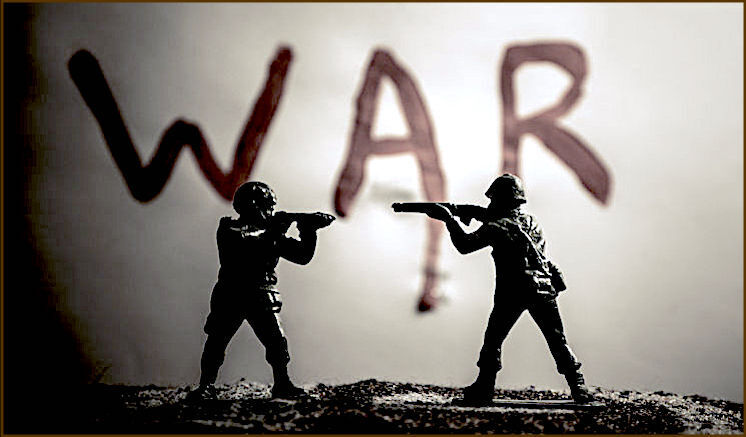
War is the worst thing in the world

war figures
© WariStock
War is the worst thing in the world. It is the single craziest behaviour exhibited by humans. The most destructive. The most traumatising. The least sustainable. The least conducive to human thriving.

All the things we fear most become the norm in a land ravaged by war. Death. Pain. Suffering. Rape. Chaos. Uncertainty. Losing loved ones. Losing homes. Losing limbs. Living in terror. Being attacked. Being brain damaged. Being faced with impossible choices. All the things we frighten ourselves with by watching horror movies become a reality from which there is no escape.

War creates a waking nightmare which any sensible person would want to avoid except in the direst necessity. And yet, we are ruled by people who actively seek it out. Who will lie and manipulate to make wars happen. Who will smear and slander anyone who resists in the name of peace. Who will actively fight against every healthy impulse in everybody in their society to push their war agenda forward.


Comment: Amen.


No Entry

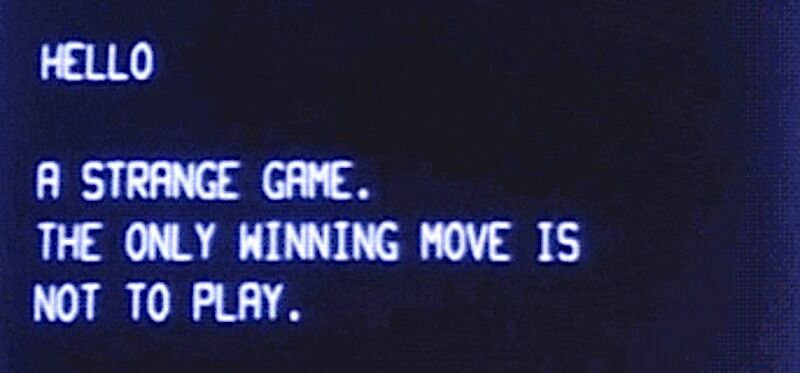
Trust No One

screenshot
© Unknown
The title of today's post is not meant to be taken literally. I trust plenty of people. I trust friends who've demonstrated their trustworthiness over the years. I trust my family. Having people in my life I love and trust makes everything far more meaningful and pleasant. I hope people reading this likewise have a circle of trust they've built over the years.

On the other hand, you should never trust anyone or anything that hasn't given you good reason to do so, and if someone or something gives you good reason not to trust them, you should never forget that. The more power a person or institution has in society, the less trustworthy they tend to be. I don't say this because it's fun to be cynical, I say this because my life experience has demonstrated its accuracy.

In the 21st century alone, I've been given good reason to distrust all sorts of things around me, including the U.S. government (all governments really), intelligence agencies, politicians, mass media, Wall Street and Silicon Valley, to name a few. These power centers make up "society" as we know it, which is really just massive concentrations of lawless financial and political power obfuscating rampant criminality behind the cover of various ostensibly venerable institutions. What's most remarkable is how many people still maintain trust in so many of these provably untrustworthy organizations and industries, which speaks to the power of propaganda as well as the comfort of denial.

Cross

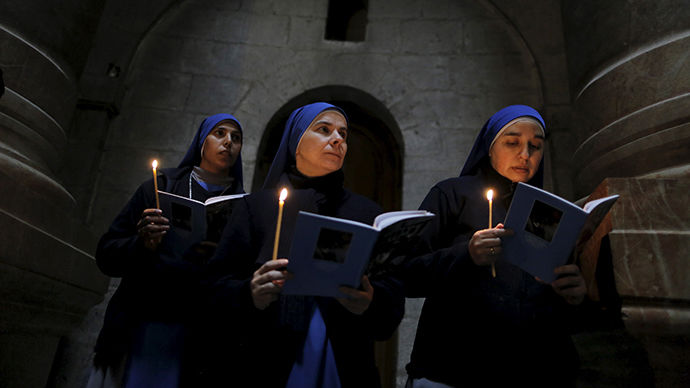
Gen Z women are booking convents, embracing vows of silence instead of beach houses this summer

British nuns
© Reuters / Ammar Awad
Move over, shared beach houses and Aperol spritzes. This summer, a growing number of Gen Z women are checking into Catholic convents and monasteries instead — on purpose.

In an unexpected pivot from rooftop parties and dating app exhaustion, young women are opting for peace and quiet. Literal quiet. The latest trend, dubbed "vow of silence summer," has people voluntarily giving up speaking for days at a time, communicating only by writing or gestures while living alongside nuns. And demand is high.

"I booked a vow of silence at a Catholic monastery late last year, and the booking process is really straightforward — you just email the nuns," said TikToker @mc667868 in a video that's now been viewed over 700,000 times. "When I went to book again for this summer, they were fully booked for the next three months."

Comment:


Gold Seal

Best of the Web: Psywar: AI bots manipulate your feelings

grok persistance of memory splintered psyop social media
I asked Grok to draw a splintered version of "The Persistence of Memory" by Salvador Dali. This is what it came up with.
The next chapter in the Social Media battle to splinter reality, the internet, and your own mind

Splinternet (as defined per Grok):

The splinternet refers to the fragmentation of the internet into separate, often isolated networks due to political, cultural, technological, or commercial reasons. It describes a scenario where the internet is no longer a unified global system but is instead divided into distinct "splinters" or subnetworks. This can happen through government censorship (like China's Great Firewall), regional regulations (such as the EU's GDPR), or tech companies creating walled gardens (e.g., Apple's ecosystem).

The term highlights how these divisions limit universal access to information and create digital borders, often reflecting real-world geopolitical tensions or differing values on privacy, security, and free expression.

Elon asked a key question. This is not dark humor or sarcasm; this is today's reality:

Comment: Despite the citation of a less-than-stellar example of social media manipulation, Malone raises excellent points. Social media users be awake and aware!


Book

Mikhail Bulgakov: How a terrible Russian tragedy shaped this legendary writer's fate

Mikhail Bulgakov
© Unknown
From saving lives in the trenches to capturing Russia's tragedy in timeless novels - here's how the chaos of revolution and civil war shaped one of Russia's greatest writers

On May 15, 2025, we commemorate the 134th anniversary of the birth of Mikhail Bulgakov, one of the most enigmatic and precise chroniclers of the Russian tragedy of the twentieth century. Today, he stands as a literary giant, but in 1919, Bulgakov was merely a young military doctor, wading through blood, mud, and despair.

His journey into literature didn't begin quietly in an office, but amid the chaos and flames of Russia's Civil War. In the twilight of a collapsing empire, Bulgakov the writer was forged.

Comment:
Driven by a profound need to process his experiences, Bulgakov turned to writing.
There are many articles that point to the benefits of writing, and not just for writers able to make a name or a profit from their works: See also:
Meet the man who taught Russia to fear - The comments have links to articles about other Russian writers.


Family

The unique parenting philosophy of the Arctic Sámi people

arctic tribe sami child reindeer
© Paadar ImagesA unique parenting style prepares children for life in the Arctic
For centuries, reindeer herders have used a unique parenting philosophy to prepare their children for survival in the Arctic. Here's what we can learn from them.

Every year in June or July, under the Arctic midnight sun, Sámi reindeer-herding families in northern Finland, Norway and Sweden come together for one of the biggest social events of the year: "earmarking", which involves marking the new reindeer calves to identify them.

On foot, in all-terrain vehicles and even helicopters, they gather the semi-wild reindeer from vast areas stretching out dozens of square kilometres. Even young children are expected to join in. The youngest boys and girls help catch the calves. From the age of about 10, they take their own earmarking knives, grab a calf, and mark both ears with a unique pattern of notches. Children receive their own personal earmark pattern at birth, and use it to mark their herds for the rest of their lives.

Among the Sámi, an indigenous people spread across the northernmost regions of Norway, Sweden, Finland and Russia's Kola Peninsula, children not only participate in herding work, but are also encouraged to act independently in most other areas of life. They have a say in deciding when to eat, when to sleep, and what to wear, even at temperatures of -30C (-22F). To outsiders, that independence can be surprising. Missionaries who visited the Arctic in the 18th Century and later, wrote in their diaries that it seemed like Sámi children could do whatever they liked, and that they lacked discipline altogether.

Wolf

From red flag to red line: What is the limit?

mean streets movie johnny boy mook
Johnny Boy being a mook.
Announcement: On May 3rd, we will have a special guest for our paid-subscriber Zoom meetup: Ilya Khotimsky, translator of Russian economist Mikhail Khazin's Recollections of the Future: Modern Economic Ideas. I wrote about his summary of the book here. If you want to the chance to ask Ilya about the book, and Khazin's economics, you know what to do!
I recently watched Martin Scorsese's Mean Streets (1973), in which Robert DeNiro plays a low-life psychopathic mafia parasite, Johnny Boy, who is coddled and protected by his friend Charlie, played by Harvey Keitel, past the point where any sane person would've broken Johnny Boy's legs purely out of principle. For those who haven't seen the film and don't want to, here's the plot summary: low-level mobster doesn't pay his boss, doesn't do anything of substance for the next couple weeks, then gets shot in the neck after telling said boss to his face that he's a sucker who's easy to rip off, and no, he's not going to pay him. Charlie, the actual main character, repeatedly makes excuses for Johnny Boy, vouching for him, spotting him a few dollars here and there, and believing he can get him to get his act together. After Johnny Boy's final confrontation with their mutual boss, Charlie tries to get Johnny Boy out of town until things cool down. It's while making their getaway that Johnny Boy gets shot in the neck, flailing around like a stuck pig, and Charlie gets shot in the arm. Roll credits.

In media and in real life, we have all seen examples of wives, children, parents, and siblings stick by a relative after he is accused or convicted of a serious crime — or exposed for a noncriminal act that severely violates behavioral norms.

Wolf

A psychopath wouldn't hesitate to cause another global financial crisis - if there was something in it for them

corporate psychopath stock market finance business psychopathy
© Gorodenkoff/Shutterstock
Would you want a psychopath looking after your pension? Or what about your shares? In a recent talk at the Cambridge Festival of Science, I spoke about the latest research relating to a psychopath's love of money, greed for power, and willingness to harm other people financially for personal gain.

Since I began researching corporate psychopaths and the global financial crisis, the idea of the financial psychopath, an employee in the financial sector acting ruthlessly, recklessly, greedily and selfishly with other people's money, has gained traction.

The theory won support because psychopaths are more commonly found in financial services than in other sectors. It has even been argued that up to 10% of employees in financial services could be psychopathic. That is to say they have no empathy, care for other people, conscience or regrets for any damage they do.

These traits make them ruthless in pursuit of their own agendas and entirely focused on self-promotion and self-advancement.

Comment:


Magic Wand

Handwriting Lights Up Your Brain - Here's How

Hand writing
Pick up a pen to activate neural pathways that might otherwise remain dormant.

Picture two brains: one buzzing with activity, connections firing across regions in a synchronized neural ballet. The other shows only scattered flickers of engagement — isolated islands of electrical activation.

Both belong to university students sitting in the same lecture trying to capture the same ideas. The difference between them isn't intelligence, attention span, or interest in the subject — but the tools in their hands.

One holds a trusty pen poised over lined paper, while the other's fingers hover over a laptop keyboard.

This neural contrast, shown in a study in Frontiers in Psychology, is just one piece of mounting evidence suggesting that our rush toward digital convenience may be coupled with significant cognitive costs. From neuroscience labs to classrooms, research comparing traditional and digital learning tools finds that pens are not quite yet old school.

Bizarro Earth

The NWO religion: How the woke postmodern "faith" glorifies evil

Satanic mob
© UnknownSatanic Mob
It's not as if it was ever a secret: The very core of the woke movement is fundamentally rooted in evil. The general definition of "evil" being a conscious act of deception and destruction, the deliberate victimization of others for the sake of personal power, pleasure and gain. When I try to imagine what a religion of evil might look like I consistently come back to the far-left woke movement along with its rabid mantras, agendas and self righteous narcissism.

The majority of human beings have an inherent sense of good and evil; we often refer to this condition as conscience or moral compass. The intuitive inner voice that guides us and warns us when we stray into "the dark side" is a product of archetypal knowledge - What psychologist Carl Jung described as a set of inborn complexes or symbols that tap into our deepest emotions and sense of identity. All our social interactions are in some way affected by these archetypes.

These ideas are universal, present in nearly every culture in every part of the world at every point in time in the world. Societies with zero social interaction and separated by thousands of years and thousands of miles all have these symbols and principles present in their mythology, academia and ideologies. The building blocks of everything from language, to mathematics to religion and morality are influenced by inherent psychological imprints present in our minds from the moment of birth.